How to Carry a Tote Bag | Strap Specs That Keep It Secure
This post contains affiliate links. As an Amazon Associate, we earn from qualifying purchases.
To carry a tote bag without it slipping, you need three specific strap measurements: the drop (10–12 inches for shoulder carry), the width (1.5 inches minimum for comfort), and the spacing between attachment points (40–55% of the bag’s opening width). A strap that’s too long, too narrow, or attached too wide will slide off every time you move.
The drop is the number that matters, not the total strap length. Most people measure the whole loop and get a figure that tells them nothing about where the bag will actually hang. A 26-inch total strap on a 12-inch wide bag gives you a 7-inch drop, that’s a hand-carry, not a shoulder bag. You bought the wrong thing.
What follows is the mechanic’s view of a tote bag. We’ll break down the three strap specs that decide whether a bag stays put or fights you, the one stitch pattern that prevents a handle from tearing off, and the simple fix for when a winter coat turns every strap into a slip-and-slide.
Key Takeaways
- Measure the drop, not the total length. For a shoulder carry, you need a 10–12 inch drop. A 7-inch drop means the bag is designed for your hand.
- Strap spacing is a ratio. The distance between attachment points should be 40–55% of the bag’s opening width. Outside that range, the bag either presses into your arm or flares open and slips.
- Width beats padding. A 1.5-inch wide strap distributes weight better than a skinny, padded one. For loads over 5kg, go to 2 inches.
- Check the stitching, not the leather. Look for a Box-X stitch (a rectangle with an X inside it) at the attachment point. A single straight line of thread fails within months under real weight.
- A structured base matters more than you think. A floppy bag body shifts its center of gravity with every step, pulling the straps off your shoulder.
The Single Most Important Spec You’re Missing
You know a tote bag’s length and height. You probably know the material. Almost nobody checks the strap spacing ratio, and that’s why bags slip.
The ideal strap spacing ratio, the distance between the centers of the two attachment points divided by the bag opening width, falls between 0.4 and 0.55. A ratio below 0.4 presses the bag against your arm. A ratio above 0.55 lets the opening flare and the straps slide right off.
This is a manufacturing spec, not a style choice. Factories cutting costs use the same strap placement for every bag size. On a large tote, that often means attaching the straps too close to the edges. The bag loses its structural integrity at the top.
How to check it without a tape measure: Look at a product photo online. If the straps are attached very close to the side seams of the bag, the spacing is too wide. That bag will fight you. When you’re picking a bag for daily use, this ratio is as important as the tote bag size itself.
The other critical measurement is drop. Total strap length is useless. Drop is the vertical distance from the top of the bag to the highest point of the strap’s curve.
| Carry Style | Ideal Drop | Total Strap Length (approx.) | Best For |
|---|---|---|---|
| Hand Carry / Short | 6–9 inches | 12–16 inches | Quick errands, lunch bag |
| Everyday Shoulder | 10–12 inches | 24–28 inches | Work, shopping, most daily tote bag uses |
| Long Shoulder / Crossbody | 12–14 inches | 28–32 inches | Travel, hands-free commuting |
If the drop is under 10 inches, you cannot comfortably get the bag onto your shoulder while wearing a jacket. That’s not a design flaw, it’s a design for a different purpose.
Strap Width and Material: The Comfort Equation
A wide, flat strap will always distribute weight better than a thin, rounded one. Padding is a marketing trick for narrow straps that dig in.
The standard webbing width for bulk-ordered custom totes is 1.5 inches (about 3.8cm). There’s a reason for that. It’s the cheapest width that doesn’t cause immediate comfort complaints. For your own bag, use this guide:
- Light load (under 2kg / 4.4 lbs): 1–1.5 inch width is fine. This covers a wallet, phone, keys.
- Medium load (2–5kg / 4.4–11 lbs): 1.5–2 inch width is mandatory. This is a laptop, a water bottle, a book.
- Heavy load (5kg+ / 11+ lbs): 2–3 inch width. This is groceries, gym clothes, baby supplies. Go wide or your shoulder will ache in 20 minutes.
Material is the second half of the equation. Glossy polyurethane or smooth nylon is slippery. It will slide off a wool coat or a silk blouse. Textured cotton webbing, like herringbone, or straps with a silicone anti-slip strip sewn in provide grip. When you choose a tote bag, run your fingers over the strap. If it feels slick, it is.
Where this goes sideways: Choosing a bag with skinny, padded straps for a heavy load. The padding compresses flat under weight, leaving a thin band of pressure that cuts into your shoulder by the end of the day. Width is what distributes force.
The Fix for Slippery Straps and Coats
It’s winter. You’re wearing a puffy jacket. Your tote bag strap will not stay on. This isn’t a bag problem, it’s a physics problem. A smooth strap on a smooth, rounded surface has no friction.
The fix is simple, free, and takes two seconds. Where the strap meets your shoulder, give it one full twist. This creates a flat, twisted section that sits perpendicular to your shoulder seam. The twist acts like a speed bump, preventing the strap from sliding down the slope of your coat.
This also works for straps made from slippery materials year-round. A single twist changes the contact patch from a smooth glide to a locked-in hold.
What about non-identical handles? If one strap is sewn slightly longer or twisted before attachment, the bag will hang unevenly. This pulls one side off your shoulder. The only fix is to return the bag. It’s a manufacturing defect you can’t correct.
How You Pack Changes How It Carries
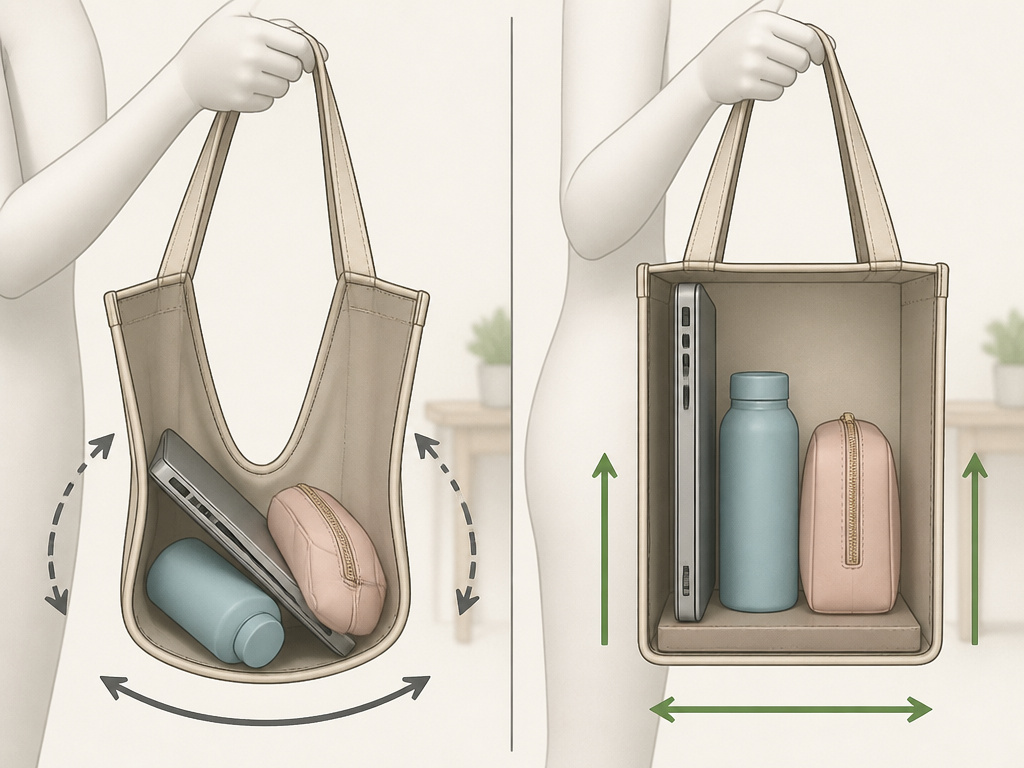 A soft, unstructured tote bag is a black hole. Everything sinks to the bottom, creating a pendulum that swings with each step. That motion pulls the straps off your shoulders.
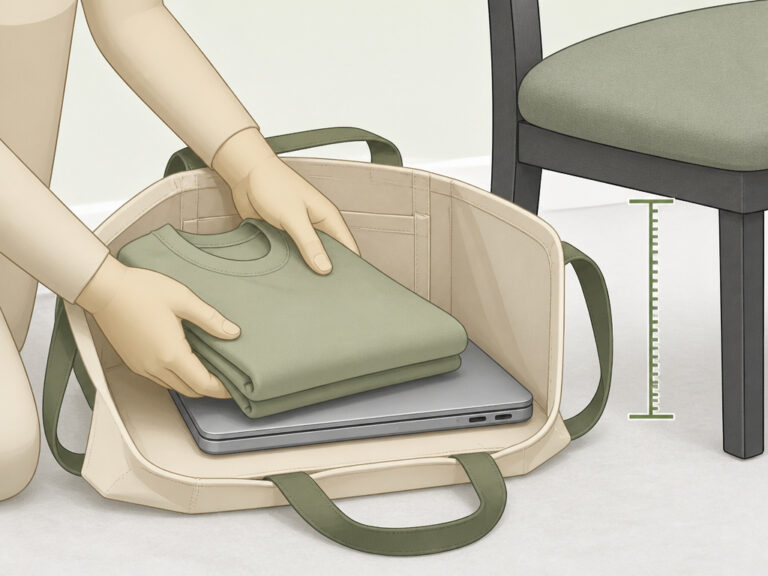
You need a structured base, either built into the bag or added by you. A firm bottom panel, often made of cardboard or plastic, stops the slump. If your bag doesn’t have one, use a small cutting board, a laptop sleeve, or a purpose-made bag organizer insert. This keeps the weight centered and stable.
Common mistake: Overloading one side of the bag. A heavy water bottle and a light scarf at opposite ends create a torque that rolls the bag on your shoulder. Keep heavy items centered and low.
Organization isn’t just about finding your keys. It’s about balance. Use pouches to group small items and prevent them from shifting to one side. A well-organized tote bag is a stable one.
Durability: The Stitch That Holds Everything Together
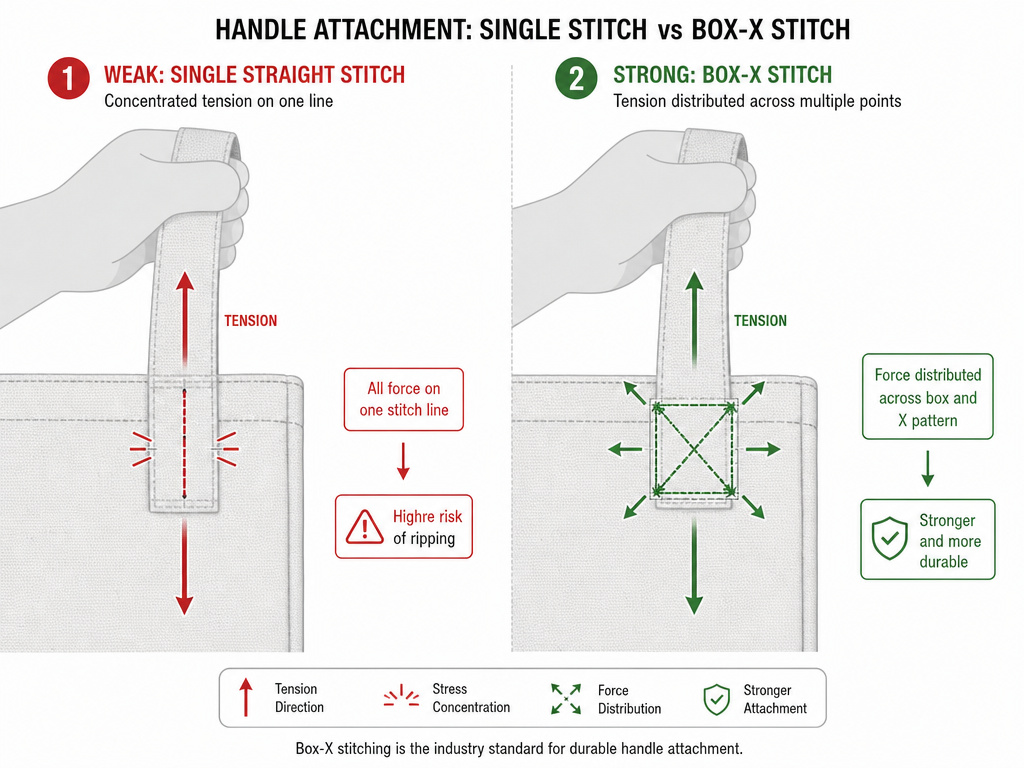 The attachment point is the most stressed part of any bag. This is where handles tear off.
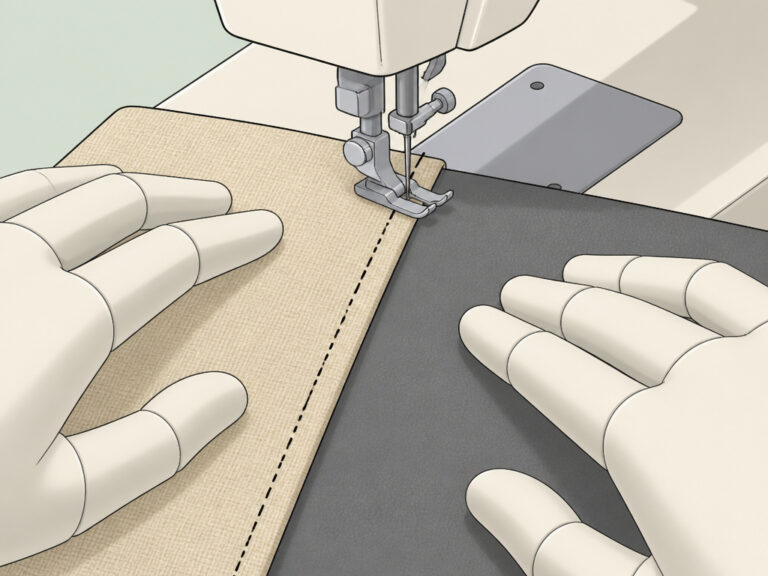
Most inexpensive bags use a single straight line of stitching. It looks clean. It’s also the weakest possible join. Under the repeated stress of a loaded bag, that straight stitch will stretch, wrinkle, and eventually snap. The timeline? A few months of regular use with a medium load.
The stronger method is a Box-X stitch. This is a rectangular box stitched around the attachment point, with an X stitched inside it. This pattern distributes tension across multiple thread directions and anchors into more material. It’s the difference between a single nail holding a picture and a bracket.
| Stitch Type | What It Looks Like | Failure Timeline (5kg load) | Result |
|---|---|---|---|
| Single Straight Stitch | One or two parallel lines of thread | 3–6 months | Threads stretch and snap; handle detaches |
| Box-X Stitch | A stitched rectangle with an X inside | 2+ years (often outlasts fabric) | Stitching may wear but grip remains secure |
Before you buy, look at the inside of the bag at the handle attachments. If you see a simple box or, worse, just a line, walk away. This is the most important factor in a bag’s long-term durability, especially for a workhorse canvas tote bag.
Carrying Methods: Shoulder, Hand, and Crossbody
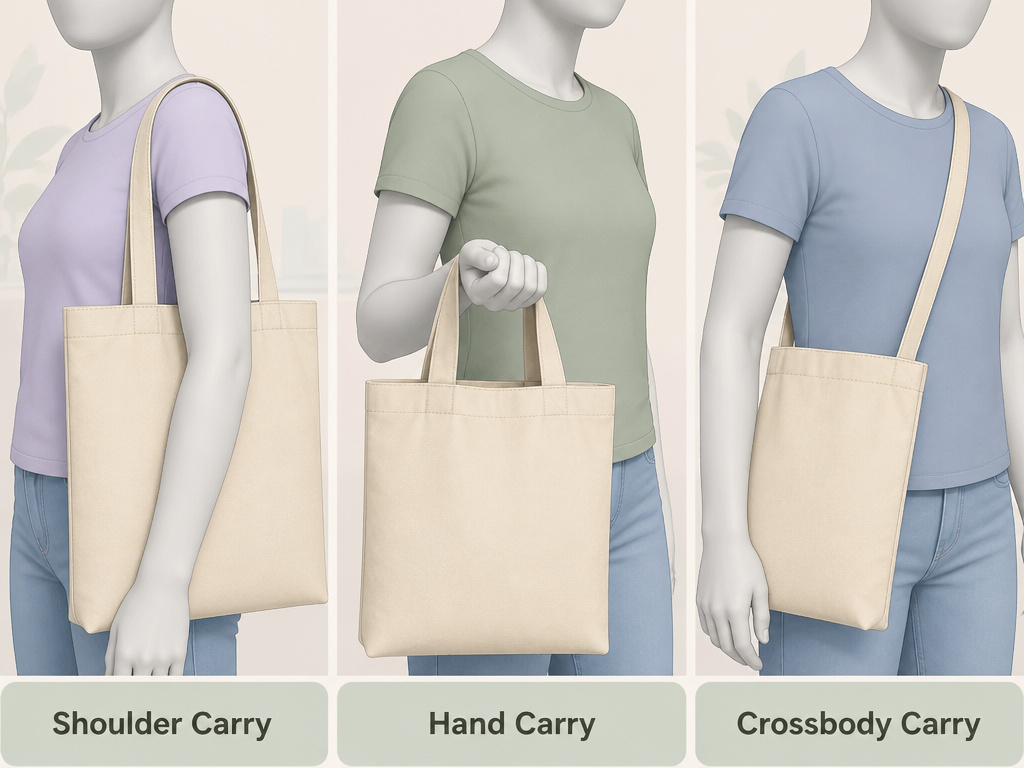 Your body and your load decide the method. The bag’s design dictates what’s possible.
Shoulder Carry is the default for a reason. It frees your hands. For it to work, you need that 10–12 inch drop and adequate strap width. Don’t hunch the shoulder up to trap the strap. Stand straight and let the bag sit naturally. Switch shoulders every so often to avoid muscle fatigue.
Hand Carry is for short durations or formal settings. It demands a shorter drop (6–9 inches). Don’t clutch the handles tightly; let them rest in the crook of your fingers. This is the style most often messed up by using a bag with a too-short drop, forcing an awkward elbow-bent carry.
Crossbody Carry is the most secure for travel or crowded places. It requires a longer strap (28–32 inch total length) and a bag that sits comfortably on your hip. Adjust the strap so the bag rests on your lower back or side, not banging against your leg. This method is a smart alternative for a bag you plan to use as a tote bag as personal item on a flight.
The one rule for all methods: Your posture matters. Slouching forward changes the angle of your shoulder, turning it into a ramp for the strap to slide down. Stand up straight. The bag should hang from you, not pull you off balance.
What About Heavy Loads and Your Health?
A tote bag, by design, puts all the weight on one side of your body. Your muscles compensate by tightening, which can lead to shoulder, neck, and upper back strain over time. This isn’t scare talk, it’s simple biomechanics.
If you regularly carry more than 5kg (11 lbs), you have two options: 1. Widen the strap. A 3-inch wide strap is a must. It turns a pressure point into a weight-distributing platform. 2. Switch to a backpack. For true heavy loads, two shoulders are always better than one. A tote is a tool for medium-duty, accessible carrying.
Listen to your body. A dull ache at the end of the day is a warning. Persistent pain means you’re overloading the system. The choice between a tote and a backpack isn’t about style; it’s about physics. For insights on the effects of unbalanced weight, our article on the health effects of a heavy tote bag dives deeper.
Bottom line: Use the right tool for the job. A tote is perfect for a laptop, a notebook, and a coffee. It’s the wrong tool for six hardcover books, a laptop, and your gym shoes.
Frequently Asked Questions
Why does my tote bag slide off even when the straps are short?
The strap spacing is likely too wide. If the attachment points are near the edges of the bag (a ratio over 0.55), the opening loses its shape and the straps have no anchor point to stay vertical. They splay outward and slide down. Check the spacing before you blame the length.
Can I use any tote bag as an airline personal item?
Maybe. It depends entirely on the bag’s dimensions, not its style. A tote bag must fit under the seat in front of you. A soft tote that you can squash down has an advantage. Always check your specific airline’s size limits for personal items, as they are stricter than carry-on rules.
How do I stop my tote bag straps from hurting my shoulders?
Increase the strap width. Discomfort is caused by pressure per square inch. A wider strap spreads the same weight over a larger area. If you already have a bag with narrow straps, consider adding a removable shoulder pad designed to clip on. It’s a band-aid, but it works.
What’s the best way to clean a tote bag without ruining it?
It depends on the material. For most canvas or cotton totes, spot clean with a mild soap and a damp cloth. For a full wash, check the care label. Never machine wash a bag with leather accents or structured elements, as water can dissolve internal stiffeners and ruin the shape.
Is a tote bag a good carry-on bag?
It can be, if it’s structured and meets size requirements. A floppy tote is a nightmare in an overhead bin because it offers no protection and its contents spill. A structured tote with a zipper closure, like many from Peak Design, can work well. Verify it fits your airline’s carry-on size rules before you rely on it.
How can I make my tote bag more secure?
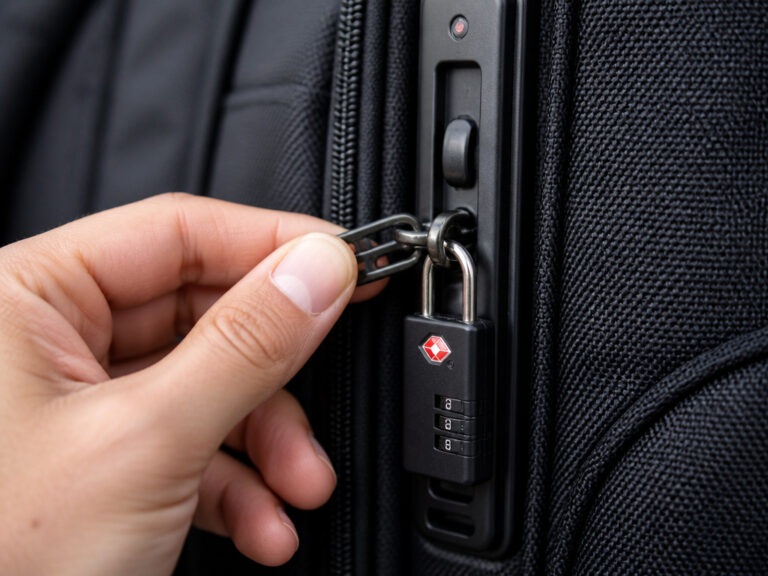
Add a closure. Most totes are open at the top. A simple carabiner clipped across the inside can deter quick grabs. For real security, use a bag with a zipper or consider a small travel lock for the zipper pulls. In a crowd, wear it crossbody with the bag in front of you.
The Bottom Line
Carrying a tote bag isn’t about gritting your teeth and hoisting it higher. It’s about three numbers: a 10–12 inch drop, a 1.5–2 inch width, and a strap spacing ratio between 0.4 and 0.55. Get those specs right at the point of purchase, and the bag will work with you, not against you.
Check the Box-X stitch. Give the strap a twist on a slippery coat. Put a firm base in a soft bag. This isn’t accessory advice, it’s ergonomics. A bag that stays put and doesn’t hurt is a tool you’ll use every day. A bag that fights you is a donation waiting to happen. Choose the numbers, and the style follows.