What is a Tote Bag | Design, Uses & How to Choose
This post contains affiliate links. As an Amazon Associate, we earn from qualifying purchases.
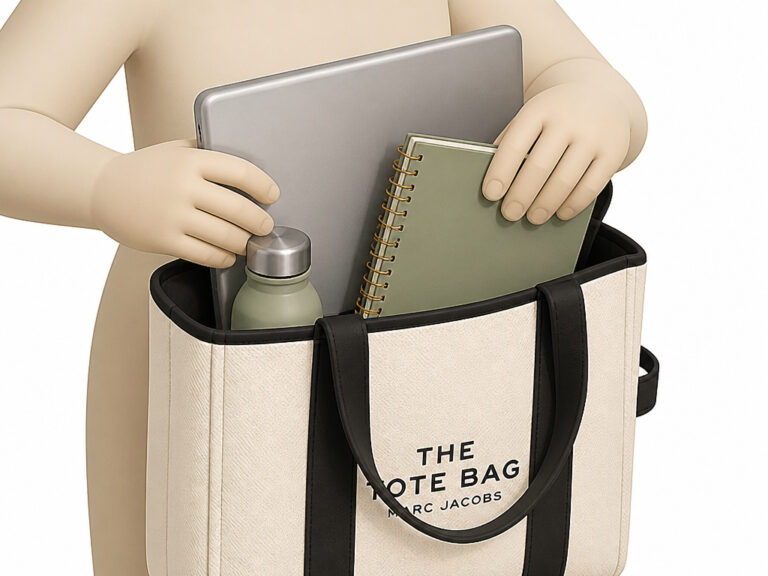
A tote bag is a large, open-top bag with two parallel handles designed for carrying everyday items, from groceries to laptops. Its defining features are its simple, unfastened design, spacious interior, and sturdy construction, typically using materials like canvas, leather, or synthetic fabrics. The term “tote” literally means “to carry,” which perfectly describes its primary function.
That simple definition hides a surprisingly complex history and a web of practical trade-offs. The bag you grab for a quick grocery run has design roots in mid-century ice carriers and high-fashion ateliers, and its environmental footprint is a calculation of dozens of reuses.
What follows: a breakdown of the tote bag’s core anatomy, the pros and cons of common materials, the real environmental math behind “reusable,” and a straightforward guide to matching a tote’s features to your actual daily load.
Key Takeaways
- The term “tote” comes from the 17th-century verb meaning “to carry,” and the bag’s open-top, two-handle design is built purely for that function.
- Canvas and heavy cotton are durable defaults, but nylon and polypropylene offer better water resistance and lighter weight for specific uses.
- An organic cotton tote must be reused 131 to 327 times to break even with a single plastic bag’s carbon footprint, a figure from a UK Environment Agency lifecycle study.
- Modern totes often include closures like zippers or magnets, a direct upgrade from the classic open-top design for better security.
- Your choice should start with what you carry daily; a laptop needs padded compartments, while beach gear demands water-resistant, sand-shaking fabric.
The Defining Features of a Tote Bag
Forget fashion labels for a moment. Look at the bag’s skeleton. A true tote bag has three non-negotiable features: parallel handles, an open-top design, and a single, large compartment. These stylistic choices are engineering decisions for easy carrying and quick access.
The handles are always mounted on opposite sides of the bag’s mouth. This creates a balanced, over-the-shoulder or hand-carry point. You’ll see this on everything from a cheap promotional giveaway to a luxury leather piece. The open top means no zippers, clasps, or flaps blocking your way. It’s the reason you can shove a last-minute purchase into a tote while juggling your phone and keys.
A tote bag is a large, typically unfastened bag with parallel handles that emerge from the sides of its pouch. Tote bags are often used as reusable shopping bags. The archetypal tote bag is made of sturdy cloth, perhaps with thick leather at its handles or bottom. (Source: Wikipedia entry on tote bags)
That’s the classic definition. But the modern tote bag has evolved. Many now include a magnetic snap or a short zipper across the top. This hybrid design keeps the easy-access feel while preventing your belongings from spilling out if the bag tips over. It’s a practical compromise that has become a new standard.
A Short History of Carrying Things
The word “tote” is an old verb, first recorded in Virginia in 1677, meaning to carry a heavy load. The bag as we know it crystallized in 1944 with L.L. Bean’s “Boat and Tote.” Marketed as an ice carrier, its sturdy, water-resistant canvas was quickly adopted by homemakers for groceries. The design was purely utilitarian.
Fashion entered the picture with designer Bonnie Cashin in the 1950s. She swapped canvas for leather, added structured shapes and turn-lock pockets, and transformed the workhorse tote into a high-end accessory. This dual identity, practical tool and style statement, has defined the tote ever since. Its explosion into popular culture was cemented by The New Yorker’s subscriber freebies and IKEA’s iconic blue FRAKTA bag.
Common Tote Bag Materials and Their Trade-Offs
The material isn’t just about look and feel. It dictates the bag’s lifespan, weight, care requirements, and environmental impact. Your choice here locks in the bag’s personality.
| Material | Best For | Durability & Care | Environmental Note |
|---|---|---|---|
| Canvas / Heavy Cotton | Everyday carry, groceries, casual use. | Extremely durable, machine washable. Can shrink. | Natural fiber, biodegradable. Requires many reuses to offset production impact. |
| Leather | Professional settings, fashion accessory. | Develops a patina, lasts decades with conditioning. Sensitive to water. | Long lifespan offsets initial resource use. Tanning process can be polluting. |
| Nylon / Polyester | Gym bags, travel, wet environments. | Lightweight, water-resistant, easy to clean. Prone to abrasion over time. | Synthetic, derived from oil. Not biodegradable. Recycled versions available. |
| Jute / Burlap | Promotional giveaways, rustic aesthetic. | Very sturdy but coarse and inflexible. Not washable. | Highly renewable, biodegradable. Rough texture limits comfort for daily use. |
| Recycled Polypropylene | Reusable shopping bags, budget-friendly options. | Strong, water-resistant, lightweight. Can degrade with prolonged sun exposure. | Gives plastic waste a second life. Lower reuse threshold to break even vs. New plastic bags. |
Canvas is the default for a reason. It’s a tightly woven, heavyweight fabric, usually cotton, that can withstand serious weight. A well-made canvas tote bag will hold textbooks, a laptop, and a full grocery haul without straining the seams. It’s also machine washable, which is why it dominates the reusable shopping bag market. The trade-off is that it’s not inherently water-resistant, a spilled coffee soaks right through.
Leather is the long-term investment. A full-grain leather tote will last a lifetime, softening and gaining character with age. It’s also the heaviest option and requires occasional conditioning to prevent drying and cracking. It’s a poor choice for a beach bag or a gym bag, but unmatched for a professional look.
Synthetics like nylon are the performance picks. They’re chosen for tote bag material when weight and weather matter. A nylon tote packs down to nothing, shakes off rain, and wipes clean easily. The downside is that it doesn’t have the natural breathability of canvas, and the fabric can “pill” or wear thin at stress points over years of abrasion.
Where this goes sideways: Choosing a tote based only on aesthetics. A beautiful light-colored linen tote is a disaster for a construction worker’s daily tools, it will be stained and torn within a week. Match the material to the mission.
How to Choose the Right Tote Bag for Your Needs
Start with what you actually carry, not the bag’s appearance. The right tote bag size and features are dictated by your daily load. This turns a vague preference into a clear checklist.
For Work & Laptops: Your priority is organization and protection. Look for a tote with a padded, dedicated laptop sleeve that fits your device snugly. Interior pockets for chargers, pens, and notebooks are non-negotiable. A zippered top closure is better than an open top or magnet snap for security on crowded transit. Structured shapes made from stiff canvas or leather help the bag hold its form when not full. The key features for a laptop tote bag are padding, compartmentalization, and a secure closure.
For Shopping & Errands: Capacity and durability win. A roomy, unstructured tote made from thick canvas or recycled polypropylene is ideal. It should be able to sit upright in your grocery cart. Longer handles that fit over your shoulder are more comfortable when the bag is heavy. Washability is key, spilled milk or dirt from produce needs to come out easily.
For the Beach or Gym: Water resistance and sand management are everything. Synthetic materials like nylon or polyester are best. A partially mesh side panel is excellent for ventilating wet gym clothes or towels. A wide, open mouth lets you shake out sand. Avoid leather or untreated canvas here, as saltwater and chlorine are corrosive.
As a Daily Everything Bag: You need a hybrid. Medium size, a mix of open and zippered pockets, and a versatile material like waxed canvas or a rugged synthetic. It should transition from work to after-work errands without looking out of place. This is where the key factors for selecting a tote bag, size, organization, and material, intersect most critically.
The Environmental Reality of “Reusable”
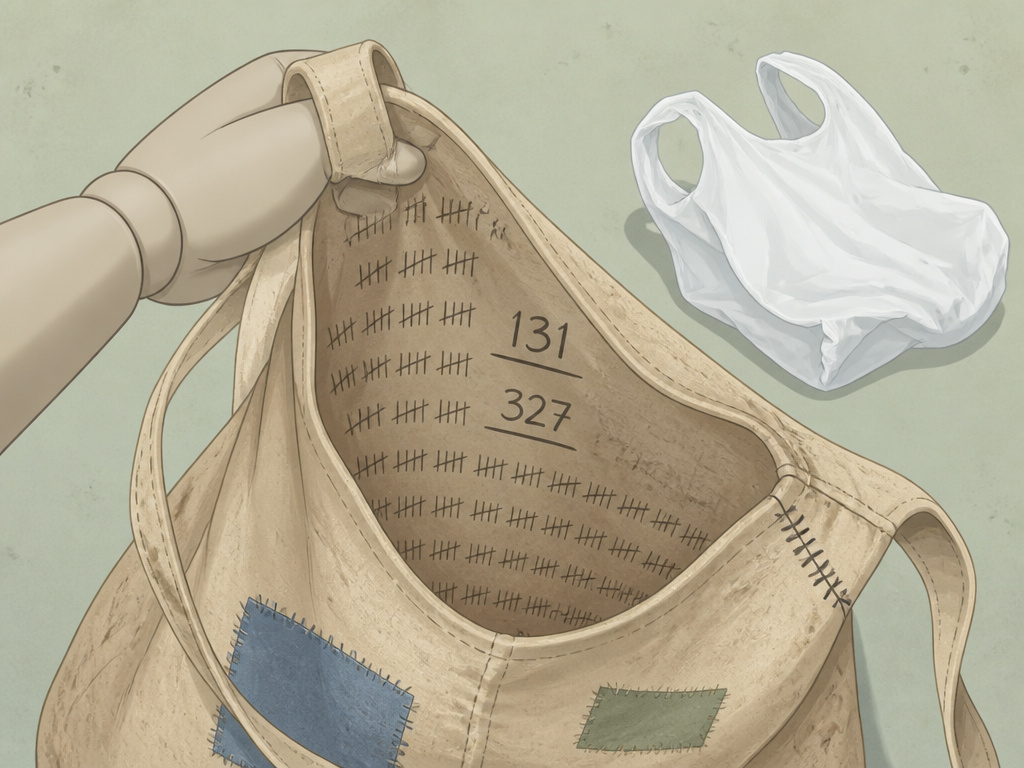 The phrase “reusable tote bag” carries an implicit green promise. The reality is more nuanced. A bag’s environmental benefit isn’t automatic; it’s earned through repeated use. The manufacturing of any bag, especially natural fiber ones, has a carbon and water footprint.
A landmark study by the UK Environment Agency provides hard numbers. A conventional cotton tote bag must be reused 131 times to break even with the carbon footprint of a single disposable plastic bag used once. If that plastic bag is reused as a bin liner first, the cotton tote needs 327 reuses to match its impact. A Danish study placed the number even higher, up to 7,100 reuses when considering all environmental indicators.
Common mistake: Buying a new cotton tote for every event or store, then letting them pile up unused. The most sustainable tote is the one you already own, used until it wears out.
The math favors synthetic bags made from recycled materials. A tote made from recycled polypropylene plastic requires as few as 11 reuses to match a single plastic bag’s climate impact. The lesson is to treat cotton totes as a long-term tool. Buy one durable canvas tote, use it for years for all your shopping, and wash it when needed.That’s how the environmental equation finally tips in your favor.
Tote Bag Styles and Their Best Uses
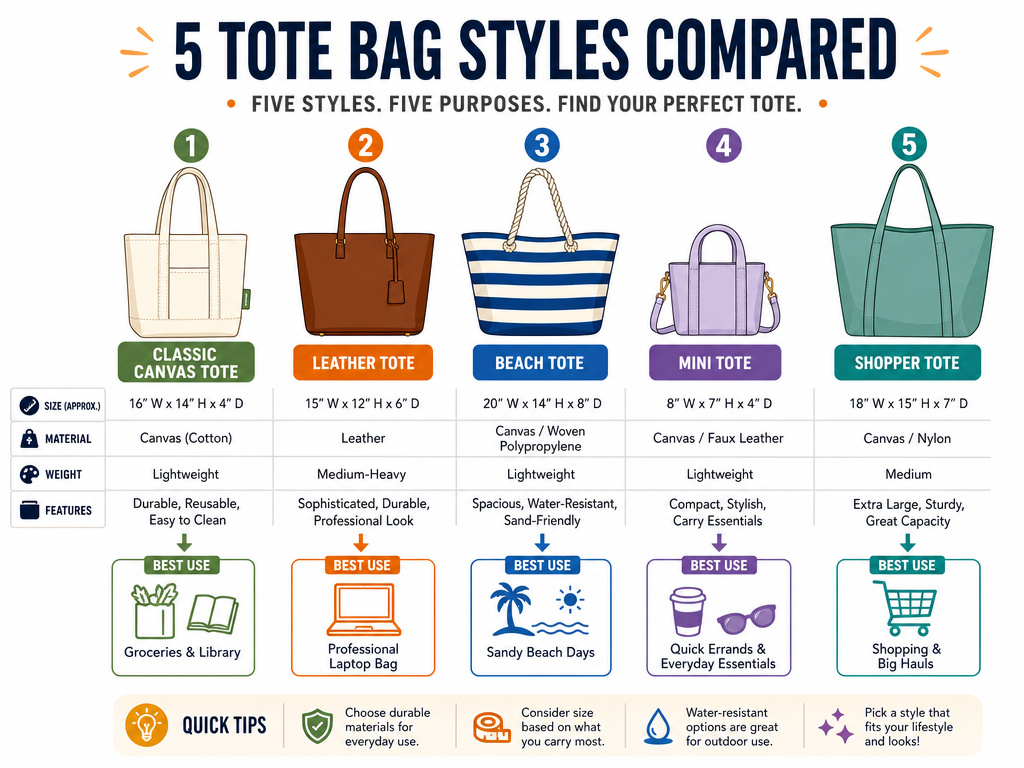 The basic tote shape has branched into distinct styles, each optimized for a different job. Knowing these types helps you skip the misfits.
- The Classic Canvas Tote: The rectangular workhorse. Think L.L. Bean Boat and Tote. Best for general carry, groceries, library trips, and casual outings. Its simplicity is its strength.
- The Leather Tote: Structured, polished, and often with more organizational pockets. This is a professional’s bag, designed to hold a laptop, documents, and daily essentials while maintaining a sharp appearance.
- The Beach Tote: Usually larger, made from quick-dry synthetic fabric or canvas with a washable liner. Features might include a zippered pocket for keys and phone, and a wide base for stability on sand.
- The Mini Tote: A scaled-down fashion version. It holds just the essentials, phone, wallet, keys, lip balm. It’s a style statement first, a utility piece second.
- The Shopper Tote: Characterized by especially long handles designed to be worn over the shoulder even when heavily laden. Often has a reinforced base and gusseted sides to expand for bulky purchases.
Your daily activities should dictate your style choice. Don’t buy a mini tote if you need to carry a water bottle and a book. Don’t choose a stiff leather tote for sandy beach days. The bag’s shape tells you what it’s meant for.
Frequently Asked Questions
What’s the difference between a tote bag and a purse?
Purse is a broad category for a bag carried by women, often featuring multiple compartments, a closure, and shorter handles. A tote is a specific type of bag defined by its large, open-top design and parallel handles. A tote can function as a purse, especially in leather or structured styles, but not all purses are totes.
Are tote bags good for your back?
Not inherently. A heavily loaded tote carried on one shoulder unevenly distributes weight, potentially straining your shoulder, neck, and back. To mitigate this, switch shoulders frequently, use both hands to carry it, or choose a tote with longer, crossbody-style straps to distribute weight more evenly across your torso. Practical techniques for carrying a tote bag can help reduce strain.
How do I keep my tote bag from getting messy inside?
The open, cavernous interior is a blessing and a curse. The solution is internal organization. Use small pouches or zippered cases for categories like electronics, makeup, or first-aid items. A removable felt insert with built-in pockets can transform any tote. For larger items, try folding cubes. Effective tote bag organization turns a pit of lost items into a efficient storage system.
Can a tote bag be a personal item on a flight?
Yes, in most cases. A tote bag fits under the seat in front of you, it qualifies as a personal item. Airlines are concerned with dimensions, not bag type. Ensure your tote is not overstuffed, so it can be squished into the sizing bin if required. A tote perfectly keeps your laptop, book, and travel essentials within easy reach.
What does “tote” mean?
The word “tote” is a verb meaning “to carry,” particularly something heavy. The Cambridge Dictionary tote bag definition confirms this usage. The bag is named for its primary function: toting your stuff around.
The Bottom Line
A tote bag is defined by its purpose: simple, sturdy carrying. The best one for you matches the weight and shape of your daily life in size, material, and features. Remember that its environmental virtue is a function of reuse, not the material alone.Choose a durable canvas, nylon, or leather bag you like enough to use hundreds of times. That’s the real secret. Everything else is just a handle and an empty space waiting to be filled.