The Efficient Way to Pack a Suitcase: 5-4-3-2-1 & Cube Guide
This post contains affiliate links. As an Amazon Associate, we earn from qualifying purchases.
To pack a suitcase efficiently, you use a structured formula like 5-4-3-2-1 to limit items, match your folding technique to the fabric (roll soft, fold structured), and organize with packing cubes filled to 75% capacity before compression. This system, not just a list, saves up to 30% space versus haphazard packing and reliably fits a week’s trip into a standard carry-on.
The formula works because it replaces guesswork with a physical constraint. You are not deciding if you need a sixth shirt; the system’s scaffold says no. The space saving comes from matching technique to material, rolling compresses knit fabrics, while flat folding preserves seams in woven ones. A cube filled wrong creates lumps that waste the space you just saved.
What follows: the exact 5-4-3-2-1 breakdown for a 7-day trip, the three folding methods and which fabric each actually works on, and the loading sequence that keeps a 50-pound bag balanced when you wheel it. We’ll also cover the one cube mistake that creates more wrinkles than it fixes and the airline spec that matters more than the bag’s label.
Key Takeaways
- Use the 5-4-3-2-1 packing formula: 5 tops, 4 bottoms, 3 shoes, 2 layers, 1 set of accessories. It’s a hard ceiling that prevents overpacking by design.
- Roll soft, fold structured, bundle formal. Rolling t-shirts saves up to 30% space; folding dress shirts flat prevents shoulder creases; bundling a suit around softer items avoids hard fold lines.
- Fill compression cubes to 75% before using the compression zipper. Underfilled cubes create air pockets and weird lumps that ruin your stack.
- Place your heaviest items, shoes, toiletry kit, at the bottom near the wheels. This anchors the suitcase’s center of gravity so it doesn’t tip over when you roll it.
- Verify your airline’s exact carry-on dimensions, not the bag’s marketing size. A generic “22-inch” bag often fails on budget carriers like Spirit or Frontier, which enforce 18″ x 14″ x 8″.
The 5-4-3-2-1 Packing Formula (A System, Not a List)
A packing list is just suggestions. A formula is a rule. The 5-4-3-2-1 method gives you a scaffold so you don’t overpack by accident. It structures your packing a suitcase around physical limits, not whims.
The 5-4-3-2-1 method forces prioritization. For travelers who tend to overpack, it acts as a hard ceiling, and that alone cuts wasted space.
Here is the breakdown for a 7-10 day trip. The goal is outfit mixing, not bringing a separate outfit for each day. * 5 Tops: Mix of short-sleeve, long-sleeve, and one nicer blouse or button-down. A cream linen shirt can be a beach cover-up, a museum layer, and a dinner top when tied at the waist. * 4 Bottoms: Two pants (one jeans, one lightweight), one skirt, one shorts. Each bottom must work with at least three of your tops. * 3 Shoes: One worn on the plane (usually the bulkiest), one walking sneaker, one casual or dress shoe. For most urban trips, one versatile leather sneaker is enough. * 2 Layers: A cardigan and a packable jacket. The jacket should compress into its own stuff sack. * 1 Set of Accessories: A belt, scarf, and jewelry that all work within your chosen neutral color palette.
Where this goes sideways is choosing a statement piece that only works with one outfit. If a floral skirt only pairs with the white tank you packed, you’ve wasted space. Lay every combination on your bed before anything goes in the bag. The system’s value is in the mixing, not the counting.
Rolling vs. Folding vs. Bundling: Match the Method to the Fabric
Rolling and folding are not competing religions. They are tools for different materials. Using the wrong one creates wrinkles or wastes space.
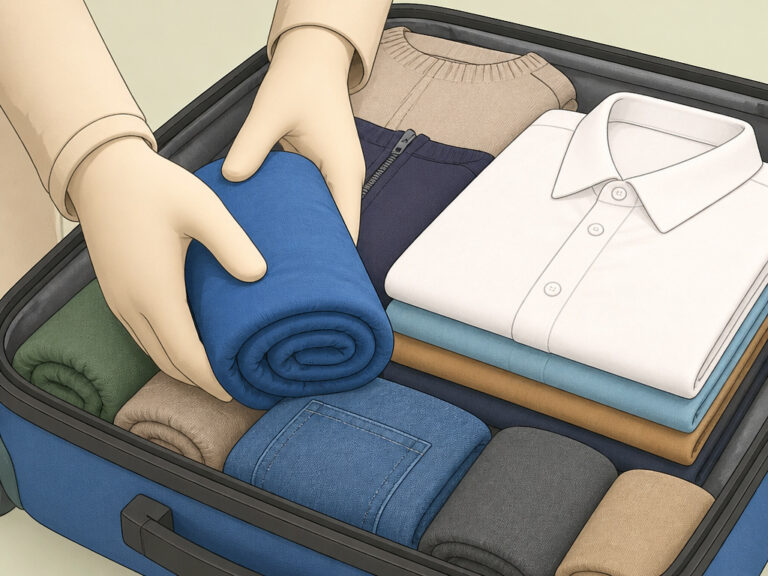
Roll soft, wrinkle-resistant items. This includes t-shirts, underwear, socks, leggings, and gym clothes. Roll them tight from the hem up. The compression saves up to 30% space compared to flat folding, and the slight creases that form shake out easily.
Fold structured, woven pieces flat. This includes button-down shirts, blazers, dresses, and trousers. Fold them with as few folds as possible. For dress shirts, use tissue paper or a dry-cleaning bag between layers, the slick surface lets fabric slide instead of crease when the suitcase lid presses down.
Bundle-wrap the one formal piece. For a single suit or delicate dress, use the bundle method. Lay the item flat and wrap softer rolled items (like t-shirts and underwear) around it as padding. The garment survives without a single hard fold line pressed into the fabric for days.
| Method | Best For | Why It Works | Risk If Skipped |
|---|---|---|---|
| Rolling | T-shirts, knits, underwear | Compresses fabric, saves up to 30% space | Bulky, inefficient packing; wasted volume |
| Flat Folding | Dress shirts, blazers, trousers | Protects structure and seams | Deep shoulder and knee creases that won’t hang out |
| Bundle Wrapping | One suit or formal dress | Avoids hard fold lines entirely | Permanent creases at fold points; garment may be unwearable |
Stand rolled items on their sides in your suitcase, like files in a drawer. This makes every item visible at a glance instead of buried under a flat stack you have to dig through at the hotel. Place folded items on top at the end.
Packing Cubes: The 75% Fill Rule and the Weight Trade-Off
Most people try packing cubes once, shove clothes in randomly, and decide they’re overrated. The cubes aren’t the product. The system is. Their primary job is organization, turning a suitcase into a set of drawers. A 3-5 piece packing cube set covers most two-week trips.
Common mistake: Stuffing a compression cube to 100% before sealing. The overfilled cube can’t compress evenly, creating hard lumps that prevent flat stacking. Fill the main compartment to 75% before using the compression zipper.
There is a weight trade-off. A typical set of 3-5 packing cubes adds about 150 grams to your load. They earn those grams on organization, not magic space creation. They corral each clothing category so nothing shifts into a single wrinkled mass. For genuine space savings on bulky items like fleece or down jackets, use a compression sack, it removes loft and recovers real volume.
Compression Cubes vs. Standard Packing Cubes
| Type | Typical Weight | Best For | Real Benefit |
|---|---|---|---|
| Standard Cubes | ~150g for a 3-5 set | Organization, category sorting | Finding items fast; no repacking scramble |
| Compression Cubes | Slightly heavier | Bulky sweaters, jeans, insulated layers | Removes air, can save 25-30% volume on compressible items |
| Compression Sack | ~100g for 2-3 bags | Down jackets, sleeping bags | Maximum volume reduction for lofty items |
Load cubes into your suitcase with their zippers facing the main opening. This sounds minor until you need a charger in a crowded overhead bin and can’t open a cube without turning the whole bag upside down. For a deep dive on packing a lot of clothes into a fixed space, compression cubes are the tool.
Load Order: Heavy at the Bottom, Essentials on Top
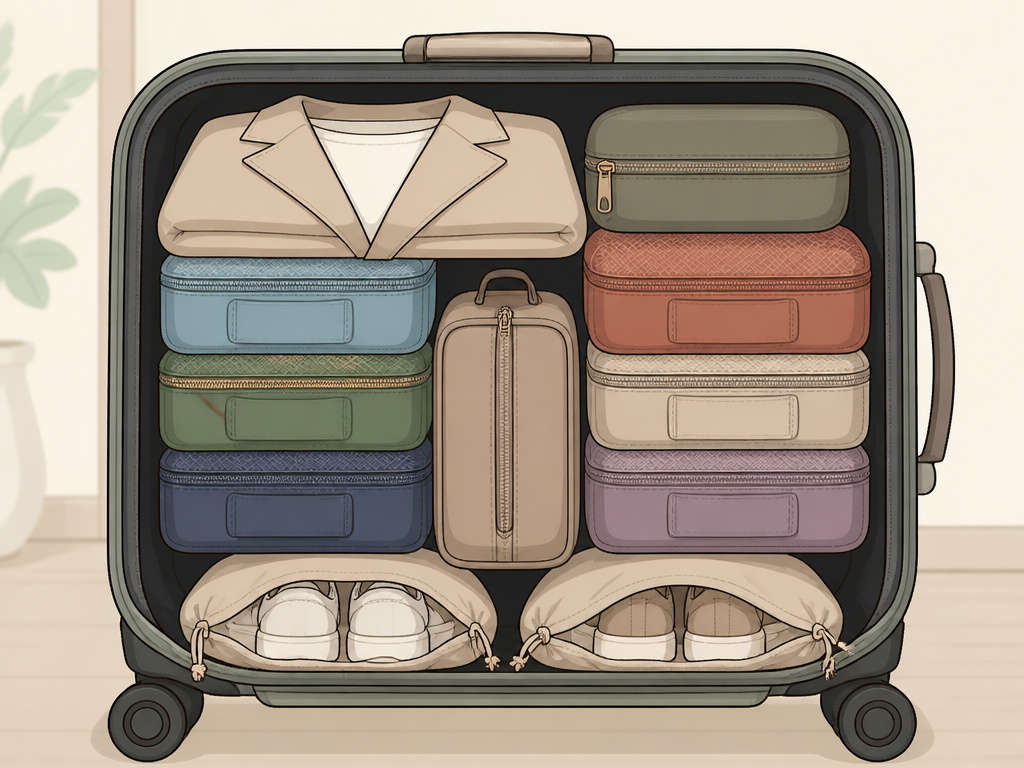
Where an item sits is as important as how it’s folded. Heavy items go at the bottom, near the wheels. This keeps the suitcase balanced when you wheel it, preventing it from tipping over. It also stops heavy objects from shifting onto and crushing lighter clothing mid-flight.
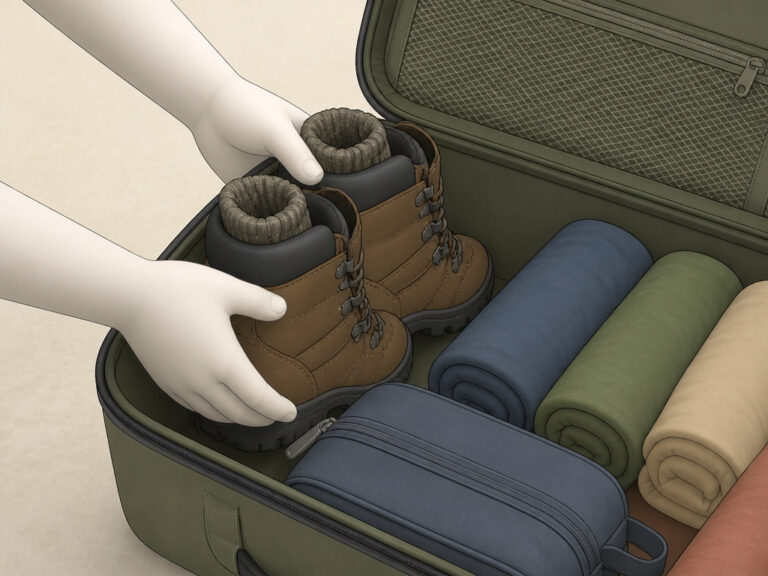
Follow this sequence: 1. Shoes. Place them in shoe bags or shower caps at the very bottom, soles against the suitcase wall. They are your heaviest items and provide a flat base. 2. Toiletry Kit. Set it upright in the middle-bottom layer. This minimizes leak risk and makes it fast to pull out at security. 3. Packing Cubes. Stand compressed cubes vertically around the toiletries. Place cubes holding heavier items (like jeans) lower down. 4. Folded Structured Items. Lay these flat on the very top. They experience the least pressure here, keeping creases to a minimum. 5. Last-Minute Essentials & Outer Layer. Your travel documents, a change of clothes, and a packable jacket get stuffed into any remaining gaps or in a dedicated top lid pocket.
This load order is the backbone of packing a carry-on suitcase efficiently. It ensures balance, protects delicate items, and keeps what you need first within easy reach.
The Airline Dimension Trap and Weight Reality

Your packing strategy is only as good as your container. A hard-shell spinner marketed as “22-inch carry-on” might actually measure 23 inches including wheels and handles. That one inch is the difference between the overhead bin and a $35 gate-check fee.
Airline carry-on rules are not universal. You must check your specific carrier’s policy 24 hours before packing. * Major U.S. (Delta, American): Typically 22″ x 14″ x 9″. Weight is rarely enforced domestically. * Budget U.S. (Spirit, Frontier): Typically 18″ x 14″ x 8″. Strictly enforced, with weights of 25-40 lbs. * International (Emirates, Lufthansa): Often 21.5″ x 15″ x 7.5″. Weight limits of 15-22 lbs (7-10 kg) are strictly enforced.
Where this goes sideways: Assuming a “22-inch” bag is universally acceptable. Budget and international carriers use smaller sizers. Always verify the operating carrier’s policy, not the one on your initial ticket confirmation.
Weight enforcement is inconsistent but costly. U.S. Major airlines rarely weigh bags at the gate. International and budget carriers do it religiously. An overweight fee can be $50 to $100. Weigh your packed carry-on luggage at home with a handheld scale. It’s the cheapest insurance you can buy.
Tools and Gear: What Actually Earns Its Space

This isn’t about buying more stuff. It’s about choosing the right tool for the physical job of compression and organization.
Packing Cubes: The Eagle Creek Pack-It Specter Compression Cube set is the benchmark for lightweight, effective compression. For a standard organizer set, the Amazon Basics 4-Piece Packing Cubes are a reliable start.
Luggage: The Away Carry-On is the default for a reason, it’s sized right, durable, and has a flat interior for clean cube stacking. For backpack-style travel where you need to avoid gate-check, the Osprey Farpoint 40 is the community standard. It holds as much as a rolling bag but fits under regional jet seats.
Compression Bags: For bulky, non-essential items like a spare jacket, a simple roll-up compression sack from Sea to Summit works. Don’t use it for your core wardrobe, it’s overkill and a pain to repack.
The goal is a system you can replicate trip after trip. The cubes, the formula, the load order, they become automatic. That’s how you go from forcing the zipper shut to having room to spare for souvenirs. For specifics on integrating items like packing shoes or packing shirts into this system, the method stays the same: contain, compress, and place according to weight.
Frequently Asked Questions
Does rolling clothes really save space?
Yes, for the right fabrics. Rolling soft, knit items like t-shirts and underwear can save up to 30% space compared to flat folding by eliminating air pockets. It does not work well for structured wovens like dress shirts or blazers, those need flat folding to prevent deep creases.
How do I prevent wrinkles when packing?
Use a three-prong approach: 1) For dress shirts, fold them flat with tissue paper or a dry-cleaning bag between layers to reduce friction. 2) For suits or dresses, use the bundle wrap method. 3) Place all folded, structured items on the very top of your suitcase load, where they experience the least compression.
Are packing cubes worth it?
They are worth their 150-gram weight for organization alone. They prevent clothes from shifting into a tangled mess, make unpacking and repacking fast, and help you see exactly what you’ve packed. For genuine space savings on bulky items, pair them with a separate compression sack for your jacket or sweater.
What is the most common packing mistake?
Overpacking “just in case” items that never get worn. The 5-4-3-2-1 formula is the direct antidote. The second most common mistake is not checking your airline’s exact carry-on dimensions and weight limit, leading to gate-check fees.
How can I pack heavier items like jeans or boots without going over the weight limit?
Wear your heaviest shoes and bulkiest jacket on the plane. Pack jeans and other dense items at the bottom of your suitcase in compression cubes to minimize their volume. Always weigh your packed bag before leaving for the airport.
What should I always keep in my carry-on?
Never check your essentials. Your carry-on essentials must include medications, travel documents, one full change of clothes, valuable electronics, and any item you can’t replace easily in the first 24 hours of your trip.
The Bottom Line
Efficient packing is a logic problem with physical constraints. The answer is always specific: your airline’s dimensions, your trip’s length, your fabric choices. Adopt the 5-4-3-2-1 formula as your item ceiling. Match your folding, roll, fold, or bundle, to the garment in your hands. Use packing cubes as organizers, filling compression ones to 75% to avoid lumps. Load heavy shoes low, keep essentials accessible, and always verify your airline’s real rules, not the bag’s label.
The system beats the list every time. It turns a stressful pre-trip chore into a ten-minute routine. You’ll close the lid with room to spare, wheel a balanced bag, and never pay a checked bag fee again.