How to Reset a Suitcase Lock & Avoid Common TSA Lock Jams
This post contains affiliate links. As an Amazon Associate, we earn from qualifying purchases.
To reset a suitcase lock, you need the current combination, a reset mechanism (button, lever, or pin), and a new code. Set the dials to the current code, engage the reset, turn to your new code, release the reset, and test. If you’ve forgotten the code, you cannot reset it yourself, a Samsonite Authorised Repair Centre or a locksmith must open it.
That last clause is the part that turns a routine task into a $100 service call. The lock isn’t broken; the memory is. And on newer TSA locks, there’s a second, sneakier path to the same outcome: changing the dials while the lock is open but the reset isn’t engaged. Do that once and your known code stops working, because you just set a new one without knowing it.
What follows is the map for the five most common lock types, the one physical mistake that jams them, and what you actually do when the factory instructions don’t work.
Key Takeaways
- All factory defaults are 0-0-0. Start there for any new or unset lock.
- You must know the current code to set a new one. If forgotten, professional intervention is required, user reset is impossible.
- Never turn the dials while the lock is open unless you’re actively resetting. This accidentally sets a new combination on many TSA models.
- Match the reset mechanism to your lock type: metal button (Delsey), interior A/B switch (Samsonite Style 4), TSA access slider (Briggs & Riley), or recessed pin.
- TSA cable locks operate separately from built-in zipper locks. Their reset is often a small button on the bottom of the lock housing.
The Universal Reset Pattern (and Why It Fails)
Every combination lock on luggage follows the same basic sequence. The failure happens when a user assumes their lock matches the generic advice.
Set the dials to the current combination. Press and hold the reset mechanism, a button, lever, slide, or pin. While holding, turn the dials to your new three-digit code. Release the reset mechanism. The new code is now set. Test by locking the mechanism, scrambling the dials, then entering your new code to unlock.
That’s the commodity answer. It’s correct, and it’s what every manufacturer’s website will tell you. It’s also useless if you don’t know which physical mechanism on your lock is the reset, or if you’ve already lost the current code.
The first practical step isn’t in the manual: identify your lock. Is it a built-in lock securing the zippers of a softside suitcase? Or is it a separate TSA cable lock threading through the zippers of a hardside case? The reset process is different, and applying the wrong one does nothing.
TSA Cable Lock vs. Built-In Lock: Reset Differences
These are two distinct devices. A built-in lock is part of the suitcase’s shell. A TSA cable lock is a separate accessory that can be used on multiple bags. Confusing them guarantees a frustrating hour.
TSA Cable Locks (like the Samsonite Lock Style 7 or Briggs & Riley cable lock) have a flexible metal cable that threads through the zipper pulls. The reset is usually a small, recessed button on the bottom or side of the plastic lock body. You need a pen tip to press it.
Built-In Zipper Locks are molded into the suitcase frame. Their reset mechanism varies wildly: a metal button beside the dials (Delsey), a sliding switch inside the suitcase (Samsonite Style 4), or a rubberized TSA access slider on the side (common on Briggs & Riley softside luggage).
| Lock Type | Common Reset Mechanism | Visual Identifier | If You Skip the Reset Step |
|---|---|---|---|
| TSA Cable Lock | Recessed button on lock bottom | Detachable cable, plastic housing | New code won’t save; lock reverts to old code |
| Delsey Built-In | Metal button near zippers | Button is external, next to dials | Button won’t depress if dials aren’t set first |
| Samsonite Style 4 | Interior A/B switch | Open suitcase, look for small sliding switch | Switch won’t move; combination cannot be changed |
| Briggs & Riley TSA | TSA access slider | Rubberized slider on lock’s side | Slider moves but doesn’t engage reset function |
The guide to setting a suitcase lock on our site breaks down each type with specific visuals. If you’re holding a cable lock, you’re following a different set a TSA lock procedure entirely.
Step-by-Step: Resetting 5 Major Brand Locks
These steps are drawn from the manufacturers’ official instructions. The “why” for each step is the physical lock mechanism, skip one and the internal levers don’t align.
1. Delsey Paris Lock
Reset Mechanism: External metal button. 1. Set the three dials to your current combination. For a new lock, this is 0-0-0. 2. Use a pen or paperclip to press and hold the small metal button located next to the zipper pulls. 3. While holding the button, turn each dial to your new desired combination. 4. Release the reset button. 5. Test: Slide the lock to the locked position. Scramble the dials. Enter your new code and slide to unlock. If it doesn’t open, you didn’t hold the button throughout step 3.
2. Samsonite Built-In Lock (Style 4 with A/B Switch)
Reset Mechanism: Interior sliding switch. 1. Open your suitcase. Locate the A/B switch on the inside of the lock housing. 2. Set the dials on the outside to your current combination. 3. Slide the interior switch from “A” to “B”. You will feel it click. 4. On the outside dials, set your new combination. 5. Slide the interior switch back from “B” to “A”. 6. Test: Close the suitcase. Scramble the dials. Enter your new code and attempt to slide the lock open.
3. Briggs & Riley TSA Access Lock
Reset Mechanism: Side-mounted TSA access slider. 1. Set the dials to 0-0-0. This lock requires the default to begin reset. 2. Push the TSA access slider in the direction of the arrow to unlock the zippers. 3. On the inside of the bag, directly behind the lock, locate the lock access pocket. Open it. 4. Inside, find and push the small reset pin with a pen. Hold it down. 5. While holding the pin, set the outside dials to your new combination. 6. Release the pin and close the access pocket. 7. Test: With the new code set, lock the zippers. Scramble the dials. Enter your new code and push the TSA slider.
4. Common TSA Cable Lock
Reset Mechanism: Recessed button on lock body. 1. Set the dials to the current combination (0-0-0 if never set). 2. Press the unlock button to release the cable from the housing. 3. Locate the tiny reset button on the bottom or side of the lock housing. Press and hold it with a pen tip. 4. While holding, set the dials to your new combination. 5. Release the reset button. 6. Test: Retract the cable. Scramble the dials. Enter your new code and press the unlock button.
5. RIMOWA Locks
Reset Mechanism: Integrated button or lever. For RIMOWA’s common lever-style lock: 1. Set dials to 0-0-0. Move the lever up to release the zipper pullers (open the lock). 2. Move the lever to cover the word ‘code’ on the lock face. Hold it there. 3. While holding the lever, set the dials to your new combination. 4. Release the lever. 5. Test: Move the lever to unlock. Scramble dials. Enter new code and lift lever.
Where this goes sideways: Turning the dials after opening the lock but before engaging the reset. On many TSA locks, this action alone changes the combination. You’ll close the suitcase, enter your old code, and find it permanently jammed. The fix is decoding, not resetting.
What to Do When You’ve Forgotten the Combination
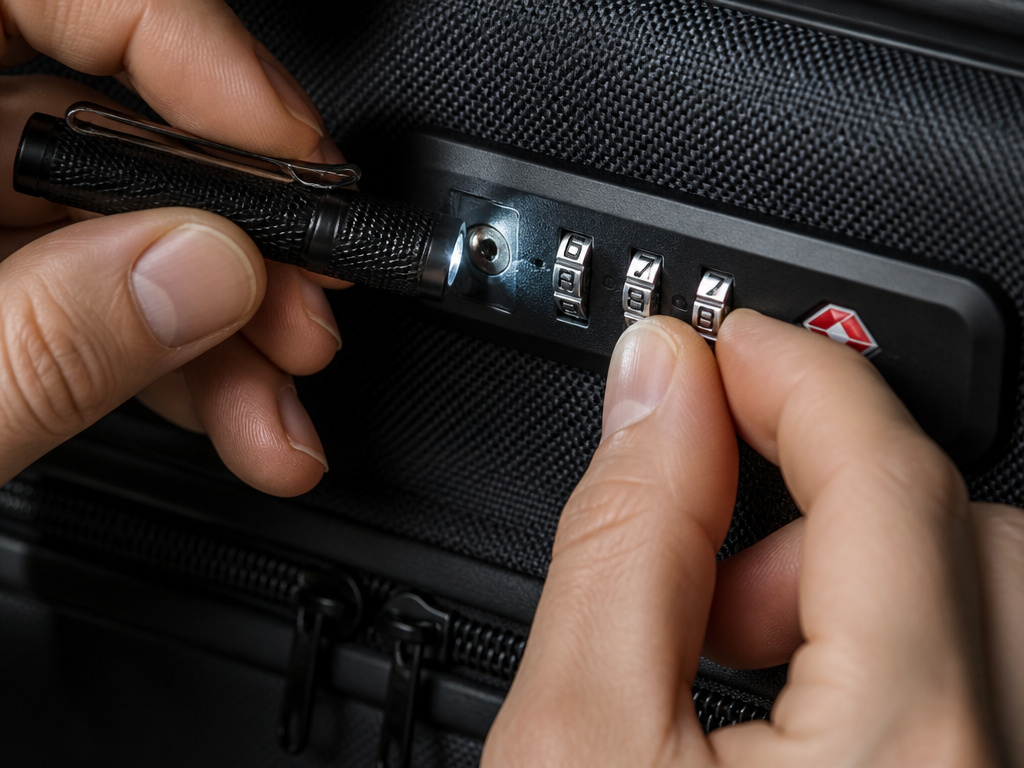
This is the hard stop. If you do not know the current combination, you cannot reset the lock. The internal mechanism is designed to prevent exactly that.
Samsonite’s official stance is clear: “If you’ve forgotten your combination, you will need assistance from a Samsonite Authorised Repair Centre to unlock your suitcase.” This is not a suggestion; it’s a statement of mechanical fact. The same applies to Delsey, Briggs & Riley, and other major brands.
Your options are: 1. Contact an Authorized Repair Center. This is the manufacturer-sanctioned path. They have the tools to open the lock without destroying it. It is a paid service. 2. Visit a Locksmith. A skilled locksmith can decode the lock in minutes, often for less than the repair center charges. This is the most reliable DIY-adjacent solution. 3. Attempt Decoding (Last Resort). Some locks have a small inspection hole next to each dial. Using a bright light, you can rotate each dial until you see a notch or hole align. Then, you systematically rotate all three dials together (e.g., +1, +1, +1) and try the lock. This can work in under 10 tries but risks damaging the mechanism if forced.
Common mistake: Thinking a forgotten combination is a “reset” problem. It’s an “access” problem. You must gain access first, which means opening the lock by means other than the combination. After it’s open, then you can follow the reset steps to set a new, memorable code.
The One Physical Mistake That Jams TSA Locks
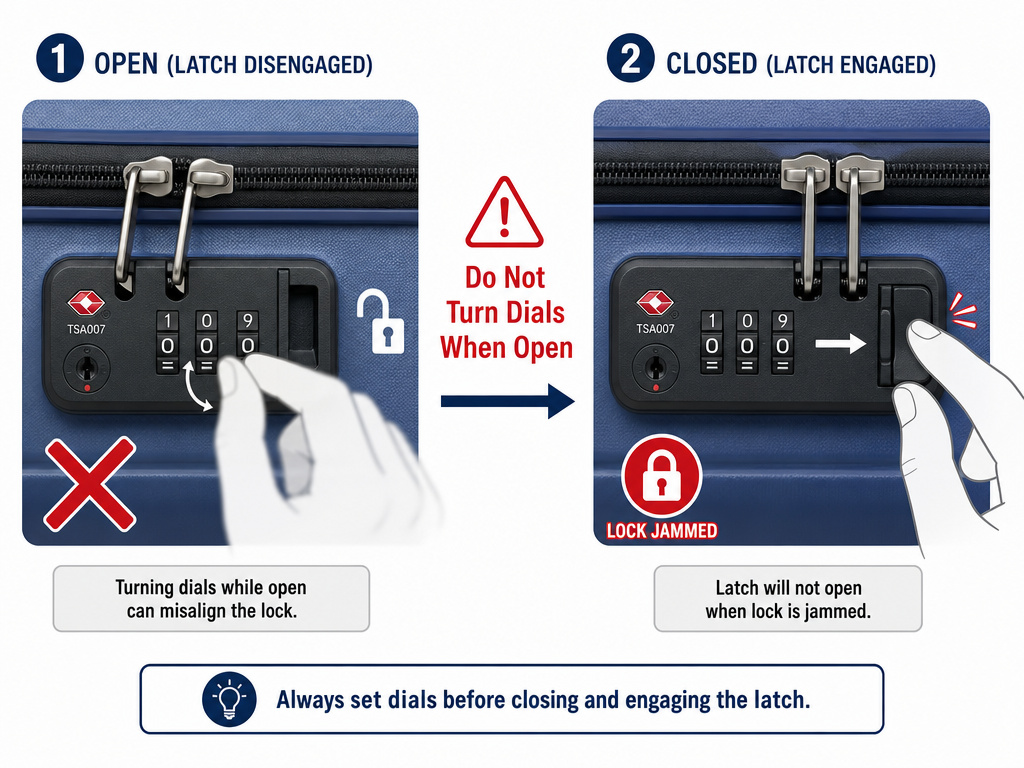
There’s a specific user error that doesn’t involve forgetting a code. It happens with the lock open.
On many modern TSA locks, the moment you open the lock (by sliding the button or lever) and then turn the dials, you are setting a new combination. The reset button doesn’t need to be pressed. The mechanism interprets dial movement while unlatched as a user-initiated change.
The consequence is immediate. You close the lock, try your old code, and it fails. The lock is now secured with a code you never consciously set.
The fix is decoding, as outlined above. The prevention is simple: once your suitcase is open and unlocked, do not touch the dials. If you must adjust them, immediately re-lock and test the new code before walking away. This quirk is why so many travelers get TSA lock jams right before a flight, they checked their bag, moved the dials absently, and sealed their own suitcase.
This also highlights why understanding your airline’s backpack on a plane rules matters. If your backpack is your personal item backpack, you’re less likely to need to re-lock a checked bag in a panic at the gate, which is when these mistakes happen.
Frequently Asked Questions
Can I reset my suitcase lock without the current code?
No. The reset function requires the lock to be in the “open” state mechanically, which is only achieved by entering the current combination. If the code is lost, you must have the lock opened by a professional via decoding or a master key (for TSA locks) before a new code can be set.
Why won’t my reset button press down?
Two reasons. First, the dials are not aligned on the current combination. The button is mechanically blocked until the internal tumblers align. Second, on some locks, the button only works when the lock is in the “open” position. Ensure the zippers are released before pressing reset.
Are all suitcase locks preset to 0-0-0?
Yes, every major brand (Samsonite, Delsey, Briggs & Riley, RIMOWA) ships its locks with a default combination of 0-0-0. This is your starting point for a new bag or after a factory reset performed by a repair center.
Can TSA open my locked suitcase?
Yes, but only if you use a TSA-approved lock. These have a special keyway that allows TSA officers to use a master key to open, inspect, and relock your bag without breaking the lock. Non-TSA locks will be cut. Always look for the red diamond logo.
My lock is jammed and I know the code. What now?
This is often the “accidental reset” scenario. Try the decoding method: look for alignment marks, then test incremental changes. If that fails, or if you’re facing a tight flight deadline like those navigating strict Spirit Airlines backpack size limits, a locksmith at the airport may be your fastest solution.
Before You Go
Resetting a suitcase lock is a three-part process: know your code, find your specific reset mechanism, and never turn the dials idly. The default 0-0-0 is your friend for new bags. The moment you forget your code, your path leads to a repair center or locksmith, not a YouTube hack.
For most travelers, the simplest path is to set a memorable code once, using your brand’s official steps, and then leave it alone. Treat the combination like your phone passcode: you don’t change it while distracted at the airport. And if you’re flying an airline with tight personal item rules like Frontier or Spirit, your mental energy is better spent sizing your backpack as carry-on than fiddling with a lock you’ll just have to open for security anyway.