Can I Keep My Backpack With Me on a Plane? What You Must Know
This post contains affiliate links. As an Amazon Associate, we earn from qualifying purchases.
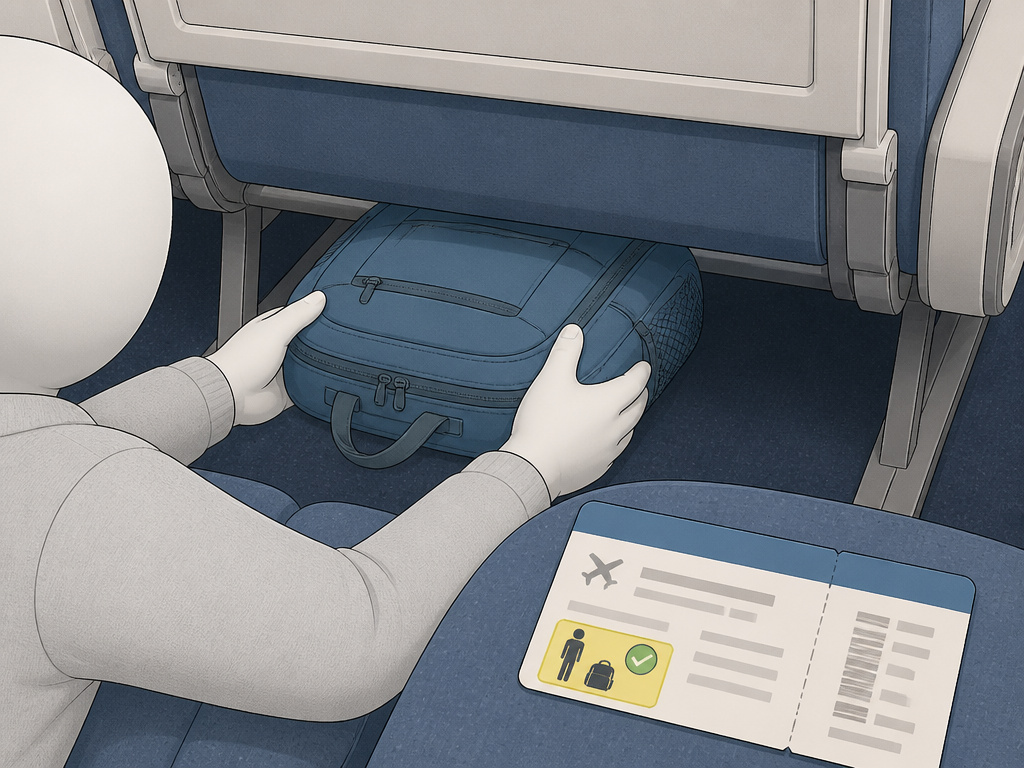
Yes, you can keep your backpack with you on a plane, but only if it fits completely under the seat in front of you. That is the FAA’s legal definition of a personal item. If it’s too large for that space, it counts as your one carry-on bag and must go in the overhead bin. If the bins are full, your backpack gets gate-checked into the cargo hold, no exceptions.
The “under the seat” clause is where most confusion starts. A backpack that slides under with room to spare is yours for the flight. One that jams against the seat leg becomes a problem for the flight crew, and federal regulation 14 CFR § 121.589 requires them to solve that problem before the door closes.
What follows are the three layers that decide your backpack’s fate: airline size rules, physical stowage reality, and the non-negotiable safety rules for lithium batteries. By the last section you’ll know exactly how to pack to guarantee your bag stays at your feet.
Key Takeaways
- Your backpack is a personal item only if it fits under the seat. If it doesn’t, it consumes your one carry-on allowance.
- Flight crews are legally required to verify stowage before departure per FAA § 121.589. A bag blocking an aisle or crammed in an overhead bin gets pulled.
- Lithium batteries and power banks must stay in the cabin. A backpack with a non-removable battery, like a smart luggage, must be carry-on per a 2019 ICAO rule.
- IATA’s standard carry-on size is 22 x 18 x 10 inches, but your airline’s specific “sizer” box is the final judge.
- If the cabin runs out of space, backpacks are the first bags gate-checked. Always remove batteries and valuables before handing it over.
The Two-Bag Rule: Carry-on vs. Personal Item
Most airlines use a “one plus one” system: one carry-on bag for the overhead bin, plus one personal item for under the seat. Your backpack almost always counts as the personal item. This isn’t a courtesy, it’s a space-management calculation baked into the aircraft’s certification.
A personal item must not obstruct the aisle or impede emergency egress. The official test is the under-seat clearance, which varies by aircraft but generally needs about 18 inches wide, 14 inches deep, and 8 inches tall. A stuffed hiking pack fails. A slim daypack or a 30-liter backpack usually passes.
Common mistake: Assuming a backpack is automatically a personal item. If you also bring a rolling suitcase as your carry-on, the backpack must still fit under-seat. Trying to put both in the overhead bin is a quick way to get flagged by the crew.
The IATA passenger baggage rules set a global baseline, but your ticket’s terms are what matter. A basic economy fare on Frontier or Spirit often strips the overhead bin right away, allowing only a single personal item that must fit under the seat. In that case, your backpack is your only bag.
| Bag Type | Standard Allowance | Where It Goes | What Happens If It’s Too Big |
|---|---|---|---|
| Carry-on Bag | One per passenger | Overhead bin | Gate-checked to cargo hold |
| Personal Item (Backpack) | One per passenger | Under seat in front | Treated as your carry-on; if bins are full, it is gate-checked |
| Basic Economy Personal Item | Often the only bag allowed | Must fit under seat | Denied at gate; forced to pay a fee to check it |
Size Limits: The Numbers and The Reality
The IATA cites common maximum dimensions of 56 x 45 x 25 cm (22 x 18 x 10 inches), including wheels and handles, for a carry-on. Personal items are smaller, but rarely given a precise measurement. They use a simpler rule: if it fits under the seat without forcing it, it’s fine.
This is where the “sizer” box at the gate comes in. Airlines like Ryanair and Spirit are notorious for using them. Their sizer dimensions are the law for that flight. A 40-liter backpack might be technically carry-on sized, but if it’s overstuffed and won’t slide into the metal box, you’re paying a fee.
Forget the listed dimensions of your backpack when empty. The real test is its packed dimensions. Load it up, then measure from the furthest protruding point, often a stuffed front pocket or a water bottle side sleeve. That’s the number that matters.
Where this goes sideways: Relying on a manufacturer’s “airline approved” label. That label is based on empty dimensions. Your packing job determines compliance, not the tag.
Weight limits are a secondary check. While U.S. Carriers rarely weigh carry-ons, some international airlines enforce a 5 kg (11 lb) limit for personal items. A backpack filled with tech gear, a heavy laptop, and books can easily hit 20 pounds. On those airlines, they will weigh it at check-in.
The Legal Floor: FAA and TSA Regulations

The operational rules come from the FAA regulation § 121.589, titled “Carry-on baggage.” It doesn’t talk about inches or fees. It mandates procedure: before any passenger door is closed for departure, a crewmember must verify every bag is properly stowed. A bag blocking an aisle, crammed in an overhead so the bin won’t latch, or sticking out from under a seat fails this verification.
The crew’s authority here is absolute. They can, and will, remove your backpack to the cargo hold to comply with this federal safety rule. This is the “gate-check” you hear announced on full flights.
FAA Carry-On Baggage circular AC 121-29B advises airlines that carry-on programs should ensure bins close without force and items won’t fall out when opened. Your overstuffed backpack is the exact scenario this guidance targets.
The TSA’s role is security, not size. The TSA What Can I Bring list determines what’s inside your backpack. A prohibited item found during screening gets confiscated, but the TSA agent won’t stop you for a bag that’s slightly too big. That’s the airline’s job at the gate.
The disconnect causes confusion. You can sail through security with a massive backpack, only to be stopped at the gate. They are enforcing different rulebooks.
Lithium Batteries: The Non-Negotiable Safety Layer

This is the most critical section for modern travel. Rules for batteries aren’t about convenience; they are fire-suppression protocols. The FAA PackSafe for passengers states it plainly: power banks and spare lithium batteries must remain with passengers in the aircraft cabin.
Why? A lithium battery fire in the cabin can be seen and suppressed with onboard halon extinguishers. A fire in the cargo hold, where temperatures can swing and no one is watching, can be catastrophic. This is why the rules are strict and non-negotiable.
| Battery Type | Capacity Limit | Where It Must Be | Special Rule |
|---|---|---|---|
| Lithium-ion (Power banks, laptop batteries) | < 100 Wh (ICAO) / < 160 Wh (FAA) | Carry-on baggage only | Terminals must be protected from short circuits |
| Spare Lithium-ion Batteries | < 100 Wh | Carry-on baggage only | Each must be individually protected (tape terminals, original box) |
| Devices with non-removable batteries (Smart luggage, some bluetooth trackers) | Any | Carry-on baggage only (unless battery is removed) | Per ICAO 2019 rule |
| Damaged or Recalled Batteries | Any | Not allowed on aircraft at all | Must be removed or made safe |
The 2019 ICAO rule is a game-changer for backpacks with built-in batteries. If your backpack has a USB charging port, a GPS tracker, or a built-in light powered by a non-removable battery, it must be carried in the cabin. If you can’t remove the battery, you can’t check the bag. This stems from a PHMSA interpretation that treats such luggage as a portable electronic device.
Easy to miss: The “spare battery” rule includes any battery not installed in a device. A loose camera battery rolling in your backpack’s front pocket is a violation. Tape the terminals or use a plastic case.
For large quantities, think a photographer with eight camera batteries, you need operator approval in advance. The airline may require batteries to be at a low state of charge (<25%) and physically separated from each other.
Airline-Specific Backpack Policies
While the safety rules are global, how airlines count your backpack varies wildly. Budget carriers monetize the overhead bin, making the under-seat backpack their revenue battleground.
Frontier and Spirit are the strictest. Their basic fares include only one personal item that must fit under the seat. A standard carry-on backpack that heads for the overhead bin costs extra, purchased in advance or at the gate for a significantly higher fee. Their Spirit backpack fee structure is designed to push you to buy a bundle.
Delta, American, and United follow the standard “one plus one” model. Your backpack is your personal item. They are generally lenient at the gate unless the flight is full. However, their Delta carry-on rules still require the backpack to fit under the seat if you also have a roller bag.
Southwest stands out. They allow two checked bags free and are generous with carry-ons. Their Southwest policy lets you bring a backpack and a larger carry-on without a second thought, as long as both fit in the overhead bin or under the seat. They rarely gate-check.
Always check your airline’s website the day before travel. Policies change, and basic economy rules are constantly being tweaked.
Packing to Guarantee Your Backpack Stays With You
Packing isn’t just about what you bring. It’s about shaping the bag to pass the physical tests. Use these steps to lock in your bag’s place under the seat.
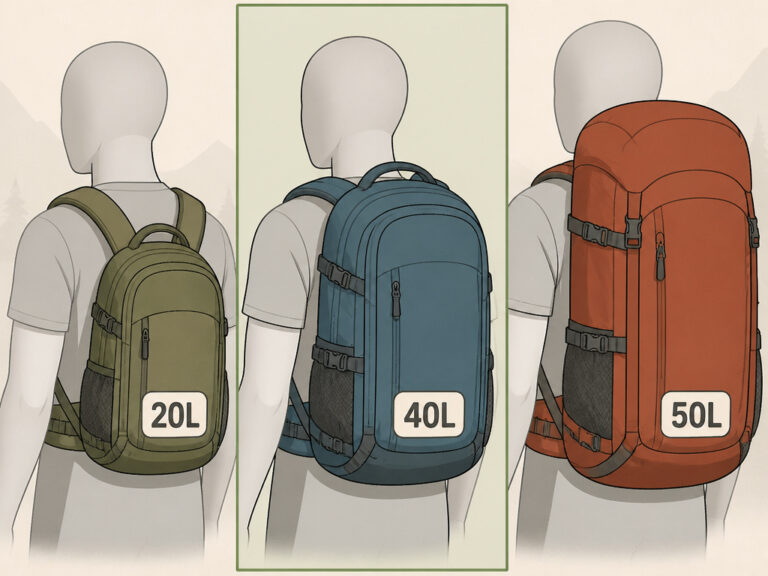
- Choose the Right Backpack. Start with a bag designed for travel, not hiking. A 40L backpack size is often the maximum for carry-on. For a personal item, aim for a 20-30L pack with minimal external bulk.
- Do a Home Fit Test. Load your backpack for the trip. Slide it under a chair in your dining room. If it touches the seat leg or sticks out into your footspace, remove items. The goal is a 2-inch clearance on all sides.
- Organize for Security and Access. Use packing cubes. Keep your laptop and liquids in an easy-to-reach sleeve. This speeds up TSA screening and lets you pull your power bank out quickly if asked.
- Protect Your Batteries. Put every spare battery, including small ones for headphones, in a small zip-top bag with the terminals taped. Keep this bag at the top of your pack. If you’re checking a backpack at the gate, you’ll need to grab this bag and any devices.
- Be Ready to Compress. If the gate agent looks skeptical, be prepared to quickly unclip and squeeze your backpack. Compression straps are not just for hiking; they’re a compliance tool.
What most people get wrong is packing for the destination, not for the journey. You need a bag that travels well first. You can always unpack and rearrange later.
What to Do If Your Backpack is Gate-Checked
It happens. The flight is full, the bins are packed, and the agent tags your backpack for the cargo hold. Don’t panic. Follow this sequence.
First, remove all lithium batteries and valuables. Take out your power bank, laptop, camera, medications, and any fragile items. This is mandatory by law for the batteries and critical for your valuables. Put them in a small tote or just carry them.
Second, secure your bag. Zip all compartments fully. If you have a backpack as luggage with dangling straps, wrap them around the bag or tuck them in. Loose straps get caught in conveyor belts.
Third, get a claim check. Ensure the gate agent gives you a baggage claim ticket. Your gate-checked bag will usually be returned plane-side at your destination, not at the main carousel. Listen for announcements.
The part nobody mentions: Gate-checking often happens in the jet bridge. It’s loud and rushed. Have your battery bag and valuables ready before you step onto the bridge. Fumbling at the aircraft door holds up the line and increases the chance you’ll forget something critical inside.
Frequently Asked Questions
Can I have a backpack and a carry-on suitcase?
Yes, on most full-service airlines. The backpack is your personal item (under the seat) and the suitcase is your carry-on (overhead bin). On budget airlines like Frontier or Spirit basic economy, you typically must choose one or the other.
What if my backpack is slightly too big for under the seat?
If it’s only slightly too big, you might get away with it on a half-empty flight. On a full flight, the flight attendant will ask you to place it in the overhead bin. If the bins are full, it will be gate-checked.
Are there backpacks that are TSA approved?
“TSA approved” refers to laptop compartments that unzip flat so the laptop can stay in the bag during X-ray screening. It has nothing to do with the bag’s size or its allowance as a personal item. A TSA-friendly backpack still must fit under the seat.
Can I put pins or patches on my backpack?
Yes, but sparingly. The TSA and pins aren’t prohibited, but a bag covered in thick, metal pins could trigger additional screening as the X-ray image becomes cluttered. Security has the discretion to swab or search it.
Do I need to take my backpack out at security?
Yes. You must remove your laptop and any large electronics (like tablets) and place them in a separate bin. You also must follow the 3-1-1 liquids rule. Your backpack itself goes through the X-ray machine in its own bin.
Before You Go
Your backpack’s place on the plane comes down to three yes/no questions. Does it fit under the seat? Does it contain any lithium batteries? Is there physical space in the cabin where it’s supposed to go?
Pack with those questions in mind. Choose a bag you know will slide under-seat. Treat your batteries with the seriousness the FAA hazardous materials guide demands, tape the terminals, keep them accessible. And always be mentally prepared to hand over the bag at the gate if the overhead bins fill up.
That preparation is what separates a smooth boarding process from a frantic, last-minute unpacking session at the jet bridge. Your backpack can stay with you. You just have to pack for the rules, not just the trip.