Can You Bring a Backpack and a Carry-On on Delta? FAA Rules
This post contains affiliate links. As an Amazon Associate, we earn from qualifying purchases.
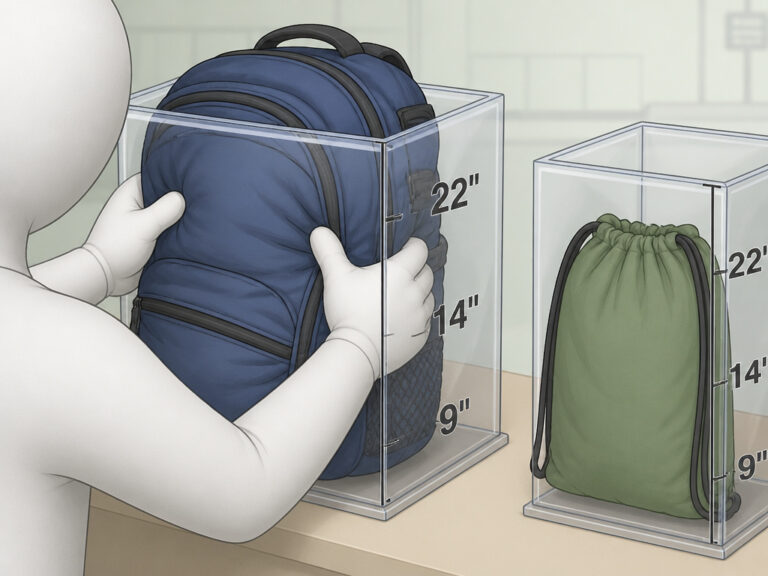
Yes, Delta allows you to bring one carry-on bag and one personal item, such as a backpack, on board for free. The carry-on must fit in the overhead bin (max 22″ x 14″ x 9″), and the personal item must fit under the seat in front of you. This policy is enforced by the FAA, not just Delta. The only exception is on Delta Connection flights with 50 seats or less, where only the personal item is guaranteed to stay with you.
That FAA-mandated size ceiling is the line between your bag flying with you and it flying in the cargo hold. On a crowded flight, even a compliant bag can get a pink gate-check tag. The backpack you counted on for your laptop and meds is then out of reach until you land.
What follows is a breakdown of the three specs that matter: the FAA dimensions, the difference between a carry-on and a personal item, and the small-jet rule that catches frequent flyers off guard. By the end, you’ll know exactly which bag goes where and how to pack so a last-minute gate check doesn’t strand your essentials.
Key Takeaways
- Delta’s policy is one FAA-sized carry-on (22″ x 14″ x 9″) plus one personal item like a backpack.
- On Delta Connection flights with 50 seats or less, only your personal item is guaranteed cabin space.
- A gate agent can pink-tag any bag for a free planeside check if the flight is full.
- Your backpack is a personal item only if it fits under the seat; oversized backpacks count as your carry-on.
- Delta assumes no liability for items in the overhead bin unless they are given to crew for storage.
The One Carry-On + One Personal Item Rule (And Its Limits)
Delta’s standard allowance is clear: one carry-on for the overhead bin, plus one personal item for under the seat. This practice is an industry standard built around Federal Aviation Administration (FAA) regulations that dictate how much can safely be stored in cabin compartments.
The 22″ x 14″ x 9″ carry-on limit is the FAA’s rule. Delta’s gate agents use those dimensions because they have to. Exceed them, and your bag gets checked, no debate.
The FAA mandates that all carry-on items fit under a seat or in an enclosed storage compartment. Delta’s 22″ x 14″ x 9″ limit is the maximum size for overhead bin storage.
The personal item rule has more wiggle room, but the principle is the same. It must be an item “of similar size” to a purse, laptop bag, or small backpack that fits under the seat. Flight attendants won’t measure your backpack with a tape measure at the jet bridge. They will look at it. If it looks like it belongs in the overhead, they’ll point you there, and if that space is your carry-on’s spot, you now have a problem.
Where this goes sideways: Assuming your bulging travel backpack qualifies as a personal item. A packed 40-liter hiking backpack might meet the 22″ height limit, but its depth will push it under the seat and into the legs of the person behind you. That’s when a flight attendant asks you to move it to the overhead, consuming your one carry-on slot.
The 50-Seat Jet Exception Everyone Forgets
The most important limit concerns the plane itself. If you’re booked on a Delta Connection flight operated with a regional jet carrying 50 seats or less, the policy changes.
On those flights, only personal items are permitted in the cabin due to severely limited overhead space. Your roller bag will get a pink Gate Claim/Planeside tag at the boarding door, be loaded in the cargo bin, and be returned to you on the jet bridge after landing. This is a free service, but it means your carry-on is inaccessible during the flight.
You won’t always know you’re on a 50-seater until you get to the gate. Check your aircraft type when you check in. If it says “Embraer ERJ-145” or “CRJ-200,” plan to pack all flight essentials in your personal-item backpack.
| Flight Type | Carry-On Allowed? | Personal Item Allowed? | Where Bags Go |
|---|---|---|---|
| Mainline Delta (A320, 737, etc.) | Yes (overhead bin) | Yes (under seat) | Standard overhead/under-seat |
| Delta Connection (>50 seats) | Yes (space permitting) | Yes (under seat) | Overhead or gate-check if full |
| Delta Connection (≤50 seats) | No | Yes (under seat only) | Carry-on is gate-checked planeside |
What Counts as a Personal Item?
Delta’s official list includes a purse, briefcase, small backpack, belt bag, camera bag, or diaper bag. A laptop bag is also explicitly called out. The key adjective is “small.”
A personal item is defined by its job: it must stow under the seat in front of you without blocking your emergency exit path. This is a safety regulation. An aisle-blocking bag during a rapid evacuation is a hazard the crew is trained to spot.
Common mistake: Using a full-size travel backpack as a personal item. If you have to force it under the seat, it’s too big. It will be reclassified as your carry-on on the spot.
For most travelers, the sweet spot is a backpack with a slim profile, around 18″ tall or less. Brands like Patagonia’s Refugio 26L or the Osprey Daylite Plus are designed to this scale. They hold a laptop, a book, headphones, and a jacket without bulging.
The best personal items are soft-sided and malleable. A structured leather briefcase might hit the dimensions on paper, but its rigid frame won’t compress under a seat crammed with wiring and brackets. A nylon backpack or a tote bag conforms to the space.
TL;DR: Your personal item must be truly under-seat sized. When in doubt, use a backpack you’d carry to a coffee shop, not one you’d take on a weekend hike.
Can Your Backpack Be Your Carry-On?
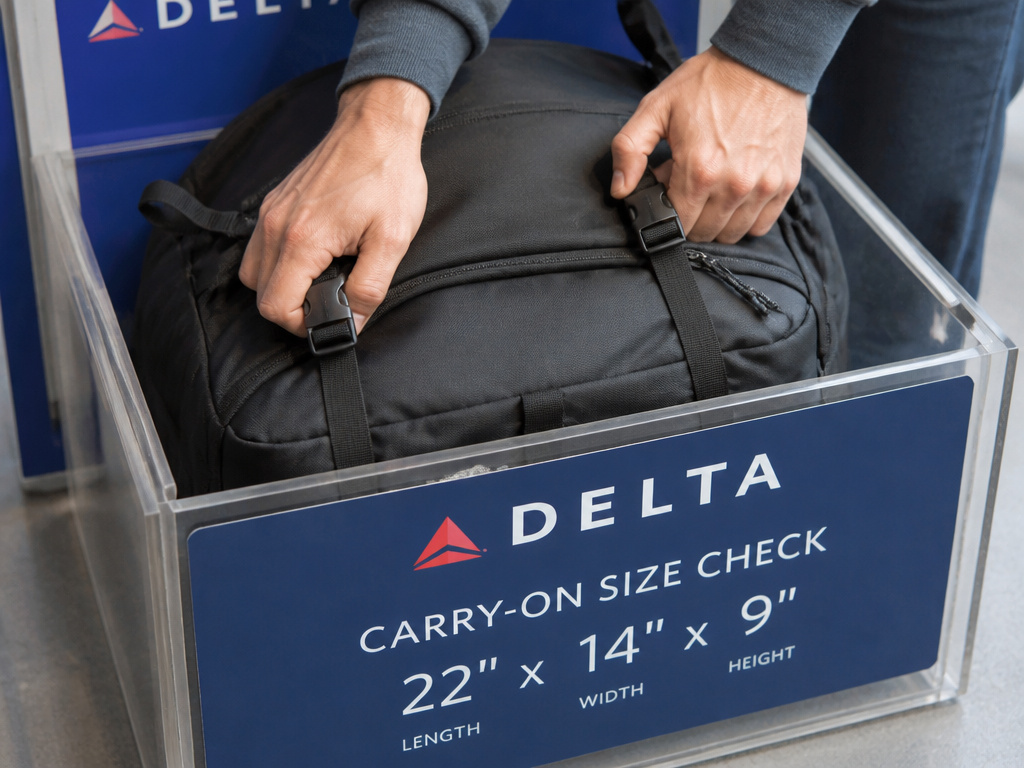
Absolutely. If your backpack is your only bag, or if it’s too large for under-seat storage, it becomes your one permitted carry-on item. It must then comply with the 22″ x 14″ x 9″ overhead bin limit.
Many travel backpacks, like the popular Peak Design Travel Backpack 45L or the Tortuga Outbreaker, are designed to these exact dimensions. They often include compression straps to ensure they fit the sizer at the gate. This is a legitimate strategy, especially if you prefer one-bag travel.
The trade-off is accessibility. Once your backpack is hoisted into the overhead, it’s gone until you land. You can’t grab your laptop, a snack, or medication mid-flight. This is why the two-bag system, a small personal item backpack plus a carry-on suitcase, is the default for business travelers and families.
If you go the one-bag route with a backpack, pack your in-flight essentials (tablet, charger, water bottle) in a separate, ultra-slim pouch or foldable tote you can pull out before stowing the main bag. Stash that pouch in your seatback pocket.
Navigating Gate Checks and Overhead Bin Wars

Even with a perfectly sized bag, you might not keep it with you. Delta’s contract of carriage explicitly states that gate personnel “may need to further limit the amount of carry-on baggage” based on cabin storage and passenger load.
On a full flight, the gate agent will announce that they are checking carry-on bags for free. This is a voluntary gate check. You can choose to keep your bag and race to find overhead space, or you can surrender it, get a pink tag, and pick it up planeside after landing.
Easy to miss: The pink Gate Claim/Planeside tag. If your bag gets this tag, it does NOT go to the regular baggage claim. You collect it on the jet bridge as you disembark. Walking to baggage claim means leaving your bag behind.
If you let them gate-check your roller bag, your personal-item backpack becomes your lifeline. This is the moment your packing strategy is tested. Did you put your prescription meds, car keys, or a fragile souvenir in your carry-on suitcase? They’re now inaccessible for the duration of the flight.
The Reddit thread where a passenger’s carry-on was taken from the overhead bin underscores this risk. Delta’s liability for loss or damage to unchecked carry-ons is extremely limited. The contract states they are not liable unless the bag is “given to our personnel for storage.” A bag in the overhead bin is in your custody, not theirs.
The fix: Treat your personal-item backpack as your critical-items vault. Your passport, medications, valuable electronics, and a change of clothes should live there. Assume your overhead carry-on could vanish until baggage claim.
How to Choose and Pack Your Backpack for Delta

Your choice of backpack dictates your travel experience. Start by deciding its role: personal item or primary carry-on.
For a personal-item backpack, target dimensions under 18″ x 14″ x 8″. Look for features that maximize under-seat utility: – A sleek, rectangular shape (not a rounded, bulbous hiking pack). – A separate, padded laptop sleeve that lies flat against your back. – Minimal external loops or straps that can snag.
The Bellroy Classic Backpack Plus is a strong contender here. Its 16L size is generous yet trim.
For a primary carry-on backpack, you need rigid compliance with the 22″ x 14″ x 9″ limit. The Peak Design Travel Backpack 45L is built for this, with a dedicated laptop compartment and clever compression straps. It’s an investment, but it replaces a suitcase.
Packing is where you secure the win. Use packing cubes to compress soft goods and create structure. Place heavier items (shoes, toiletry kit) at the bottom, against your back. This centers the weight and makes the bag easier to hoist. Keep your 3-1-1 liquids bag and boarding pass in a quick-access outer pocket, you’ll need them at security, not buried under two days of clothes.
Finally, do a test fit. Load your backpack as you would for a trip and try to slide it under a chair at home. If it sticks out more than an inch or two, or if you have to tilt it sideways, it’s too big. Re-pack or choose a different bag.
Frequently Asked Questions
Does a backpack count as a personal item or carry-on on Delta?
Backpack can be either, depending on its size. A small backpack that fits under the seat is a personal item. A larger backpack that must go in the overhead bin is your one allowed carry-on. You cannot have both a large backpack in the overhead and a separate carry-on suitcase.
What is the size limit for a personal item backpack on Delta?
Delta does not publish a specific numeric size for personal items, only that they must fit under the seat. In practice, a backpack no larger than 18 inches tall, 14 inches wide, and 8 inches deep will fit under most mainline aircraft seats. Bulkhead and exit row seats have less under-seat space.
Can I bring a backpack and a carry-on suitcase on Delta?
Yes, this is the standard allowance: one carry-on suitcase (22″ x 14″ x 9″) for the overhead bin, and one personal-item backpack for under the seat in front of you.
What happens if my backpack is too big for under the seat?
If your backpack is too large to fit under the seat, a flight attendant will ask you to place it in the overhead bin. If you already have a carry-on suitcase there, you’ll need to rearrange your bags. In a worst-case scenario, you may be asked to gate-check one of your bags.
Are there any flights where I can’t bring a carry-on, only a backpack?
Yes. On Delta Connection flights operated with regional jets having 50 seats or fewer, only personal items (like a small backpack) are allowed in the cabin. Any larger carry-on bag will be tagged and planeside-checked for free.
The Bottom Line
Delta’s bag policy boils down to two numbers: 22x14x9 for the overhead, and under-seat for everything else. Your backpack is your most versatile tool, it can serve as either item, but you must size it for the job you want it to do.
Pack with the assumption that your overhead bag might get gate-checked. Your backpack should carry every critical item you can’t afford to lose or be without for three hours. That shift in mindset, treating your personal item as your primary bag, is what separates a smooth flight from a stressful one.
Check your aircraft type before you head to the airport. If you see a 50-seat regional jet on your itinerary, pack light and lean on your backpack. For everything else, stick to the standard two-bag combo and enjoy the space.