Spirit Backpack Fees: Does Spirit Charge for Your Backpack?
This post contains affiliate links. As an Amazon Associate, we earn from qualifying purchases.
Spirit Airlines charges for a backpack if it exceeds the free personal item dimensions of 18 inches by 14 inches by 8 inches. A backpack that fits those specs is free. One that is larger is considered a carry-on and costs between $35 and $125+, with the price rising sharply if you pay at the airport instead of during booking.
The 18x14x8 inch box isn’t a suggestion. It’s the hard line between a free item and a paid carry-on. The difference is often less than an inch in one dimension, and that inch can cost you a hundred dollars at the departure gate if you guess wrong.
What follows is the breakdown of that rule, the exact fee ladder, the items you can bring on top of your backpack, and the specific mistakes that turn a free bag into a $99 charge.
Key Takeaways
- Your backpack is free only if it fits the 18″ x 14″ x 8″ (45x35x20 cm) personal item sizer, including all handles and wheels.
- Carry-on fees start at $35 when booked online but jump to a minimum of $99 at the gate if your bag is deemed oversized.
- Spirit agents are far more likely to stop a rigid duffel or suitcase at the gate than a soft, compressible backpack that “looks” compliant.
- A long list of exempt items, like a diaper bag, outerwear, or assistive devices, do not count toward your one personal item limit.
- If you must gate-check a bag, ensure it gets a claim tag. An untagged bag checked at the last minute is the most common way luggage disappears.
The 18x14x8 Inch Rule: What Counts as a Personal Item?
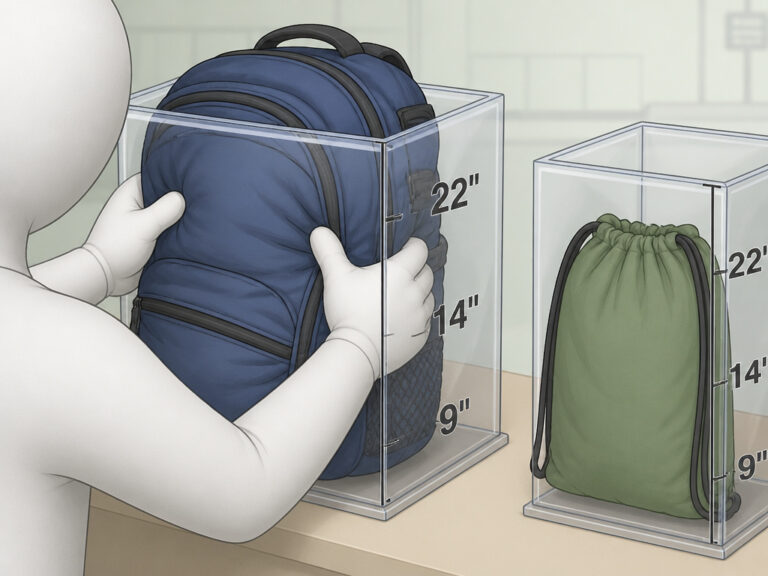
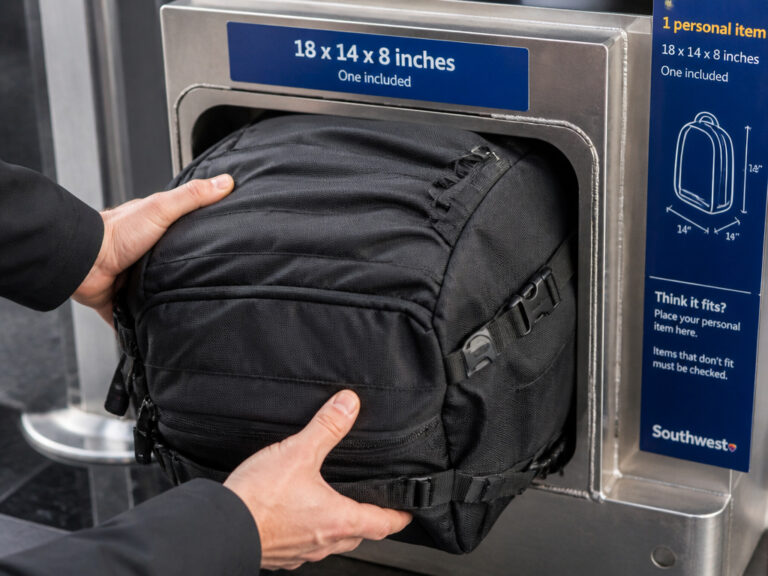
Spirit’s free personal item policy is defined by a single, unyielding measurement: 18 inches by 14 inches by 8 inches. This includes every external part, the wheels, the handle, the water bottle pocket, the compression straps. If it sticks out, it counts.
The Spirit Airlines Contract of Carriage states the personal item must not exceed 18″ x 14″ x 8″ (45cm x 35cm x 20cm) and must be stowed under the seat. This is the primary source for all size enforcement.
The goal is to guarantee the bag fits under the seat in front of you. Overhead bin space is reserved for paid carry-ons. This is why a soft, pliable backpack is your best bet. You can squeeze it into the sizer at the gate, and you can compress it under the seat. A hard-sided suitcase or a overstuffed duffel has no give.
Common mistake: Measuring with your eyes, not a tape measure. A backpack that looks “about right” is often half an inch too deep or too tall. That’s all it takes.
| Bag Type | Fits 18x14x8″ Sizer? | Spirit’s Classification | Typical Gate Scrutiny |
|---|---|---|---|
| Small Daypack / Laptop Bag | Yes | Free Personal Item | Low |
| Standard School Backpack | Maybe (Must Measure) | Personal Item or Carry-on | Medium |
| Hiking Backpack (Frame) | No | Carry-on (Fee Applies) | High |
| Duffel Bag (Soft-sided) | Maybe (If Underfilled) | Personal Item or Carry-on | High |
| Rolling Suitcase | No | Carry-on (Fee Applies) | Very High |
The enforcement is not perfectly consistent, but the pattern is clear. Gate agents are trained to spot bags that threaten overhead space. A bulky duffel draws attention; a sleek, 20-liter backpack worn on your back often does not. As one flyer noted, they’ve boarded with a backpack holding two laptops and a small telescope without a second glance, while others with duffels were stopped.
Does Spirit Charge for a Backpack? The Two Possible Answers
The question has a binary outcome based on size.
Answer 1: No charge. If your backpack fits the 18x14x8 dimensions, it is your free personal item. This is the core of Spirit’s budget airline backpack rules. You can bring it on board and stow it under the seat. Nothing else is required.
Answer 2: Yes, a significant charge. If your backpack is larger, it is reclassified as a carry-on. Spirit charges for all carry-ons. The fee isn’t fixed, it’s a dynamic price that escalates based on when and where you pay for it. This is the crucial financial trap.
The reclassification is automatic. It doesn’t matter that you call it a backpack. The agent at the gate has a sizer box. If the bag doesn’t fit, you pay the current carry-on rate. Arguing that it was fine on your last flight is irrelevant. The airline backpack rules are applied at the point of boarding, not based on past experience.
The $35 to $125+ Fee Ladder (And How to Avoid the Top Rung)
Spirit uses a dynamic pricing model for baggage, meaning the cost floats with demand, route, and timing. However, the escalation ladder from booking to gate is steep and predictable.
Where this goes sideways: Waiting to pay at the gate. If your bag is flagged as oversized there, the minimum fee is $99, and it can exceed $125. That’s often triple the price of adding the bag during initial booking.
Here is the typical fee progression for a carry-on bag:
- During Initial Booking on Spirit.com: $35 – $60. This is the cheapest point.
- During Online Check-in or at Airport Kiosk: $65 – $85.
- At the Departure Gate: $100 – $125+.
The “Bag-O-Tron” tool on Spirit’s website gives you the exact price for your itinerary. Use it. The financial penalty for procrastination is severe. If you’re even considering a larger backpack, buy the carry-on add-on early. You can always cancel it later for a credit if you decide to downsize.
What most people get wrong: Thinking they can “sneak” a slightly oversized bag through. Gate agents make a commission on catching these bags. They have the sizer ready, and they are incentivized to use it when they see a bag that looks borderline. The $99 gate charge is a revenue line, not an accident.
What Else Can You Bring On Top of Your Backpack?
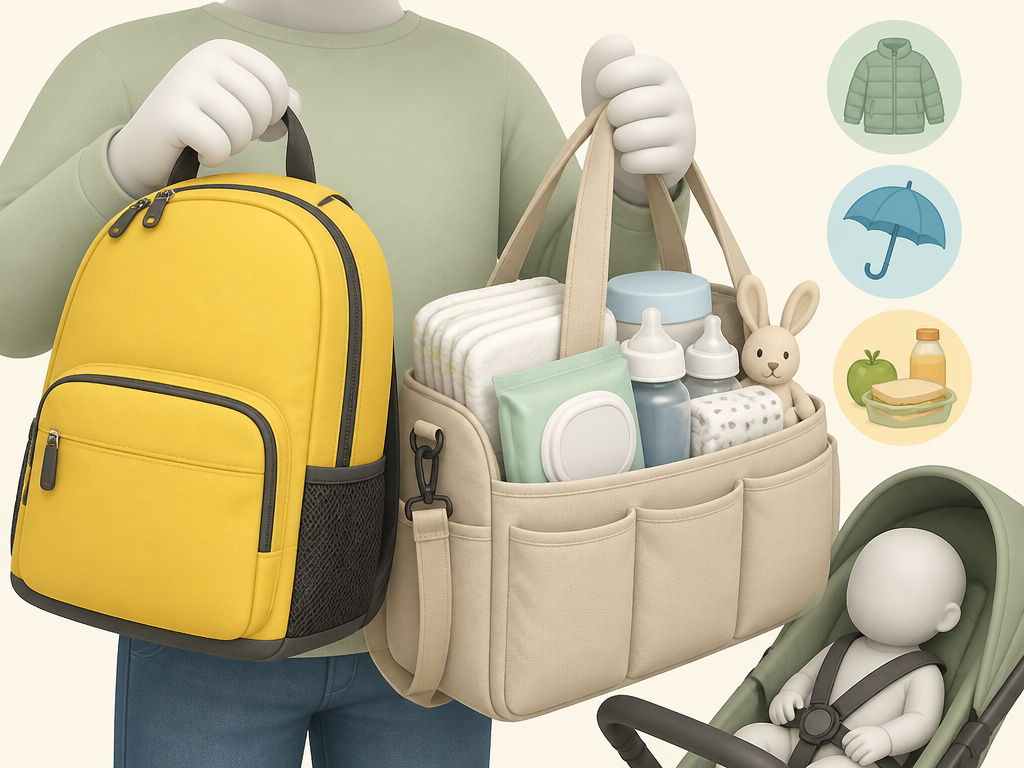
The “one personal item” rule has explicit, written exceptions. These items do not count toward your limit and can be brought on board in addition to your compliant backpack.
- Outer garments (coat, jacket, hat)
- Food for immediate consumption
- A reasonable amount of reading material
- Umbrella
- Infant items (diaper bag, car seat, collapsible stroller) when traveling with the child
- Medical devices, mobility aids (crutches, canes), and assistive devices
- One small bag of duty-free purchases
This list is from Spirit’s Contract of Carriage. It’s your legal leverage. For example, if you’re traveling with a baby, your backpack is your personal item, and the fully-stocked diaper bag is a separate, free exemption. You don’t have to cram everything into one bag.
Easy to miss: The “infant bag” exemption only applies if the infant is on your lap. If the infant has their own seat, their baggage allowance changes.
Bags on Top of Bags: The Purse + Backpack Dilemma
A common traveler move is to carry a backpack and a small crossbody purse or laptop bag. On most major airlines, this is fine. On Spirit, it’s a gamble.
The official policy is one personal item total. A purse is a personal item. A backpack is a personal item. Bringing both means you have two personal items, which violates the contract. In practice, enforcement is inconsistent.
The safe, no-risk method: Place your purse inside your backpack before you reach the gate agent. Once you’re on the plane, you can take it out. This follows the letter of the rule and eliminates any chance of a fee.
The common workaround: Wear your backpack and tuck the purse between your back and the backpack straps, making it look like part of the same item. This works often, but if an agent challenges you, you have no policy to stand on. You’ll be forced to combine them or pay.
If you regularly fly with both, consider a backpack with a detachable daypack or a designated backpack as personal item that has ample organization so you don’t need a separate purse.
When Your Backpack Becomes Checked Luggage
There are two scenarios where your backpack ends up in the cargo hold.
Voluntary Gate-Check: If the flight is full and overhead space runs out, Spirit will gate-check carry-on bags for free. This is standard across the industry. Your bag gets a tag, and you pick it up on the jet bridge at your destination.
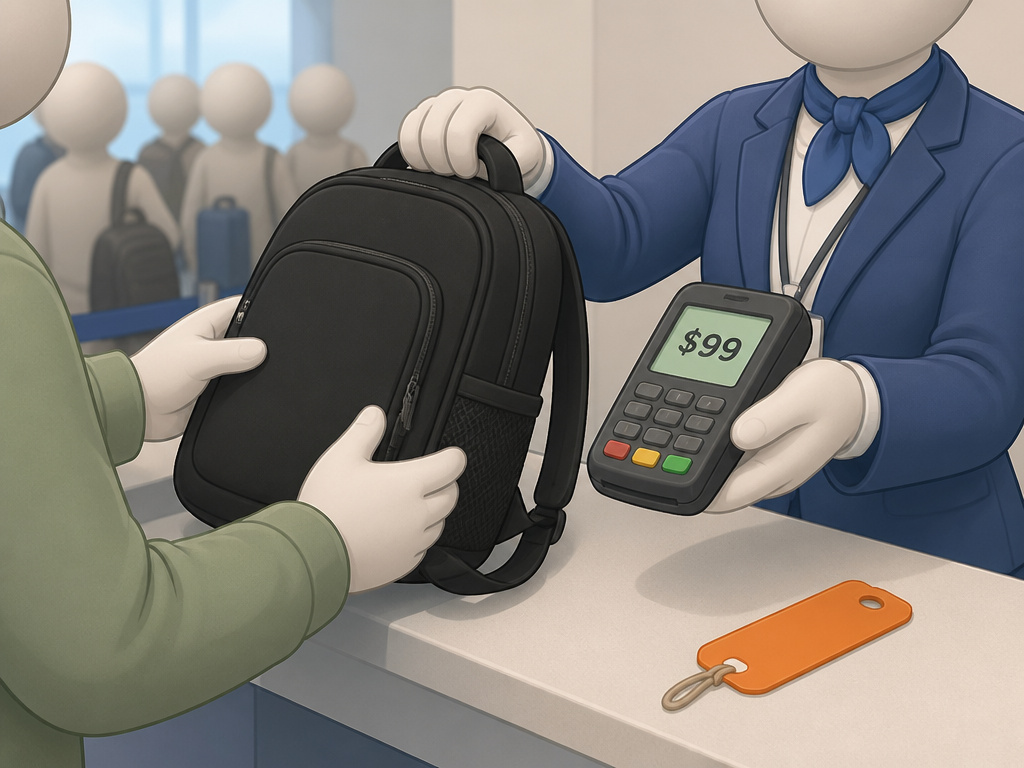
Involuntary Check & The Lost Bag Risk: This is the dangerous one. If you are charged at the gate for an oversized bag, the agent will often immediately take it from you to be checked. In the rush of a late boarding, they may snatch the bag, charge your card, but fail to properly tag it.
A Reddit user reported this exact scenario in August 2024: charged $99 at the gate for a backpack, the agent took it untagged, and it never arrived. With no tag number, the airline’s lost luggage tracing process is nearly impossible.
If you are forced to check your backpack at the gate, do not let it leave your hands without a claim tag slapped on it. Watch them do it. That tag is the only proof your bag was ever loaded onto the plane. Without it, you’ve paid a fee to donate your luggage to the airline.
How Spirit’s Policy Compares to Other Airlines
Spirit is an ultra-low-cost carrier (ULCC). Its model is to sell the bare seat and charge for everything else. Comparing its Spirit backpack policy to a legacy carrier is like comparing a bolt-action rifle to a Swiss Army knife, they’re for different purposes.
- vs. Frontier: Nearly identical. Frontier’s personal item sizer is 18″ x 14″ x 8″, the same dimensions. The fee structures and strict enforcement are twins.
- vs. Delta / American / United: These legacy carriers include a full-size carry-on in the base fare. Their personal item is smaller (like 17″ x 13″ x 9″), but you are allowed that plus a carry-on. Their Delta backpack policy is part of a more generous two-bag system.
- vs. Southwest: Southwest allows two free checked bags and a carry-on and a personal item. Their backpack and carry-on policy is the most generous in the U.S.
The takeaway? Spirit is the strictest on bag size and charges the most for overhead access. You trade baggage allowance for a lower base fare.
Smart Strategies to Avoid Backpack Fees on Spirit
- Buy the Right Bag. Invest in a backpack designed specifically for under-seat travel. The Tomtoc 28L Travel Backpack is a community favorite for hitting the Spirit/Frontier size perfectly. Know that a 30-liter backpack is almost certainly a paid carry-on.
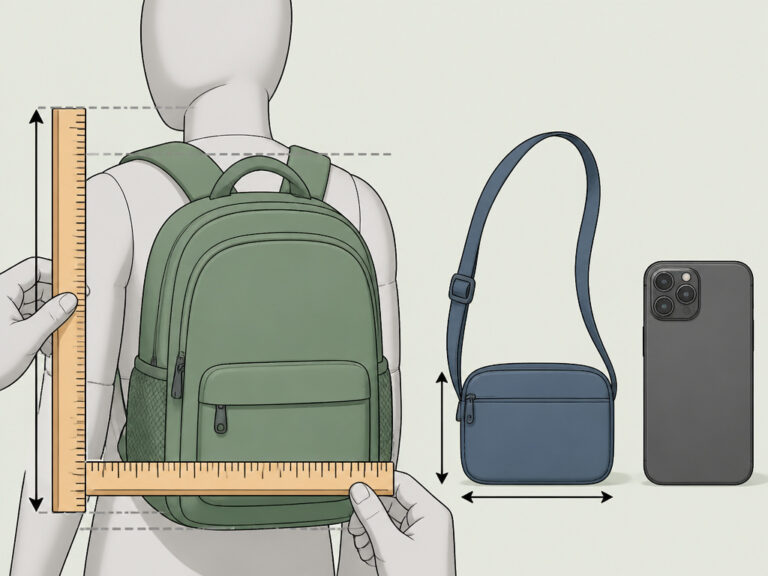
- Measure with a Tape, Not Your Eyes. Before you pack, measure your empty backpack’s height, width, and depth. Remember to include all external protrusions.
- Pack a Soft Bag. A nylon backpack with minimal structure can be compressed into the sizer. A rigid bag with a hard frame cannot.
- Purchase Early. If there’s any doubt your bag will fit, buy the carry-on add-on during the initial booking. It’s the cheapest insurance policy you can buy.
- Use Exemptions. A jacket with large pockets, a tote bag of snacks, these are free. Use the policy’s loopholes to your advantage.
- Consider Elite Status or the Saver$ Club. Free Spirit Gold status includes a free carry-on. The Spirit Saver$ Club ($69.95/year) offers discounts on bags. If you fly Spirit more than twice a year, it can pay for itself in baggage savings alone.
Frequently Asked Questions
Can I bring a backpack and a carry-on on Spirit?
No, not for free. Your backpack is your one allowed item. If it fits the 18x14x8″ personal item size, it’s free. If it’s larger, it is your carry-on and you must pay the carry-on fee. You cannot bring a separate carry-on suitcase in addition to a free backpack.
What if my backpack is slightly over the size limit?
If it doesn’t fit in the sizer at the gate, you will be charged the carry-on fee. “Slightly” doesn’t matter to the metal box. Agents have no discretion to waive the fee for a bag that doesn’t fit.
Does Spirit weigh backpacks?
No. Spirit has no weight limit for personal items or carry-ons. The only limit is that you must be able to lift and stow it yourself. The restriction is purely dimensional.
Are military members exempt from backpack fees?
Yes, but you must follow the procedure. Active-duty U.S. Military members traveling on orders receive two free checked bags and a free carry-on in addition to their personal item. You must add the bags in advance during booking or online check-in using the dedicated military verification process.
Can I check my backpack instead of carrying it on?
Yes. You can treat your backpack as checked luggage. Checked bag fees are often lower than carry-on fees, especially if paid in advance. However, checked bags have a 40-pound weight limit and a 62 linear inch size limit.
Before You Go
Spirit’s backpack policy is simple but rigid. A bag under 18x14x8 inches is free. Anything larger costs money, a lot more money if you wait until the airport to deal with it. The airline’s entire business model is built on this distinction. Your defense is a tape measure, a soft-sided bag, and the decision to pay early if you’re cutting it close. Don’t guess at the gate. That guess costs a minimum of ninety-nine dollars.