How Big Is a 22L Backpack? The Exact Dimensions for Travel
This post contains affiliate links. As an Amazon Associate, we earn from qualifying purchases.
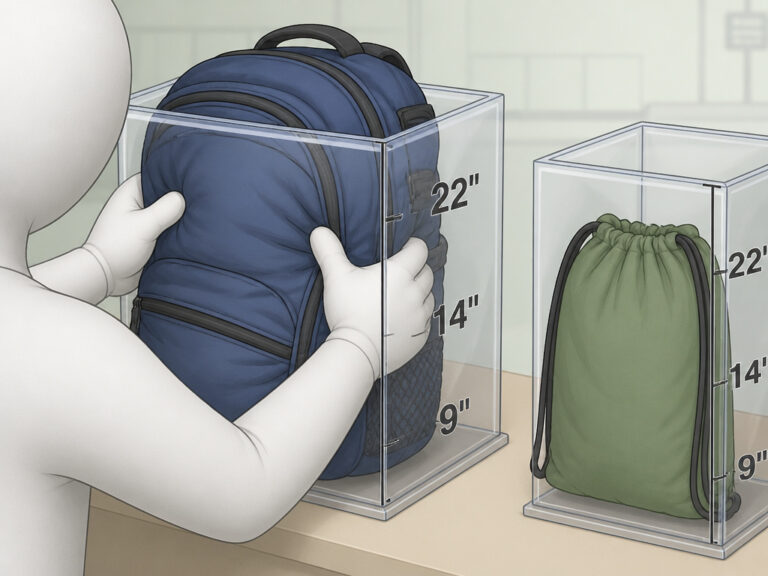
A 22L backpack typically measures 18–20 inches tall, 11–12 inches wide, and 7–9 inches deep. The exact dimensions vary by brand and model, but the depth is the critical number, it must be under 9 inches to reliably fit under an airplane seat as a personal item. A 22-liter capacity holds a 15-inch laptop, a light jacket, a water bottle, and daily essentials.
That depth spec is where the real decision happens. Manufacturers measure volume differently, and a soft-shell bag’s 9-inch depth can balloon to 11 inches when you stuff it. For flying, that’s the difference between sliding your bag under the seat and getting flagged for the overhead bin.
What follows: the exact dimensions of five popular 22L packs, the physics of how they pack out, and the gear list that actually fits. You’ll know which bag type matches your commute, your hike, or your next flight.
Key Takeaways
- The depth (front-to-back measurement) is the deciding factor for airline personal item compliance; aim for a spec under 9 inches.
- Soft-shell bags gain depth when packed, often exceeding their stated dimension by 1-2 inches, while framed bags hold their shape.
- A true 22L capacity fits a 15-inch laptop, a medium packing cube, a jacket, a 1L water bottle, and small essentials, but not all at once for every bag design.
- Manufacturer volume includes external pockets on some models, which means the main compartment is smaller than the advertised 22 liters.
- For airline travel, always verify your bag’s packed depth against the carrier’s specific personal item sizer dimensions.
The Manufacturer Spec Sheet – What the Numbers Actually Mean
You can’t trust a “22L” label alone. One brand’s 22-liter pack is another’s 20-liter main compartment with 2 liters of pocket space. The numbers on a spec sheet tell you the container’s potential volume, not how it carries on your back or fits under a seat.
Osprey lists the Talon 22 (M/L) at 20″ x 11″ x 11″. Thule lists the AllTrail Daypack 22L at 20.5″ x 9.1″ x 11.4″. Those are external dimensions. The internal, usable space is always less.
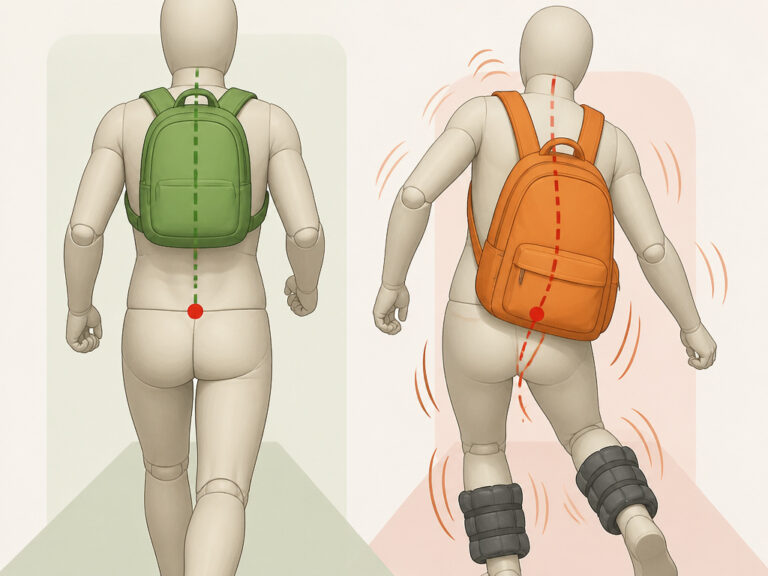
Osprey Talon 22 Load Range: 10-20 lb (5-8 kg). The AirScape backpanel and BioStretch harness are designed to stabilize loads within this weight range. Exceeding it compromises the suspension system’s ability to transfer weight to your hips.
This engineering limit is why a hiking pack like the Talon has a firm frame, it needs to hold its shape under load. A floppy travel pack doesn’t. That changes everything about how you use the volume.
How Volume is Measured (And Why It’s Inconsistent)
There’s no industry standard. Most brands use a simple formula: multiply the internal height, width, and depth. Some include every external pocket sealed shut. Others only measure the main cavity.
The Deuter StepOut 22 uses a roll-top to extend its volume. Its 22-liter capacity is a maximum, not a default. The Herschel Ultralight 22L is made from packable ripstop, its shape is entirely defined by what you put in it. Its 22 liters is a best-case scenario when fully stuffed.
| Backpack Model | Stated Dimensions (H x W x D) | Key Structural Note | Real-World Depth When Packed |
|---|---|---|---|
| Osprey Talon 22 | 20″ x 11″ x 11″ | Internal HDPE frame sheet | Holds near 11″; rigid. |
| Thule AllTrail 22L | 20.5″ x 9.1″ x 11.4″ | Structured back panel | Holds near 11.4″; semi-rigid. |
| Herschel Ultralight 22L | 18″ x 10.25″ x 5.25″ | Packable, no structure | Can stretch to 8″+. |
| L.L.Bean Cordura Pack | 19″ x 11″ x 5″ | Soft, unstructured | Can stretch to 7″+. |
| Nitecore Freerain22 | 19.5″ x 10.5″ x 7″ | Waterproof, roll-top | Holds 7″; fabric has little give. |
The Critical 9-Inch Dimension
This is the whole game for air travel. Most U.S. Domestic airlines mandate a personal item no larger than 18″ x 14″ x 8″. The depth, that front-to-back measurement, is the killer. A bag listed at 9 inches deep is already over the limit on paper. A bag listed at 11 inches deep, like the Osprey Talon, will not fit in the sizer if it’s fully packed.
Your backpack’s depth is a range rather than a fixed number, as a soft bag compresses.A structured bag does not.
Where this goes sideways: Assuming a “22L” badge guarantees under-seat fit. The Thule AllTrail is 11.4 inches deep. Even semi-empty, that dimension risks a gate agent asking you to check it if they’re enforcing rules strictly. You need a bag whose maximum possible depth is under the airline’s limit.
This is why packable bags like the Herschel Ultralight or the Nitecore Freerain22 are popular with travelers. Their slim profile when under-packed meets the letter of the law. A hiking pack with a stiff frame, designed to carry weight safely, often cannot comply without being half-empty.
Do you actually fly often with this bag? If yes, your search starts and ends with depth. Ignore the 22L label and find the model whose external depth spec is 8 inches or less. The capacity will be tighter, but you’ll board without stress.
What Fits Inside a 22L Backpack? The Real-World Pack-Out
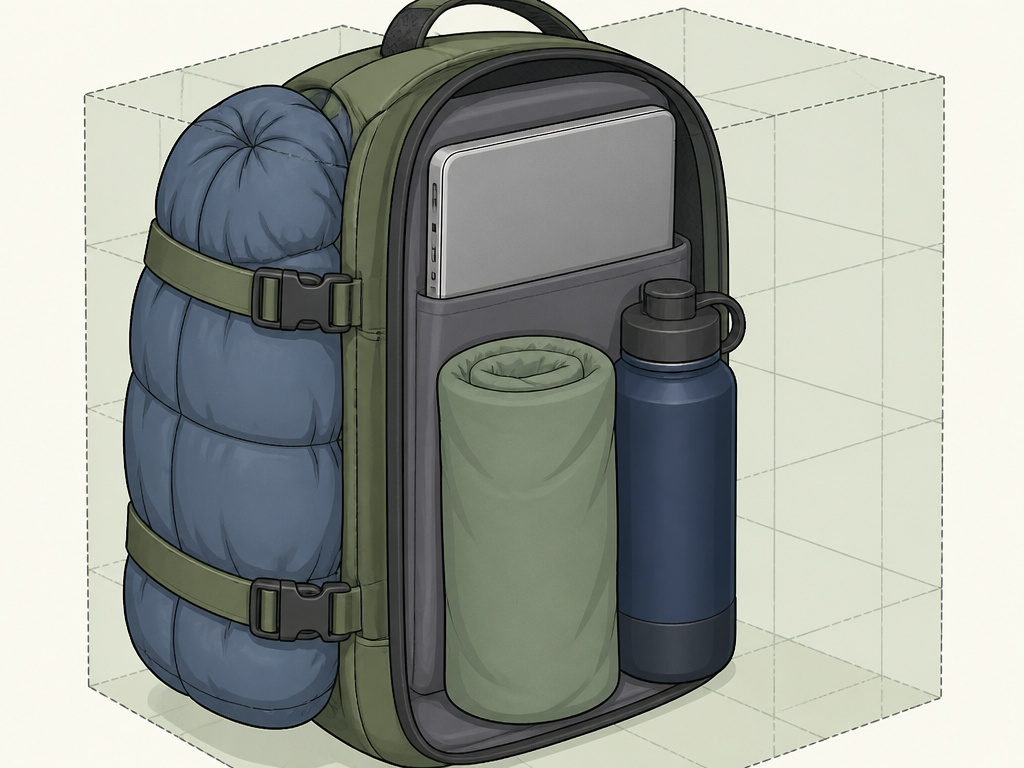
A liter is a cube 10 centimeters on each side. Twenty-two of those cubes sounds huge. It isn’t. You’re working with about 1,340 cubic inches. The layout of pockets, padding, and compartments eats into that space immediately.
For a day hike, a proper 22L pack is ample. For an urban workday, it’s often overkill. Here’s what you can realistically expect to carry, divided by use case.
The Hiker’s Load (e.g., Osprey Talon 22, Thule AllTrail 22L):
- 3L hydration reservoir in the dedicated sleeve
- Light puffy jacket or rain shell
- First-aid kit, headlamp, multi-tool
- Food for 6-8 hours
- Trekking poles attached externally via Stow-on-the-Go loops
- What it won’t fit: A bulky insulated lunch bag and a heavy fleece. You pick one.
The Commuter’s Load (e.g., Deuter StepOut 22, Herschel Ultralight):
- 15-inch laptop in a padded sleeve
- Small tech pouch (charger, cables, mouse)
- Notebook and a couple of folders
- Light sweater or scarf
- Reusable water bottle in side pocket
- What it won’t fit: A full-sized lunch container and a large umbrella comfortably. One goes in the main compartment, the other in a hand.
The One-Bag Traveler’s Load (e.g., Nitecore Freerain22):
- Two to three rolled t-shirts
- One pair of pants
- Toiletry kit
- Tablet or small laptop
- Light jacket worn or strapped outside
- What it won’t fit: Extra shoes or a thick sweater. This is minimalist travel.
The common failure is overestimating the main compartment. When a bag has a thickly padded laptop sleeve, a separate tablet sleeve, and an organizer panel, those layers consume over a liter of space before you add a single item.
22L Backpack Styles Compared: Hiking vs. Urban vs. Packable
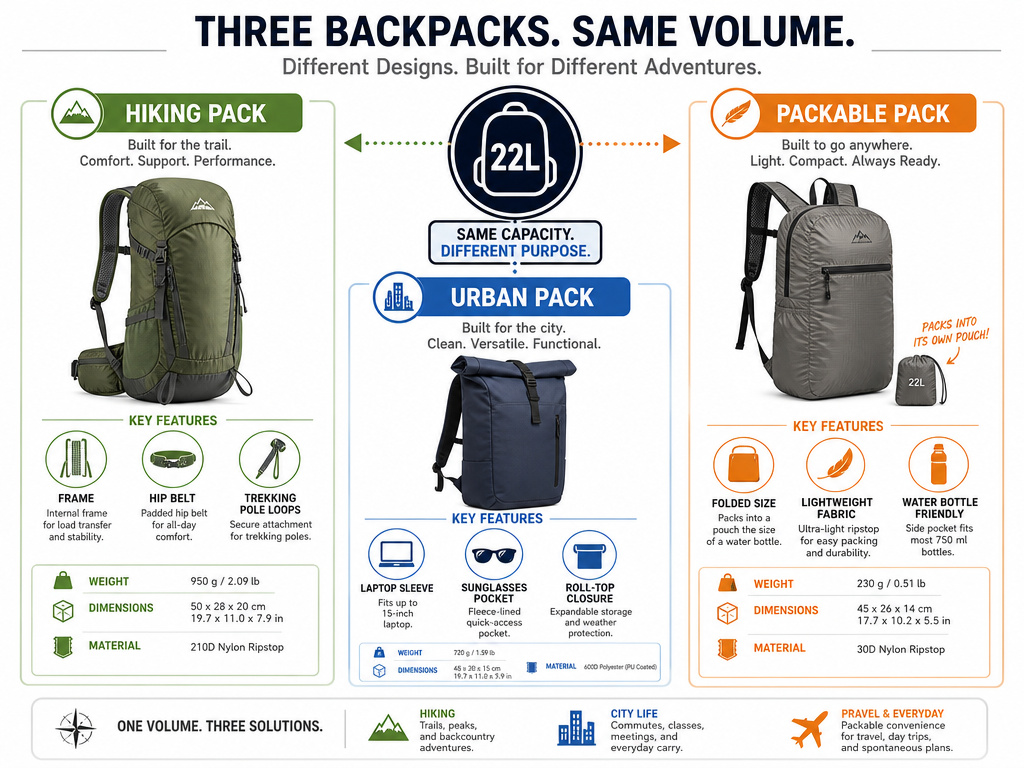
Not all 22-liter bags are built for the same job. The features that make one perfect for a trail render it awkward for a subway commute. This is about matching the tool to the task, not about better or worse.
Structured Hiking Packs (Osprey Talon 22, Thule AllTrail 22L)
These bags have suspension. The Osprey Talon uses an AirScape backpanel with a tensioned mesh harness. The Thule AllTrail has a perforated foam back panel. They’re designed to carry 20 pounds comfortably, transferring weight to your hips. They include gear attachments: ice tool loops, trekking pole attachments, and a LidLock helmet clip. * Best for: Actual hiking, trail running, all-day outdoor events. * Weakness for travel: The rigid structure and deeper profile fight the under-seat space. The external loops snag on everything in an airport.
Urban/Commuter Packs (Deuter StepOut 22, TravisMathew 22L Backpack)
The focus here is on organization and low-profile looks. The Deuter StepOut uses a clean roll-top and a dedicated laptop compartment. The TravisMathew bag has a fleece-lined sunglasses pocket and a streamlined shape. They use lighter padding and simpler straps. * Best for: Daily work commute, school, city day trips. * Weakness for hiking: The thin straps and minimal hip belts become painful with a 15-pound load after an hour. They lack external gear attachment points.
Packable/Travel Packs (Herschel Ultralight 22L, Nitecore Freerain22)
These are tools of convenience. The Herschel Ultralight uses ripstop nylon and packs into its own pocket. The Nitecore Freerain22 is fully waterproof with sealed seams and a roll-top closure. They are incredibly light, the Herschel is 12.3 ounces. * Best for: Airline personal item use, stuffing inside a larger suitcase as a daypack, beach or casual outings. * Weakness for structure: They offer zero load support. A heavy laptop will sag and strain your shoulders. They have minimal organization.
The part nobody mentions: A hiking pack’s superior comfort comes from its rigid frame. That same frame makes it impossible to overstuff and then compress down to meet airline depth limits. You can’t have both perfect load-bearing and perfect compressibility in one 22L bag.
How to Choose: The Three Decision Points
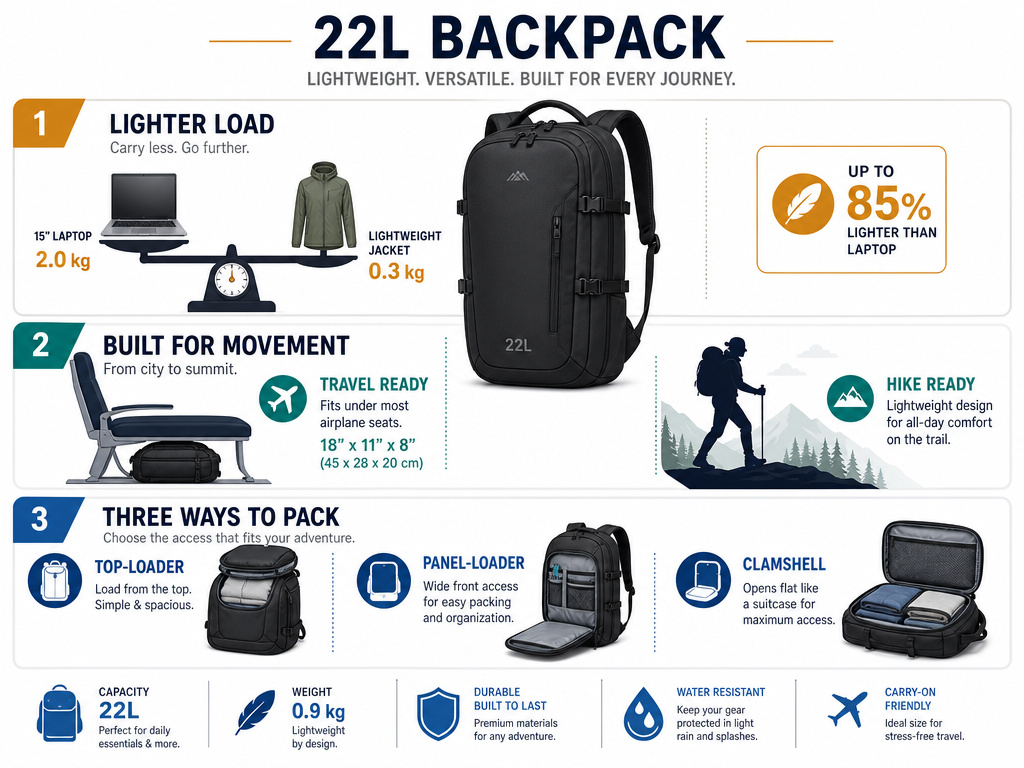
Stop looking at 22L backpacks as a single category. Your choice hinges on answering three questions in order.
1. What is the heaviest single item you will carry?
If it’s a 15-inch MacBook Pro (4.7 lbs) plus a charger, you need some structure and padding. A floppy packable bag will be miserable. If it’s a rain jacket and a sandwich, you can prioritize weight and packability.
2. Where will you use it most, under an airplane seat or on your back for four hours?
This is the airline depth question versus the comfort question. You must pick the primary use. A bag that excels at both does not exist at this size.
3. How do you access your gear, top-loader, panel-loader, or clamshell?
A hiking pack like the Talon is a top-loader with a front panel zip. Great for grabbing a jacket, frustrating for digging out a notebook at the bottom. An urban pack like the StepOut 22 is a panel-loader, it opens like a suitcase. Perfect for work, overkill for a trail where you just need water and a snack.
Once you have those answers, the field narrows instantly. * Air travel first, urban use second: Look at the Herschel Ultralight or the Nitecore Freerain22. * Hiking first, travel never: The Osprey Talon 22 or Thule AllTrail 22L are default picks. * Work commute, occasional weekend use: The Deuter StepOut 22 or a similar panel-loader is the right tool.
Frequently Asked Questions
Is a 22L backpack a personal item?
It can be, but it is not automatic. The 22-liter volume is often within personal item size limits, but the bag’s dimensions are what airlines check. A bag must typically be under 18″ x 14″ x 8″. Many 22L packs exceed the 8-inch depth limit when fully packed. Always verify your specific bag’s packed dimensions against your airline’s rules.
Can a 22L backpack hold a 15-inch laptop?
Yes, most 22L backpacks designed for urban or commute use include a dedicated, padded sleeve for a 15-inch laptop. Hiking-focused 22L packs may not have a padded laptop compartment, or it may be a less protective sleeve. Always check the product specifications for laptop sleeve size.
How big is a 22L backpack compared to a 20L or 25L backpack?
The difference is subtle but noticeable in packing. A 20-liter backpack might force you to leave behind a light jacket. A 22L bag fits that jacket. A 25-liter backpack adds enough room for an extra pair of shoes or a bulky lunch container. In terms of dimensions, the depth or height might increase by an inch or less.
Is 22L enough for a day hike?
For most day hikes, 22 liters is the ideal and most common size. It provides enough space for essential safety gear, food, water (or a hydration reservoir), and extra layers. It is not typically enough for overnight gear unless you are an ultra-minimalist.
What is the best 22L backpack for travel?
The “best” depends on your travel style. For maximizing cabin luggage allowance, a packable bag like the Herschel Ultralight 22L or the waterproof Nitecore Freerain22 is best because it can compress to meet strict size limits. If you’re checking a main bag and using the 22L as a daypack, a more structured, comfortable option like the Osprey Talon 22 is better.
The Bottom Line
A 22L backpack is a shape-shifting container whose usefulness depends on its construction, not a standard box. The number on the tag is a starting point, not a promise.
For flying, the depth is the only spec that matters, chase a number under 9 inches. For hiking, the harness and frame are what you’re buying. For work, the organization panel is the real value.
Stop shopping for 22 liters. Start shopping for the 9-inch depth, the AirScape backpanel, or the clamshell opening. The right bag is the one that disappears on your back while holding exactly what you need, not the one that holds the most stuff.