How to Pack a Business Suit in a Suitcase Without Wrinkles
This post contains affiliate links. As an Amazon Associate, we earn from qualifying purchases.
To pack a business suit in a suitcase without wrinkles, use the inside-out shoulder fold for the jacket and fold trousers along their natural creases. Place the folded suit on top of a soft layer of clothing in your suitcase, never under heavy items. Unpack and hang the suit within 12 hours to prevent permanent creases from setting.
The inside-out fold protects the jacket’s outer fabric by placing the lining on the outside. This turns the shoulders into a protective shell. The technique creates just two main folds across the back and waist, which are easier to release than a web of random creases.
What follows is the exact sequence: preparing the suit, executing the fold, layering it correctly in your bag, and the one-step recovery trick for any wrinkles that survive the journey. We’ll also cover the fabric choices that make this process work and the single biggest mistake that flattens a jacket’s shoulders for good.
Key Takeaways
- The inside-out shoulder fold creates only two predictable creases and shields the suit’s visible fabric from friction.
- Fabric dictates your margin for error. Wrinkle-resistant wool or polyester blends can stay folded for 24-48 hours; pure linen or cotton will crease deeply within 12.
- Always place the folded suit on top of a soft clothing layer in the middle of your suitcase. Heavy items like shoes go in a separate compartment or at the very bottom.
- Unpack and hang the suit within 12 hours of arrival. For stubborn wrinkles, hang it in a steamy bathroom for 15 minutes—the moisture relaxes the fibers.
- For trousers with pleats or thick hems, fold at the waistband, not along the crease, to avoid stressing and distorting the seams.
The Core Principle: It’s About Managing Creases, Not Eliminating Them
You cannot pack a tailored suit in a rectangular box and expect zero folds. The goal is to control where those folds happen and ensure they are shallow enough to fall out. A suit wrinkles when fabric fibers are compressed and held at a sharp angle. The inside-out folding method minimizes this by creating broad, gentle bends instead of hard, pressed creases.
The difference is in the recovery. A sharp crease from being stuffed under a pair of shoes can permanently weaken the fiber memory, especially on natural fabrics. The two broad folds from a proper pack will often drop out with a few hours of hanging in a humid room.
The inside-out shoulder fold places the jacket’s lining on the outside, turning the shoulders into a padded shell that protects the lapels and outer wool from pressure and friction during transit.
The 5-Step Inside-Out Shoulder Fold for Jackets
This method is the professional standard for a reason. It is reliable and limits stress points.
Step 1: Lay the jacket face-down on a flat surface. A bed or clean table works. Smooth out the lapels and back panel so there are no twists in the fabric.
Step 2: Turn one shoulder inside out. Reach inside the jacket and gently pull the right shoulder through itself so the lining is exposed. The shoulder is now inverted.
Step 3: Tuck the other shoulder inside. Nest the left shoulder neatly into the cavity of the inverted right shoulder. The jacket is now folded vertically in half, with the sleeves aligned.
Step 4: Smooth and fold horizontally. Flatten the sleeves so one lies neatly on top of the other. Then, bring the bottom hem up towards the collar, creating one horizontal fold across the waist. Avoid a tight, sharp crease—a gentle bend is what you want.
Step 5: Final adjustments. Tuck the collar in neatly. You should have a compact, rectangular bundle where the jacket’s outer fabric is mostly shielded by the lining.
Skipping the smoothing step is where people get a twisted sleeve caught in the fold. That single twist creates a diagonal crease across the back that no amount of steam will fully erase.
How to Fold Suit Trousers (Pleats Change the Rule)
For most trousers, you fold along the existing crease. Lay them flat, align the front and back creases, and fold in half vertically. Then, fold in thirds or quarters depending on your suitcase depth.
Where this goes sideways: Folding pleated trousers along their crease. This stresses the pleat stitching and can permanently flatten them. For pleats or trousers with a thick, structured hem, fold at the waistband instead. Bring the legs up so the cuffs meet the waist, creating a long, narrow bundle. This keeps pressure off the critical front panel.
| Trouser Type | Folding Method | Risk If Done Wrong |
|---|---|---|
| Flat-front, standard | Fold along natural crease | Creates extra, competing creases |
| Pleated | Fold at the waistband | Pleats collapse, seam stress causes puckering |
| Heavy wool (flannel) | Fold in thirds, not quarters | Tight quarter-folds set deep, hard-to-remove creases |
Where to Place the Suit in Your Luggage (The Layer Cake)
Packing order is not a suggestion. It is a structural requirement. Your suitcase is a pressure chamber. The suit must live in a low-pressure zone.
Start with a base layer of soft clothing—t-shirts, underwear, socks, or a sweater. Place this at the bottom of your suitcase. This is your cushion.
Lay your folded suit jacket and trousers flat on top of this soft base. They should sit in the middle of the suitcase, not crammed against a hard side.
Add another soft layer on top of the suit. A second sweater, more t-shirts, or pajamas work. This top layer absorbs pressure from anything else you pack and prevents direct impact.
Finally, pack hard, heavy, or irregular items like shoes, toiletry kits, or chargers in a separate compartment or around the sides of the suitcase. If your bag has compression straps, use them loosely. A tight strap pressed directly over the folded suit will imprint a line across the jacket.
The logic is simple. Fabric against fabric slides and absorbs. Fabric against a hard corner presses and creases. A soft-shell duffel bag demands extra vigilance here—you must pad the sides with rolled clothing to keep the suit from slumping into a bent position.
The 12-Hour Unpacking Rule and Wrinkle Recovery
A folded suit is under tension. The longer it stays that way, the more likely those temporary folds become permanent creases. The clock starts when you zip the suitcase.
Unpack and hang the suit within 12 hours of reaching your destination. This is the safe window for most wool and synthetic blends. For linen or cotton, that window shrinks to more like 6 hours. If you’re on a multi-leg trip and can’t unpack, at least unzip the bag and shift the suit’s position to relieve the pressure points.
What about the wrinkles that remain after hanging?
The steamy bathroom trick works because of physics, not magic. Hang the suit on the bathroom door, run the shower hot for 10-15 minutes, and let the room fill with steam. Close the door and leave the suit in there for another 20 minutes. The moisture penetrates the fibers, relaxing the hydrogen bonds that hold the crease. As the suit dries, the fibers can reset in a straighter alignment.
This is a recovery step, not a miracle. It won’t fix sharp, set-in creases from being packed wrong. For those, you need a professional steamer or an iron with a cloth buffer.
Suit Fabric: Your Built-In Wrinkle Resistance
 Your packing success is predetermined by your fabric choice. Some suits are built for travel; others are built for a short walk from the car to the office.
Wrinkle-resistant wool or wool-polyester blends are the gold standard. The synthetic fibers add memory and bounce-back. A good wool blend can survive 24-48 hours folded and still look presentable after a steam.
Pure linen or cotton will crease. Deeply. They are beautiful and breathable but treat them as a “wear on the plane” option or accept that you will need to press them upon arrival.
Travel-specific fabrics like tech wool or stretch blends are engineered for this. They are more forgiving and dry faster, but they often lack the classic drape and feel of traditional wool.
| Fabric | Wrinkle Resistance | Best For | Packing Window |
|---|---|---|---|
| Wool/Polyester Blend | High | Business travel, multi-day trips | 24-48 hours folded |
| Pure Wool (Super 100s+) | Medium | Important meetings, short trips | 12-24 hours folded |
| Linen or Cotton | Low | Destination weddings, warm climates | Unpack immediately (≤6 hrs) |
| Technical/Stretch Blend | Very High | Frequent flyers, long itineraries | 48+ hours folded |
Garment Bag vs. Suitcase: The Carry Decision
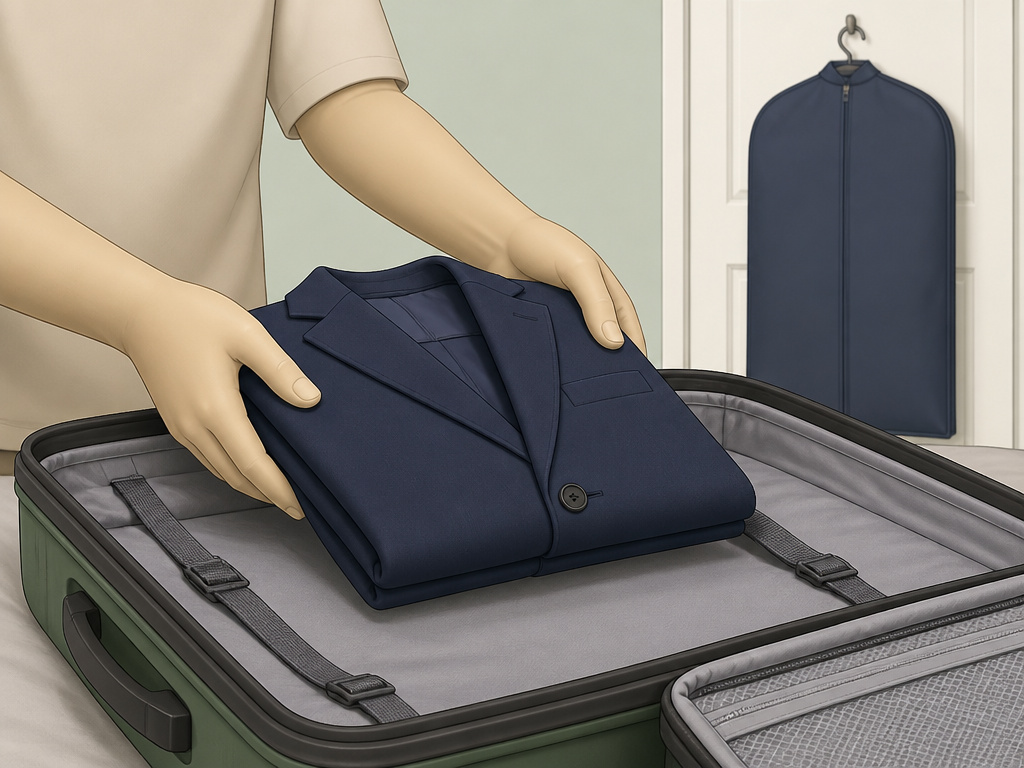 This is the strategic layer above folding. Your carrier determines your constraints.
A garment bag keeps the suit on a hanger. It’s ideal for short trips where you can lay it flat in an overhead bin or across the back seat of a car. The suit arrives with maybe one fold across the bottom. The trade-off is bulk and airline acceptance—many carriers count a garment bag as your carry-on item.
A hard-shell suitcase with a flat packing compartment is the most reliable for folding. The rigid walls prevent external pressure from distorting your careful layers. Look for one with compression straps you can leave loose and a separate shoe compartment.
The Reddit discussions highlight a real pain point: airline staff inconsistently applying the “one carry-on plus one personal item” rule to a suitcase, backpack, and garment bag trio. The safest play is to choose two: a suitcase with your folded suit inside, and a backpack as your personal item.
This is where knowing specific airline backpack policies matters. The Delta backpack policy might be more generous than Southwest Airlines bags allowance. Always verify your carrier’s current rules for a backpack and carry-on.
Frequently Asked Questions
Can I roll my suit instead of folding it?
You can roll the trousers, and many people do to save space. Rolling the jacket is risky. It creates multiple, unpredictable spiral creases that are harder to manage than the two controlled folds from the inside-out method. Stick with the proven fold for the jacket.
How do I pack a suit for a week-long trip with only a carry-on?
You pack one suit. Wear the jacket on the plane over a t-shirt or casual shirt. Fold the trousers using the waistband method and pack them. This leaves room for shirts, underwear, and a dopp kit. The worn jacket arrives virtually wrinkle-free. For more on efficient packing a suitcase strategies, the layer system is key.
What’s the one thing I should never do when packing a suit?
Never place shoes, a laptop, or a heavy toiletry bag directly on top of the folded suit. The concentrated weight will imprint the object’s shape and create sharp, set-in creases at the pressure points. Always buffer with soft clothing.
Does putting a suit in a plastic dry-cleaning bag help?
Yes, but with a specific technique. Place the folded suit inside a large, lightweight plastic bag (like a dry-cleaning bag) and trap a little air before sealing it. The air cushion acts as a buffer against friction from other items. Don’t use a tight, vacuum-sealed bag, as that can create its own compression creases.
My suit still looks wrinkled after the shower steam trick. What now?
The steam only relaxes minor wrinkles. For deeper creases, you need direct contact with a steamer or an iron. Use a handheld travel steamer, holding it an inch from the fabric and pulling the garment taut. If ironing, always use the lowest heat setting with a pressing cloth between the iron and the wool to prevent scorching and shine.
The Bottom Line
Packing a business suit is a mechanical process. The inside-out shoulder fold controls the damage. Your fabric choice sets the difficulty level. Your packing order defends against external pressure.
The default pick for most travelers is a wrinkle-resistant wool blend suit, folded with the inside-out method, and placed in the middle of a hard-shell suitcase between layers of soft clothing. Unpack it within half a day.
For the suit you absolutely must have crisp, consider wearing the jacket on the plane. It is the oldest, most reliable trick in the book. Everything else is just a better way to fold a box.