The Best Way to Pack a Hat in a Suitcase Using Crown-Down
This post contains affiliate links. As an Amazon Associate, we earn from qualifying purchases.
To pack a hat in a suitcase, place it crown-down with the entire brim flat on the suitcase floor. Stuff the crown completely with soft items like socks or t-shirts to hold its shape. Then, surround the brim with rolled clothing to create a protective cushion. This method, confirmed by brands like Eric Javits and Notch Gear, uses the brim as a stable foundation and prevents the crown from collapsing under pressure.
That “crown-down” detail is the split. Brixton’s official advice says to pack the hat facing up. Every other expert source. Eric Javits, Notch Gear, Hicks & Brown, insists on crown-down. The reason is mechanical: a crown-up hat lets the brim flex unpredictably under the weight of packed items. Crown-down turns the brim into a load-bearing plate. The weight distributes evenly, and the stuffed crown can’t buckle.
What follows: three material categories that decide your risk, the seven-step crown-down method, and the two hat types this method cannot save. You’ll also get the fix for when things go wrong.
Key Takeaways
- Always pack hats crown-down, not crown-up. This uses the brim as a stable base and prevents the crown from denting.
- Stuff the crown full of soft items like socks. An empty crown collapses within the first hour of transit, creating a permanent dent.
- Mold can grow in 48 hours if you pack a damp straw or felt hat. Never pack a hat that isn’t completely bone-dry.
- For rigid wide-brim hats or stiff painted straw hats, do not force them into a suitcase. Wear them or use a hat clip.
- Most travel wrinkles steam out in minutes. Use a garment steamer or a bathroom shower to reintroduce moisture and reshape by hand.
The One Rule Every Other Guide Misses
The first sentence of most packing tutorials is wrong. They tell you to “place the hat in the middle of your suitcase.” That’s incomplete. Where the crown points decides whether your hat arrives ready to wear or permanently deformed.
Brixton’s blog is the outlier. It recommends placing the hat “facing up” in the center of the bag. Eric Javits, Notch Gear, and Hicks & Brown all specify crown-down. This isn’t a minor preference. It’s a difference in how force travels through the hat’s structure.
Where this goes sideways: Storing a hat crown-up. The brim has no structural support and will flex under the weight of layered clothing. That flex translates into a permanent downward droop on one side, visible after just one trip.
A crown acts like an arch. It’s strong when force is applied evenly around its circumference, but weak when pressure comes straight down on its peak. In a suitcase, the peak is the top of the crown. Packed items push straight down. Without internal support, the arch fails. You get a dent.
Turning the hat over inverts the problem. Now the brim is the load-bearing surface. A brim is designed to handle pressure across its entire plane. The stuffed crown is below, protected from direct weight. This is the same principle behind packing a hard-shell suitcase, you build a stable base first.
Match Your Hat to Its Survival Odds
Not all hats are born equal for travel. Your material dictates your margin for error. A polyester bucket hat forgives a sloppy pack job. A painted straw fedora does not.
| Hat Material | Packing Flexibility | Biggest Risk | Recovery Chance |
|---|---|---|---|
| Squishee® / Synthetic (Eric Javits) | High – engineered for compression | Overstuffing the crown | Excellent – springs back within an hour |
| Wool Felt | Medium – holds shape but can crease | Moisture & heavy pressure | Good – steams out easily |
| Natural Straw / Raffia | Low – stiff, can crack or crease permanently | Bending against suitcase wall | Poor – creases may be permanent |
| Cotton / Canvas (bucket hats, caps) | Very High – can be rolled or folded | Losing its structure if packed loose | Very Good – often bounces back |
If you’re buying a hat specifically for travel, look for the term “packable.” Brands like Eric Javits use patented Squishee® material designed to spring back after compression. A standard wool felt hat is a decent traveler but demands perfect packing. A rigid straw hat is a liability.
The Smithsonian’s textile conservation principles apply here: support the shape, control humidity, and minimize stress. Your suitcase is a dark, pressurized environment. Choose a hat that can handle it.
The Step-by-Step Crown-Down Method
This is the technique that works for structured hats like fedoras, sun hats, and baseball caps. It turns your suitcase into a custom hat box.
Before you start: Make sure your hat is completely dry. Check that nothing in your suitcase has sharp buckles or edges that could press directly against the hat’s body.
- Select your softest items. Gather socks, underwear, t-shirts, or scarves. These will be your stuffing and cushioning materials. Avoid anything with zippers, buttons, or thick seams.
- Stuff the crown. Fill the crown of the hat until it is firm but not bulging. The crown should hold its round shape on its own. If the brim starts to lift off the floor, you’ve overstuffed it, remove a few items.
- Place the hat crown-down. Set the hat in your suitcase with the brim flat against the floor. For a carry-on suitcase, position it in a corner where it will experience the least compression from the bag’s walls.
- Build the brim fortress. Roll or fold soft clothing items. Arrange them around the hat’s brim, creating a wall that reaches roughly halfway up the crown’s height. This layer absorbs external pressure.
- Pack around the hat. Proceed with your general packing clothes routine, placing heavier items like jeans or shoes away from the hat zone. Use your methods for efficient packing to fill the remaining space.
- Add a top layer. Place a final buffer, like a folded sweater or jeans, over the hat before closing the suitcase. This protects it from zippers and any shifting during transit.
- Close the suitcase carefully. Don’t force it. If the lid won’t close easily, you need to redistribute weight, not crush the hat.
This method uses the hat’s own geometry for protection. The brim becomes the foundation, the stuffed crown maintains its volume, and the clothing walls absorb shocks from baggage handling. It’s the difference between an item packed and an item preserved.
The goal is to create a rigid, supported form that cannot move or collapse. This is especially critical when you’re packing a lot of clothes into one bag. The hat must be an immovable object in a sea of soft goods.
When the Standard Method Fails (And What to Do Instead)

Some hats break the rules. Your job is to know which ones before you hear the crack.
- Rigid Wide-Brim Hats: If the brim is wider than your suitcase is deep, forcing it to bend will crack the internal stiffener. The only safe options are to wear it on the plane or carry it separately using a Hicks & Brown Hat Clip or a flat hat envelope.
- Stiff or Painted Straw Hats: These are the most fragile. The painted finish can crack like an eggshell if bent. Never roll or fold them. If they aren’t packable by design, use a dedicated hat box.
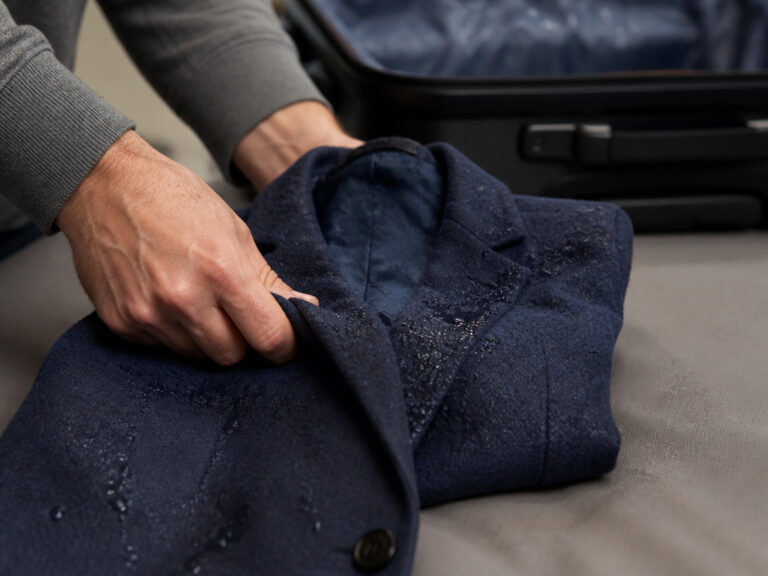
- Damp Hats: This is a non-negotiable. Moisture trapped against straw or felt can breed mold in as little as 48 hours. If your hat gets damp, air-dry it completely on a flat surface before even thinking about your suitcase.
For these edge cases, the standard packing a suitcase method is your enemy. You need a plan B. Often, that plan is to treat the hat as a third piece of carry-on luggage. Most airlines allow a hat as an additional personal item, especially if you’re wearing it.
What If My Hat Gets Crushed?
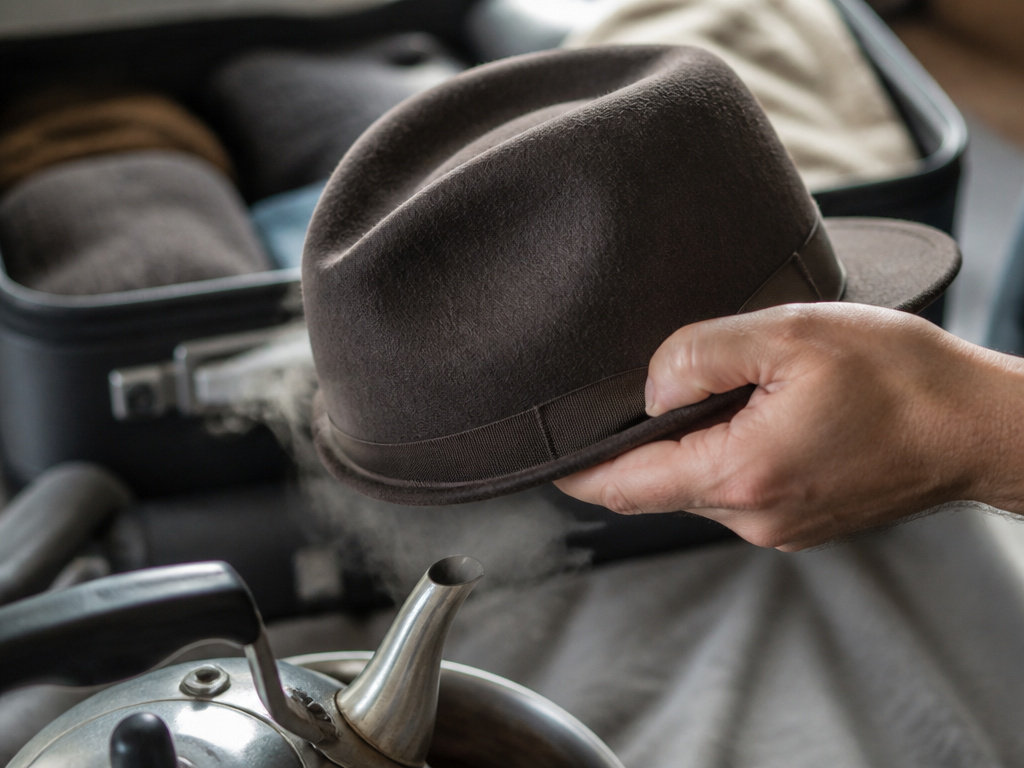
You unpack and there’s a dent. Don’t panic. Most travel wrinkles are superficial.
The first 30 seconds after unpacking are key. Unpack the hat first and let it sit. Many quality materials, like Squishee® or wool felt, will begin to spring back on their own within an hour.
If a crease remains, introduce moisture and reshape by hand. 1. Steam it: Hold the hat (avoid any leather trim) in the steam from a kettle or a garment steamer for a few seconds. Don’t saturate it. 2. Reshape: Immediately use your hands to gently massage and reform the crown and brim back to their proper shape. 3. Let it rest: Place the hat on a flat surface or a hat stand to cool and dry completely. The heat and moisture relax the fibers, letting them hold the new shape.
Common mistake: Using a hair dryer or direct heat. This can warp synthetic materials and cause wool to shrink. Steam is indirect, gentle moisture. Dry heat is destructive.
This process also works for reviving clothes after packing a hard-shell suitcase, where garments can get pressed into sharp folds. The principle is the same: relaxed fibers can be reshaped.
The Travel Hat Hall of Fame

If you want to eliminate risk, start with the right hat. These categories are proven survivors.
- The No-Worry Champion: The Packable Synthetic. A hat like an Eric Javits Squishee® Fedora is engineered for this. It can be compressed, squished, and will return to form. This is the default pick for frequent travelers who need a structured look.
- The Flexible Friend: The Cotton Bucket Hat. Brands like Brixton make cotton bucket hats with reversible brims. You can literally roll them up and stuff them in a backpack pocket. They’re perfect for beach trips or hiking.
- The Structured Workhorse: The Wool Felt Fedora. A classic. It holds its shape well if packed correctly using the crown-down method but will show creases if abused. Ideal for city travel or fall trips.
Your choice should mirror your trip. A two-week European tour with one suitcase? Go packable synthetic. A weekend beach getaway? A cotton bucket hat is all you need. Buying a hat is like choosing any travel gear, the right tool for the job reduces stress.
Frequently Asked Questions
Can you pack a hat in a carry-on suitcase?
Yes. The crown-down method works perfectly in a carry-on suitcase. In fact, it’s safer because the hat stays with you and avoids the rougher handling of checked baggage. Position the hat in a corner to minimize pressure from the bag’s walls.
How do you pack a baseball cap without ruining it?
Use the same crown-down method. Stuff the crown with socks or a t-shirt to maintain its dome shape. If the cap is unstructured and soft, you can also gently fold it in half and pack it in the center of your packing your shoes bundle for protection.
Is it better to wear a hat on the plane?
If possible, yes. Wearing it is the absolute safest method. Most airlines allow it, and it doesn’t count toward your baggage allowance. Use a hat clip from brands like Hicks & Brown if you need to take it off during the flight, so it stays secure and undamaged.
How do you get wrinkles out of a packed hat?
Use steam. Hold the hat over the steam from a boiling kettle or use a handheld garment steamer for a few seconds. Gently reshape the area with your hands as the material becomes pliable. Let it dry in the correct shape. Never use an iron.
What is the absolute worst thing to do when packing a hat?
Packing it damp is the fastest route to ruin. The moisture warps the shape and leads to mold growth within two days. The second worst is placing a rigid hat where the brim must bend against the suitcase wall, that crack is forever.
Before You Go
Packing a hat isn’t about luck. It’s about physics. Crown-down distributes weight. A stuffed crown resists collapse. A dry hat avoids mold. Remember those three things.
For everything else, your jeans, your shirts in a suitcase, your toiletries, follow your standard suitcase packing guide. But give the hat its own five-minute ritual. The difference between a hat that travels and a hat that arrives is just a pile of socks and the direction you set it down.