Pack a Sports Coat in a Suitcase Without Wrinkles: A Guide
This post contains affiliate links. As an Amazon Associate, we earn from qualifying purchases.
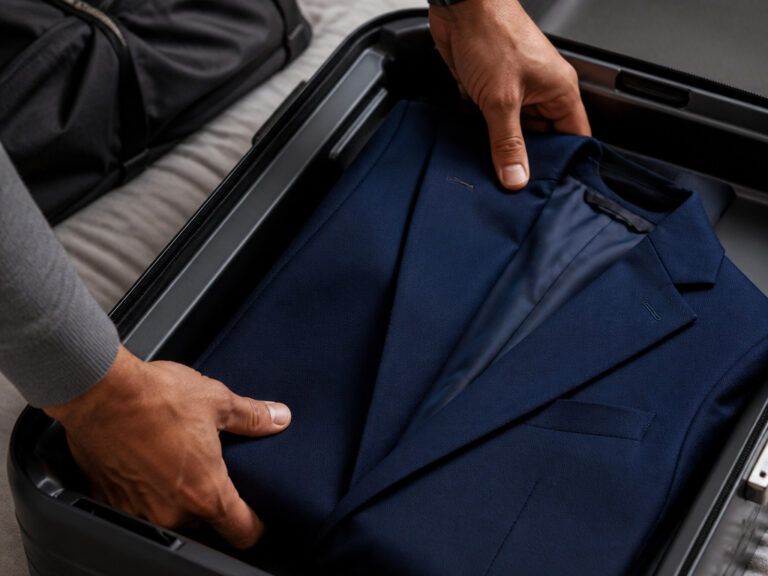
To pack a sports coat in a suitcase, use the inside-out shoulder fold. Lay the jacket face down, turn one shoulder inside out, and tuck the opposite shoulder into it. Fold it once horizontally, place it flat on top of your other packed items, and use a dry-cleaning bag to reduce friction. This method protects the outer fabric and minimizes sharp creases.
The inside-out fold works because it uses the jacket’s own lining as a protective sleeve. The outer wool never rubs against another rough surface, which is where most travel wrinkles start.
What follows is the exact sequence, the fabrics that fight you, the one mistake that sets creases permanently, and how to recover at the hotel.
Key Takeaways
- The inside-out shoulder fold is the default for structured jackets; rolling is only for soft, unstructured blazers.
- Fabric decides everything. Tropical wool bounces back; linen and leather crease for keeps if folded wrong.
- Never pack a damp jacket. The moisture sets creases and can cause mildew spots within a day.
- Place the folded coat on top of everything else in your suitcase. Shoes and heavy items go in first, at the bottom.
- A dry-cleaning bag is non-negotiable. The slippery plastic prevents fabric-on-fabric friction, which causes 80% of transit wrinkles.
The 5-Step Inside-Out Shoulder Fold (Step-by-Step)
This isn’t just a fold. It’s a packing system that uses the jacket‘s construction to protect itself. The goal is zero sharp creases across the lapels or chest.
Before you start: Unbutton the jacket. Work on a flat, clean surface like a bed or table. Have a plastic dry-cleaning bag ready. Folding on a carpet or uneven floor introduces wrinkles before the jacket even hits the suitcase.
Step 1: Lay it flat, face down.
Position the jacket with the collar at the top and the sleeves spread out. Smooth the back panel with your hands to remove any immediate wrinkles. This is your baseline.
Step 2: Turn one shoulder inside out.
Reach inside the left shoulder. Grab the seam and pull it through itself, so the lining is facing out and the outer fabric is tucked inside. The shoulder now looks inverted.
Step 3: Tuck the opposite shoulder inside.
Take the right shoulder (still normal) and nest it neatly inside the inverted left shoulder. The jacket is now folded vertically in half, with the lining on the outside acting as a protective sleeve.
Step 4: Fold once horizontally.
Bring the bottom hem up towards the collar. The fold should happen at the jacket’s natural break point—usually just below the pockets. Avoid folding directly across the chest or the shoulder blades.
Step 5: Wrap and place.
Slide the folded jacket into a plastic dry-cleaning bag. Don’t seal it; just let the plastic wrap loosely. This creates a slippery barrier. Place the bundle flat in your suitcase, on top of all other packed items.
Where this goes sideways: Folding across the chest instead of at the natural break. You’ll get a horizontal crease line right below the lapels that a steamer can’t fully erase. It looks like the jacket was stuffed in a drawer.
Skip step 2, and the wool exterior grinds against itself for the entire flight. The result is a fuzzy, worn-looking patch on the back by the time you land.
Suitcase Strategy: Layering, Placement, and Bag Choice
Packing order is a physics problem. Heavy things sink and compress whatever is beneath them. Your sports coat must be the last item in, sitting on a stable, flat platform.
| Layer | Items | Why This Order |
|---|---|---|
| Bottom | Shoes (in bags), toiletry kit, any dense electronics. | Creates a solid, non-shifting foundation. Shoes are the densest objects. |
| Middle | Jeans, pants, sweaters, t-shirts, socks. | These items can handle compression without permanent damage. |
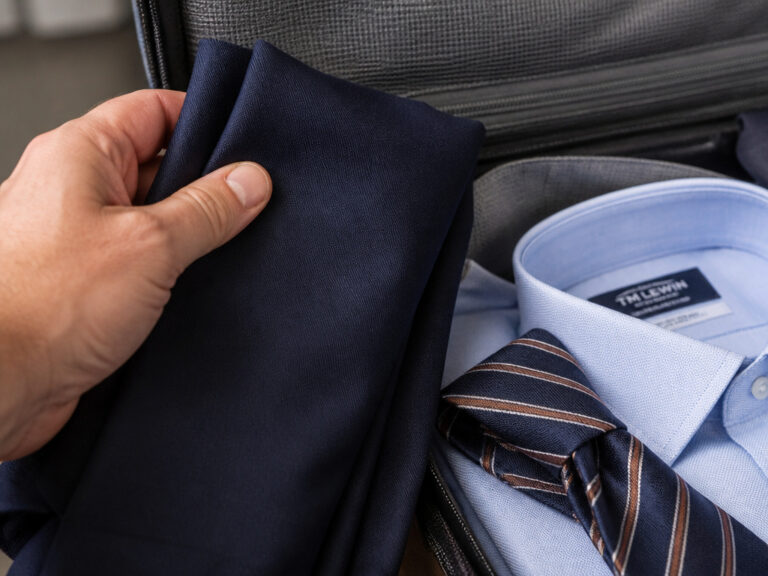
| Top | Sports coat, dress shirts, trousers. | The wrinkle-prone garments experience minimal pressure here. |
A hard-shell suitcase is mandatory for this method. Soft-sided bags flex, allowing external pressure to crush the entire stack. The rigid shell of a Travelpro Platinum Elite or a Samsonite Winfield 2 maintains the flat, protected space your jacket needs.
Use the suitcase’s compression straps, but keep them loose. A snug strap holds things in place; an overtightened strap digs a permanent ridge into the shoulder padding.
Common mistake: Stuffing the suitcase to its limit. If you have to sit on the lid to close it, the jacket is already creased. Leave an inch of empty space at the top for the contents to settle without crushing.
What to Do With Problem Fabrics (Leather, Linen, Tweed)
Not all jackets follow the rules. The standard fold can damage some materials permanently.
Leather and Faux Leather
These materials hold a crease forever. You must keep the hide supple. 1. Condition the jacket with a product like Bickmore Bick 4 before travel. 2. Do NOT use the sharp inside-out fold. Instead, roll the jacket loosely from the bottom hem. 3. After rolling, wrap it in a soft cotton pillowcase—never plastic—to prevent trapped moisture and mildew.
Linen and Silk
Wrinkles are part of the aesthetic, but deep creases are not. – The inside-out fold still works, but be meticulous with the dry-cleaning bag. – Pack linen only if you’re going for a relaxed look. For a sharp crease, wear it on the plane or use a garment bag.
Heavy Tweed or Structured Blazers
Thick fabric and padding resist folding. – Follow the standard inside-out fold, but be prepared for a shoulder bump. – Unpack immediately and hang the jacket for a full 24 hours to let the canvas recover its shape.
Unstructured & Soft-Shouldered Blazers
These are the easiest. The lack of rigid canvas means they can be rolled tightly without consequence. Roll from the bottom, wrap in plastic, and tuck into a suitcase corner. They’ll spring back after hanging.
The One Mistake That Ruins a Jacket Before You Leave
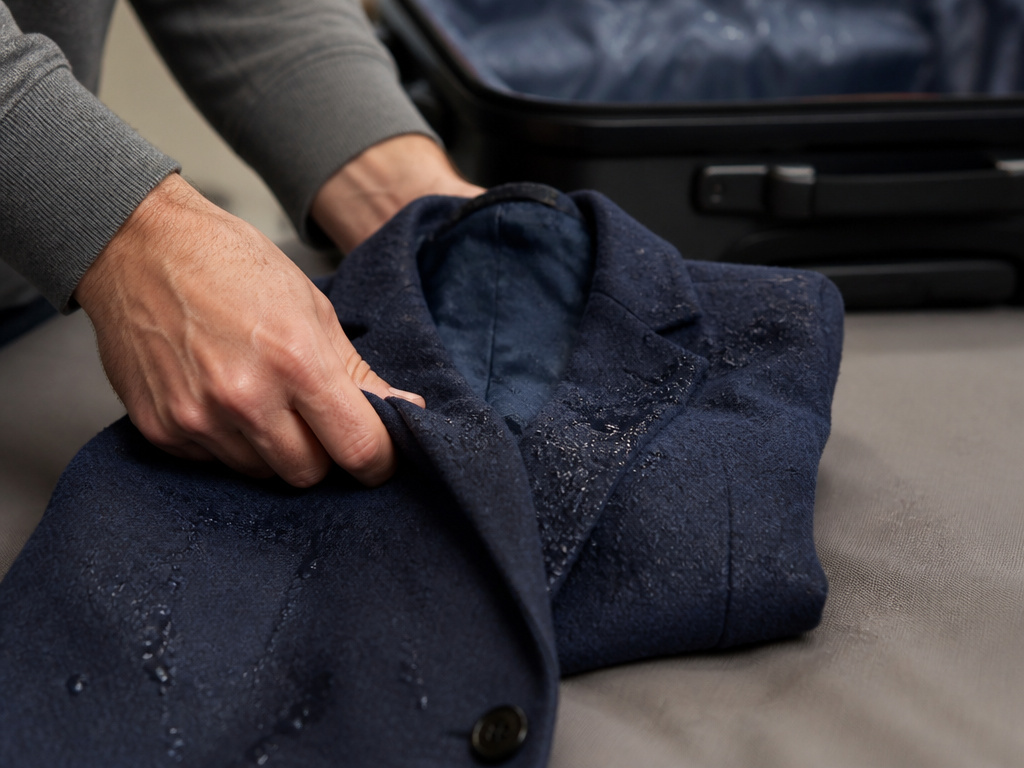
Folding a damp or wet jacket.
Moisture sets creases like a temporary press. A jacket that was slightly damp from a humid day, when folded and compressed for hours, will develop sharp, set lines. Worse, it can lead to mildew or water spots on the lining. Always ensure the jacket is bone-dry before packing.
The same goes for packing a jacket that’s already wrinkled. Travel doesn’t smooth things out; it deepens every existing flaw.
Garment Bag vs. Suitcase Fold: When to Choose Which
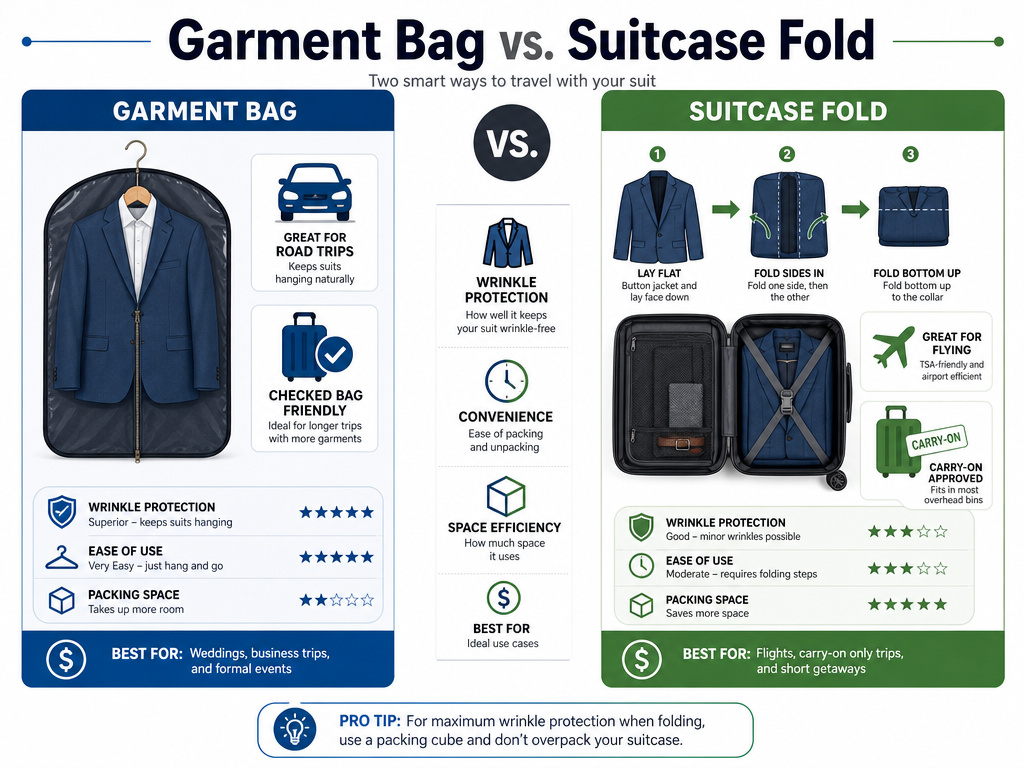
The garment bag is the obvious solution, but it has strict limits.
| Method | Best For | Biggest Risk |
|---|---|---|
| Garment Bag | Car travel, short trips with checked luggage, transporting multiple suits. | Checked bag fees, rough handling, exposure to weather on the tarmac. |
| Suitcase Fold | Carry-on travel, business trips, mixing formal and casual wear in one bag. | User error in the fold, overpacking the suitcase. |
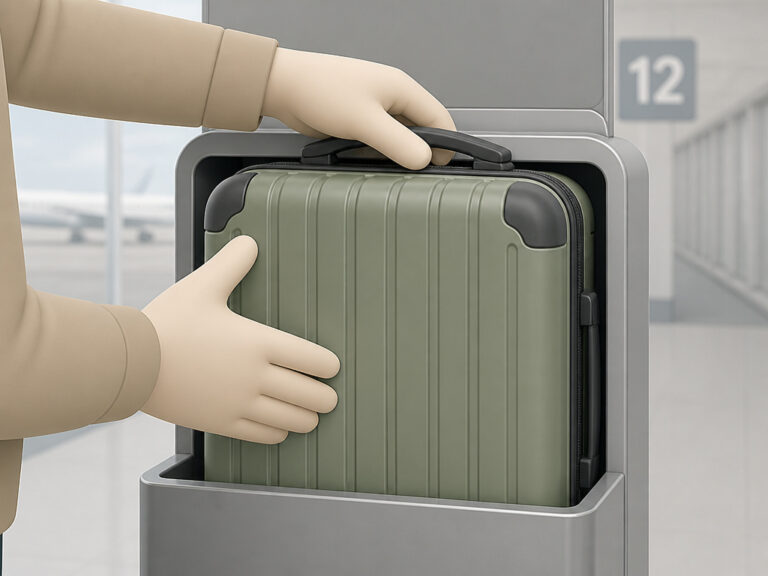
A full-length garment bag rarely meets strict airline carry-on dimensions. If you’re flying a regional jet, your bag might not even fit in the overhead. Folding the jacket into your carry-on roller is the more reliable choice for most business travel.
If you own a suit, the principles are identical. The process for packing a suit in a suitcase uses the same inside-out fold for the jacket and a precise fold for the trousers along their natural crease.
Arrival and Recovery: The 15-Minute Hotel Fix
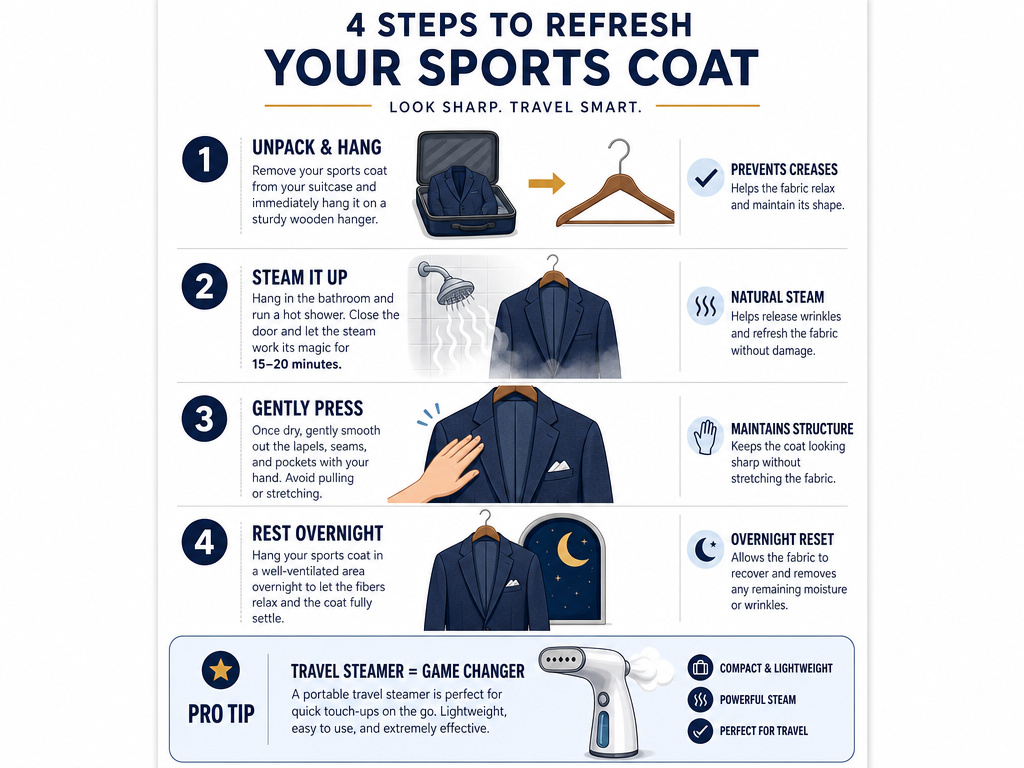
You’ve landed. Now, undo the travel damage immediately.
- Unpack first. Hang the jacket on a proper wooden or padded hanger within 10 minutes of entering your room. Wire hangers distort the shoulder shape.
- Steam, don’t iron. Hang the jacket in the bathroom and run the shower on hot for 5-10 minutes with the door closed. Don’t get it wet. The steam will relax 90% of the travel wrinkles.
- Hand press. After steaming, use your hands to gently smooth the lapels and down the front panels, following the fabric’s grain.
- Let it rest overnight. If you have time, leave the jacket hanging overnight. Gravity is the most effective wrinkle-remover you own.
For stubborn creases, a portable travel steamer like the J-2000 Jiffy Steamer is a better investment than a hotel iron. Direct ironing can scorch wool and create shiny patches.
Frequently Asked Questions
Can you roll a sports coat instead of folding it?
You can roll an unstructured, soft-shouldered blazer to save space. Never roll a structured jacket with padded shoulders—it distorts the canvas and creates a round bulge in the back that won’t hang right.
What is the best fabric for a travel sports coat?
Tropical wool (150s-160s super count) is the gold standard. It’s lightweight, breathable, and has a natural resilience that sheds wrinkles. Wool-mohair blends and high-twist wool are also excellent choices.
How do you pack a sports coat in a carry-on?
Use the inside-out shoulder fold, wrap it in a dry-cleaning bag, and place it flat in the lid compartment of your carry-on. Ensure it’s the last item packed, so nothing heavy sits on top of it.
Does putting a jacket in a dry-cleaning bag really work?
Yes. The plastic drastically reduces friction between the jacket and other items. This friction is the primary cause of surface wrinkles and fabric fatigue during transit.
What if my suitcase has no compression straps?
Use packing cubes to create a stable, compressed base layer for your middle items. Then place your wrapped jacket on top of this stable platform. Fill any gaps around the sides with soft items like socks to prevent shifting.
The Bottom Line
The inside-out shoulder fold is the only technique you need for a structured sports coat. Match it with a dry-cleaning bag, a hard-shell suitcase, and a top-layer placement. Choose tropical wool if you buy a jacket for travel, and never pack it damp. Roll unstructured blazers, fold everything else, and steam it back to life when you arrive. That’s the whole system.