How to Clean a Sleeping Bag: Step-by-Step Washing Guide
This post contains affiliate links. As an Amazon Associate, we earn from qualifying purchases.
To clean a sleeping bag, match three things: the fill type (down or synthetic), the washing machine type (front-loader only), and a specialized, non-biological detergent. Wash on a gentle cycle at 30°C (86°F), rinse twice, and tumble dry on low heat with clean tennis balls. The first full wash should wait until about 50 nights of use.
That 50-night number is the pivot. It comes straight from Deuter and Rab’s service manuals, and it’s the line between maintaining loft and accelerating wear. Wash too soon and you strip natural oils. Wait too long and body grease bakes into the fill, turning it stiff.
What follows is not a generic list. It’s the field-tested difference between a bag that lasts a decade and one that’s shot in three seasons. We’ll cover the OEM specs that contradict each other, the one machine feature that destroys bags on contact, and the detergent choice that decides whether your down ever lofts again.
Key Takeaways
- Wait for 50 nights before the first full wash. Spot clean until then.
- A top-loading washer with a central agitator will shred your bag. Find a front-loader.
- Use a down-specific detergent like Nikwax DownWash for treated down. Standard detergent strips the water-repellent treatment.
- Dry on low heat only. High heat melts synthetic fabric and can scorch down.
- Store your bag loose in its large storage sack, never compressed in its stuff sack.
The Down vs Synthetic Divide: Washing Steps That Actually Work
The process splits here. Down is a natural protein fiber coated in oils. Synthetic fill is plastic. Treat them the same and one will be ruined.
Technical Snapshot: Down sleeping bags require a front-loading washing machine (minimum 5 kg capacity), a gentle cycle at 30°C (86°F), and a non-biological, down-specific detergent. The wash cycle should be followed by two extra rinse cycles to remove all soap residue, which clumps the down. Drying requires a tumble dryer set to a maximum of 30°C with three clean tennis balls to break up clumps.
Synthetic bags follow the same temperature and machine rules, but you have more detergent flexibility. A technical cleaner like Nikwax Tech Wash is ideal, but a mild liquid detergent works. The real difference is drying time and consequence.
Why the fill type dictates the detergent: Down’ warmth comes from its loft, which depends on the natural oils on each plume. Biological detergents contain enzymes designed to break down organic matter—like those oils. Use one, and you’re literally washing the insulation out of your bag. Synthetic fill doesn’t have this issue, but standard detergents can leave a filmy residue that reduces loft over many washes.
How to Wash a Down Sleeping Bag
- Inspect and repair any holes or torn seams. Washing a damaged bag worsens the tear. Check baffles, zippers, and the foot box.
- Close all zippers and Velcro tabs. An open zipper can snag and break. Loose Velcro can hook and pull threads.
- Turn the bag inside out. This protects the outer shell and lets the water reach the down fill directly.
- Load into a clean, front-loading washer. Run an empty rinse cycle first if you use fabric softener on your clothes. Residue coats down.
- Add down-specific detergent. For bags with treated down (like Nikwax Hydrophobic Down), this is mandatory. The Nikwax DownWash formula is designed to maintain the water-repellent treatment.
- Set to gentle/cold cycle at 30°C (86°F). Do not use hot water.
- Run two extra rinse cycles. This is non-negotiable. Soap residue is the primary cause of down clumping.
- Gently press out water after the final spin. Do not wring or twist. Lift the entire bag from the washer to avoid straining seams.
How to Wash a Synthetic Sleeping Bag
The sequence is identical from steps 1 through 4. The detergent changes. Use a technical cleaner or a very mild, non-biological liquid detergent. Fabric softener is still banned—it coats the synthetic fibers, reducing their ability to trap air.
The risk point is heat. Synthetic fabrics and fills can melt. Stick to the 30°C rule.
Your Washing Machine is a Tool: Check It Like One
This isn’t about capacity. It’s about mechanism. The central agitator post in a top-loading washer acts like a spinning paddle. Your sleeping bag will wrap around it, stretching seams, tearing baffles, and shredding lightweight shell fabric.
Where this goes sideways: Using a top-loading agitator washer. The bag wraps around the central post, putting immense torque on the side seams. Baffles separate, and down shifts permanently into one clump. The damage is often not visible until the bag comes out of the dryer, cold and lumpy.
Front-loading machines tumble the bag gently. If you only have a top-loader, you have two paths: find a laundromat with front-loaders, or hand-wash in a bathtub. Therm-a-Rest’s manual states this warning explicitly.
| Machine Type | Action on Bag | Risk Level | Recommended? |
|---|---|---|---|
| Top-Loader with Agitator | Wraps & twists bag around central post | High – Can destroy seams and baffles | Never |
| Front-Loader (Domestic) | Gentle tumbling action | Low – Safe if capacity is sufficient | Yes |
| Commercial Front-Loader | Powerful, thorough tumbling | Very Low – Ideal for full rinsing | Best Option |
The Drying Process: Low Heat, Tennis Balls, and Patience
Drying is where you restore the bag or wreck it. High heat is the enemy of both types. For down, it can scorch the feathers. For synthetic, it can melt the fibers or the shell fabric itself.
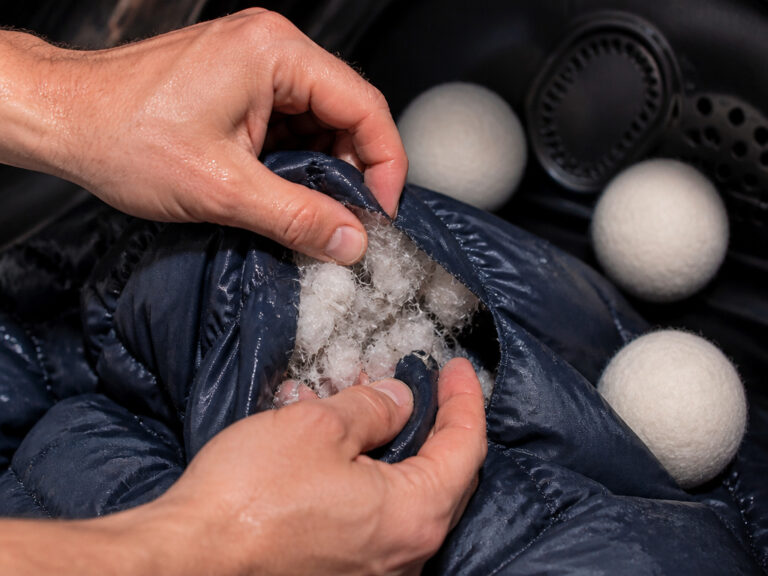
The tennis ball trick isn’t a hack; it’s physics. The balls bounce around, physically breaking up damp down clusters. Without them, down dries in cemented clumps that will never fully loft again. For synthetic bags, they’re helpful but less critical.
- Start with a drip-dry. After the final spin, hang the bag over a shower rod or two chairs for an hour. Putting a sopping-wet bag directly into a dryer stresses the drum and heats the fabric unevenly.
- Load into a tumble dryer. Again, clean the lint trap first.
- Add two or three clean, dry tennis balls.
- Set heat to LOW (30°C max). No exceptions. The “Air Fluff” or “No Heat” setting is better than guessing.
- Run in one-hour cycles, checking and turning the bag each time. This can take 3-4 hours for down, less for synthetic.
- Test for complete dryness. Feel deep inside the baffles, especially at the foot box. Any dampness means mold will grow in storage. If in doubt, run another cycle.
Common mistake: Stopping the dryer when the shell feels dry. The insulation in the center of a baffle can stay damp for hours longer. That hidden moisture is what causes the musty, locker-room smell that never leaves.
Spot Cleaning and Storage: The Daily Habits That Prevent Washes
 The best wash is the one you avoid. Body oils and dirt are the main drivers for a full wash. Intercept them.
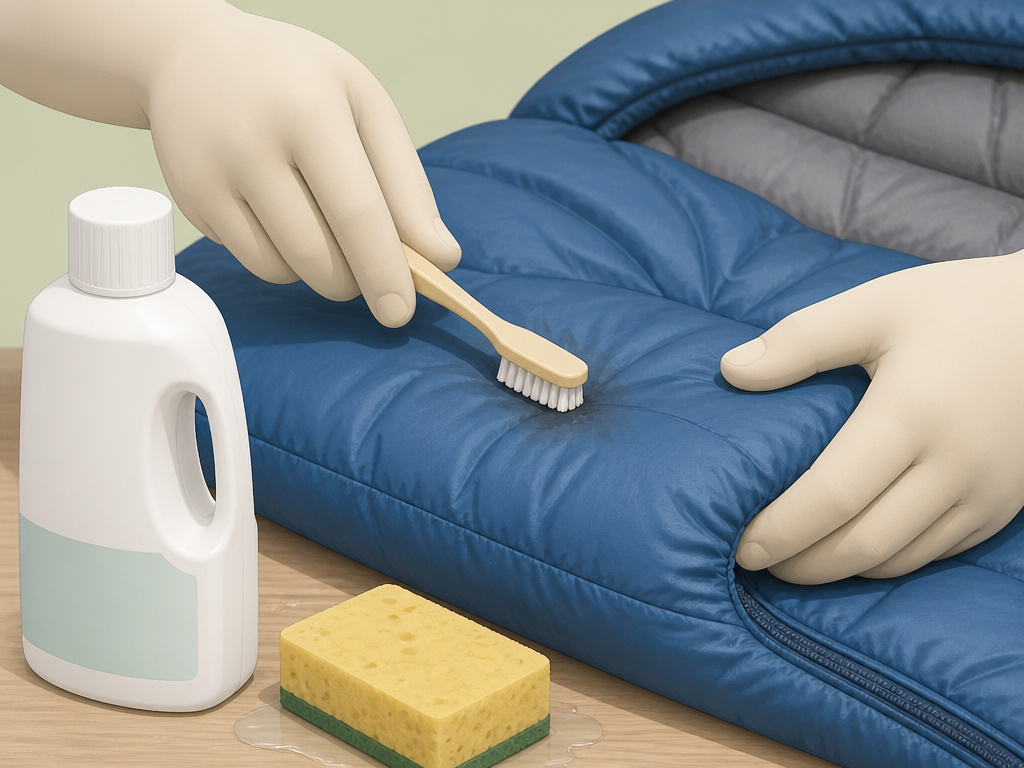
Spot cleaning is your first line of defense. Use a soft toothbrush and a drop of the same technical detergent you’d use for a full wash. Dab, don’t scrub. Rinse with a damp sponge, holding the shell away from the fill to keep it dry.
Use a sleeping bag liner. A simple silk or polyester liner adds warmth, feels better, and absorbs sweat and oils. Toss it in with your regular laundry.
Air it out after every trip. Hang your bag over a railing or lay it flat in a shaded, dry space for a few hours. This evaporates moisture and lets odors dissipate. Storing it damp is the fastest way to ruin it.
Storage is not packing. Never store a clean sleeping bag compressed in its small stuff sack. That’s for travel only. Use the large, breathable storage sack it came in, or hang it in a closet. Compression over months permanently damages the fill’s ability to loft.
Frequently Asked Questions
Can I dry clean my sleeping bag?
No. The chemical solvents used in dry cleaning strip the natural oils from down, permanently damaging its loft. For synthetic bags, the chemicals can degrade the fibers. No major manufacturer recommends dry cleaning.
How often should I wash my sleeping bag?
Follow the 50-night rule from manufacturers like Deuter and Rab. For occasional users, that might mean one wash every two or three years. For a bag used every weekend, you’re looking at a wash each season. Always spot clean first.
What detergent should I use for a down sleeping bag?
Use a down-specific technical cleaner like Nikwax DownWash. It’s formulated to clean without stripping the natural oils or water-repellent treatments. For synthetic bags, Nikwax Tech Wash or a very mild, non-biological liquid detergent is safe.
Can I wash my sleeping bag at home?
Yes, if you have a front-loading washing machine. If you only have a top-loader with an agitator, you must hand-wash it in a bathtub or find a laundromat. The agitator poses a high risk of damage.
Why did my sleeping bag lose its loft after washing?
Two likely causes: soap residue from insufficient rinsing, or drying with high heat. Soap residue glues down clusters together. High heat can damage the feather structure or melt synthetic fibers. Always double-rinse and dry on low heat with tennis balls.
The Bottom Line
Cleaning a sleeping bag isn’t about making it look new. It’s about preserving the loft that keeps you warm. The specs are precise: 30°C water, front-loader only, down-specific soap, low heat, tennis balls. Ignore one, and the bag’s performance drops for good.
Wash less than you think—target 50 nights between full washes. Spot clean relentlessly. Store it loose. That’s how a bag lasts a decade of solid use. For the majority of campers, a down sleeping bag cleaned with Nikwax DownWash in a commercial front-loading washer will come out looking and performing like it just left the factory. Everything else is a compromise that shows up at 3 AM when the temperature drops.