How Much Is a Chanel Bag
This post contains affiliate links. As an Amazon Associate, we earn from qualifying purchases.
A Chanel bag price in 2026 starts at $3,850 for a Wallet on Chain and exceeds $13,200 for a Maxi Classic Flap. The iconic Medium Classic Flap is $11,700. These figures reflect an April 2, 2026, price increase of 3–4%, continuing a sixteen-year trend where the Medium Classic Flap’s cost has risen 310% from its $2,850 price in 2010.
If you’re tracking these numbers, you’re not just watching a price tag. You’re watching a deliberate market strategy play out in real time. Chanel isn’t reacting to inflation; it’s using controlled, annual price hikes to reposition its entire brand upmarket, closer to the exclusive territory of Hermès bags. The consequence is a market split: a boutique experience for those who can time the increases, and a booming secondary market for everyone else. This guide breaks down the 2026 price list, explains the regional loopholes that can save you thousands, and shows exactly where the resale value lives—and where it vanishes.
Key Takeaways
- The April 2026 increase added $200 to Mini bags and $400 to most other Classic Flap sizes, with the Medium now at $11,700.
- Prices did NOT increase in Australia, China, Malaysia, Switzerland, Sweden, Thailand, or the Czech Republic in April 2026, creating immediate regional price gaps.
- Resale value is dominated by size and condition. A bag in unworn condition loses about 37% of its value the moment it becomes “excellent pre-loved,” and smaller sizes like the Mini and Small retain value far better than Jumbo or Maxi.
- Buying in Europe and claiming the VAT refund can save an American buyer roughly $800–$1,000 on a Medium Classic Flap compared to U.S. Retail plus sales tax.
- The pre-owned market is now a rational alternative for classic models, with authenticated, excellent-condition pieces often selling below the new, increased retail price.
Chanel Bag Prices in 2026: The Official Numbers
The numbers below are the new retail prices effective April 2, 2026, in the United States. This increase, confirmed by Chanel boutiques and reported across industry sources, followed a $500 increase in August 2025. The pattern is methodical: Mini sizes rise by $200, and nearly all other core sizes rise by $400.
The April 2026 Chanel price increase averaged 3–4% across core handbag lines in the U.S. And Europe. The Medium Classic Flap (11.12) rose from $11,300 to $11,700, a 3.5% increase. This continues a long-term pricing strategy of incremental annual adjustments designed to elevate brand positioning.
| Chanel Bag Model | Size | Price (Pre-April 2026) | Price (April 2026 Onward) | Increase |
|---|---|---|---|---|
| Classic Wallet on Chain (WOC) | – | $3,700 | $3,850 | +$150 |
| Classic Mini Square Flap | 12 x 17 x 7 cm | $5,200 | $5,400 | +$200 |
| Classic Mini Rectangular Flap | 12 x 20 x 6 cm | $5,400 | $5,600 | +$200 |
| Classic Small Flap | 14.5 x 23 x 6 cm | $10,900 | $11,300 | +$400 |
| Classic Medium/Large Flap | 15.5 x 25.5 x 6.5 cm | $11,300 | $11,700 | +$400 |
| Classic Jumbo Flap | 19 x 30 x 9 cm | $12,200 | $12,600 | +$400 |
| Classic Maxi Flap | – | $12,800 | $13,200 | +$400 |
The takeaway isn’t the single increase. It’s the cumulative effect. A Medium Classic Flap has gone from $2,850 in 2010 to $11,700 today. That’s a 310% climb in sixteen years. For context, the same financial stretch could cover a significant home renovation or a luxury car down payment. Chanel’s pricing is no longer just about leather and craftsmanship; it’s a financial instrument.
Where the 2026 Increase Did Not Happen
Worth knowing before you start: While the U.S. And Europe saw hikes, Chanel did not raise prices for the Medium Classic Flap in Australia, China, Malaysia, Sweden, Switzerland, Thailand, or the Czech Republic in April 2026. This regional discrepancy is critical for international shoppers. It means the same bag had a static price in Sydney while it jumped $400 in New York. For a traveler, buying in a non-increase country before any future adjustment locks in a lower price. However, these countries often have higher baseline prices to offset tax structures, so the net saving requires a calculator, not just a calendar.
Why Chanel Prices Increase Every Year (It’s Not Just Inflation)
The standard explanation points to rising production costs, inflation, and demand. That’s the commodity answer. The real mechanism is brand strategy. Chanel uses scheduled price increases to achieve two goals: create perceived scarcity and methodically climb into the ultra-luxury tier.
The One Rule That Creates Scarcity
Chanel enforces a “one classic bag per transaction” policy globally. You cannot walk into a boutique and buy two Classic Flaps, 2.55s, or Boy Bags at once. This policy, designed to combat reseller bulk buying, artificially limits supply at the retail source. When combined with predictable price hikes, it creates a powerful psychological trigger: “Buy now before it costs more and becomes harder to get.”
The Hermès Gambit
Chanel’s long-term trajectory aims for Hermès bag territory, specifically near the price point of a Birkin bag. Analysts tracking the 15-17% average annual price increase on the Classic Flap project it could reach $20,000 within five years. This isn’t an accident. It’s a repositioning. Each increase lifts the entire brand’s perceived value, making older models seem like relative bargains and pulling the resale market up with it.
Retail vs. Resale: Where Does the Value Actually Live?
Buying a Chanel bag at retail is a experience. Buying one on the resale market is a financial calculation. The data from resale platforms like SACLÀB clarifies where your money goes—and where it evaporates.
The Condition Penalty is Immediate and Severe
The largest value drop occurs between an unworn bag (Grade 1) and an excellent pre-loved bag (Grade 2). On average, that first step out of the box costs you 37% of the retail price. A $11,700 Medium Flap moves to about $7,371 the moment it’s no longer considered pristine. This highlights the market’s extreme sensitivity to any sign of wear.
Size Dictates Resale Performance
All bags are not equal. Data shows smaller sizes retain value dramatically better. This is where the investment narrative holds some water, but only for specific configurations.
| Chanel Bag Size | Approx. Value Retention (Unworn/Like-New) | Key Reason |
|---|---|---|
| Mini (Square/Rectangular) | Up to 87% of retail | High demand, versatility, lower entry price. |
| Small Classic Flap | ~80-85% of retail | The modern “daily bag” size, fits essentials. |
| Medium/Large Classic Flap | ~70-75% of retail | Most iconic, but higher price depresses % retention. |
| Jumbo / Maxi | 58% (Jumbo) to 47% (Maxi) | Less practical, heavier, much harder to sell at scale. |
The lesson is blunt. If resale potential influences your purchase, buy a Mini or a Small. The Chanel 25 Mini, a newer icon, has shown particularly strong early retention. The Jumbo and Maxi are style statements that you buy for love, not for any future financial return.
How to Buy a Chanel Bag for Less Than Retail
 Paying full price is a choice. Several legitimate paths can save you thousands.
1. The European VAT Refund
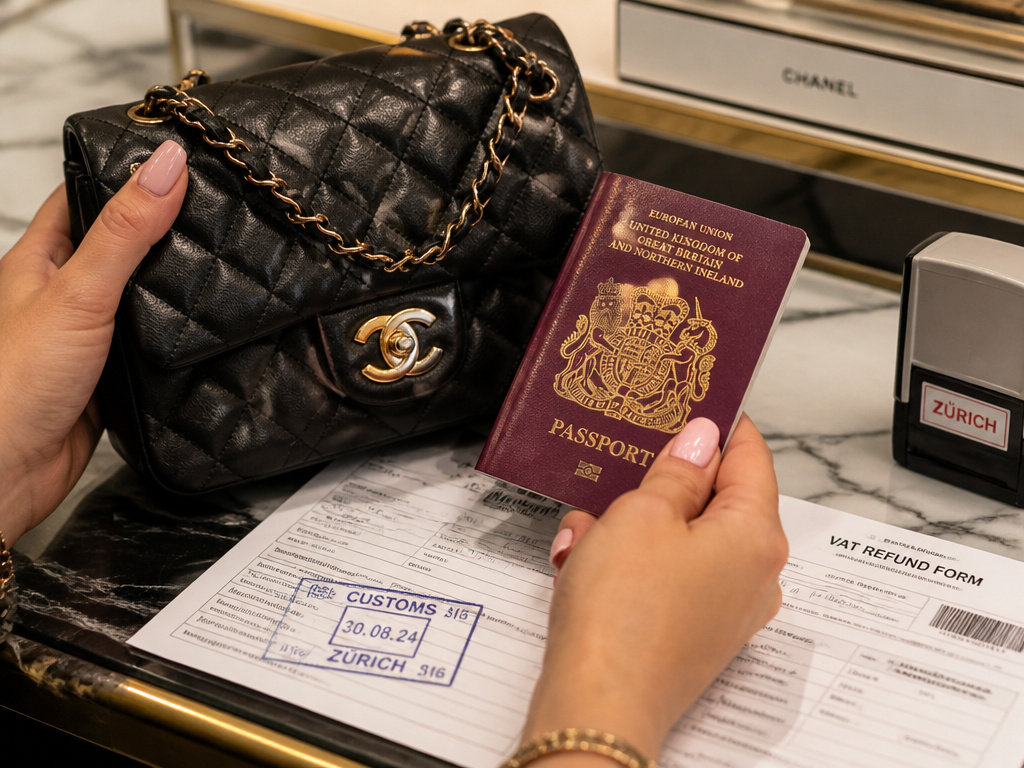
This is the most significant saving for a traveler. European prices include Value-Added Tax (VAT), typically 20%. As a non-resident, you can claim most of this back. – The Math: A Medium Classic Flap is €10,500 in Europe. A VAT refund of 12-14% (after fees) nets you roughly €1,260 back. The effective price drops to about €9,240, or $9,900 at favorable exchange rates. Compared to the U.S. Price of $11,700 plus sales tax (say, 8% in NYC = $12,636), the saving exceeds $2,700. – Process: Get the refund form at the boutique, get it stamped at customs when you leave the EU, and submit it for a credit card refund or cash at the airport. Reddit users report savings of “$800-$1,000” after all factors.
2. The Pre-Owned Market
This is where the condition penalty becomes your advantage. You can buy a bag that someone else took the 37% depreciation hit on. – Where to Look: Trusted resellers like Fashionphile, The RealReal, Sotheby’s, and Konesseur. These platforms authenticate their inventory. – What to Expect: An excellent-condition (Grade 2) Medium Classic Flap from 2021 might list for $7,500-$8,500. That’s thousands under today’s retail for a bag that is virtually identical. – The Caveat: Authentication is non-negotiable. Chanel is one of the most counterfeited brands. Only buy from a seller that guarantees authenticity.
3. Regional Price Arbitrage
As noted, prices in countries like Japan or Switzerland may be lower at a given moment, and some countries skipped the April 2026 increase. This requires research and travel, but for a major purchase, the flight might be worth the saving.
Chanel vs. Other Luxury Brands: A Price Perspective
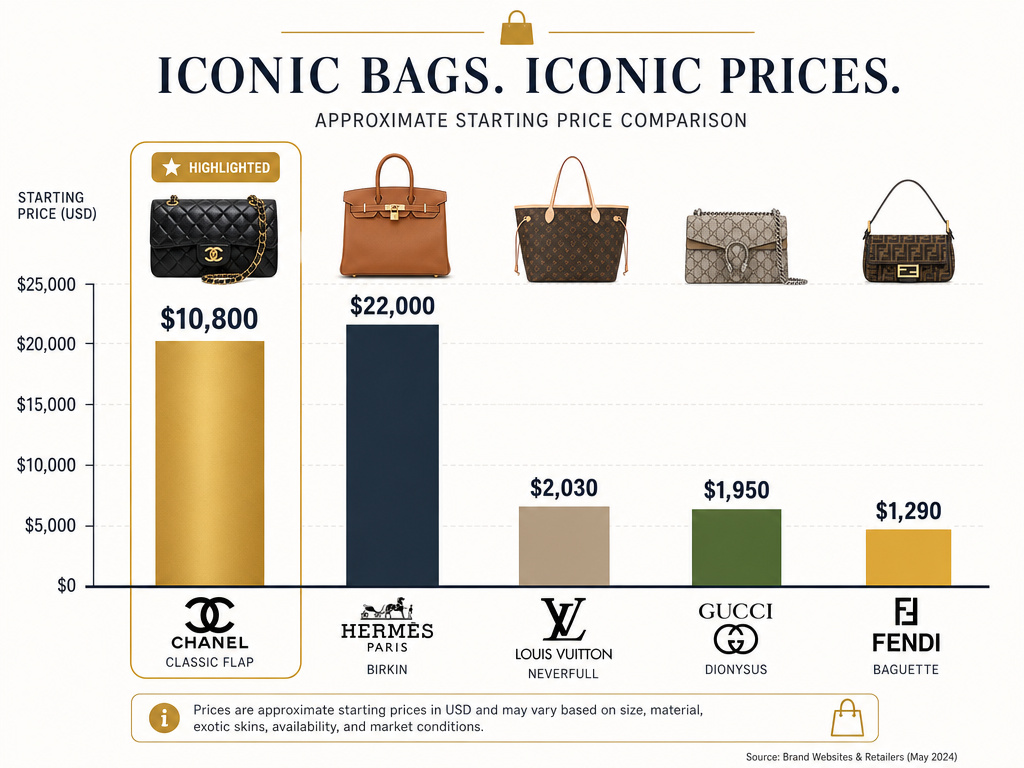 Chanel’s aggressive pricing reshapes the entire luxury landscape. It’s useful to see where it sits relative to peers.
| Brand & Iconic Model | Starting Price Point (Approx.) | Key Differentiator |
|---|---|---|
| Chanel Classic Flap | $5,400 (Mini) | Highest annual price increase rate, iconic status, strong small-size resale. |
| Hermès Birkin | $10,000+ (but often $15k+) | Ultimate exclusivity via invitation, highest resale premiums, different market entirely. |
| Louis Vuitton Neverfull | $1,600 | Accessible entry, ubiquitous, lower resale % but high volume. |
| Gucci Dionysus | $2,500 | Fashion-forward, trend-driven, steeper value depreciation. |
| Fendi Baguette | $2,800 | Seasonal appeal, revival style, value tied heavily to specific collections. |
Chanel is in a category of one between the accessible luxury of Louis Vuitton bags and the rarefied air of Hermès. Its strategy is to close that gap from below.
Frequently Asked Questions
What is the cheapest Chanel bag you can buy?
The cheapest new Chanel bag is the Classic Quilted Wallet on Chain (WOC), priced at $3,850 as of April 2026. It functions as a small crossbody bag that holds cards, cash, and a phone. The next entry point is the Classic Mini Square Flap at $5,400.
Do Chanel bags hold their value?
They can, but with major caveats. Smaller sizes in classic colors and hardware hold value best. A black Mini with gold hardware may retain 85%+ of its retail price if unworn. Larger bags like the Jumbo or seasonal colors lose value faster, often reselling for 50-60% of retail. They are not guaranteed investments like some Hermès bags, but are better at storing value than most designer bags.
How often does Chanel raise prices?
Chanel has raised prices at least once per year since 2017. In recent years (2021, 2024, 2025), it implemented two increases in a single year. The increases typically happen in early spring (March-April) and sometimes again in late summer (August-September).
Is it better to buy Chanel new or pre-owned?
It depends on your goal. Buy new for the boutique experience, absolute certainty of condition, and access to the latest collections. Buy pre-owned for significant cost savings, access to discontinued models, and to avoid the immediate depreciation hit. For most buyers seeking a classic style, the pre-owned market offers the stronger financial logic.
What is the most popular Chanel bag size?
The Medium Classic Flap (also called the Large or 11.12) is the most iconic and popular size. It measures 15.5 x 25.5 x 6.5 cm and retails for $11,700. It strikes a balance between capacity and proportion, fitting daily essentials without being bulky.
Before You Go
The price of a Chanel bag is a moving target, deliberately set on an upward track. The April 2026 numbers—$5,400 for a Mini, $11,700 for the Medium—are just coordinates on that climb. Your decision now hinges on whether you value the first-owner experience at that premium or see greater sense in the pre-owned market, where the same craftsmanship waits at a lower entry. If you’re buying, let it be for the design you love, in the size you’ll use. Chase the icon, not the investment. For a broader view of the landscape, from Gucci bags to timeless leather bags, our guides break down the value proposition across brands.