The Best Way to Pack a Suit in a Suitcase for a Crisp Arrival
This post contains affiliate links. As an Amazon Associate, we earn from qualifying purchases.
To pack a suit in a suitcase, use the inside-out shoulder fold: lay the jacket face down, turn one shoulder inside out, tuck the other shoulder into it, fold once horizontally, and place the jacket flat on top of your packed suitcase with the trousers folded along their crease on top. This method, recommended by tailors like Victorinox and Redmayne, protects the outer fabric and limits wrinkles to one or two predictable lines.
The jacket’s structure is your biggest ally. That inside-out move uses the lining as a buffer between the suit fabric and itself, preventing the sharp creases that form when wool rubs against wool. Most wrinkles aren’t from the fold itself; they come from friction during transit.
What follows: the exact step sequence that takes two minutes, the one fabric tip that matters more than any folding trick, a tailor’s secret using a plastic bag that cuts wrinkles by half, and where to place the folded suit so nothing you packed ruins it before you arrive.
Key Takeaways
- Use the inside-out shoulder fold for a single suit on a short trip; it creates one predictable crease line.
- Skip the bathroom steam trick for quality suits, a former royal tailor warns the humidity can soften the suit’s internal construction and spoil the finish.
- For two or more suits or a week-long trip, use the bundle wrap method, it produces the least creasing but requires a soft core like a sweater.
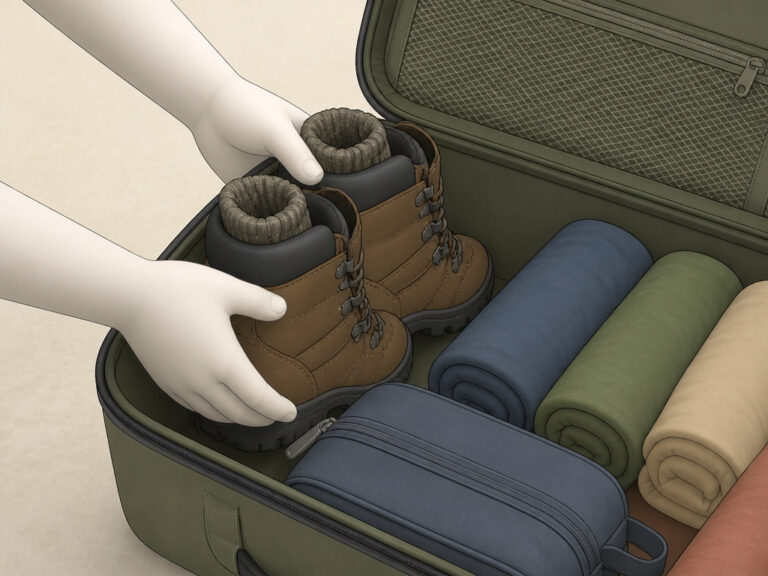
- Pack the suit last, laying it flat on top of everything else in your suitcase. Never put shoes or hard objects on top of it.
- Fabric choice decides everything. Tropical wool, high-twist wool, or wool-mohair blends travel well; linen and heavy tweeds are wrinkle magnets.
The One Fabric Rule That Beats Any Folding Technique
Your suit’s material determines its travel fate before you even touch a suitcase. A finely woven tropical wool will spring back from a fold; linen will celebrate every crease as part of its character. This concerns fiber physics, not preference.
Tom Mahon of Redmayne, a tailor who once made suits for King Charles, tells frequent travelers to invest in fabrics that withstand folding. He points to high-twist wool and hopsack weaves. The twist in the yarn acts like a spring, helping the fabric snap back after being compressed. Smooth, super-fine wools, while luxurious, lack this resilience and will hold a fold line as a permanent crease.
Where this goes sideways: Using steam on a fused suit. Tom Mahon notes that steam can cause the glued interlinings in more affordable suits to unfuse, leading to permanent wrinkles and bubbles. He recommends hanging the suit in a dry, warm room for 12 hours instead.
The data from Pack Lightly backs this up. They rate wrinkle risk by fabric type when using standard folds. A travel-friendly wool has a “low” wrinkle risk; linen scores “high.” If you’re buying a suit with travel in mind, that spec sheet is your first checkpoint.
| Suit Fabric | Wrinkle Resistance | Best For | Packing Caution |
|---|---|---|---|
| Tropical Wool (150s-160s) | High | Frequent flyers, warm climates | Minimal; the gold standard for travel. |
| High-Twist Wool / Hopsack | High | Business travel, multi-trip suits | Holds its shape; few creases. |
| Wool-Mohair Blend | High | Formal events, long-haul flights | Resilient; sheds wrinkles easily. |
| Linen / Linen Blend | Low | Destination weddings, casual events | Expects and shows creases; needs garment bag. |
| Heavy Tweed / Flannel | Medium | Cold-weather travel | Stiff; can show sharp fold lines if compressed. |
The Inside-Out Shoulder Fold: Step-by-Step
This is the default method for a reason. It leverages the jacket’s own construction, turning the lining into a protective sleeve. The goal isn’t to avoid creases entirely, that’s impossible, but to control where they form so you can easily release them later.
You’ll need: a flat surface (a bed or clean table), your suit jacket, and about two minutes.
- Lay the jacket face down. Unbutton it and smooth the sleeves flat. This is your starting canvas.
- Turn one shoulder inside out. Reach inside the jacket and gently pull the right shoulder through itself so the lining is on the outside. The shoulder pad will puff out.
- Tuck the opposite shoulder inside. Nest the left shoulder into the now-inside-out right shoulder. The jacket collapses into a neat, vertical fold.
- Smooth the lapels and seams. Run your hand over the front to ensure no fabric is caught or bunched. A caught lapel creates a diagonal crease that’s hard to steam out.
- Fold once horizontally. Bring the bottom hem up toward the collar. The fold should land at the natural break point of the jacket, not across the chest. You now have a compact rectangle.
The inside-out shoulder fold creates one primary horizontal crease and maybe one at the shoulder tuck. These are predictable. Steam targets them directly, and gravity will pull most of it out within an hour of hanging.
For the trousers: Lay them flat, aligning the front creases. Fold one leg over the other along that crease. Then, fold in thirds or quarters, thirds for a carry-on, quarters for a checked bag, as Victorinox specifies. Do not press hard; just smooth gently.
Now, the most important step happens outside the fold.
Where the Suit Goes in the Suitcase (This Is What Everyone Gets Wrong)
You can execute a perfect fold and still ruin the suit by putting it in the wrong spot. The suit’s position in the case is non-negotiable.
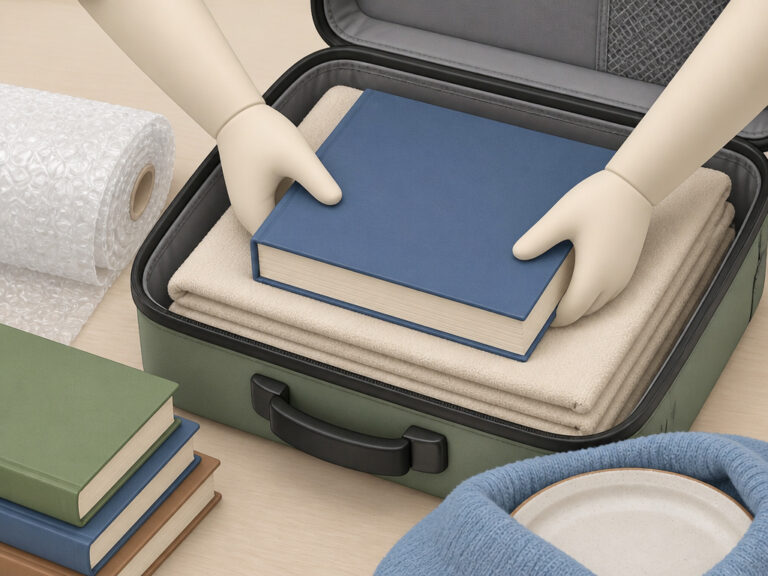
Pack the suit last. It should be the final item placed in your suitcase, directly on top of everything else. This ensures nothing is piled on top of it during transit. The weight of a toiletry kit or a pair of shoes pressing down for hours will imprint new creases no fold can prevent.
Lay the folded jacket flat. Place it in the lid of a hard-shell spinner or on the top layer of a soft-sided bag. Then, place the folded trousers flat on top of the jacket. The jacket’s structure can handle this light weight; the trousers benefit from the flat surface.
Common mistake: Putting the suit at the bottom of the case. Everything you pack after it, shoes, bags, books, adds compression for the entire journey. The fold collapses under the load, and you get a mesh of creases instead of one line.
Avoid hard edges. Never stack a book, laptop charger, or hard-shell toiletry case on top of the suit. These items press a sharp, localized line into the fabric. A soft crease from folding relaxes; a hard, pressed line from a charger brick might not.
What if you have more than one suit, or you’re traveling for a week and need multiple formal outfits? One fold isn’t enough.
Choosing the Right Method: Fold, Wrap, or Sleeve?
 Not every trip calls for the same technique. Matching the method to your itinerary is the difference between a suit that needs a quick steam and one that’s ready to wear straight from the bag.
| Trip Scenario | Recommended Method | Wrinkle Risk | Time to Pack | Why It Wins |
|---|---|---|---|---|
| Day trip / Overnight | Inside-out shoulder fold | Medium (1-2 creases) | 2 minutes | Fast, fits any bag, predictable results. |
| 2-3 day business trip | Inside-out fold | Medium | 2 minutes | Reliable; budget 10 mins with a hotel iron on arrival. |
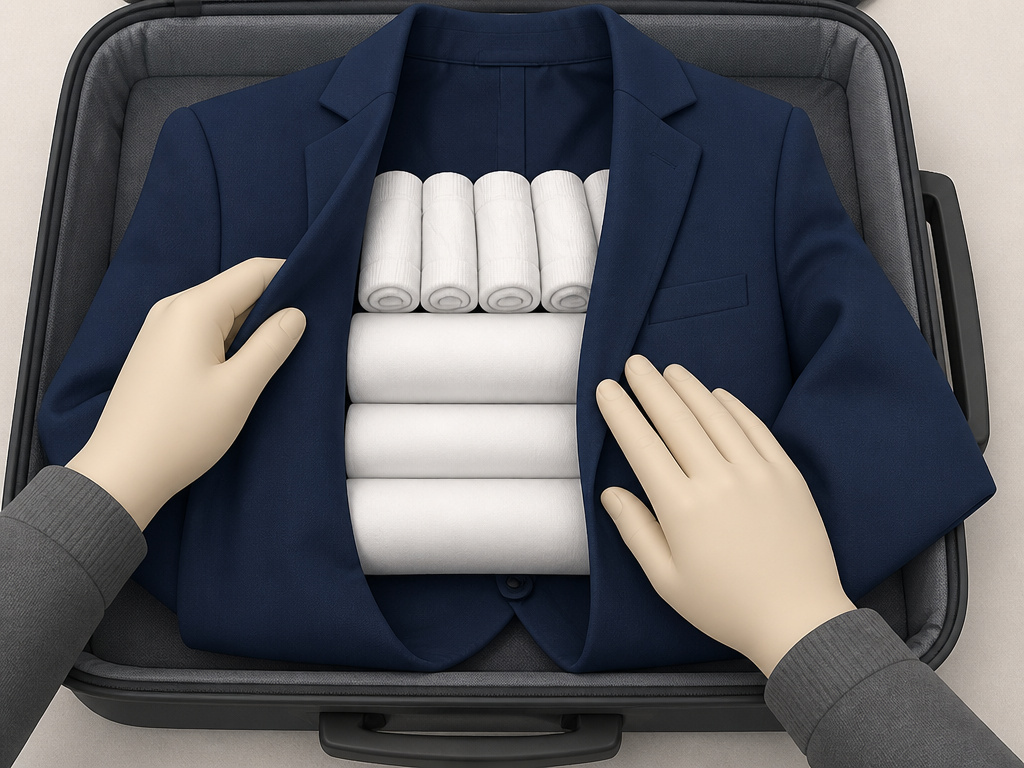
| Week+, multiple suits | Bundle wrap | Low | 5 minutes | Wrapping around a soft core keeps suits separate and nearly crease-free. |
| Wedding / Zero-wrinkle event | Garment sleeve or bag | Very Low | 3 minutes | Worth the bulk when there’s no time to fix a crease. |
The Bundle Wrap is your best bet for longer trips. You need a soft core, a rolled-up sweater or a bundle of socks, placed in the center of your suitcase. You lay each garment flat, one on top of the other, with sleeves smoothed out, and then wrap the entire stack around the core. The outer layers protect the inner ones, and the lack of hard folds means almost no creasing. It takes five minutes and is worth every second for two or more jackets.
The Garment Sleeve is a hybrid. It’s a long, zippered compartment in some suitcases that lets you lay a suit flat, almost on a hanger. It doesn’t compress the suit, making it ideal for critical events. If your suitcase has one, use it.
But what if you don’t have a special sleeve and you’re still getting wrinkles? There’s a professional tailor’s trick that costs nothing.
The Tailor’s Secret: Plastic Dry-Cleaning Bags
 Michael Andrews Bespoke recommends a method that seems too simple to work. Take a wide-shoulder hanger, put your jacket on it, and slide a plastic dry-cleaning bag over it. Add a second jacket, add a second bag. You can stack up to five or six jackets this way.
The plastic bags eliminate friction. In a suitcase, fabrics rub against each other, catching and pulling into wrinkles. The slippery plastic allows the jackets to shift slightly instead of gripping. When you arrive, you hang the whole stack, and the wrinkles that did form fall out almost immediately.
I’ve found you can do this up to six times on the same hanger. The more jackets you have, the fewer wrinkles you’ll see. The plastic dry-cleaning bags are designed to reduce friction, and it’s friction between the cloth that tends to cause wrinkles.
This method works even if you have to fold the hanger in half to fit a smaller suitcase. The key is using proper, wide-shoulder hangers to maintain the jacket’s shape. It turns your suitcase into a makeshift garment bag.
How to Recover Your Suit on Arrival (The Right Way)
 You’ve packed it perfectly. Now you need to unpack it perfectly. Rushing this step can undo all your careful work.
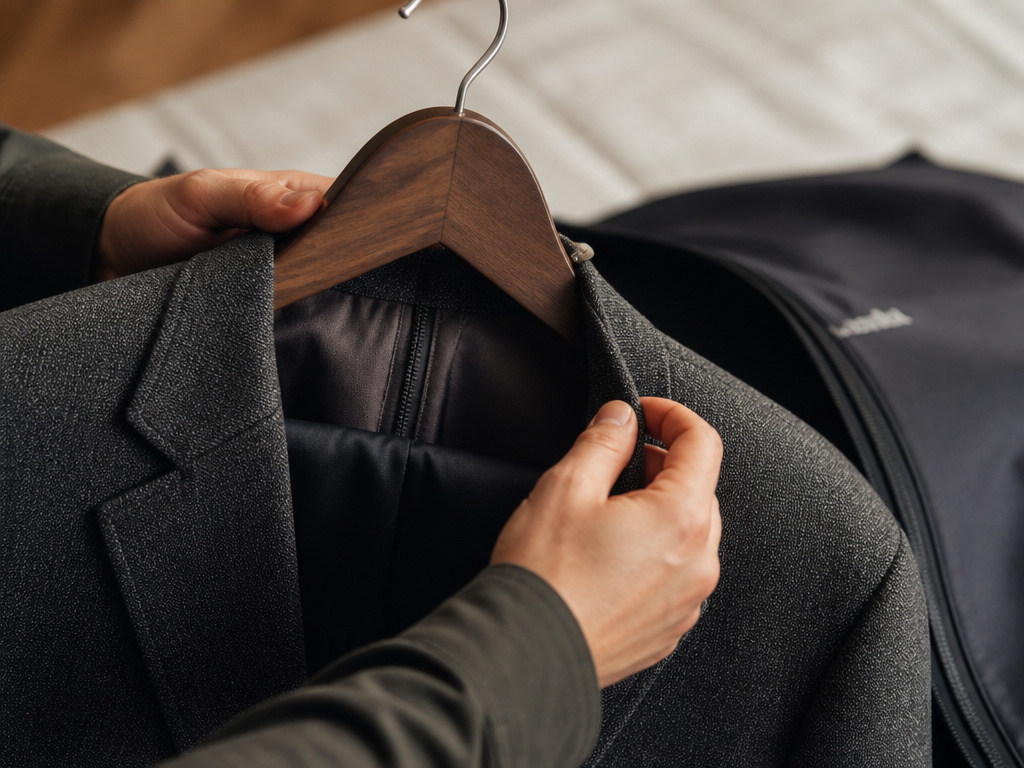
Hang it immediately. The moment you get to your room, take the suit out of the bag. Hang it on the widest hanger available, one that supports the shoulders. Let gravity work for at least an hour before you even think about steaming.
Forget the steamy bathroom for good suits. Recall the royal tailor’s warning: steam can damage the internal construction. For a quality wool suit, hanging it in a dry, warm room is safer and often more effective. The fibers will relax naturally.
If you must remove a crease, use a handheld garment steamer. Hold it a few inches from the fabric and use a sweeping motion. Never let the hot plate touch the wool. For the single crease from the inside-out fold, a few passes are all you need.
Never iron a suit directly. If you must use a hotel iron, use a pressing cloth, a clean cotton handkerchief or a towel, between the iron and the suit. The direct heat of an iron can crush the weave and leave a shiny, permanent mark.
TL;DR: Hang first, steam second only if necessary, and never let an iron touch the fabric.
Frequently Asked Questions
Can you roll a suit jacket to save space?
You can, but you shouldn’t for a structured jacket. Rolling can distort the shoulders and the canvas inside a well-made suit. For very lightweight, unstructured jackets (like a Naples-style jacket in tropical wool), a loose roll is tolerated, but the inside-out shoulder fold remains the safer, recommended method.
Is a garment bag better than folding?
For car travel or when checking a bag, a full-length garment bag is excellent. For carry-on air travel, garment bags often don’t fit in overhead bins and create hassle. A properly folded suit in a hard-shell carry-on can arrive in just as good condition, without the checked bag risk.
How do you pack a dress shirt with a suit?
Fold your dress shirt carefully, ideally with tissue paper between the folds to reduce creasing. Then, place the folded shirts on top of your already-packed suit in the suitcase. This keeps them flat and protected. For more detailed techniques, our guide on how to pack dress shirts covers the professional method.
What’s the best suitcase for packing a suit?
Hard-shell suitcase with a flat lid compartment is ideal. The rigid walls prevent external pressure from distorting your fold. Look for one with loose compression straps or none at all over that compartment, tight straps will crease the fabric. A built-in garment sleeve is a bonus.
How many suits can you pack in one suitcase?
With the plastic dry-cleaning bag method, you can stack five or six jackets. With careful bundle wrapping, you can fit three full suits (jacket and trousers) in a standard carry-on without excessive compression. The limit involves weight and the risk of over-packing, which crushes everything, rather than space.
The Bottom Line
Packing a suit involves respecting the garment’s structure, not brute force or complicated origami. Use the jacket’s own lining as a shield with the inside-out fold.Let fabric choice guide your expectations, tropical wool travels, linen creases. Place the folded suit on top, never on the bottom, and let gravity be your first line of defense on arrival.
For most single-suit trips, the two-minute fold is all you need. When the stakes are higher, spend the extra three minutes on the bundle wrap or reach for the tailor’s plastic-bag trick. The goal is to walk into your meeting or event looking sharp, not like you just wrestled your luggage. That confidence starts with how you pack.