The Ultimate Guide on How to Pack a Blazer in a Suitcase
This post contains affiliate links. As an Amazon Associate, we earn from qualifying purchases.
Pack a blazer by turning one shoulder inside out, tucking the other shoulder inside it, then folding the jacket in half. Place it last on top of your other items in the suitcase. The lining now faces out, protecting the outer fabric from pressure and friction.
That answer gets you a wearable jacket. The difference between wearable and ready-to-meet hinges on three details the fold alone misses: your suitcase’s internal shape, the jacket’s fabric, and what you wrap it in before it goes in.
What follows is the breakdown of why that fold works, the one mistake that guarantees a crease, and how to choose between a garment bag, a fold, and just wearing the thing on the plane.
Key Takeaways
- Use the inside-out shoulder fold for structured blazers; it nests the shoulder pads and uses the lining as a buffer.
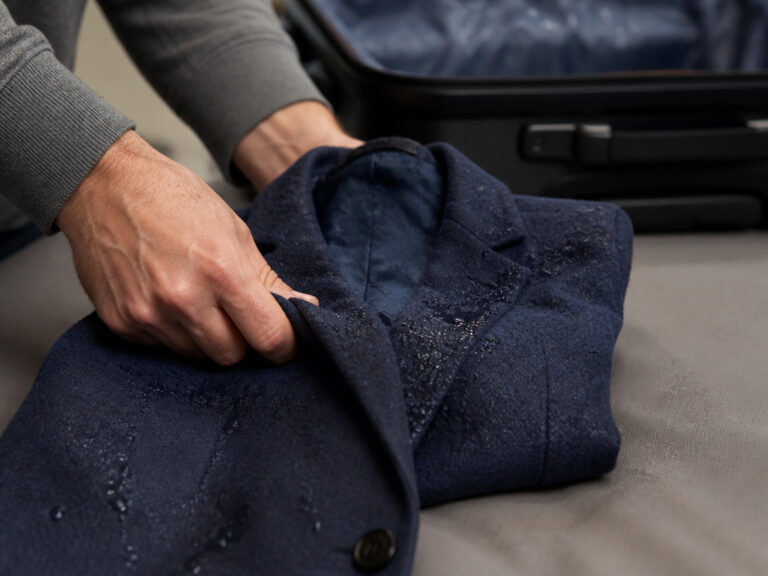
- Never pack a damp jacket. Moisture sets permanent creases and can cause mildew inside your suitcase.
- Hard-shell suitcases beat soft-sided bags for blazers because they provide a flat, rigid surface that prevents fabric bunching.
- Place the folded blazer last on top, with nothing heavy stacked above it. Compression is the enemy.
- Hang the blazer immediately upon arrival and use bathroom steam for 10-15 minutes to relax light travel wrinkles.
Why Blazers Fight Being Packed Flat
A blazer isn’t a t-shirt. Its construction is a series of rigid points connected by draped fabric. Fold it wrong and those points dig in.
The shoulder pads create two hard bumps. When you fold a jacket conventionally, these pads press against each other or into the chest fabric, creating sharp crease lines radiating from the armhole. The lapel roll, which gives the jacket its shape when worn, flattens under pressure. The inner lining—usually polyester or acetate—holds wrinkles more stubbornly than the outer wool or cotton shell. Finally, body heat trapped inside a closed suitcase and the steady pressure from other items set those wrinkles permanently during transit.
The goal of any good packing method is to sidestep this physics problem. You want to minimize direct folds across the chest and lapels, protect the shoulders from point-loading, and prevent the outer fabric from grinding against other items.
Common mistake: Folding a blazer like a shirt, straight down the middle. The shoulder pads align and pinch the fabric between them, leaving a vertical crease line that a steamer won’t fully erase.
The 5-Step Inside-Out Shoulder Fold (Step-by-Step)
This is the traveler’s standard. It uses the jacket’s own structure as its protective case.
- Lay the jacket face down on a flat surface. A bed or clean table works. Smooth the back with your hands to remove any initial wrinkles. Unbutton it if it’s buttoned.
- Turn one shoulder inside out. Reach inside the left shoulder and gently pull it through itself so the lining faces out. The shoulder pad is now hidden inside the inverted fabric.
- Tuck the opposite shoulder inside. Take the right shoulder and nest it neatly inside the inverted left shoulder. The jacket is now folded in half vertically, with the lining on the outside.
- Smooth the lapels and seams flat. Run your hands over the front of the folded bundle to ensure the lapels lie neatly against the chest panel. This step prevents weird diagonal creases.
- Fold the bundle in half horizontally. Bring the bottom hem up towards the collar. Make this fold at the natural break point of the jacket, just below the chest. Avoid folding directly across the shoulder line.
Your blazer is now a compact rectangle, with the delicate outer fabric shielded inside a cocoon of lining. The shoulder pads are nested, not pressed together.
Your Suitcase Type Decides the Outcome
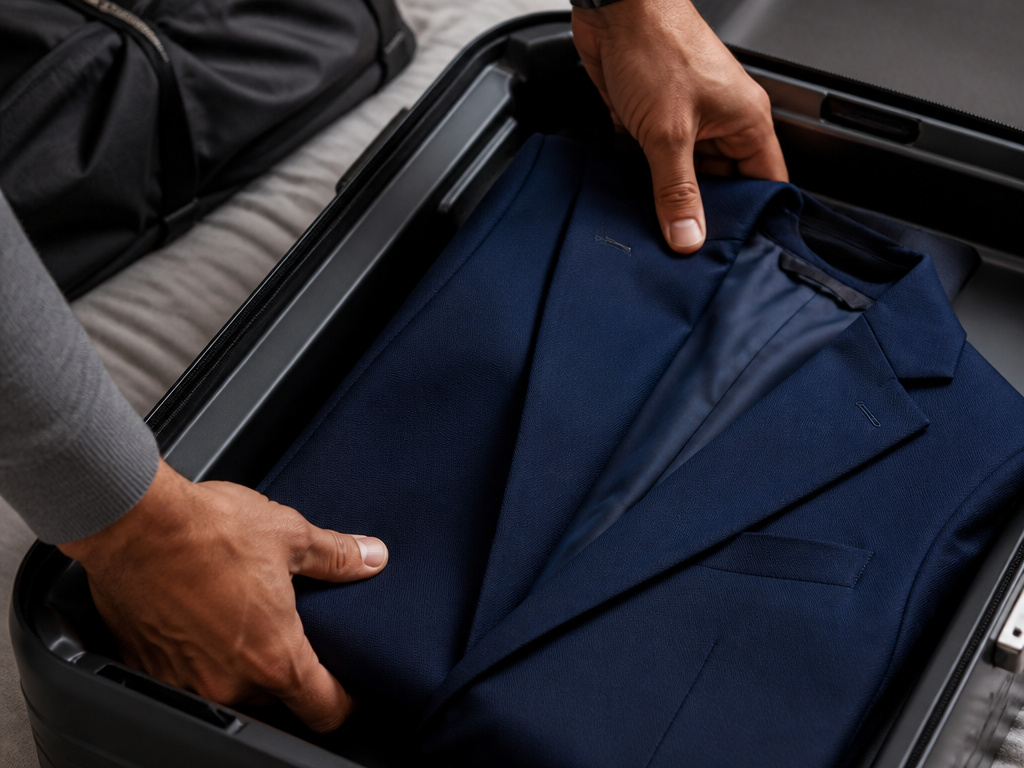 Your folding technique is only half the battle. The case you pack it into applies the pressure.
A soft-sided duffel or backpack conforms to what’s inside. It will crush your carefully folded blazer against the curve of a shoe or the corner of a toiletry kit. A structured hard-shell suitcase offers a fighting chance because its interior walls are flat and rigid.
For a blazer, the hard shell wins. It allows the jacket to lie flush against a flat surface, eliminating the random pressure points that cause creasing. If you must use a soft bag, employ a packing folder—a rigid panel that you fold clothes around—to create a temporary flat plane inside the chaos.
A garment bag is the obvious alternative, but its limitations are real. Full-length garment bags seldom fit in overhead bins, forcing you to check the bag and risk loss, delay, or a rainy tarmac. For strict carry-on travel, the fold method inside a hard-shell roller is more reliable.
The Dry-Cleaning Bag Trick: Why Slippery Beats Tight
 You might think compressing your blazer with packing cubes or tight straps would hold it in place and prevent wrinkles. It does the opposite. Compression sets creases by holding the fabric in a deformed state for hours.
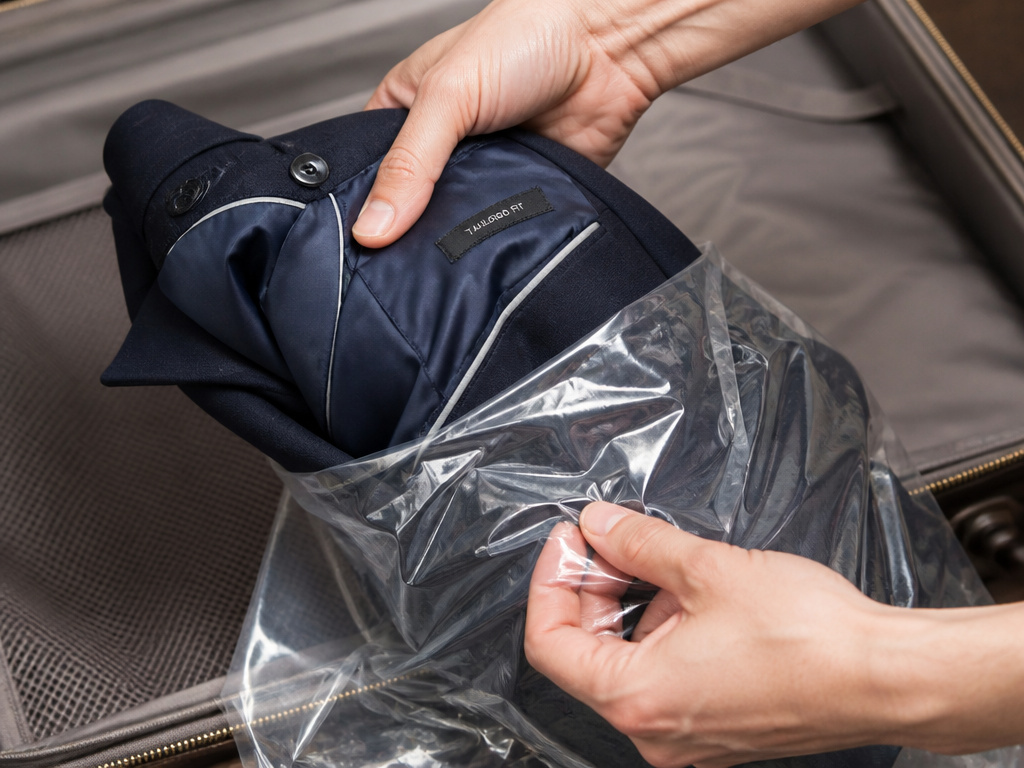
Friction is the real culprit. As your suitcase shifts during handling, the blazer fabric catches and bunches against neighboring clothes. A simple dry-cleaning bag solves this.
After folding your blazer using the inside-out method, slide it into a plastic dry-cleaning bag. Don’t seal it tight; just let the plastic envelop the jacket. The slippery plastic creates a low-friction barrier. When the suitcase moves, the blazer can slide a millimeter inside its plastic sheath instead of catching and folding. This trick is particularly effective inside hard-shell cases.
What to Do With Pants, Shirts, and Everything Else
 A blazer rarely travels alone. How you pack its companions affects the jacket’s fate.
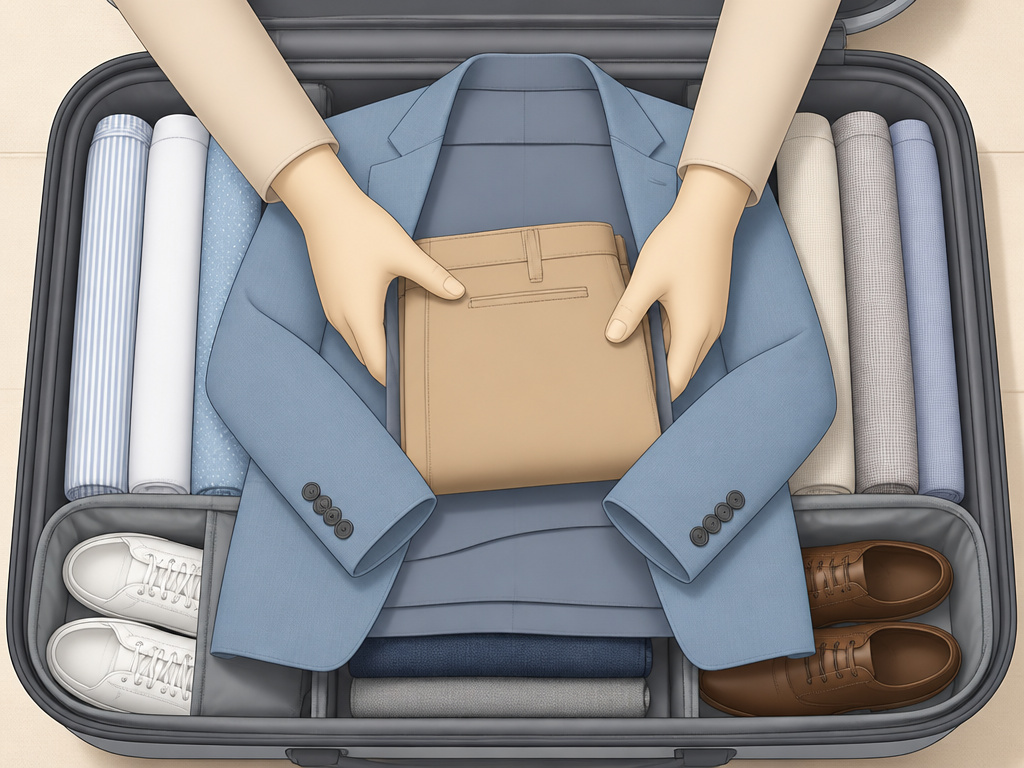
- Suit Trousers: Fold them precisely along their existing front crease. Then fold in thirds or quarters to match your suitcase depth. For the best protection, place the folded trousers inside the folded blazer before that final horizontal fold. The jacket becomes a padded case for the pants.
- Dress Shirts: Use the classic fold, but place a piece of tissue paper or a dry-cleaning bag between each shirt to reduce friction. Pack them vertically around the edges of your suitcase to form a supportive wall.
- Shoes: Pack them in separate shoe bags or shower caps. Place them at the bottom of the suitcase, heel-to-toe along the wheel well, away from the blazer.
- Toiletries and Heavy Items: These go in the bottom, opposite end from the blazer. Never stack a toiletry kit or electronics on top of your folded jacket.
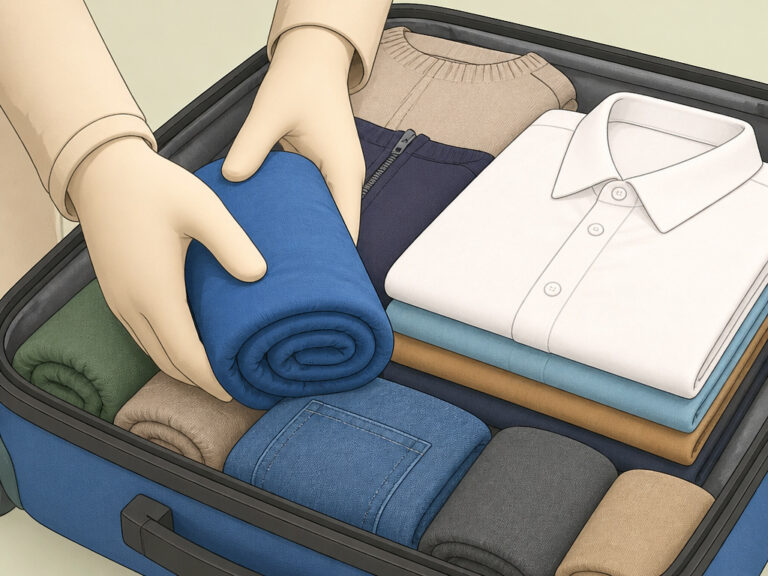
This approach to pack a suitcase turns your luggage into a layered, structured system where each item has a designated zone, minimizing pressure on the formal wear.
Arrival Recovery: From Suitcase to Sharp
Even perfect packing introduces some settling. Your recovery routine starts the moment you unlock the hotel room door.
- Hang it immediately. Get the blazer out of the suitcase and onto a proper wooden or contoured hanger within ten minutes of arrival. Gravity is your first and best tool.
- Use the bathroom steam. Hang the blazer in the bathroom, close the door, and run the shower on hot for 5-10 minutes. Don’t let the jacket get wet. The steam relaxes the wool fibers, releasing most travel wrinkles. This works on wool, wool blends, and wool-silk.
- Do a hand press. After steaming, use your hands to gently smooth the fabric along its grain, focusing on the lapels and back.
- Let it rest overnight. If you arrive the evening before your event, hanging the jacket for eight hours will do more than a rushed ironing job.
Where this goes sideways: Ironing a wool blazer directly without a pressing cloth. The heat and pressure of a hotel iron can crush the fabric’s natural weave, leaving shiny, permanent patches. Always use a cotton pressing cloth as a buffer.
Fabric Choice: Your Pre-Packing Decision
Your battle is half-won or half-lost before you even open your suitcase. Some fabrics are born travelers.
Wool, especially tropical-weight wool (150s-160s super count), is the travel champion. Its natural fibers have memory and spring back from compression. Wool-mohair blends and high-twist wool are also exceptionally resilient. Wool-silk blends travel well for spring and fall.
Linen wrinkles as a matter of principle. Embrace it for casual trips, but don’t expect a razor-sharp crease after a flight. Heavy tweeds and flannels are stiff and show fold lines easily. Velvet marks permanently under pressure and should only travel in a garment bag.
If you travel frequently, investing in a blazer made from a travel-friendly fabric like tropical wool is a game-changer. It forgives minor packing sins.
Frequently Asked Questions
Can I roll a blazer instead of folding it?
For a structured, canvassed blazer, rolling is a gamble. It can distort the shoulders and chest canvas. The inside-out fold is safer. For very soft, unstructured jackets (like a knit blazer), a loose roll can work, but the fold is still the preferred method.
How do I pack a blazer in a backpack?
The principles are the same, but the stakes are higher. Use the inside-out fold, then place the blazer in a rigid packing folder. Position this folder at the very back of your backpack (against your back), so the rest of your gear presses it against a flat surface, not into it. Know your airline’s backpack as a personal item rules first.
What if my blazer gets wet during travel?
Unpack it immediately. Hang it up to air dry completely away from direct heat before attempting to steam or press. Never pack it away damp again.
Is a garment bag always better than folding?
Not always. For carry-on travel, a folded jacket in a hard-shell suitcase often arrives in better condition than one in a garment bag that got gate-checked and thrown under the plane. For car travel or when checking a bag is acceptable, a garment bag is excellent.
Can packing cubes help?
Compression packing cubes can help organize and save space, but never use them on your blazer. The compression part is what sets wrinkles. Use standard, non-compression cubes for other items to keep them organized and away from your jacket.
The Bottom Line
Packing a blazer isn’t about avoiding wrinkles entirely; it’s about managing them down to a level a steamer can handle in five minutes. The inside-out shoulder fold inside a hard-shell suitcase, wrapped in a slippery dry-cleaning bag and placed on top, is the most reliable system. It respects the jacket’s construction instead of fighting it. Check your carry-on luggage rules before you fold, hang it the second you arrive, and steam what’s left. That’s the whole job.