How to Display Tote Bags at a Craft Show: A Seller’s Guide
This post contains affiliate links. As an Amazon Associate, we earn from qualifying purchases.
Display tote bags at a craft show by maximizing vertical space with hanging fixtures like grid walls, table rods, or rollbars. Use S-hooks or carabiners to hang bags front-facing, and always set the bag’s top 6–12 inches above the table for easy viewing. For outdoor shows, clip every hanging bag with a carabiner and place a plastic tarp under your tablecloth to block ground moisture.
That 6–12 inch height spec isn’t a suggestion. It’s the measured sightline that lets a customer see the bag’s full front panel without craning their neck or lifting it off the hook. Miss it, and you’ve hidden your product behind a visual barrier.
What follows is the gear, the geometry, and the real-world fixes for wind, rain, and sagging dowels that turn a cluttered table into a sales machine. We’ll walk through the three core display methods, hanging, standing, and binning, and name the exact fixtures that work for each.
Key Takeaways
- Set hanging bags so the top is 6–12 inches above the table surface. This is the ideal customer eye-level zone.
- Use carabiners, not S-hooks, for any outdoor display or heavy bag. An S-hook drops the bag in a gust; a carabiner locks it.
- For soft, unstructured bags, skip hanging. Display them folded or rolled in baskets or bins with one sample unfolded.
- Always place a plastic tarp under your tablecloth for grass-setup shows. Morning dew soaks through canvas by 10 AM and wicks into bag bottoms.
- A dowel rod clothesline sags under the weight of multiple bags. Use a sturdy dowel (1-inch diameter minimum) or a wire core line for lightweight fabric bags.
The #1 Rule for Hanging Tote Bags
Head design changes the entire process. Look at the business end of your trimmer.
For a secure, shoppable hanging display, the bag’s top must sit 6–12 inches above the table surface. This height brings the bag’s front panel into the customer’s direct sightline and allows easy removal without dragging across the tablecloth.
The goal is shoppability, not just storage. If a bag hangs too low, the customer must lift it to see the front design. If it’s too high, it feels disconnected from your table’s merchandising zone. That 6–12 inch band is the sweet spot.
You have three main fixture types to hit that height.
Grid wall panels are the most flexible. You configure them into a wall or shelving unit and add S-hooks or baskets. The grid’s holes accept various accessories. Table rods, like the IKEA RIGGA, arch over your table. Use a twisted S-hook to hang bags in a cascading row. A rollbar or garment rack stands beside or over your table. Wooden pant hangers let bags hang higher so they don’t drag.
The hook choice matters more than the fixture. A standard S-hook lets a bag swing forward. A carabiner clips shut. For outdoor shows or heavy canvas tote bags, the carabiner is non-negotiable.
| Fixture Type | Best For | Critical Hook | Risk If Skipped |
|---|---|---|---|
| Grid Wall | Indoor shows, maximizing wall space | S-hook | Bags swing and tangle; hard to browse |
| Table Rod (IKEA RIGGA) | Tabletop arch, adding height without floor space | Twisted S-hook | Bags cluster at the center and hide each other |
| Rollbar / Garment Rack | Outdoor shows, high visibility | Carabiner | Wind lifts bag off an S-hook within an hour |
Where this goes sideways: Using S-hooks outdoors. A gust of wind lifts the bag’s loop, the hook rotates, and the bag drops. I watched an $80 leather tote sail across a field because of this. Clip every bag with a locking carabiner if your show is outside.
When Your Bags Need to Stand Up
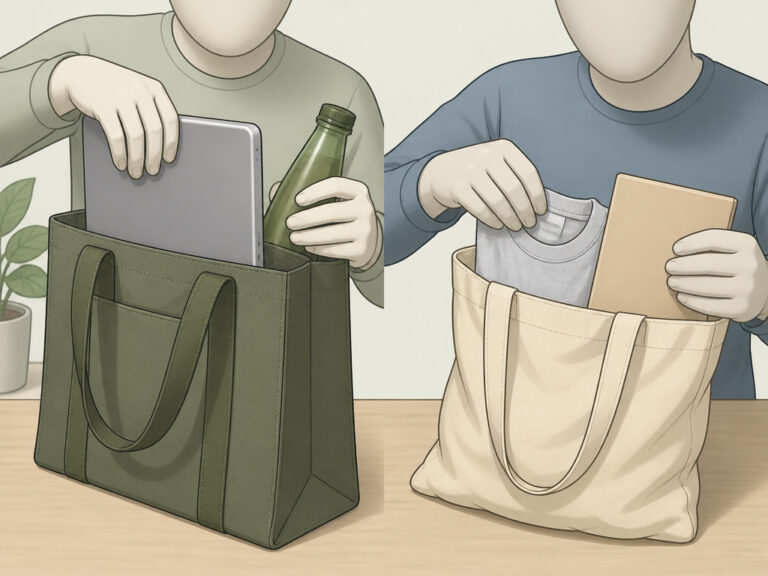
Some bags are built for it. A bag with a flat, stable bottom and some structure can stand on its own on a crate, shelf, or the table itself. This method saves hanging hardware and creates a clean, tiered look.
It also fails silently. A bag that stands in your workshop will slump on a show table after three hours. The weight of the fabric settles, the sides bow, and the bag becomes a shapeless puddle.
Common mistake: Letting a stand-up bag go empty. An unstuffed bag loses its form by midday and looks cheap.
The fix is internal support. You have three options, listed in order of effectiveness: 1. Bag weights. Sew small fabric pouches filled with sand or rice. Drop one in each bottom corner. 2. Cardboard inserts. Cut pieces to fit the bag’s base and slide them in. 3. Tissue paper. Crumple it and pack the bag loosely.
This is also where shelving shines. A short bookshelf or stacked crates gives you tiers. Place your best large tote bags on the top shelf at eye level. Use lower shelves for smaller items or folded stock.
Do you actually know how much structure your bag has? Press on the sides. If they collapse easily with light pressure, it’s a standing candidate only with an insert. Otherwise, hang it or bin it.
The Bin-and-Basket Strategy for Problem Bags
Not every bag wants to perform. Soft, unstructured bags, lightweight fabric totes, and bags with no real shape fight both hanging and standing. Forcing them leads to a sad, wrinkled display.
Your move is to embrace the bin. This strategy treats these bags as soft goods, not hardware.
Fold or roll each bag neatly. Place them upright in a sturdy basket, a wooden crate, or a rolling craft bag repurposed as display storage. Arrange them by color or size. Place one single bag of each style unfolded next to the bin as your sample.
This does two things. It creates a compact, organized stock pile that customers can riffle through. It also clearly communicates that these are the “soft” options. The displayed sample shows the potential; the bin holds the inventory.
This method is perfect for reusable tote bags made of thin cotton or polyester. They simply won’t hold a shape. Displaying them this way manages customer expectation and keeps your table looking intentional, not messy.
The part nobody mentions: This is how you store tote bags long-term at home, too. Folding them compactly in a bin is the same principle applied to post-show storage. It prevents creases and makes inventory easy.
Outdoor Shows Need a Backup Plan
Sun and rain change everything. An indoor display transplanted outside will fail on two fronts: wind and ground moisture. The fixes are specific and non-negotiable.
Wind attacks anything hanging. The solution is weight and locks. * Weight down every fixture. Use sandbags on the legs of garment racks and rollbars. * Clip every bag with a carabiner. Not some bags, every bag. The carabiner’s gate stops the loop from lifting off. * Secure stacked crates. Use clamps or zip ties in the back to lock crates together. A gust can topple a pyramid.
Ground moisture, especially morning dew on grass, wicks upward. It happens fast.
Easy to miss: Morning dew on grass. It soaks through a canvas tablecloth by 10 AM, dampening the bottom of every bag sitting on it.
Place a plastic painter’s tarp under your tablecloth. The tarp blocks the moisture from rising. This isn’t about rain from above; it’s about capillary action from below. Skip it, and you’ll be drying bag bottoms with a towel by lunch.
If you’re using a clothesline-style display, a string line will sag when damp and under weight. Switch to a wire core line or a stout 1-inch diameter dowel rod. The dowel mentioned in our research sagged because its diameter was too small for the load. Go thick, or go with wire.
Crafting a Cohesive Visual Story

Your display is a silent sales pitch. Color coordination and props write that pitch. A scattered rainbow of bags says “clearance bin.” A curated color story says “brand.”
Limit your display palette to 2-3 colors that complement your bag designs. Use a tablecloth in one of those colors. This pulls the space together and makes it photographable, customers will take pictures, and those pictures are free marketing.
Props should suggest use, not just decorate. Drape a displayed bag over a bust form wearing a jacket if it’s a winter line. Tuck a beach towel and sunscreen into a summer tote. Place a small plant and a notebook in a work bag.
I won’t recommend the oversized novelty prop for a small table. A giant fake apple might get a smile, but it eats crucial real estate where another bag could be selling. Save the giant prop for a double booth where you have space to breathe.
The goal is to answer the customer’s unspoken question: “What would I use this for?” Your display should show them, not tell them. This is where custom tote bags with specific designs shine, you can build the whole scene around the print’s theme.
Frequently Asked Questions
What’s the best way to hang tote bags without a grid wall?
Use a table rod like the IKEA RIGGA or a standalone rollbar. For a DIY solution, create a clothesline between two wooden posts using a wire-core line or a sturdy 1-inch dowel. Always set the hanging height so the bag’s top is 6–12 inches above your table.
How do you display very floppy or lightweight tote bags?
Don’t hang them. Fold or roll them neatly and stand them upright in baskets, bins, or a repurposed rolling craft bag. Place one unfolded sample next to the bin to show the design. This manages customer expectation and keeps your table tidy.
How can I protect my bags at an outdoor craft show?
Clip every hanging bag with a locking carabiner, not an S-hook, to prevent wind from lifting it off. Weight down all fixtures with sandbags. Most critically, place a plastic tarp under your tablecloth to block ground moisture from wicking up through the grass.
How many tote bags should I display at a show?
Display a full range of your designs and sizes, but keep stock hidden. A good rule is to show 6–10 different bags max on your table, with remaining inventory stored neatly below or behind. An overcrowded display overwhelms customers and makes individual items hard to see.
What do I do with bags that won’t stand up on their own?
Stuff them. Use homemade fabric “bag weights,” cardboard inserts cut to fit the base, or crumpled tissue paper to give the bag structure. An empty bag will always slump and look unattractive within a few hours on the table.
Can I use a clothesline to hang bags?
Yes, but only for lightweight fabric bags and only with a wire core line to prevent sagging. A standard rope or a thin dowel will sag under the weight of multiple bags, creating a sloppy, hard-to-shop display.
The Bottom Line
Display is retail theater. Your job is to direct the scene so the product, your best tote bags, gets the spotlight. Hit the 6–12 inch hanging height, lock bags down with carabiners outdoors, and use a plastic tarp as a moisture barrier on grass. For bags that fight structure, fold them into bins. The goal isn’t to show every bag you have. It’s to make the bags you show impossible to walk past.