Tote Bag Storage Guide: Prevent Curl, Mildew & Deformation
This post contains affiliate links. As an Amazon Associate, we earn from qualifying purchases.
Store tote bags in a cool, dry place with less than 45% relative humidity, away from direct light. For cotton and canvas, fold neatly and stack upright on a shelf. For structured leather or nylon bags, use a padded hanger. Always clean and completely dry the bag first, air-drying requires airflow over 0.5 m/s to prevent edge curl and puckering.
That humidity number is the line between a bag that stays ready and one that grows mold. Storage is the deliberate act of putting something away.It’s managing three physical variables: moisture, light, and pressure. Get one wrong and the damage is permanent.
What follows is a breakdown of those variables by material. You’ll get the airflow spec that stops puckering, the light wavelengths that break fibers, and the one mistake with hangers that ruins shape in two days.
Key Takeaways
- Air-drying a tote bag in still air causes capillary wicking, which leads to edge curl and seam puckering. You need airflow exceeding 0.5 m/s.
- Never use wire or plastic hangers for canvas or polyester bags. They create permanent indentations within 48 hours.
- Store all bags in an environment with less than 45% relative humidity. A damp basement will cause mildew on natural fibers in under two weeks.
- Direct sunlight damages bags through two specific light bands: UV-A (315–400 nm) degrades nylon, and visible blue light (400–500 nm) fades dyes.
- For synthetic PET bags, avoid overcrowding in storage. Blocked air circulation leads to mold just as fast as high humidity does.
Why “Cool, Dry Place” Isn’t Enough
The standard advice is useless. “Cool, dry place” doesn’t tell you what dry means. “Away from sunlight” doesn’t say which part of the spectrum actually does the damage.
Storage is a chemical and physical process. Humidity above 45% gives mold spores the water activity they need to grow. Light at specific wavelengths provides the energy to break molecular bonds in synthetic fibers and dyes. Still air during drying allows water to wick along fabric threads, distorting the weave as it evaporates.
If you don’t control these factors with numbers, you’re guessing. And guessing is how you open a storage bin to a musty, misshapen bag.
Air-drying flat is optimal for all fiber types, but only if airflow exceeds 0.5 m/s (measured with an anemometer). Still air promotes capillary wicking, causing edge curl and seam puckering. Hanging must use padded hangers, wire or plastic hangers indent canvas and polyester, creating permanent deformation in 48 hours. Source: Alibaba Lifetips
The 0.5 m/s Airflow Rule for Drying
You washed the bag. Now you lay it flat on a rack or hang it up. This is where most people fail. Drying requires the movement of air.
If the air around your bag is still, water evaporating from the fabric pulls more water from the wet interior through the threads via capillary action. This uneven tension causes the edges to curl inward and seams to pucker. The bag dries, but it’s warped.
The fix is measurable airflow. Data from textile care protocols states you need airflow moving faster than 0.5 meters per second past the bag’s surface. How do you get that? * Place the drying rack near a fan on its lowest setting. * Hang the bag in a well-ventilated hallway, not a stagnant corner. * Avoid stacking wet bags on top of each other, this blocks airflow entirely.
Skip this, and the bag’s shape is compromised before it even hits storage.
The Four Storage Killers (and How to Beat Them)
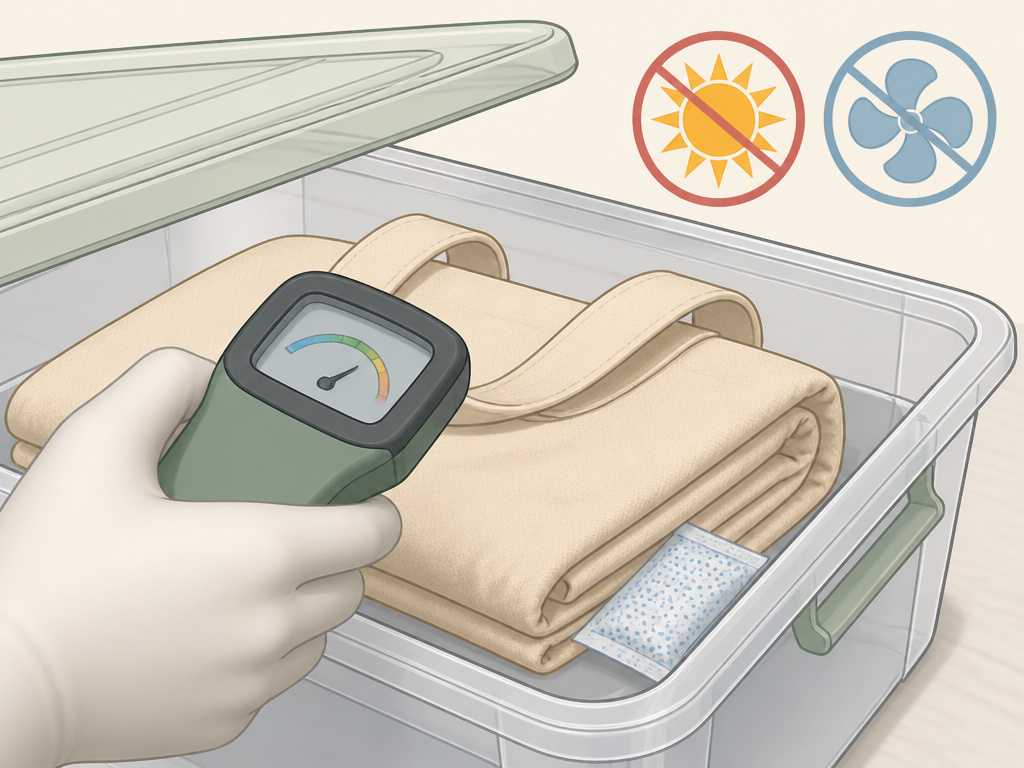
Your closet, attic, or basement might be a hostile environment. You need to diagnose it before you trust it with your bags.
| Killer | What It Does | The Fix |
|---|---|---|
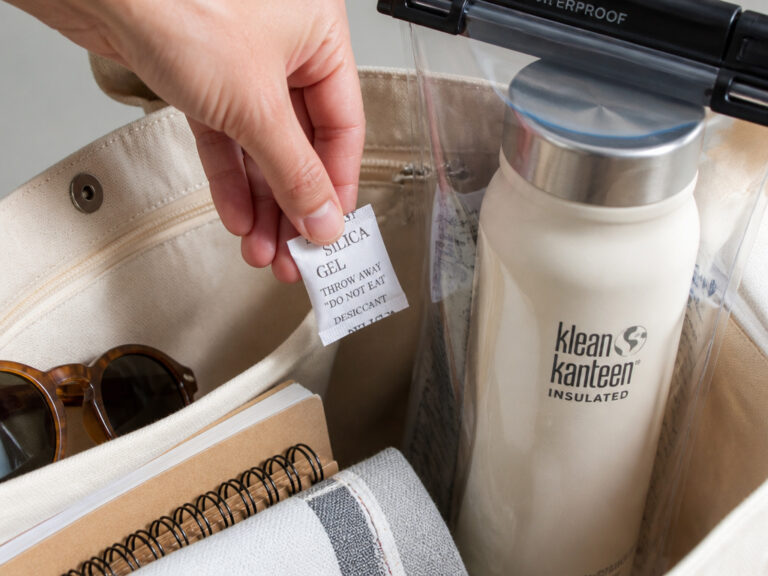
| Humidity >45% RH | Promotes mold/mildew on natural fibers (canvas, jute). Mildew spots can form within two weeks. | Use a hygrometer. Store in a room with dehumidifier or silica gel packs in the storage container. |
| Direct Sunlight | UV-A (315–400 nm) degrades nylon’s amide bonds. Visible light (400–500 nm) fades dyes. Fibers become brittle. | Store inside a closet, in an opaque bin, or inside a breathable cotton storage bag. |
| Pressure Points | Wire hangers dent canvas. Over-stuffed shelves crush shape. Permanent deformation sets in fast. | Use padded hangers for hanging. Fold neatly and store upright on shelves. Use shelf dividers. |
| Still, Stagnant Air | Traps moisture and allows dust mites to settle. Promotes musty odors in synthetic bags like PET. | Ensure some air circulation. Don’t overcrowd storage. Use breathable containers, never sealed plastic. |
A damp basement is a death sentence for canvas. An attic that bakes in summer will crisp nylon. The right storage spot is stable, dark, and has moving air.
Where This Goes Sideways: The “Breathable” Plastic Bin Trap
You buy a clear plastic storage bin. It seems clean and dry. But if you seal it completely, you’ve just created a mini-terrarium. Any residual moisture in the bag gets trapped, and humidity spikes. For a natural fiber bag, that’s a mold incubator.
The solution is a breathable cotton bag inside the bin, or leaving the bin’s lid slightly ajar. The goal is a stable microclimate, not an airtight seal.
Step-by-Step: Pre-Storage Prep That Actually Works
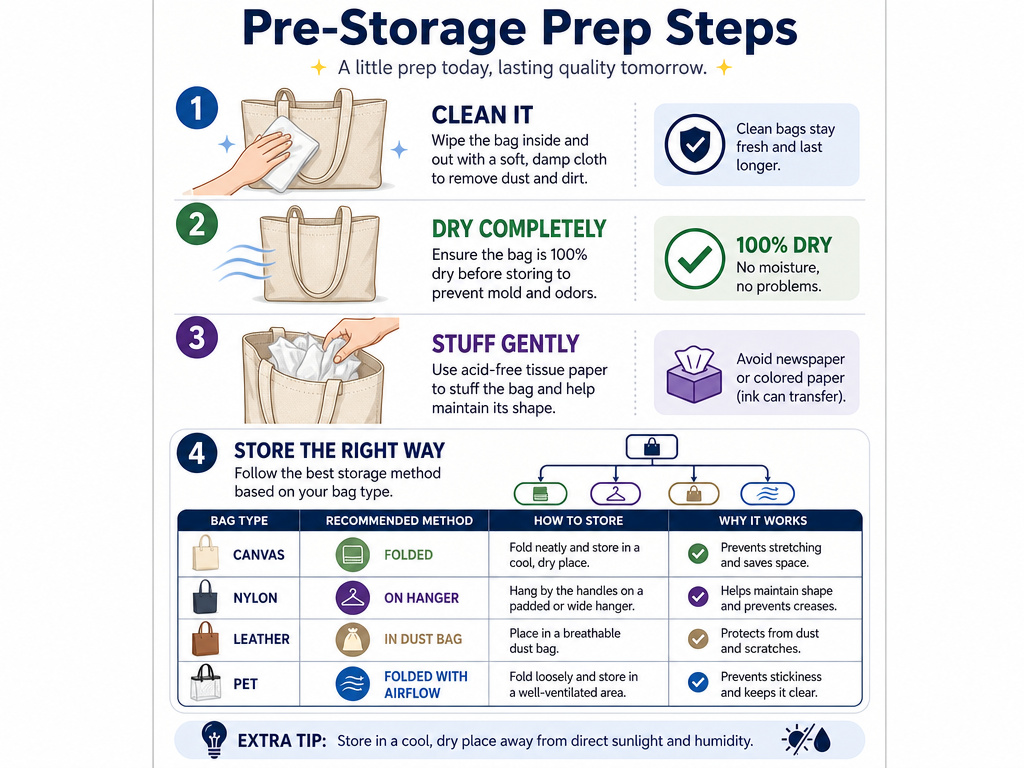
Skipping prep is how you store a problem. Follow this sequence every time.
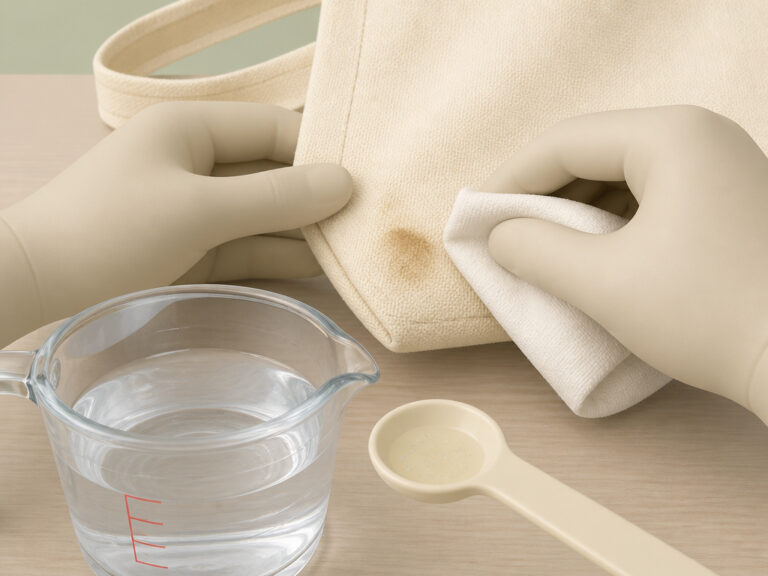
- Clean It Thoroughly. Empty all pockets. Shake out crumbs and dirt. For fabric bags, spot clean stains with a mild detergent. For leather, use a dedicated leather cleaner. Dirt attracts pests and can set stains over time.
- Dry It Completely. This is non-negotiable. Follow the 0.5 m/s airflow rule. Feel the inside lining, it must be bone-dry. Storing a bag with even slight dampness guarantees mildew.
- Stuff It for Shape. A hollow bag collapses. Use acid-free tissue paper, clean towels, or bubble wrap to gently fill the main compartment. Don’t overstuff and stretch the seams; just provide light support.
- Choose the Final Form. This decision depends on the bag’s structure and material. Use the chart below.
| Bag Type | Best Storage Method | Why | Never |
|---|---|---|---|
| Soft Canvas / Cotton Tote | Fold neatly, store upright on shelf. | Prevents random creases. Easy to see and grab. | Hang on a thin hanger (will stretch loops). |
| Structured Nylon / Polyester | Hang on a padded hanger. | Maintains shoulder strap and body shape. | Crumple into a ball in a bin. |
| Leather Tote | Stuff well, place in breathable dust bag, shelf. | Dust bag protects finish. Stuffing prevents sag. | Store in plastic (traps moisture, ruins patina). |
| PET / Recycled Plastic Tote | Fold along seams, store in well-ventilated area. | Prevents deep creases. Needs airflow to stay fresh. | Overcrowd in a tight stack. |
Material-Specific Storage: Cotton, Nylon, Leather, and PET
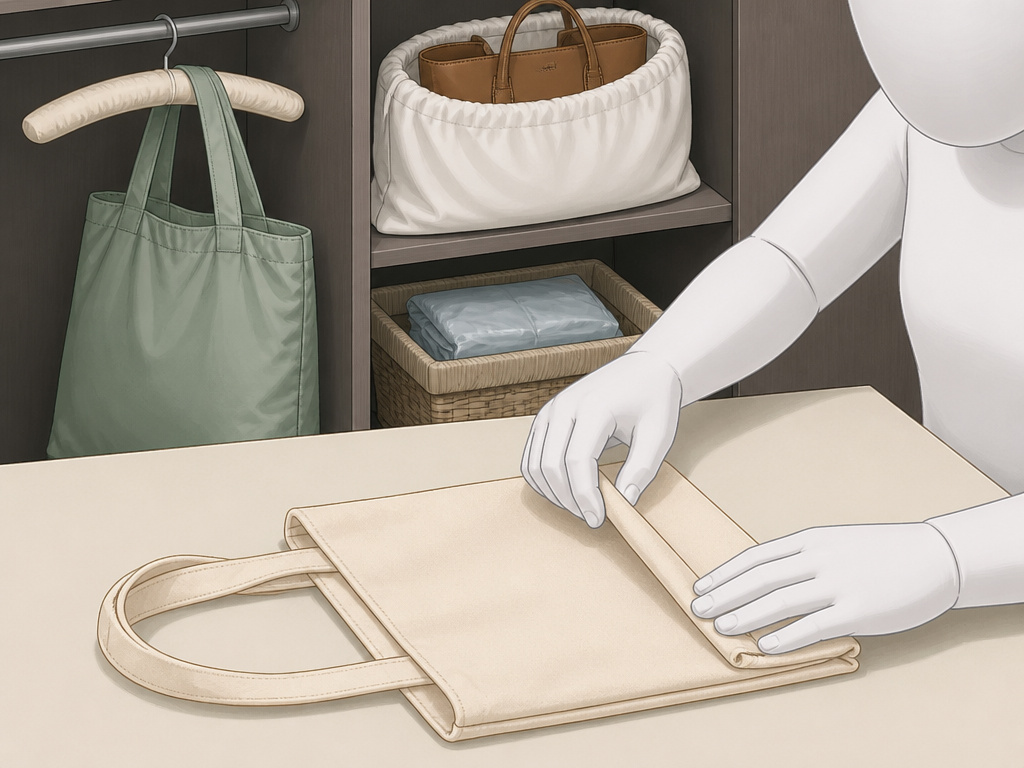
Different fibers have different enemies. Your best canvas totes need different care than your best nylon totes.
Storing Cotton and Canvas Bags
The enemy is moisture. Canvas is a natural fiber that wicks water and holds it. A storage room that feels slightly damp is a threat.
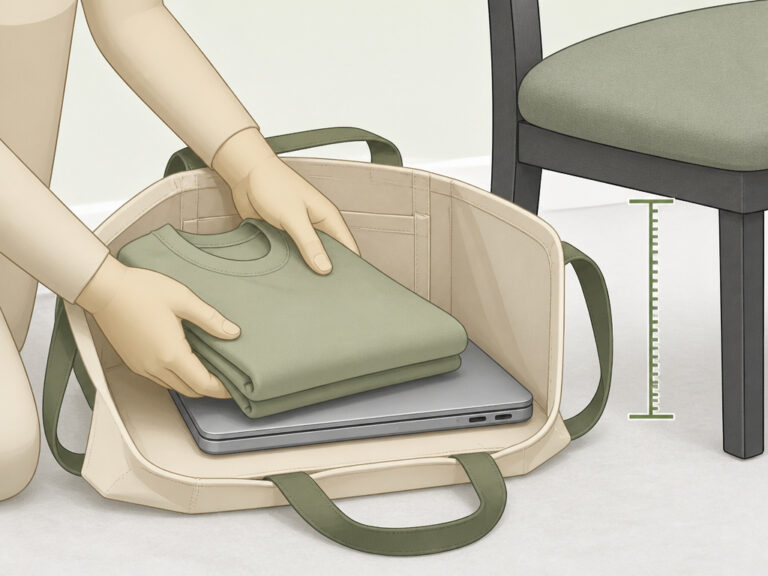
Clean with a damp cloth and mild soap. Air dry with aggressive airflow. Once dry, fold along its natural seams. To fold tote bags neatly, flatten the base, fold in the sides, then fold the bag in thirds. Store it upright on a shelf so you can see it. This keeps air circulating around it and prevents the mustiness that comes from being buried.
Storing Nylon and Polyester Bags
The enemy is ultraviolet light. Nylon’s strength comes from amide bonds in its polymer chain. UV-A radiation provides enough energy to break those bonds, weakening the fabric over time.
After cleaning, hang your durable nylon totes on a wide, padded hanger. The padding distributes weight and prevents sharp creases and shoulder strap distortion. Store it in a dark closet or inside an opaque storage bag. Never leave it in a sunny window or a bright garage.
Storing Leather Totes
The enemy is humidity and plastic. Leather needs to breathe. Trapped moisture leads to mold. Plastic bags or bins seal in vapors and can also cause the leather’s natural oils to dry out or the surface to develop a sticky residue.
Use a conditioner after cleaning. Stuff the bag firmly with tissue to hold its shape. Place it inside the breathable cotton dust bag it came with (or a pillowcase). Store it on a shelf in your main closet, where temperature and humidity are most stable. Your quality leather totes will develop a better patina this way.
Storing PET Tote Bags
PET (polyethylene terephthalate) is the plastic used in many reusable shopping bags. Its enemy is stagnant, humid air. Without circulation, condensation can form, leading to mold spots.
Ensure the bag is completely dry. Fold it neatly, tight folds can create weak stress points over months. Store it in an open basket or on a shelf where air can move. Do not cram dozens into a sealed tub. This is crucial for maintaining your specific reusable tote bags for shopping.
Long-Term Storage & Maintenance
You won’t use every bag every season. For bags in hibernation, you need a system.
First, organize tote bags by category. Keep your best everyday totes accessible. Place seasonal or special-occasion bags in a designated storage area.
Every three to six months, do a quick check. Unfold or unbag a stored item. Look for any signs of: * Dust or Odor: A quick airing out solves this. * Pests: Look for tiny droppings or webbing. Cedar blocks in the storage area deter moths. * Moisture: Feel for any dampness. Replace silica gel packs if you use them.
This rotation prevents slow, unnoticed damage and keeps all your bags, from spacious tote bags to your selection of lightweight tote bags, in ready-to-go condition.
The short version: Control humidity, block light, ensure airflow, and support shape. That’s the whole manual.
Frequently Asked Questions
Can you hang a tote bag on a hook?
You can, but it depends on the bag. A structured bag with sturdy handles can handle a wide, rounded hook. A soft canvas tote will have its handles stretched and deformed by a thin, sharp hook. For long-term storage, a padded hanger is always safer than a hook.
How do you store tote bags to save space?
The most space-efficient method is consistent folding. Learn to fold tote bags into uniform rectangles. Store them upright on a shelf like books, or stack them neatly in a bin with shelf dividers between categories. Hanging also saves shelf space but requires proper hangers.
Should tote bags be stored in plastic bags?
Never. Plastic bags trap moisture and prevent the fabric from breathing. This leads to condensation, mildew, and, for leather, deterioration of the material. Always use breathable fabric bags like cotton pillowcases or dedicated dust bags.
What is the best way to store a leather tote bag?
Clean and condition it first. Stuff it firmly with acid-free tissue paper to maintain its shape. Place it inside a breathable cotton dust bag (never plastic). Store it in a cool, dry place inside your home, like a closet shelf, away from heat vents and direct sunlight.
How do I prevent my stored tote bags from smelling musty?
Mustiness comes from moisture and lack of air circulation. Ensure bags are 100% dry before storage. Use moisture-absorbing products like silica gel packs in your storage container. Store in a well-ventilated area and perform seasonal check-ups to air them out.
Before You Go
Storage is active preservation. The right method keeps your best tote bags looking and functioning like new for years.It boils down to a few physical rules: keep humidity below 45%, block ultraviolet light, ensure airflow exceeds 0.5 m/s when drying, and use padded support for hanging. Ignore the vague advice. Follow the numbers. Your bags will thank you the next time you pull them out, ready for anything.