Carry On Luggage Weight Limits: How Much Weight Is Allowed?
This post contains affiliate links. As an Amazon Associate, we earn from qualifying purchases.
Carry-on luggage weight is not governed by one universal rule. In the United States, major domestic airlines like Delta, American, and United typically do not enforce a weight limit for carry-ons, only size. However, many international and budget airlines enforce strict limits, commonly 7 kg (15.4 lbs) or 10 kg (22 lbs), which includes the weight of your bag itself.
That split is the whole game. A bag that sails onto a domestic flight can trigger a $100 fee on an international one. The limit isn’t about the plane’s capacity—it’s about ground crew safety and the airline’s revenue model. You pack for the strictest rule on your itinerary.
What follows: a breakdown of who has limits and who doesn’t, a table of specific airline numbers, and the math of subtracting your suitcase’s weight from your total allowance. The goal is to walk through an airport without that last-minute gate-side scramble.
Key Takeaways
- U.S. Majors (Delta, American, United) often have no weight limit, only size. This is the exception, not the global rule.
- Most international & budget airlines enforce 7-10 kg (15-22 lb) limits. This total includes your bag’s weight.
- Your suitcase can weigh 5-8 lbs empty. A 7 kg (15.4 lb) limit leaves only 7-10 lbs for your actual belongings.
- Always verify your specific airline’s policy. Rules change and codeshares adopt the stricter partner’s limits.
- Packing cubes, wearables, and a digital scale are non-negotiable tools for hitting low weight targets.
What Is The Standard Carry-On Weight Limit?
There isn’t one. This is the first point of confusion and where most generic advice fails. The standard depends entirely on your airline and your route.
Where this goes sideways: Assuming “carry-on” means the same thing everywhere. A Travelpro Maxlite 5 that’s perfect for Delta may be 2 kg over before you pack a single sock on AirAsia.
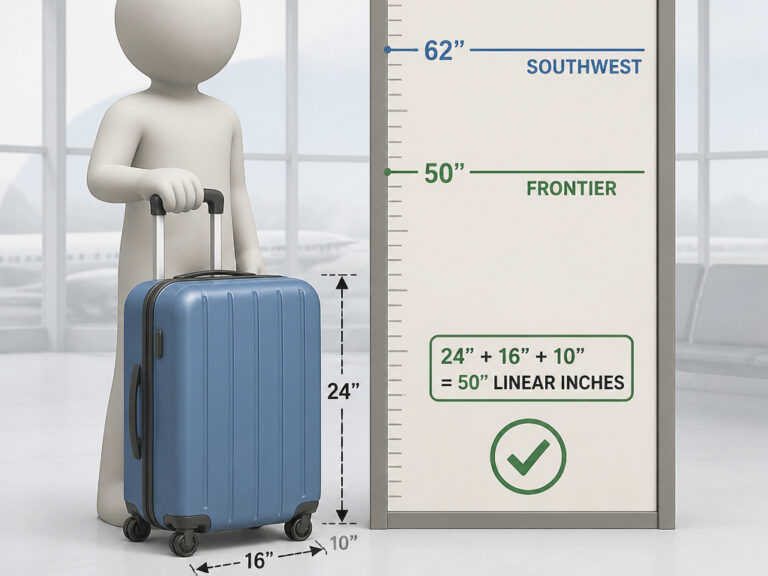
Domestic travel within the United States operates under a different set of assumptions than global travel. For major U.S. Carriers, the primary constraint is physical dimensions—will it fit in the overhead bin? They publish size limits (commonly 22″ x 14″ x 9″) but frequently omit a weight number from their carry-on policy pages. This leads travelers to believe weight doesn’t matter.
Internationally, and especially with budget carriers in Europe and Asia, weight is the primary checkpoint. These airlines often use smaller aircraft with tighter overhead compartments and employ fewer ground staff. A strict, easily enforceable weight limit streamlines boarding and adds a significant revenue stream from excess baggage fees. The most common figure you’ll encounter is 7 kilograms, which converts to 15.4 pounds.
| Airline Type | Typical Weight Limit | Primary Concern | Risk If Ignored |
|---|---|---|---|
| U.S. Major Domestic (Delta, American, United) | Often none published | Bin space / dimensions | Gate-check for oversized bags |
| International Full-Service (Lufthansa, Air France) | 8-10 kg (17.6-22 lbs) | Size + weight compliance | Fee at check-in or gate, often €50-100 |
| Budget / Regional (Ryanair, AirAsia, EasyJet) | 7-10 kg (15.4-22 lbs) | Strict weight for revenue | Fee at gate, can exceed bag’s cost |
TL;DR: Pack for the strictest airline on your ticket. If your trip includes a budget carrier, their 7 kg rule overrides everything else.
Airline-By-Airline Weight Limits
This table pulls from current policies. Always double-check your airline’s website 48 hours before departure—these can and do change.
| Airline | Carry-On Weight Limit | Key Notes & Exceptions |
|---|---|---|
| Delta Air Lines | No published limit | Size must fit in sizer (22″ x 14″ x 9″). Must be liftable by passenger. |
| American Airlines | No published limit | Size limit: 22″ x 14″ x 9″. Agent can deny excessively heavy bags. |
| United Airlines | No published limit | Size limit: 22″ x 14″ x 9″. |
| Southwest Airlines | No published limit | Size must fit in bin (24″ x 16″ x 10″). |
| JetBlue | No published limit | Size limit: 22″ x 14″ x 9″. |
| Air Canada | 10 kg (22 lbs) | Standard for most fares. Basic fares may have lower limits. |
| British Airways | 23 kg (51 lbs) | Exceptionally high limit. Must still meet size: 22″ x 18″ x 10″. |
| Lufthansa | 8 kg (17.6 lbs) | Economy Classic/light fares. Includes personal item. |
| Air France | 12 kg (26.4 lbs) | For Business/Premium Economy. Economy is 10 kg (22 lbs). |
| Ryanair | 10 kg (22 lbs) | For priority boarding. Non-priority is 1 small bag only (no weight specified). |
| EasyJet | 15 kg (33 lbs) | Another high limit, but size is strict: 22″ x 18″ x 10″. |
| AirAsia | 7 kg (15.4 lbs) | Strictly enforced. Includes weight of personal item. |
| Qantas | 7 kg (15.4 lbs) | Domestic & International. Size: 22″ x 14″ x 9″. |
| Emirates | 7 kg (15.4 lbs) | Economy. Business/First is higher. |
Common mistake: Booking a codeshare flight. Your ticket may say “Delta,” but if the operating carrier is Korean Air, you must follow Korean Air’s 10 kg (22 lb) limit, not Delta’s lack of one.
The takeaway is simple. You cannot know your carry-on weight limit without looking up your specific airline’s contract of carriage. Treat “no published limit” as a permission to be reasonable, not a challenge.
How Your Luggage’s Own Weight Eats Your Allowance
This is the silent budget killer. A carry-on weight policy of 7 kg isn’t 7 kg of clothes. It’s 7 kg total: bag, wheels, handle, and contents.
Let’s run the math with real numbers from manufacturer specs: * Travelpro Maxlite 5 21″ Spinner: 5.4 lbs (2.45 kg) * Away The Carry-On (Polycarbonate): 7.1 lbs (3.22 kg) * Delsey Paris Cadence 21“: 7.7 lbs (3.49 kg) * Monos Aluminum Carry-On Plus: 11.08 lbs (5.03 kg)
Now apply the most common international limit: 7 kg (15.4 lbs).
If you choose the featherweight Travelpro, you start with 12 lbs (5.45 kg) of packing capacity remaining. If you choose the sleek but heavy Monos aluminum case, you start with only 4.3 lbs (1.95 kg) left. The Monos is a tank, but it consumes a third of your total allowance before you pack a single t-shirt.
The part nobody mentions: Wheels and handles are weight centers. A hard-shell spinner with a metal frame is always heavier than a soft-sided two-wheeler. That durability costs you in packing grams.
This is why understanding carry-on size and weight are linked. A lighter bag inherently gives you more usable capacity under a strict limit. For budget airline travel, a bag under 6 lbs empty is a strategic advantage.
How To Pack For A 7kg (15.4 lb) Limit
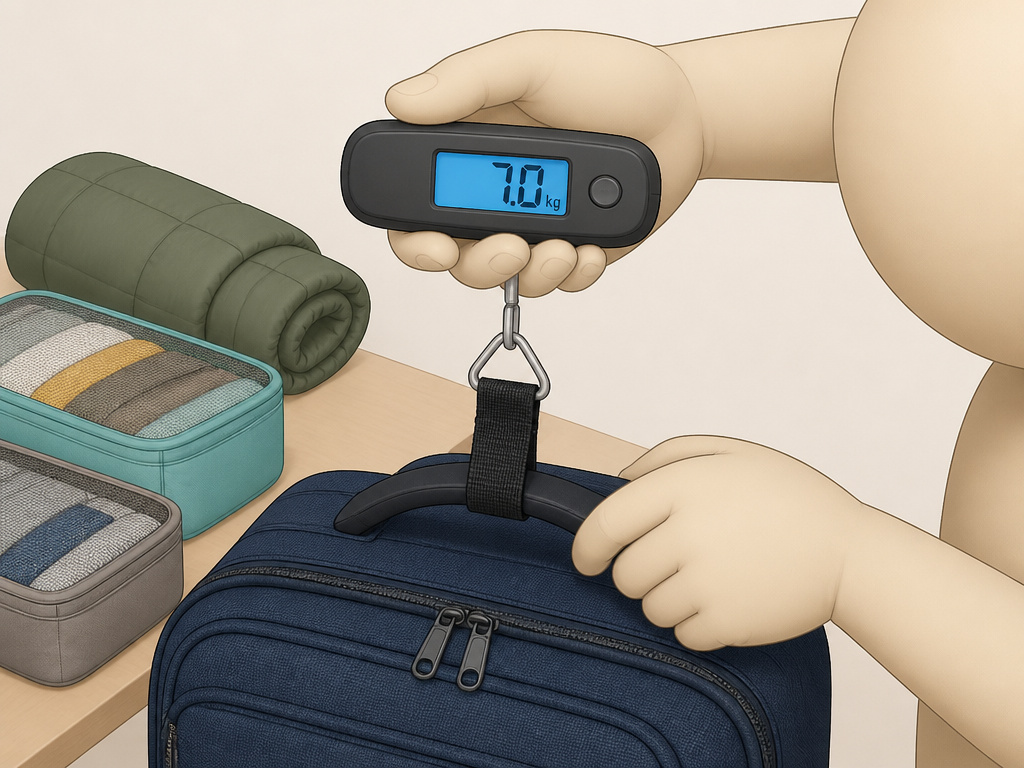
Hitting a 7 kg target requires a system, not just careful folding. It’s a subtraction game.
1. Weigh Your Empty Bag.
This is non-negotiable. Use a digital kitchen scale. Know your starting point down to the ounce. If your bag weighs 3.5 kg (7.7 lbs), you have 3.5 kg (7.7 lbs) for everything else.
2. Use Packing Cubes & Compress.
Packing cubes organize and compress. Rolled clothes inside a compression cube can cut volume by 30%, letting you take fewer, more versatile items. The Y-strap compression system inside bags like the July Carry On Max physically straps your load down, preventing shifting and saving space.
3. Wear Your Heaviest Items.
Boots, jackets, jeans. Wear them on the plane. This isn’t a style tip; it’s weight logistics. A pair of leather boots can weigh 2 kg (4.4 lbs) alone.
4. Toiletries Are Liquid Weight.
Decant everything into 100ml bottles. Better yet, use solid alternatives: shampoo bars, deodorant cream, toothpaste tablets. A full liquid bag can weigh over 1 kg.
5. Electronics Are The Final Frontier.
Your laptop, charger, and camera are dense. Can you use a tablet instead of a laptop? Do you need that heavy DSLR, or will your phone suffice? This is the hardest trade-off, but it’s where the most weight lives.
The Weigh-Off Before You Go.
Do a final weigh-in at home with a portable luggage scale. If you’re over, you have time to make decisions calmly, not at the gate. Pull out a spare pair of shoes or a heavy book. Knowing your maximum carry-on weight in advance is the only way to avoid surprise fees.
What Happens If Your Bag Is Overweight?

They charge you. The fee is almost always more expensive than checking a bag would have been if purchased online in advance.
At the check-in counter, agents have scales and will often ask you to place your bag on them. If it’s over, they will offer to check it for a fee that can range from $50 to $200, depending on the airline and route. This is a fixed fee, not per kilogram.
At the gate, it’s more punitive. Gate-check fees are typically higher, and the process is stressful. For airlines like Ryanair or AirAsia, gate agents are specifically incentivized to catch overweight bags. They will place your bag in the sizer and on the scale. If it fails, you pay immediately, often in cash or a specific card.
Worth knowing before you start: Some airlines, like Air New Zealand, have “weight amnesty” at certain gates for last-minute item removal. Most do not. The assumption is you had ample time to check your bag.
The financial logic for the airline is clear. It’s a deterrent and a profit center. The threat of these fees is what makes understanding airline weight restrictions a critical part of trip budgeting.
Frequently Asked Questions
Do U.S. Airlines ever weigh carry-ons?
Rarely, but they can. The contract of carriage for every major U.S. Airline includes a clause that the bag must be liftable by the passenger and fit safely in the bin. If an agent deems your bag excessively heavy, they have the right to demand you check it. This is discretionary, not systematic.
Is the weight limit per bag or per person?
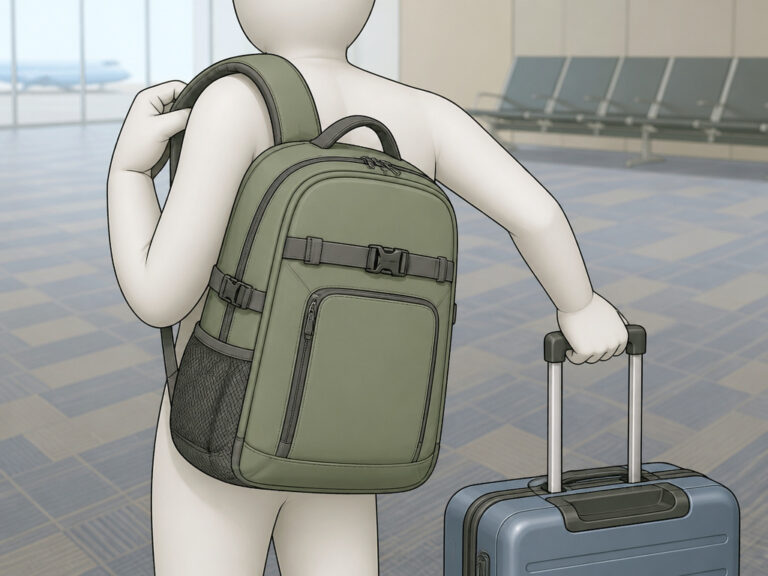
It is almost always per bag. Your personal item (purse, backpack, laptop bag) sometimes has its own, smaller weight limit (e.g., 4 kg on Lufthansa), or its weight may be included in your total allowance (e.g., AirAsia). You must read the fine print for your airline.
How can I find my airline’s exact weight limit?
Go to the airline’s official website. Navigate to “Baggage” or “Travel Info.” Look for “Cabin Baggage” or “Carry-on Baggage.” Do not rely on third-party travel sites; policies change and those sites are often outdated.
Are there tricks to make my bag seem lighter?
No effective ones. Gate agents have seen them all. The “wear five jackets” strategy makes you look suspicious and miserable. The “hold your heavy camera in your hand” trick fails when they ask you to place all items in the bag for weighing. Honest packing and a lightweight bag are the only reliable strategies.
Does a lighter bag have downsides?
Yes. Ultralight bags often use thinner materials, fewer reinforcements, and simpler wheel systems. A 5 lb Travelpro Maxlite 5 is incredibly light but may not withstand 30 trips a year as well as an 8 lb Away suitcase. You trade durability for packing capacity.
The Bottom Line
Carry-on weight limits are a variable, not a constant. Your mission is to identify the strictest rule on your itinerary and pack to it. For most international travel, this means targeting 7-10 kg (15-22 lbs).
Start with a scale. Weigh your empty bag. Choose versatile, lightweight clothing and ruthless toiletries. Your electronics are the final budget.
The freedom of walking past baggage claim is worth the discipline. But that freedom hinges on a number you know before you zip up your bag. Check your airline, know your limit, and pack to it. Every gram counts.