Is 22 Inch Luggage Carry On | The Gate Sizer Reality
This post contains affiliate links. As an Amazon Associate, we earn from qualifying purchases.
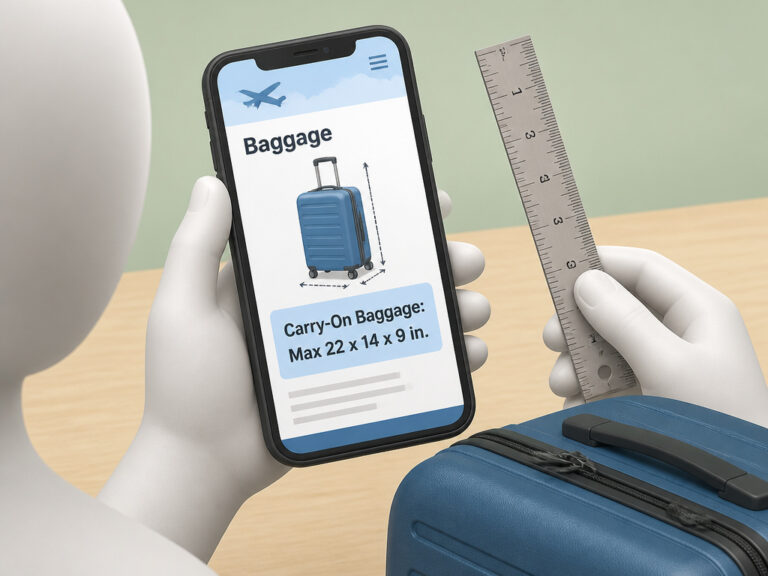
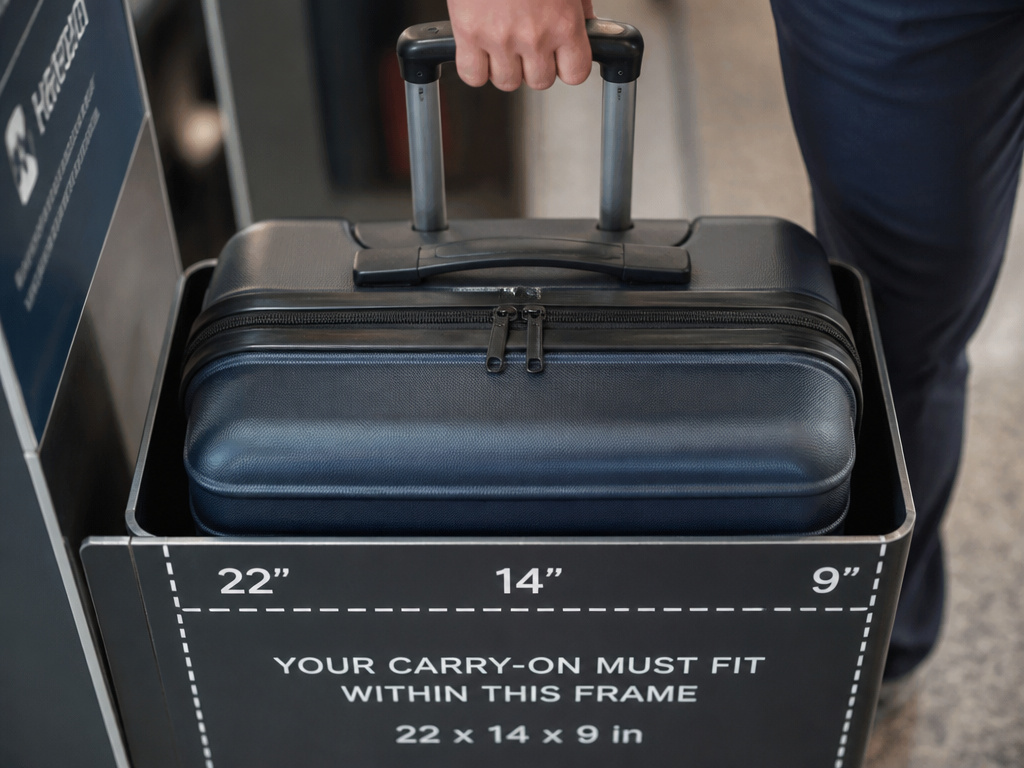
A 22 inch suitcase is carry-on only if its total external dimensions, including every wheel, handle, and bulging pocket, stay under the airline’s limit, which is usually 22 x 14 x 9 inches for US legacy carriers. Most bags sold as “22 inch” measure 22.5 to 23.5 inches with wheels, which fails a strict gate sizer. For travel on European, Middle Eastern, or Asian airlines, the common 55 cm (21.65 inch) length limit means a true 22 inch bag is already too long.
That gap between the number on the tag and the number the gate agent cares about is where trips get expensive. Southwest gives you a two-inch margin; Ryanair charges a £75 gate fee for the same bag.
What follows: how to measure your bag correctly, the two airline rule-sets that matter, and a short list of bags that actually fit the 2026 sizer.
Key Takeaways
- Airlines measure total external dimensions, including wheels and handles. Manufacturers often advertise just the main body length.
- The US domestic standard is 22 x 14 x 9 inches, but many European and Asian carriers use a 55 cm (21.65 inch) maximum length.
- Southwest, Frontier, and Sun Country allow up to 24 inches, giving you real margin. Delta, United, and American enforce the 22-inch limit strictly at crowded gates.
- Automated sizer scanners are rolling out at more US airports in 2026, removing human discretion.
- If your bag is borderline, a soft-sided backpack or a bag designed for the 55 cm international standard is a safer bet.
The 22 x 14 x 9 Inch Standard (And Why It’s a Lie)
That triple number is the published carry-on limit for Delta, American, United, Alaska, JetBlue, and Hawaiian. The problem is which tape measure you use.
Manufacturers label a suitcase “22 inch” based on the height of the main body shell. Airlines, and their metal sizer boxes, measure the entire exterior from the floor to the top of the extended handle, and from the furthest protruding wheel to the opposite side.
A bag sold as 22 inches usually measures 22.5 to 23.5 inches with wheels, which can fail a sizer. The inch you pretend doesn’t exist is exactly the inch the frame cares about.
Look at the spec sheets. The Travelpro Platinum Elite 21 inch Spinner‘s overall dimensions are 23 x 14.5 x 9 inches. The L.L.Bean 22-inch Hardside Spinner lists its height as 22 inches, but that’s “41”H with handle extended.” The Pelican 22″ ATX Carry-On‘s exterior is 22.4 x 14.3 x 9.6 inches, every fraction counts.
Your measuring tape is your first line of defense. Don’t measure the empty bag in your closet. Pack it for a real trip, including that stuffed front pocket and the expansion zipper you opened halfway. Then measure the whole package: wheels, handles, bulging corners. Compare that number to your airline’s limit, not the tag sewn into the lining.
This is the difference between sliding your bag into the overhead and watching it disappear down the jet bridge with a gate-check tag.
How to Actually Measure Your Carry-On Luggage
Grab a tape measure and a helper. This takes two minutes and saves a fifty-dollar fee.
- Measure Height: Place the bag upright on the floor. Extend the telescoping handle fully. Measure from the floor to the very top of the handle.
- Measure Width: Measure across the bag at its widest point, side to side. Include any side pockets or compression straps that add bulk.
- Measure Depth: Measure from the front of the bag to the back. Include the wheels and any front-facing organizational pockets.
Record these three numbers. That’s your bag’s true size for airline purposes. If any number is within a half-inch of your airline’s limit, you are at risk on a full flight. This is the only way to know your carry-on suitcase dimensions with certainty.
The Southwest Exception (And Other US Carriers)
Not all US airlines play by the same 22-inch rule. Three give you breathing room.
| Airline | Carry-On Size Limit | Weight Limit | The Margin |
|---|---|---|---|
| Southwest Airlines | 24 x 16 x 10 in | None | 2 full inches of length margin. |
| Frontier Airlines | 24 x 16 x 10 in | 35 lbs | Same dimensions as Southwest, but with a strictly enforced weight cap. |
| Sun Country Airlines | 24 x 16 x 11 in | 35 lbs | An extra inch of depth over the standard. |
If you primarily fly Southwest, a true 22-inch bag is actually conservative. You have a two-inch cushion on length, an extra two inches on width, and an extra inch on depth compared to the legacy carrier standard.This is why a bag that might get flagged on a packed United flight sails onto a Southwest plane.
For the other major US carriers. Delta, American, United, the 22 x 14 x 9 inch limit is absolute. Their stated maximum carry-on size is a ceiling, not a target. Automated sizers don’t negotiate.
Where this goes sideways: Assuming your “22 inch” bag is fine because you’ve never been stopped. Enforcement is inconsistent until the flight is full and the bins are tight. That’s when the sizer comes out.
The 55 cm International Gauntlet
This is the trap for transatlantic and transpacific flyers. While you’re worrying about the 22-inch limit, a stricter one is already in play.
Many European, Middle Eastern, and Asian airlines use a maximum carry-on length of 55 centimeters, which converts to 21.65 inches. A bag that is a true 22 inches tall is already 0.35 inches too long for this standard before you even add wheels and handles.
| Airline | Carry-On Size Limit | Weight Limit | The Verdict for a 22″ Bag |
|---|---|---|---|
| Air France, KLM, Lufthansa | 55 x 35 x 25 cm | Varies (~8 kg) | Too long. The 55 cm (21.65 in) length is the hard cap. |
| Ryanair (Priority fare) | 55 x 40 x 20 cm | 10 kg | Too long and too deep. Fails length by 0.4 in, depth by >1 in. |
| Singapore Airlines, ANA | 55 x 40 x 25 cm | 7 kg (SQ) / 10 kg (ANA) | Too long. The 55 cm length limit applies. |
| Emirates | 55 x 38 x 22 cm | 7 kg | Too long. |
| Qatar Airways | 50 x 37 x 25 cm | 7 kg | Far too long. Their limit is under 20 inches. |
If your itinerary includes any of these carriers, a bag marketed as 22 inches is the wrong tool. You need luggage designed for the international 55 cm standard, often sold as “21 inch” or “international carry-on.”
Bags That Actually Fit: The 2026 Shortlist
Forget the marketing. These bags have published external dimensions that meet the strictest common limits.
For US Domestic Travel (22 x 14 x 9 in target):
- Monos Carry-On: Exactly 22 x 14 x 9 inches including wheels. It’s the honest pick for the US domestic limit with zero guesswork.
- Away The Carry-On: Measures 21.7 x 14.4 x 9 inches. This buys you a tiny, valuable margin against sizers, especially on airlines with a 55 cm limit.
For International Travel (55 cm / 21.65 in target):
- Briggs & Riley Baseline Global 21″ Expandable: Designed around the 55 cm standard. Its lifetime warranty even covers airline damage, which tells you how confident they are.
- Travelpro Maxlite Air International Carry-On: A soft-sided spinner built to clear European and Asian sizers, weighing under 6 pounds empty.
The Expandable Wildcard:
- Eagle Creek Expanse 22“: External dimensions are 22 x 14 x 9 inches, but it has an expansion zipper. Use it compressed for the flight, expanded after you land. Just remember: a fully expanded bag may not meet airline restrictions on the return trip.
The common feature here is verifiable specs. You can find the real numbers on the product page, not just the “22 inch” label on the sales tag.
When a 22 Inch Bag is a Carry-On (And When It’s Not)
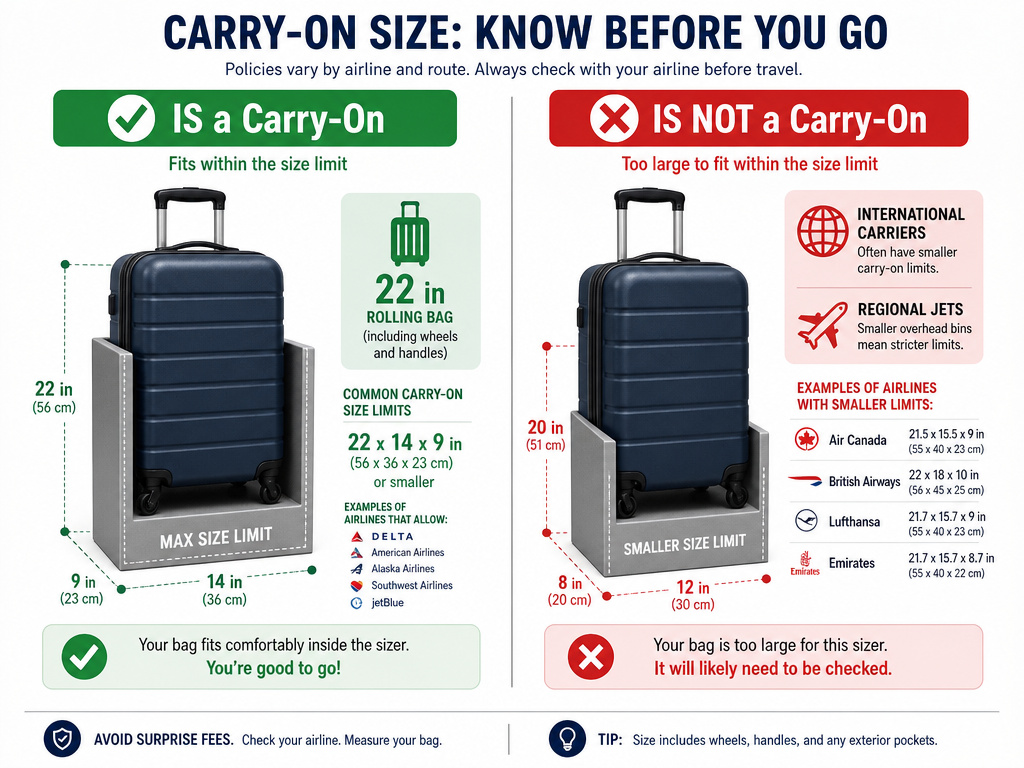
Let’s get specific. Your bag’s fate depends on three things: its true size, your airline, and how full the flight is.
It is a carry-on if:
- Its total external dimensions are under your airline’s limit (use the measuring method above).
- You’re flying Southwest, Frontier, or Sun Country and your bag is under 24 inches long.
- The flight has plenty of overhead space and the gate agent is focused on a quicker departure.
It is not a carry-on if:
- Its total dimensions exceed the limit, even by half an inch, and you’re facing a strict sizer.
- You’re flying a European, Middle Eastern, or Asian carrier with a 55 cm length limit.
- You’re on a regional jet (CRJ, Embraer) with tiny overhead bins. These planes always gate-check larger roll-aboards.
Common mistake: Relying on past luck. Just because your bag has never been sized doesn’t mean it fits the rules. Enforcement is getting stricter, not more lenient.
The safest path is to choose a bag that gives you a buffer. A 20-inch suitcase or a 21-inch international model eliminates the guesswork and the gate-side anxiety.
Frequently Asked Questions
Does a 22 inch suitcase fit as a carry-on on Delta?
It fits on Delta only if the bag’s total exterior dimensions, including wheels and handles, do not exceed 22 x 14 x 9 inches. Delta publishes this limit clearly. Many bags advertised as 22 inch measure 22.5 to 23 inches with wheels, which can be rejected at a gate sizer, especially on full flights.
Is 22 inch luggage allowed on Southwest?
Yes, easily. Southwest’s carry-on allowance is 24 x 16 x 10 inches, the most generous of any US airline. A 22 x 14 x 9 bag has two inches of margin in length and extra room in width and depth. This is why 24-inch luggage can sometimes be a carry-on on Southwest but never on Delta.
Will a 22 inch carry-on fit on Ryanair?
No. Ryanair’s free cabin bag is personal-item size (40x30x20cm). Their Priority cabin bag limit is 55 x 40 x 20 cm (21.6 x 15.7 x 7.9 in). A 22 inch bag exceeds the length by 0.4 inches and the depth by more than an inch. Trying to bring one triggers a gate fee of around £75.
What is the best size carry-on for European airlines?
Bag with total external dimensions of 55 x 40 x 20 cm or smaller. In inches, that’s approximately 21.65 x 15.75 x 7.87. Bags designed for this “international carry-on” standard are often labeled as 21 inch. The Briggs & Riley Baseline Global 21″ and the Travelpro Maxlite Air International are built for this exact box.
Do airlines really weigh carry-ons?
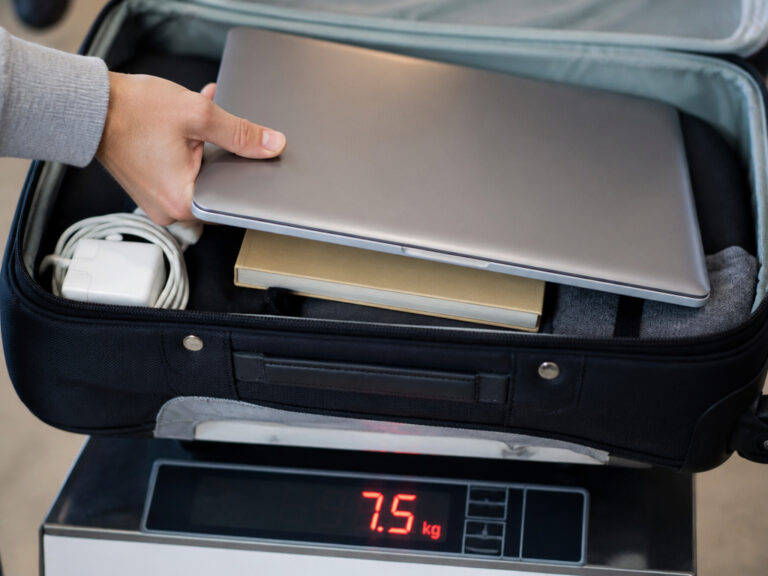
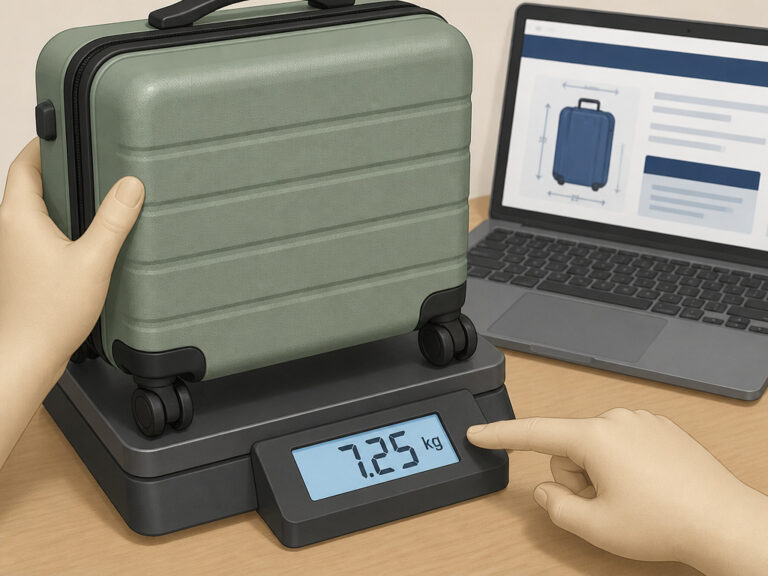
Yes, more are starting to. Many carriers have limits of 8-10 kg (17-22 lbs). Enforcement often happens at bag-drop kiosks with built-in scales or at the gate. A packed carry-on can hit that limit quickly once you add the suitcase’s own weight (often 7-9 lbs). Weigh your bag at home first.
The Bottom Line
A 22 inch suitcase lives in a dangerous middle ground. It’s too big for many international airlines and too often mis-measured for strict US domestic enforcement.
The answer is to buy with your eyes open. Measure the real specs, not the marketing copy.Know which airlines you actually fly and what their real carry-on size requirements are. If you see a 55 cm limit on your itinerary, step down to a true international carry-on.
Your goal is to never have to argue with the system in the first place. Pick a bag that fits the standard carry-on dimensions with room to spare, and you walk to the gate with your coffee, not your anxiety.