Is There a Carry-On Luggage Weight Limit? Find Out Here
This post contains affiliate links. As an Amazon Associate, we earn from qualifying purchases.
Yes, there is a weight limit for carry-on luggage on many airlines, but a surprising number do not publish one. The rule splits cleanly: most major U.S. Carriers like Delta and United focus only on size, while most international and budget airlines enforce strict weight limits, often starting at 5 kg (11 lbs). Your specific limit is set by your airline’s policy, your cabin class, and sometimes the aircraft type.
The “self-lift” clause is the universal catch. Even airlines without a published number can require you to lift your bag into the overhead bin unaided. A bag you can’t hoist gets gate-checked, and on a weight-restricted airline, that means a fee.
What follows is the breakdown: which airlines weigh, what the common limits are, where the regulations come from, and how to pack so you never get that surprise charge at the jet bridge.
Key Takeaways
- Major US carriers (Delta, United, JetBlue) typically have no published weight limit, only size restrictions. Your ability to lift the bag yourself is the real test.
- International and budget airlines almost always have weight limits, commonly 7-10 kg (15-22 lbs) for economy class. Airlines like ANA and Qatar Airways are strict enforcers.
- The FAA’s core rule is about safe stowage, not a number. Regulation 14 CFR § 121.589 requires bags to be stowed so they don’t hinder emergency equipment, which airlines interpret through their own programs.
- Exceeding a published limit leads to gate-check fees, which are often more expensive than pre-paid checked baggage. On small regional jets, you may have no choice.
- Weigh your bag at home before you leave. Assume every scale at the airport will read 0.5 to 1 kg heavier than yours.
The Short Answer: It Depends on Your Airline
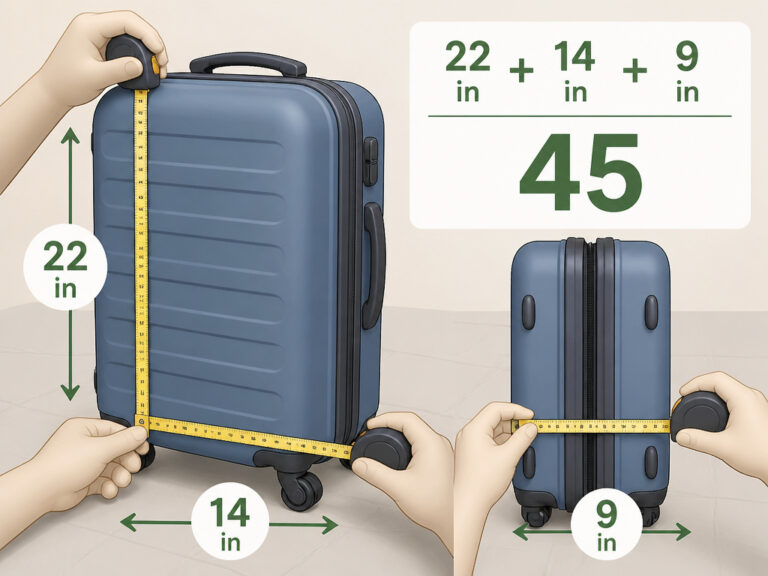
IATA passenger baggage rules state that carry-on allowances may vary by airline, cabin class, and aircraft type. While a common maximum size is 56 x 45 x 25 cm (22 x 18 x 10 in), weight limits, when applied, typically start at 5 kg (11 lb).
This variation isn’t random. It’s a direct result of how airlines interpret broad safety regulations into operational policy. The U.S. Federal Aviation Administration (FAA) provides the framework, but each carrier fills in the specifics.
Your first stop should always be your airline’s website. Look for “carry-on baggage” under travel information. Do not rely on third-party aggregators for your final check; airline policies change, and the fine print about regional jets or basic economy fares matters.
The most common point of failure is assuming your domestic US policy applies to an international partner. A Delta-operated flight to New York might not weigh your bag, but the connecting Delta-marketed flight operated by Korean Air to Seoul absolutely will. The operating carrier’s rules govern each segment.
US vs. International Airlines: The Great Weight Divide
The Atlantic Ocean is a decent proxy for carry-on philosophy. U.S. Legacy carriers generally skipped weight limits for main cabin overhead bags. In Europe, Asia, and on budget carriers everywhere, the scale is part of the boarding ritual.
| Airline Type | Typical Weight Limit | Enforcement Likelihood | Primary Concern |
|---|---|---|---|
| Major US (Delta, United, American) | Often none published | Low at check-in, medium at gate if bag looks heavy | Size compliance and bin space |
| International Full-Service (ANA, Lufthansa, British Airways) | 7-10 kg (15-22 lbs) | High at check-in and gate | Weight distribution, aircraft balance |
| Budget & Regional (Frontier, Ryanair, inter-island carriers) | 7-10 kg (15-22 lbs), sometimes less | Very High, with sizer boxes | Revenue from baggage fees, small aircraft limits |
Why the difference? For U.S. Airlines, the business model long relied on checked-baggage fees, not carry-on policing. The operational headache of weighing every roller bag wasn’t worth it if the bin closed. International carriers, especially those using a wider variety of aircraft with stricter balance calculations, standardized on weight early. Budget airlines monetize the limit directly.
Where this goes sideways: Assuming “no published limit” means “no limit.” On a full flight, gate agents for any airline will scrutinize bags that look oversized or obviously heavy. If you struggle to lift it, they will tag it for the hold, and on a weight-restricted airline, you’ll pay a premium gate-check fee.
The Rules Behind the Rules: FAA and IATA Standards
Airlines don’t make these rules up. They are built on a foundation of safety regulations and industry standards. Two bodies set the stage: the International Air Transport Association (IATA) for global guidelines, and the FAA regulation § 121.589 for U.S. Operations.
The FAA Advisory Circular 121-29B explains how airlines should create their carry-on programs. It doesn’t mandate a specific weight. Instead, it requires that bags be stowed so they don’t block aisles, can be secured in bins, and won’t fall out. The airline’s program must ensure bins can be closed “without using force.”
This is where the “self-lift” rule gets its teeth. If a flight attendant can’t close a bin because it’s overloaded, or if a passenger can’t lift their bag, the official FAA carry-on document has been violated. The airline’s solution is to remove the bag.
IATA’s role is harmonization. Their global airline baggage standards provide a common reference, the 56x45x25cm size, the 5 kg starting point, so that interline travel (tickets on multiple airlines) has a baseline. This is why you’ll see those dimensions echoed by carriers worldwide, from ANA to Lufthansa.
How to Find and Prepare for Your Airline’s Limit

Don’t guess. The process takes five minutes and saves you money and stress at the airport.
- Go to the source. Navigate to your airline’s official website. Use the search function for “carry-on baggage.”
- Read past the headline. Look for sections titled “Weight Restrictions” or “Allowances.” Note any differences by cabin class (economy vs. Business) or fare type (basic economy).
- Check for aircraft exceptions. Policies for mainline jets (like a Boeing 737) often differ from regional jets (like a CRJ-200) with tiny overhead bins. Your ticket should show the aircraft type.
- Weigh your packed bag. Use a bathroom scale: weigh yourself, then weigh yourself holding the bag. Subtract. Do this the night before you fly.
- Plan your personal item. Your backpack or purse is your buffer. If your roller bag is 0.5 kg over, shift a heavy book or charger to your personal item, which is rarely weighed.
Common mistake: Using a duffel bag or soft-sided roller that expands. When fully packed, it may still fit in the sizer at the gate, but if it’s bulging and heavy, it attracts a weight check. A structured, hard-sided suitcase within the carry-on dimensions is less likely to raise suspicion.
What Happens If Your Bag Is Over the Limit?

The consequence isn’t theoretical. It’s a specific, often expensive, sequence of events.
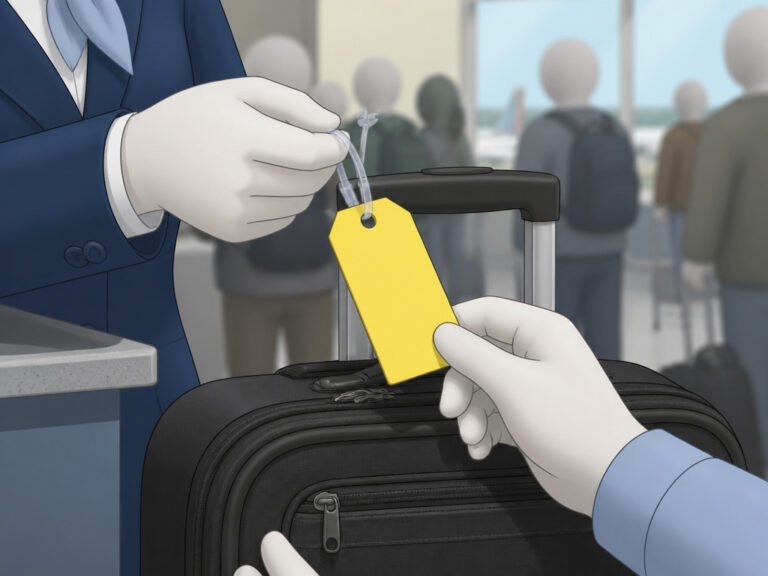
On a U.S. Carrier without a weight limit, the worst case is usually a free gate-check. Your bag gets a pink tag, you leave it on the jet bridge, and you pick it up planeside at your destination. It’s inconvenient but not costly.
On an airline with a strict carry-on weight limit, the scenario changes: * At the check-in counter, you’ll be asked to repack or pay to check the bag. * At the gate, the fee to check it is almost always higher than the pre-paid rate online, sometimes double. * On a very small aircraft (like those used for island hops), your bag may be taken for cargo loading regardless of your fee, with no guarantee it arrives on your flight.
The financial logic for airlines is clear. A published weight limit is a revenue trigger. They want you to either pack lighter or pay for the convenience of a heavier bag.
TL;DR: Know your airline’s number. If they have one, treat it as a hard ceiling. If they don’t, still pack with the 10 kg (22 lb) standard in mind so you can lift it easily. Your shoulders and your wallet will thank you.
Frequently Asked Questions
Do any US airlines have a carry-on weight limit?
Yes, but they are the exception, not the rule. Frontier Airlines has a 35 lb limit. Hawaiian Airlines has a 25 lb limit. The major legacy carriers. Delta, American, United, do not publish a weight limit for standard carry-ons, adhering only to size dimensions.
Is the weight limit for carry-on and personal item combined?
Sometimes. This is a critical detail to verify. Airlines like ANA (All Nippon Airways) specify a combined weight for your carry-on bag and personal item, not to exceed 10 kg. Most U.S. Carriers that do have limits apply them per piece. Always check your airline’s phrasing: “per bag” vs. “total combined weight.”
What if I can’t lift my carry-on bag into the overhead bin?
You will be required to gate-check it. Flight attendants are not permitted to lift bags for passengers (with exceptions for those with disabilities). This is a universal safety and liability rule. If you can’t lift it, it’s not a compliant carry-on, regardless of the number on the scale.
Are carry-on weight limits enforced on every flight?
Enforcement is inconsistent but risk-based. On busy international routes and with budget airlines, enforcement is high. For domestic U.S. Flights on large jets, it’s lower unless the bag is visibly oversized or the flight is completely full. The trend, however, is toward more consistent enforcement as airlines seek ancillary revenue.
How can I reduce my carry-on weight?
Start with your bag itself. A lightweight, durable carry-on from brands like Travelpro or Briggs & Riley saves pounds before you pack. Wear your heaviest shoes and jacket. Use digital copies of books. Choose travel-sized toiletries and remember that liquids under 100 ml still add weight. Every ounce counts when you’re close to a 7 kg limit.
Before You Go
The question “is there a weight limit” has a binary answer: check your airline. For U.S. Domestic travel, you’re probably safe focusing on size. For almost any other flight, assume a limit exists and it will be enforced. The standard carry-on size and weight benchmark of 22x14x9 inches and 7-10 kg is your best packing guide.
Weigh your bag at home. Know the difference between your roller bag and your personal item. That five minutes of preparation is the only reliable way to walk past the gate agent’s scale and straight onto your flight.