What Is a Cabin Bag | The IATA Specs That Actually Matter
This post contains affiliate links. As an Amazon Associate, we earn from qualifying purchases.
A cabin bag is a piece of luggage you carry onto an airplane and store in the overhead bin or under the seat in front of you. Its size and weight are not universal; they are set by each airline, often using the International Air Transport Association’s (IATA) general reference dimensions of 56 x 45 x 25 cm (22 x 18 x 10 in) as a guideline, with weight limits typically starting at 5 kg (11 lb).
That IATA guideline is just a recommendation, not a rule. Every airline publishes its own specific limits, and they are the final word. The difference between the guideline and the real limit printed on your boarding pass is where fines happen.
What follows: the exact IATA specs, how airlines twist them, the security restrictions that apply everywhere, and the real-world choices that get your bag past the gate agent without a second look.
Key Takeaways
- The common 56 x 45 x 25 cm (22 x 18 x 10 in) cabin bag size is an IATA guideline, not a guarantee. Your airline’s published limit is the only one that matters.
- Weight limits are separate and often stricter, especially on budget airlines like Ryanair and EasyJet.
- Interline itineraries (flights on multiple airlines) use the most restrictive baggage rules of all carriers on your ticket.
- Security rules for liquids, aerosols, and gels (LAGs) are universal in many regions: containers must be 100ml or less, all fitting inside one clear, resealable 1-liter bag.
- A soft-sided backpack or duffel is more likely to fit a sizer when fully packed than a rigid suitcase with protruding wheels.
The Official IATA Dimensions & Weight Limits
The International Air Transport Association provides the baseline that most of the industry points to. Their global airline baggage standards are a voluntary framework, but they shape the numbers you see everywhere.
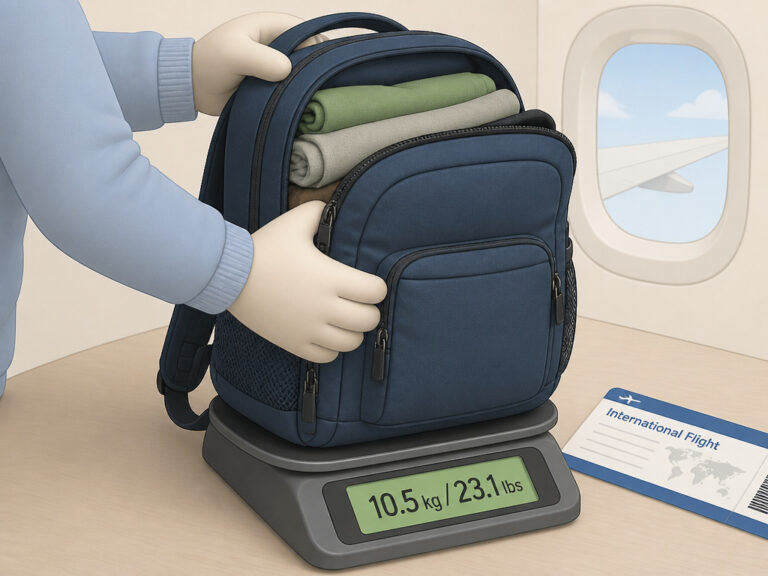
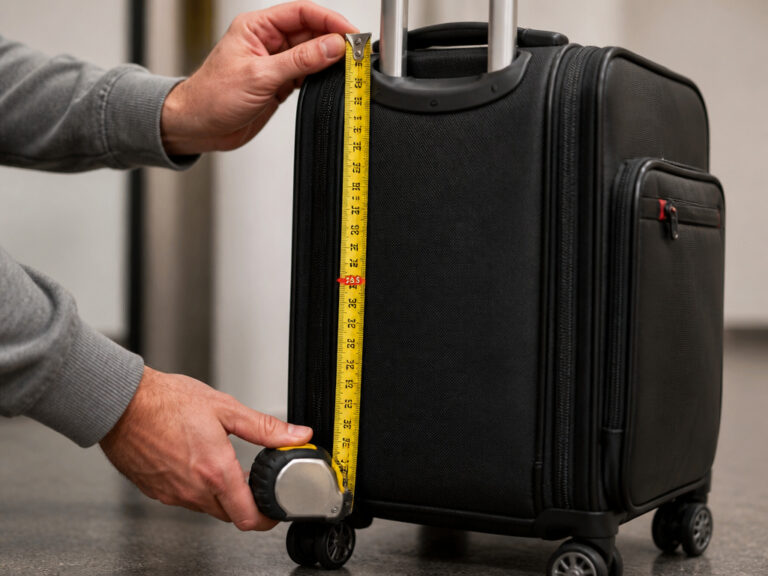
IATA’s general reference for maximum carry-on baggage dimensions is 56 × 45 × 25 cm (22 × 18 × 10 in), including wheels and handles. Many airlines also apply weight limits, typically starting at 5 kg (11 lb). Items exceeding applicable limits may be placed in the aircraft hold.
This 56x45x25cm box is the “Cabin OK” size. If a bag is marketed with an IATA Cabin OK logo, it meets this exact spec. The weight suggestion is just that—a suggestion. An airline is free to set its limit at 5kg, 8kg, or 10kg. The IATA page makes this delegation clear: baggage allowances remain airline-specific.
Why these numbers? They’re designed to maximize the use of standard overhead bin space across common aircraft like the Boeing 737 and Airbus A320. A bin can typically fit three or four bags of this size in a specific orientation. When bags are larger, the bin fits fewer, and the last passengers to board often get their carry-on luggage gate-checked.
| IATA General Reference | Dimension / Weight | What It Includes |
|---|---|---|
| Maximum Dimensions | 56 cm × 45 cm × ,25 cm (22 in × 18 in × 10 in) | All parts: wheels, handles, external pockets. |
| Typical Weight Start | 5 kg (11 lb) | The bag and all its contents. |
| Purpose | Industry guideline for optimal stowage. | Not a regulation; airlines can and do set stricter rules. |
The takeaway is simple. You can use the IATA size as a search filter when shopping, but you must verify your airline’s actual policy before you fly. Assuming the guideline is the rule is the first mistake.
How Airlines Enforce Their Own (Different) Rules
Here is where the IATA framework meets reality. Every carrier publishes its own carry-on size limits and weight maximums. Budget airlines are notoriously strict, using sizers at the gate and charging high fees for non-compliance.
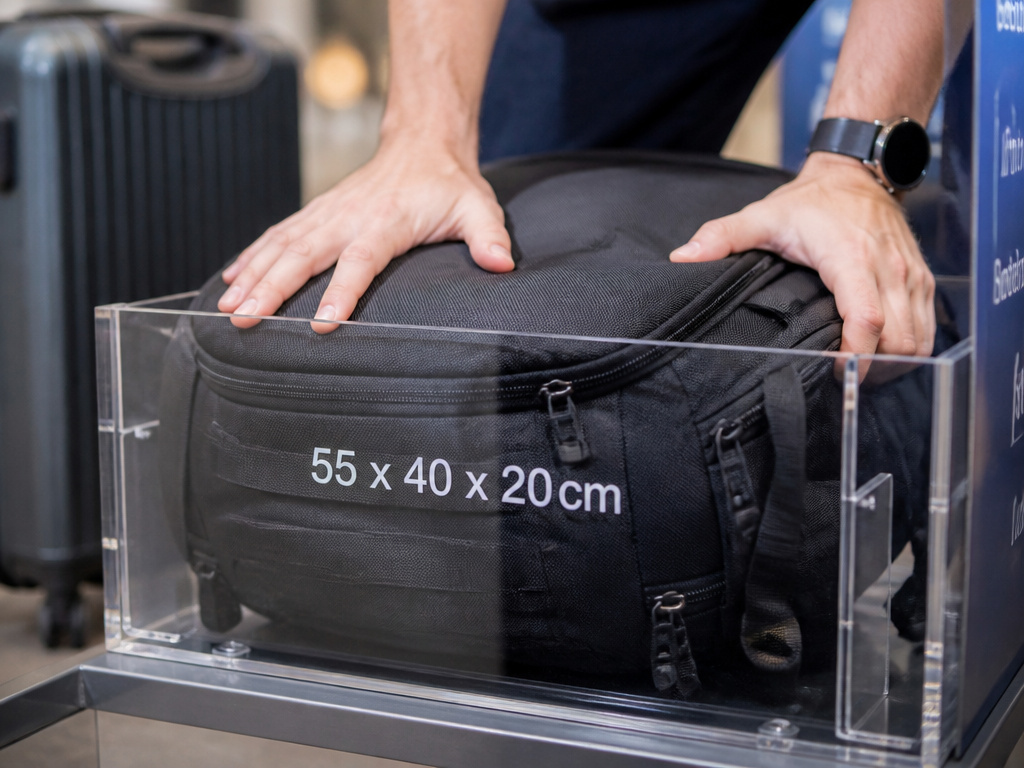
Ryanair is the classic example. Its priority cabin bag allowance is 55 x 40 x 20 cm, and it must weigh under 10kg. Notice this is smaller than the IATA guideline on two axes. Their sizer is a vertical metal cage. A Reddit user posted a photo of their Samsonite Magnum Eco suitcase failing because the wheels protruded when placed vertically, even though it fit EasyJet’s horizontal sizer. The community response was blunt: “But it doesn’t fit, the wheels are outside the measure.”
EasyJet allows one free cabin bag up to 45 x 36 x 20 cm. It’s smaller still, but they explicitly state it must fit under the seat. Their weight limit is a generous 15kg, but the physical constraint is the real barrier.
Where this goes sideways: Assuming a bag marketed as “cabin-sized” will fit your specific airline. Manufacturers use the IATA guideline, but a Ryanair sizer is a different shape. That Samsonite Magnum Eco owner learned this with a €150 fine.
The enforcement is often selective and tense. Another Reddit thread described a “massacre” at Copenhagen airport, with Ryanair staff checking every bag and fining ten priority passengers. Soft bags have an advantage here. A stuffed backpack can be squeezed into a sizer; a hard-shell suitcase with fixed wheels cannot.
For most U.S. Legacy carriers, the rules are closer to the IATA standard. Delta, American, and United generally accept bags up to 22 x 14 x 9 inches (56 x 35 x 23 cm) in overhead bins, with weight limits around 7-10 kg (15-22 lb). Always check your carry-on size requirements for your exact flight.
The Critical Difference Between a Cabin Bag and a Personal Item
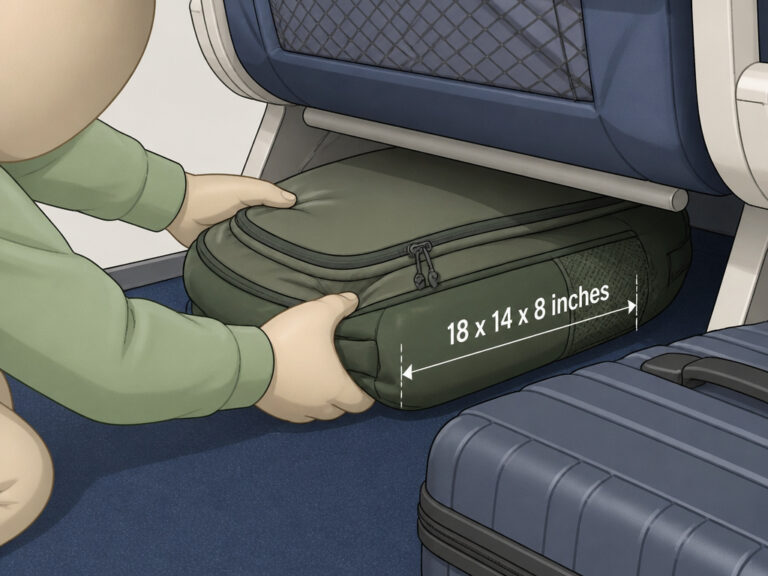
Most airlines allow two items: one cabin bag for the overhead bin and one smaller personal item for under the seat. The definitions matter.
A cabin bag is your main piece of carry-on luggage. It’s the one that must meet the airline’s published size and weight limits for the overhead compartment.
A personal item is smaller—think a handbag, laptop bag, or small backpack. Its purpose is to fit under the seat in front of you, freeing overhead space. Dimensions are often around 40 x 30 x 20 cm. A tote bag or slim duffel bag often works perfectly here.
Common mistake: Using a large backpack as both your cabin bag and personal item. If it’s your only bag and it fits under the seat, you’re fine. If you also have a roller bag, the backpack must fit under the seat while the roller is overhead. Gate agents will make you consolidate if you’re trying to board with two oversized pieces.
This two-bag system is how frequent travelers manage. They use a compact carry-on duffel like the Patagonia MLC 45L for the overhead (it’s soft and fits most sizers when not overstuffed) and a small daypack for under-seat essentials. This approach is almost never challenged.
Security Restrictions: Liquids, Aerosols, Gels (LAGs)
Size is one hurdle; content is another. Separate from airline policy, security agencies worldwide enforce restrictions on liquids in carry-on baggage.
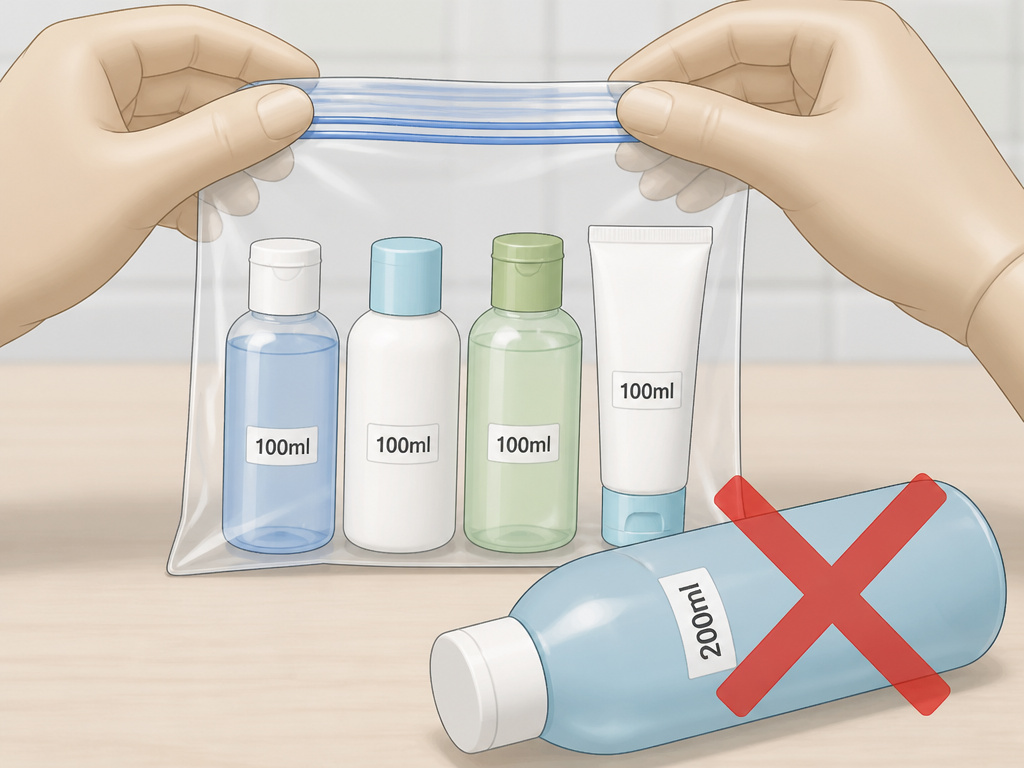
The universal rule in the EU, UK, US, and many other regions: * Each liquid, aerosol, or gel container must hold 100 ml (3.4 oz) or less. * All containers must fit inside a single, transparent, resealable plastic bag. * The bag must not exceed 1 liter (about 1 quart) in capacity. * One bag per passenger.
Skip this if: You’re checking your bag. These rules apply only to cabin and personal items. Medicines, baby food, and special dietary liquids are exempt but must be declared.
The “100 ml” limit refers to the container’s capacity, not the amount inside. A half-full 200ml shampoo bottle is prohibited. These rules trace back to the 2006 transatlantic aircraft plot and are non-negotiable. You present the clear bag separately at security screening. Fail this, and your items are confiscated—no airline policy will save them.
What Happens on Interline Flights (Multiple Airlines)
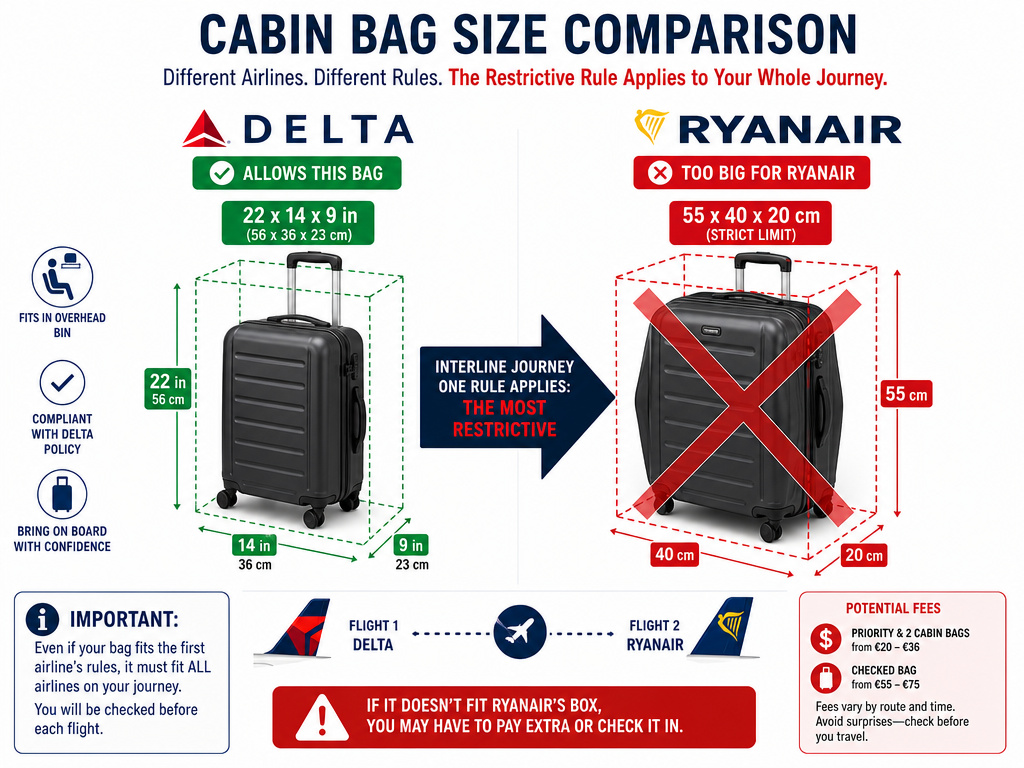
This is the most overlooked trap. An interline itinerary involves two or more airlines on one ticket. Your baggage allowance is governed by the most restrictive carrier on your journey.
The IATA guidance document on baggage standards for interline states carriers must ensure it’s clear which rules apply. As a passenger, you are responsible for checking all of them. If your first flight is on a generous U.S. Carrier and your connecting flight is on a strict European budget airline, the budget airline’s smaller size and weight limits apply to your entire trip.
| Scenario | First Flight Allowance | Second Flight Allowance | Your Bag Must Comply With |
|---|---|---|---|
| New York to London (Delta) | 22x14x9in, 22 lb | N/A | Delta’s rules. |
| London to Milan (Ryanair) | N/A | 55x40x20cm, 10kg | Ryanair’s rules. |
| NYC-London-Milan (ticketed together) | Delta’s rules | Ryanair’s rules | Ryanair’s rules for the entire journey. |
The consequence is straightforward. If your bag is built for Delta but too big for Ryanair, you will be stopped at the gate in London and forced to check it for a high fee. This catches even seasoned travelers.
Choosing a Bag That Actually Works
Given all these variables, what should you buy? The goal is flexibility and compliance.
For maximum airline acceptance: Aim for a bag at or below the smallest common denominator—around 55 x 40 x 20 cm. A soft-sided bag is superior to a hard-shell for squeezing into sizers. The North Face Base Camp Fusebox is a Reddit-recommended backpack that targets the 40x30x20cm personal item size but can expand. The Patagonia MLC 45L is a popular soft-sided carry-on bag that, when not overstuffed, conforms to most overhead bin limits.
For budget airline certainty: If you frequently fly Ryanair or EasyJet, buy a bag marketed explicitly for their specific dimensions. Many brands now make “Ryanair-approved” cabin cases. Better yet, use a durable backpack you can compress.
The default pick: For most travelers flying a mix of legacy and budget airlines, a 40-45L travel backpack from a brand like Osprey, Patagonia, or The North Face is the safest bet. It can be your one carry-on item, it fits overhead, and it lacks the rigid wheels that fail sizer tests. It also doubles as a personal item if you need to downsize on a stricter airline.
Frequently Asked Questions
Are cabin bag and carry-on bag the same thing?
Yes, for all practical purposes. “Cabin bag” is common in Europe and Asia, while “carry-on” is the North American term. Both refer to luggage you keep with you in the passenger cabin.
Do wheels and handles count in the cabin bag size?
Yes. Every airline and the IATA guideline specify that the maximum dimensions include all external parts: wheels, handles, side pockets, and anything else protruding. This is why so many suitcases fail sizer tests.
Can I take a cabin bag and a personal item?
In most cases, yes. The standard allowance is one cabin bag for the overhead bin and one smaller personal item (like a purse or laptop bag) for under the seat. Always verify with your airline, as some ultra-low-cost carriers charge for the overhead bag.
What happens if my cabin bag is too big?
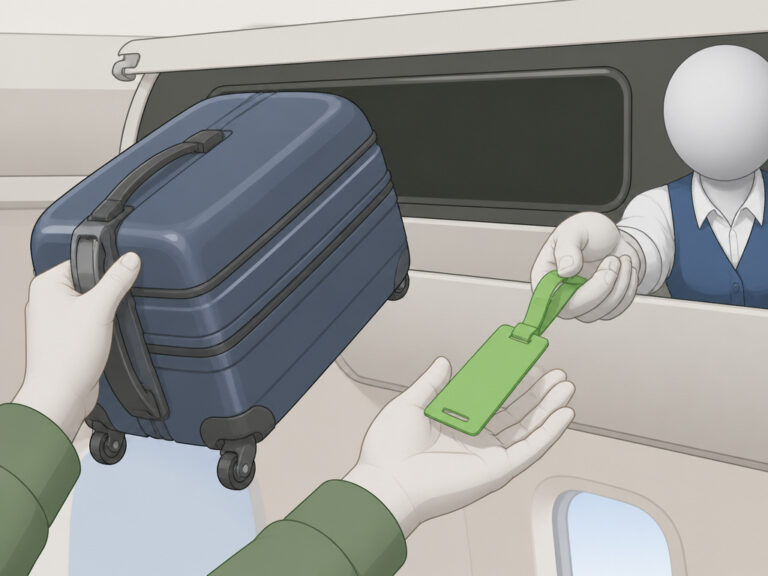
If it doesn’t fit the sizer or the overhead bin, the airline will gate-check it. This means they take it at the jet bridge, tag it, and load it into the aircraft hold. You collect it at baggage claim. There is usually a fee for this, especially if you knew it was oversized.
Are there items prohibited in a cabin bag?
Yes. Sharp objects, tools, and certain sporting equipment must go in checked baggage. Lithium-ion spare batteries and power banks must be in your carry-on luggage, not checked. Always check the FAA carry-on baggage advisory and your airline’s list before packing.
The Bottom Line
A cabin bag is your ticket to efficient air travel, but its definition is set by your airline’s tape measure, not a dictionary. Use the IATA 56x45x25cm guideline as a shopping aid, but anchor your final decision to the smallest size limit on your itinerary. When in doubt, choose a soft bag over a hard one, and never assume the rules you used last time still apply. Your backpack might fit under the seat today, but the gate agent’s sizer is the only judge that matters.