What Is the Dimension of a Carry On Luggage? | Sizer Guide
This post contains affiliate links. As an Amazon Associate, we earn from qualifying purchases.
The dimension of a carry on luggage is 22 inches long by 14 inches wide by 9 inches tall (56 x 36 x 23 cm), including wheels and handles. This is the standard for most major US airlines like Delta, American, and United. However, a growing number of carriers now enforce a maximum of 45 linear inches—the sum of length, width, and height—instead of checking each dimension separately.
That 22x14x9 figure is your starting point, not a guarantee. Enforcement shifted in 2026. Gate agents now use physical sizer boxes more often, especially on budget and European carriers. A bag that bulges when packed or has protruding pockets will fail even if its empty dimensions look correct.
What follows is a breakdown of the two measurement systems, the strictest and most generous airline limits, and how to physically measure your bag the way a gate agent will. The goal is to walk past the sizer without a second glance.
Key Takeaways
- The 22″ x 14″ x 9″ standard applies to Delta, American, United, JetBlue, and Alaska Airlines, but always verify your specific carrier’s policy.
- Linear inches matter. Delta, Southwest, and Air Canada use a 45 linear inch limit (L + W + H). A 22x14x9 bag equals exactly 45 linear inches.
- Enforcement is visual for US majors but strict for budget carriers. European and Asian airlines like Ryanair and Cebu Pacific use sizer boxes and charge high gate-check fees.
- Measure your bag packed. Soft-sided luggage can expand by over an inch in each direction when full, turning a compliant bag into a rejected one.
- Small regional jets have different rules. On Delta Connection flights with 50 seats or less, only personal items fit in the cabin; standard carry-ons are gate-checked.
The Standard US Carry-On Dimension: 22 x 14 x 9 Inches
Open any major US airline’s baggage page. You will see the same three numbers: 22, 14, and 9. This 22x14x9 inches template became the de facto standard because it fits in the overhead bins of the Boeing 737 and Airbus A320 families that dominate domestic routes.
The Federal Aviation Administration doesn’t set a universal size. Its FAA carry-on baggage advisory circular only mandates that bags must fit under a seat or in an enclosed storage bin without blocking aisles. Airlines derived their own limits from the bin dimensions of their most common aircraft.
The 22″ x 14″ x 9″ carry-on size (56 x 36 x 23 cm) is an industry consensus, not a law. It represents the maximum volume that can be reliably stowed in the overhead compartments of narrow-body jets without requiring flight attendants to force bins closed.
This standard applies to the maximum carry-on size for American Airlines, Delta Air Lines, United Airlines, JetBlue, and Alaska Airlines. Their policies are nearly identical. The critical detail is whether they police individual dimensions or use the linear-inch system.
| Airline | Individual Dimensions (in) | Linear Inch Limit | Primary Enforcement Method |
|---|---|---|---|
| Delta Air Lines | 22 x 14 x 9 | 45 linear inches | Visual, sizer at gate for suspect bags |
| American Airlines | 22 x 14 x 9 | 45 linear inches | Visual |
| Southwest Airlines | 24 x 16 x 10 | No linear limit | Visual |
| United Airlines | 22 x 14 x 9 | 45 linear inches | Visual |
| JetBlue | 22 x 14 x 9 | No linear limit | Visual, sizer at busy gates |
Southwest is the notable outlier. Its carry-on luggage dimensions for Southwest Airlines are a generous 24 x 16 x 10 inches. This is the most permissive acceptable carry-on size among US majors. If you frequently fly Southwest, you can buy a larger bag.
Where this goes sideways: Assuming a bag marketed as “carry-on” actually fits these rules. Luggage companies know the limits, but a bag labeled “22-inch carry-on” often measures 23 inches when you include the wheels and handle. That extra inch is the difference between boarding and a $75 gate-check fee.
Linear Inches vs. Individual Dimensions: The Math That Catches People
Delta, American, and United all state a maximum size of 45 linear inches. This is not a separate rule. It’s just another way to express the 22x14x9 limit.
Linear inches are the sum of your bag’s length, width, and depth. A perfect 22x14x9 bag calculates to 22 + 14 + 9 = 45 linear inches. The system gives you flexibility. A bag measuring 20 x 15 x 10 also equals 45 linear inches. It’s shorter but deeper.
The problem is almost no traveler thinks in linear inches. You buy a bag based on its listed dimensions. A 24-inch tall suitcase might seem close, but its math is fatal: 24 + 14 + 9 = 47 linear inches. That’s two inches over Delta’s limit.
Common mistake: Checking only the height of a “22-inch” suitcase. The 22 inches refers to the internal frame, not the external height with wheels and a pulled handle. The external height is what the sizer measures.
If your primary carrier uses linear inches, you need a luggage tape measure. Add the three numbers yourself. For a 22-inch carry-on, the math must hit 45 or less. This is the single most reliable check against gate-agent rejection.
International and Budget Airlines: A Tighter, Stricter World

Forget the US standard if you’re flying Ryanair, easyJet, Cebu Pacific, or any Gulf carrier like Emirates. Their limits are smaller and their enforcement is absolute.
The International Air Transport Association (IATA) suggests a guideline of 56 x 45 x 25 cm (22 x 17.7 x 9.8 in). Few airlines actually use it. Budget carriers designed their rules to maximize fee revenue from oversized bags.
| Airline | Carry-On Dimensions (cm) | Carry-On Dimensions (in) | Strictness Level |
|---|---|---|---|
| Ryanair (Priority) | 55 x 40 x 20 | 21.7 x 15.7 x 7.9 | Very High – metal sizer |
| Wizz Air (WIZZ Priority) | 55 x 40 x 23 | 21.7 x 15.7 x 9.1 | Very High – weighed & sized |
| Air Senegal | 55 x 38 x 20 | 21.7 x 15 x 7.9 | Highest – among strictest |
| Cebu Pacific | 56 x 36 x 23 | 22 x 14.2 x 9.1 | High – inconsistent sizers |
| Emirates | 55 x 38 x 20 | 21.7 x 15 x 7.9 | High – sizer at gate |
The Reddit threads on Cebu Pacific reveal the chaos. One user posted photos of airport sizers labeled 23cm wide (9 inches) while the airline’s website stated 10 inches. Another traveler reported their bag exceeding the limit by 2cm was allowed through because it wasn’t “bulky,” while others were charged. This inconsistency is the worst kind of risk.
The 2026 shift is toward automated sizers and zero leeway. The old trick of squeezing a soft bag into the box no longer works. If the metal frame doesn’t close easily, your bag fails. Gate-check fees on these airlines often exceed $60, more than the cost of checking a bag online.
How to Measure Your Bag Like a Gate Agent Does

You need a tape measure and your fully packed bag. Empty dimensions are useless.
- Measure Height: Place the bag upright with wheels on the ground and the handle fully extended. Measure from the very bottom of the wheels to the very top of the handle. This is the number that defeats most “22-inch” suitcases.
- Measure Width: Measure across the bag at its widest point, usually the center. Include any side pockets that bulge out when packed.
- Measure Depth: Measure from the front to the back of the bag. For soft-sided bags, press gently to simulate the bag being in an overhead bin but don’t compress it unnaturally.
Now, add the three figures. If you’re flying Delta, the total must be 45 linear inches or less. Compare each individual number to your airline’s standard carry-on luggage dimensions.
Worth knowing before you start: Wheeled luggage adds 2-3 inches of height. A “22-inch” spinner typically measures 24-25 inches from wheel bottom to handle top. That’s why so many bags fail. Look for a “22-inch carry-on” that specifically lists its external dimensions as 22 x 14 x 9.
This process is your only defense against the sizer. If your bag is within a quarter-inch of the limit in any direction, assume it will be challenged on a full flight. Size down.
Special Cases and Exceptions That Change the Rules
The printed policy has fine print. Overlooking it turns a planned carry-on into an expensive checked bag.
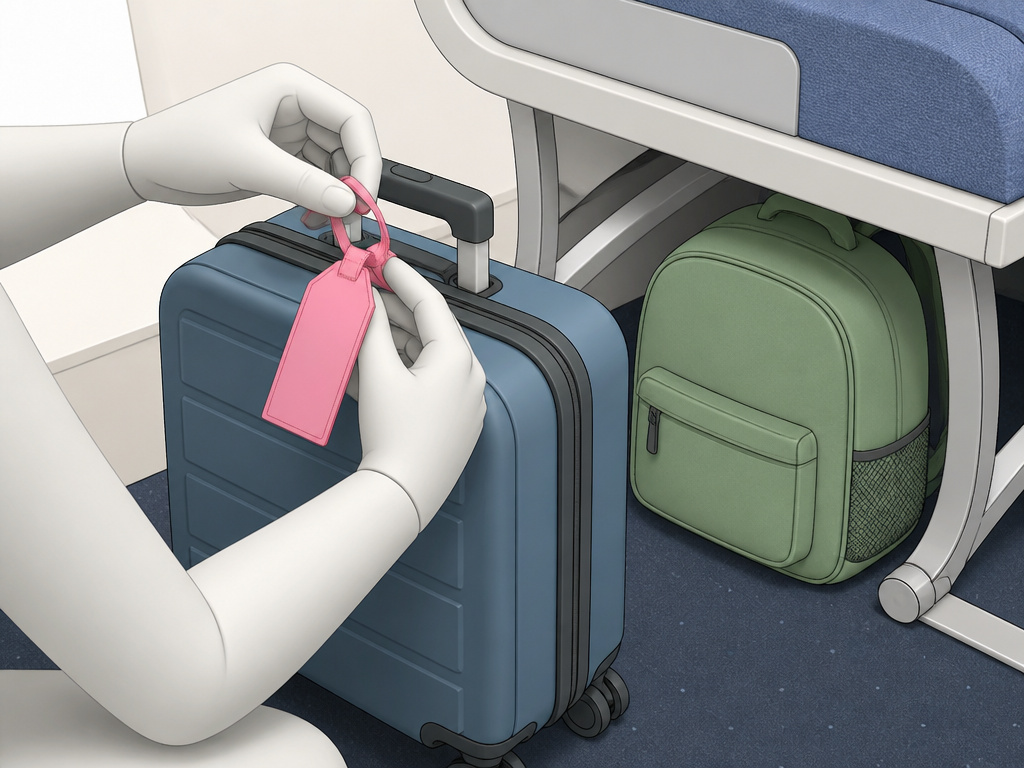
Delta Connection and Small Regional Jets: On planes with 50 seats or fewer—like many CRJ-200s or Embraer E145s—overhead bins are tiny or nonexistent. Delta’s policy explicitly states only personal items are allowed in the cabin on these flights. Your standard roll-aboard will get a pink gate-check tag and ride in the cargo hold. It’s free, but you collect it planeside after landing.
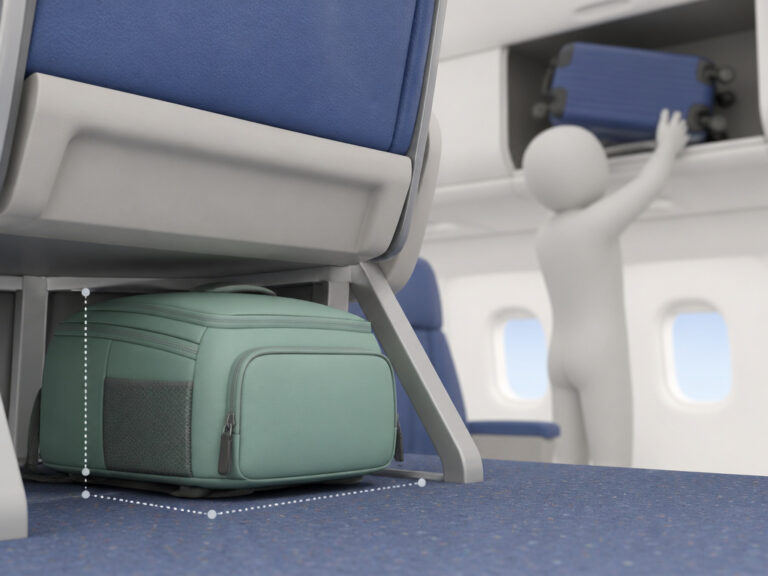
Personal Item Dimensions: This is your backup. A personal item must fit under the seat. Common limits are 18 x 14 x 8 inches. A large backpack or duffel that meets this spec can hold a surprising amount. If your carry-on is borderline, your personal item becomes your critical luggage.
Musical Instruments and Assistive Devices: These are exempt from standard size limits. A small guitar or a folded wheelchair can often be carried on if they fit in an overhead bin or a closet. You must notify the airline in advance.
The carry-on luggage definition also excludes certain items. A coat, umbrella, or food bought post-security doesn’t count toward your limit. Use this to your advantage.
Frequently Asked Questions
Is a 24-inch suitcase a carry-on?
On most US airlines, no. A 24-inch suitcase typically measures 26+ inches tall with wheels and handle, exceeding the 22-inch height limit and the 45 linear inch total. It will only work on Southwest Airlines, which allows bags up to 24 inches tall.
Do airlines actually measure every bag?
In the US, enforcement is usually visual. A gate agent will stop an obviously oversized bag. In Europe and Asia, and on budget airlines everywhere, physical sizer boxes are common. In 2026, airlines are using them more to increase fee revenue and speed up boarding.
What if my bag is slightly over the size limit?
It depends on the airline, the agent, and how full the flight is. On a US carrier, you might get a pass. On Ryanair or Spirit, expect to pay a gate-check fee that is often double the pre-paid checked bag rate. The risk is not worth the extra packing space.
Does carry-on size include the wheels?
Yes. All airline dimensions are external measurements including wheels, handles, and any protruding pockets. The sizer box is a solid metal frame. If the wheels prevent the bag from sliding in, it fails.
Are there weight limits for carry-ons?
Most US airlines have no weight limit for carry-ons (though you must be able to lift it). Many international airlines, especially in Asia and the Middle East, enforce a 7-10 kg (15-22 lb) limit. They will weigh your bag at check-in or the gate.
The Bottom Line
The dimension of a carry on luggage is a moving target. The standard 22″ x 14″ x 9″ is a good guide for US travel. The real test is your specific airline’s sizer box at the gate on the day you fly.
Buy a bag from a reputable brand that publishes honest external dimensions. Measure it yourself, packed. If you fly budget airlines, choose a bag that meets their stricter 55 x 40 x 20 cm standard. That bag will also fit any US carrier’s overhead bin with room to spare.
Your carry-on should be the most reliable part of your trip. Don’t let a quarter-inch of overstuffed fabric or a poorly measured handle turn it into a liability and an extra charge. Know the numbers, measure twice, and board with confidence.