What Is Considered Carry On Luggage
This post contains affiliate links. As an Amazon Associate, we earn from qualifying purchases.
Carry-on luggage is a small bag you keep in the cabin, subject to airline size and weight limits. Typically, it must fit in the overhead bin. A personal item, like a purse or laptop bag, fits under the seat. Always check your specific airline’s rules, as dimensions and policies vary.
You stand at the airport security line, your bag in hand. A sudden doubt creeps in. You measured it at home, it fit the guide. But the gate agent up ahead looks strict. Will your bag pass? Or will you face that awkward, expensive gate-check because you misunderstood the rules?
That uncertainty costs travelers time, money, stress every single day. The carry-on luggage rules feel straightforward until you’re holding your specific bag in a real airport. The line between a compliant carry-on, a personal item, and a bag that must be checked isn’t always clear.
I’ve helped friends dig through airline fine print for years. I’ve watched people hastily re-pack at the gate. The problem isn’t a lack of information. It’s too much conflicting advice. This guide cuts through the noise. I’ll give you a clear, seven-point checklist based on current airline policies, not generic travel blogs. You’ll know exactly what qualifies, what doesn’t, and how to pack with confidence.
Key Takeaways
- There is no single universal size. Airlines set their own rules. ” “standard is 22” x 14 x 9 inches, but many airlines use 45 linear inches (height + width + depth).
- Your bag must fit the sizer. If it doesn’t slide in easily at the gate, it’s getting checked. Include wheels and handles in your measurements.
- You get two items on most flights: one carry-on (overhead bin) and one smaller personal item (under the seat).
- Weight limits are real on international and budget airlines.Domestic U.S. carriers often don’t enforce them, but European and Asian airlines usually do.
- Liquids are the 3-1 rule.All containers must be 3.4 oz (100 mL) or less, fit in one clear, quart-sized bag.
- Some things never belong in your carry-on.Review the TSA prohibited items list before every trip.
What Is Considered Carry-On Luggage?
Let’s start with the official definition. Carry-on luggage is any bag you bring on board the aircraft that you intend to store in the overhead compartment or under the seat in front of you during the flight.
That sounds simple. The devil is in the details airlines add. Your “intent” matters less than the airline agent’s assessment at the gate. So we move to the practical checklist.
Your 7-PointCarry-On Checklist
202 four
The following points cover every factor an airline agent uses to judge your bag. Skip one, and you risk a gate-check.
1. Check Your Airline’s Exact Size Limit
This is the most critical step. Assuming “all airlines are the same” is the top mistake.
The Common Benchmarks:
- Domestic U.S. Standard: 22″ x 14″ x 9″. Used by American, Delta, United, JetBlue, others.
International Common Maximum: 21.5″ x 15.5″ x 9″ or 45 linear inches.
Linear Inches: Many airlines (Southwest, Air Canada, Spirit) use this. Add height + width + depth. The result must be 45 inches or less.
The Hard Truth: Your airline’s contract of carriage lists its official limit. A quick web search for “[Your Airline] carry on size” is faster. I keep this carry-on luggage rules page bookmarked. It lists major airlines side-by-side.
Pro Tip: If you’re flying a budget airline (Spirit, Frontier, Allegiant), check twice. They are notorious for stricter enforcement and smaller sizers.
2. Verify It Fits TheSizer (Not Just TheBox)
You might measure the outside of your hard-shell suitcase correctly. But did you include the wheels and handle? Those almost always protrude.
How to Measure Correctly:
- Use a flexible tape measure. Place the bag on a flat surface.
- Measure the height from the ground to the top of the highest point, including the handle fully extended if it’s not retractable.
- Measure the width from side to side at its widest part.
- Measure the depth from front to back, including any external pockets or compression straps that bulge when packed.
- Add them if your airline uses linear inches.
A bag that’s even a half-inch over can get flagged. Soft-sided bags often have give here because you can squish them. A hard-shell spinner suitcase has no give.
3. Know TheWeight Limit (If Any)
Most major U.S. airlines (American,Delta,United) do not enforce a weight limit for carry-on bags. Their rule is: if you can lift it into the bin, it’s allowed.
Where Weight Matters:
- International Flights: Airlines like British Airways, Lufthansa, and Emirates often have limits (typically 15-22 lbs or 7-10 kg).
- Budget Airlines: Carriers like Ryanair have strict 22 lb (10 kg) limits for all cabin baggage.
- Small Aircraft: On regional jets, lower weight limits (like 25 lbs) may apply due to bin constraints.
Check your airline’s website. If there’s a limit, pack a small travel scale. I learned this the hard way on a trip to Iceland.
4. Understand The Carry-On vs. Personal Item Difference
This is where travelers claim a free “extra” bag. Here’s the real breakdown.
| Carry-On (Overhead Bin) | Personal Item (Under Seat) | |
|---|---|---|
| Purpose | Your main cabin bag. | |
| Typical Examples | Roll aboard suitcase, large backpack, duffel bag. | Purse, laptop bag, small backpack, tote. |
| Size Guide | Must meet airline’s carry-on dimensions above. | |
| The Rule | One per passenger on most airlines. | One per passenger on most airlines. |
The Golden Combo: Most travelers bring one roller suitcase (carry-on) and one laptop backpack (personal item). That’s your standard allowance.
The Exception: Some ultra-low-cost carriers (Spirit’s Bare Fare,Frontier’s Discount Den) allow only ONE free personal item. You must pay for a full-sized carry-on. Know your fare rules.
5. Pack Your Personal Item First
Always stow your personal item under the seat before putting your carry-on overhead. Why? If overhead space runs out (a common issue on full flights), your essentials stay with you. You won’t watch your medication or laptop get gate-checked to the hold.
6. Master The 3- 1 Liquids Rule
The TSA’s 3-1-1 rule is for security, not baggage size. But violating it will stop your bag (and you) at security.
The Rule:
- 3.4 oz Containers: All liquids, gels, aerosols, creams, and pastes must be in containers 3.4 ounces (100 milliliters) or less.
- 1 Quart-Sized Bag: All those containers must fit into one clear, quart-sized, resealable plastic bag.
- 1 Bag Per Passenger: You get one bag for your security screening.
What Counts as a Liquid? Toothpaste, deodorant (gel or spray) biblical sunscreen biblical lip gloss biblical peanut butter (creamy) are all liquids in TSA’s eyes. Pack them in your quart bag.
Pro Tip: Your quart bag must be completely sealed. A bulging bag invites additional screening. I use a TSA-approved clear toiletry bag with a flat front. It lies flat in my backpack, maximizing space.
7. Banned Items: What Never Belongs in Your Carry-On
Some items are prohibited for safety. Packing them can lead to fines, confiscation, or missed flights.
Common Prohibited Items:
- Tools: Any tool over 7 inches long. Wrenches, hammers, screwdrivers.
- Sharp Objects: Knives (any size, even pocket knives), box cutters, razor blades (except safety razors), scissors with blades over 4 inches.
- Sporting Goods: Baseball bats, golf clubs, hockey sticks.
- Self-Defense Items: Pepper spray, martial arts weapons.
- Flammables: Lighter fluid, strike-anywhere matches, flammable paints.
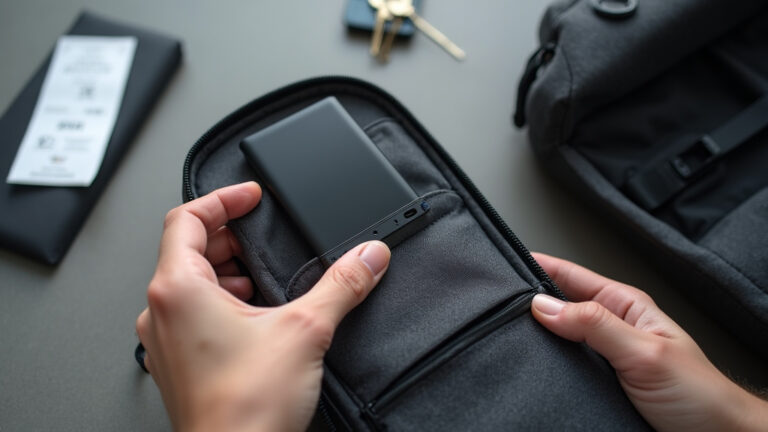
The Gray Area – Power Banks: You must carry power banks in your carry-on. They are prohibited in checked baggage due to fire risk. Ensure yours is under 100 watt-hours (Wh) for most airlines. The capacity (mAh) is usually on the label.
For the complete, official list, I always reference the TSA prohibited items page.
Carry-On vs. Checked Bag: A Quick Decision Guide
Not sure if something should be carry-on or checked? This table helps.
| Item / Concern | Carry-On | Checked Bag |
|---|---|---|
| Valuables (jewelry, cash, electronics) | Yes – Keep them with you. | Never – Risk of loss or theft. |
| Essential Medications | Yes – In your personal item. | No – Bags can be delayed. |
| Critical Documents (passport, itinerary) | Yes – On your person. | No – Same as above. |
| Full-Sized Liquids (shampoo, wine) | No – 3-1-1 rule applies. | Yes – Pack securely against leaks. |
| Sharp Tools or Sporting Goods | No – Prohibited. | Yes – Declare if required. |
| A Change of Clothes | Smart – In case your checked bag is delayed. | Yes – The bulk of your wardrobe. |
Frequently Asked Questions
Can a backpack be a carry-on?
Yes, absolutely. A backpack is one of the most common carry-on bags. The key is that its dimensions, including any external pockets or straps, must comply with your airline’s size limit for carry-on luggage. A large travel backpack (40-45L) is designed for this. A bulky hiking backpack with a large frame often will not fit.
How strict are airlines about carry-on size?
They are strict at the gate, especially on full flights. Gate agents have the final say and will ask you to test your bag in the sizer if it looks questionable. Budget airlines (Spirit, Frontier, Ryanair) are the most strict and frequently charge fees at the gate. Major U.S. carriers are somewhat more lenient on size if the flight isn’t full, but they will enforce it if bins are filling up.
What if my carry-on is slightly too big?
If it’s visibly oversized or doesn’t fit the sizer, you will have to gate-check it. This means you leave it at the end of the jet bridge, it’s loaded into the hold, and you pick it up on the baggage carousel at your destination. There’s usually a fee (often $50-$100) for this, especially on budget airlines. On full flights, sometimes airlines will ask for volunteers to gate-check bags for free.
Do duty-free items count toward my carry-on limit?
Generally, no. Items purchased in the secure, duty-free area of the airport and placed in a secure, tamper-evident bag do not count toward your carry-on or personal item allowance. Keep your receipt handy, as you may need to show it. However, if you have a connecting flight through another country, you must often take special care with liquids over 3.4 oz.
What is the best type of bag for a carry-on?
soft-sided, rectangular duffel or a hybrid backpack with minimal rigid structure is often the most versatile. It can be squeezed slightly to fit a tight sizer. A hard-shell spinner is more protective but offers no give if it’s slightly over-sized. Look for a bag with a “slim” profile (around 9″ depth) and clean lines without bulky external pockets.
The Bottom Line
Knowing what qualifies as carry-on luggage isn’t about memorizing one number. It’s about verifying the specific rules for your airline, measuring your bag correctly, and understanding the two-item system. Use the seven-point checklist above. Pack your valuables and essentials in your personal item that stays with you. Double-check the TSA prohibited list.
The confidence comes from preparation. When you walk down the jet bridge, you’ll know your bag fits the rules. You won’t be that person shuffling belongings at the gate while the line stacks up behind you. You’ll just stow your bag and take your seat, ready for takeoff.
Before You Go: Bookmark this page or save the checklist. Share it with a friend who’s flying soon. Safe travels
{
“@context”: “https://schema.org”,
“@type”: “FAQPage”,
“mainEntity”: [
{
“@type”: “Question”,
“name”: “Can a backpack be a carry-on?”,
“acceptedAnswer”: {
“@type”: “Answer”,
“text”: “Yes, absolutely. A backpack is one of the most common carry-on bags. The key is that its dimensions, including any external pockets or straps, must comply with your airline’s size limit for carry-on luggage. A large travel backpack (40-45L) is designed for this. A bulky hiking backpack with a large frame often will not fit.”
}
},
{
“@type”: “Question”,
“name”: “How strict are airlines about carry-on size?”,
“acceptedAnswer”: {
“@type”: “Answer”,
“text”: “They are strict at the gate, especially on full flights. Gate agents have the final say and will ask you to test your bag in the sizer if it looks questionable. Budget airlines (Spirit, Frontier, Ryanair) are the most strict and frequently charge fees at the gate. Major U.S. carriers are somewhat more lenient on size if the flight isn’t full, but they will enforce it if bins are filling up.”
}
},
{
“@type”: “Question”,
“name”: “What if my carry-on is slightly too big?”,
“acceptedAnswer”: {
“@type”: “Answer”,
“text”: “If it’s visibly oversized or doesn’t fit the sizer, you will have to gate-check it. This means you leave it at the end of the jet bridge, it’s loaded into the hold, and you pick it up on the baggage carousel at your destination. There’s usually a fee (often $50-$100) for this, especially on budget airlines. On full flights, sometimes airlines will ask for volunteers to gate-check bags for free.”
}
},
{
“@type”: “Question”,
“name”: “Do duty-free items count toward my carry-on limit?”,
“acceptedAnswer”: {
“@type”: “Answer”,
“text”: “Generally, no. Items purchased in the secure, duty-free area of the airport and placed in a secure, tamper-evident bag do not count toward your carry-on or personal item allowance. Keep your receipt handy, as you may need to show it. However, if you have a connecting flight through another country, you must often take special care with liquids over 3.4 oz.”
}
},
{
“@type”: “Question”,
“name”: “What is the best type of bag for a carry-on?”,
“acceptedAnswer”: {
“@type”: “Answer”,
“text”: “soft-sided, rectangular duffel or a hybrid backpack with minimal rigid structure is often the most versatile. It can be squeezed slightly to fit a tight sizer. A hard-shell spinner is more protective but offers no give if it’s slightly over-sized. Look for a bag with a \”slim\” profile (around 9\” depth) and clean lines without bulky external pockets.”
}
}
]
}