Can You Backpack in Iceland | The 3 Rules That Decide
This post contains affiliate links. As an Amazon Associate, we earn from qualifying purchases.
Yes, you can backpack in Iceland, but it operates under three non-negotiable rules: you must camp only in designated areas or with strict landowner permission, you can only hike certain trails during a narrow summer window, and your gear must be rated for freezing temperatures and relentless wind. The landscape doesn’t negotiate, and the fines for getting it wrong start at 50,000 ISK.
That “yes” comes with more caveats than most wilderness destinations. This isn’t a place where you can just point at a map and wander. The rules exist because the environment is fragile and the weather is hostile. Your trip hinges on understanding them before you book a flight.
What follows is the breakdown most guides skip: the specific legal lines you cannot cross, the gear specs that are actually enforced by conditions, and the logistical split between hut-based trekking and full wilderness expeditions. By the end, you’ll know exactly which type of trip fits your experience level and how to avoid the fines and failures that catch new visitors.
Key Takeaways
- Wild camping is largely illegal. You can pitch a tent for one night on uncultivated ground, but only with no more than two other tents and never near a farm without explicit permission. Fines exceed 50,000 ISK.
- The highland trail season is brutally short. Key routes like the Laugavegur Trail are only accessible from late June to early September. Planning for July requires booking huts six to nine months in advance.
- Your sleeping system is a safety item, not a comfort item. A sleeping bag rated to at least 23°F (-5°C) and a sleeping pad with an R-value of 4.0 or higher are mandatory, even in August.
- Huts do not provide meals or kitchen access to campers. You must carry all your food, and campers staying at hut sites are explicitly forbidden from using the indoor cooking facilities.
- Off-trail hiking is an environmental offense. Icelandic moss can take over a century to recover from a single footprint. Stay on marked paths always.
The 3 Non-Negotiable Rules for Backpacking in Iceland
Iceland’s appeal is its raw, untouched beauty. The legal and environmental framework exists solely to keep it that way. You aren’t just following rules; you’re participating in a preservation pact. Get these three things wrong, and your trip ends with a hefty fine or a rescue call.
Before you start: Register your itinerary with the SafeTravel program. This gives ICE-SAR (Icelandic Association for Search and Rescue) your route and return date. Download the 112 Iceland app, it lets you check in and provides rescuers your last known location if service drops. Cell coverage is a myth in the highlands.
1. The Camping Law Isn’t a Suggestion
The Umhverfisstofnun (Environment Agency of Iceland) sets the rules. Everyone quotes the “right to roam,” but few read the fine print that follows.
You may camp for one night in a tent on uncultivated land. The catch? Your group cannot exceed three tents total without landowner permission. Camping on cultivated land, near farms, or in any protected area is flatly prohibited unless the landowner has posted a notice allowing it. This is where most visitors miscalculate.
What “cultivated land” looks like isn’t always obvious. If you see fences, livestock, or any signs of farming, you are too close. The law also explicitly bans spending the night in camper vans, caravans, or tent trailers outside of organized campsites. The 50,000 ISK fine is a real deterrent, and rangers do patrol popular areas.
The practical takeaway: Assume wild camping is illegal for your trip. Plan to use the designated campsites adjacent to mountain huts or official campgrounds. It’s simpler, legal, and often puts you near a water source and toilet.
2. Trail Access Has a Strict Expiration Date
Iceland’s interior is called the Highlands for a reason. It’s a high-altitude plateau cut by glaciers and snowfields. The mountain passes connecting trails are only clear of snow for about 10-12 weeks each year.
The Laugavegur Trail, running from Landmannalaugar to Þórsmörk, is the classic trek. Its operating window is typically late June to early September. The F-roads that lead to the trailheads are closed until the Icelandic Road Administration inspects and clears them, usually in mid-June. Planning a hike for early June is a guaranteed cancellation.
The part nobody mentions: “Late June” doesn’t mean June 21st. It means whenever the snow melts that particular year. In a heavy snow year, the Laugavegur might not open until July. Always check the Ferðafélag Íslands (FÍ) website for current trail status in the weeks before your trip.
This compressed timeline creates a booking frenzy. For a July or August hut trek, you need to reserve bunk space six to nine months in advance. If huts are full, your only option is to carry a full 4-season tent and camp at the designated tent sites beside the huts, wild camping along the route itself is not permitted.
3. Your Gear Must Match the Metric System of Misery
Icelandic weather uses two settings: windy and rainy, or windy and about to rain. The temperature is a secondary concern to the wind chill and wetness. Your gear list isn’t about comfort; it’s a checklist for survival.
| Gear Category | Minimum Spec | Why It’s Non-Negotiable |
|---|---|---|
| Sleeping Bag | 23°F (-5°C) rating | Nighttime temps routinely drop below freezing, even in August. A “summer” bag will leave you shivering. |
| Sleeping Pad | R-value 4.0+ | The ground is cold and damp. An insulated pad is the only thing blocking conductive heat loss all night. |
| Rain Shell | Full waterproof (not resistant) jacket & pants | Horizontal rain is common. A water-resistant jacket wets through in 20 minutes. |
| Footwear | Waterproof hiking boots with ankle support | You will ford glacial rivers. The water is near 37°F (3°C), and the rocky bottoms are slippery. |
| Power Bank | 20,000 mAh capacity | Solar chargers fail under frequent cloud cover. This capacity can recharge a phone and GPS 4-5 times. |
Packing a 30°F bag because a blog said “summer is mild” is the most common, miserable mistake. The cold is insidious, it saps your energy, ruins your sleep, and makes every minor problem feel major.
Huts vs. Tents: The Logistics Split
Your choice between hut trekking and tent-based backpacking defines your entire trip’s weight, cost, and rhythm. They are fundamentally different experiences.
The Hut System: Not a Hotel
Ferðafélag Íslands (FÍ) runs about 40 mountain huts across the country. They are bunkhouses, not hotels. Managing expectations is critical.
- You bring your own sleeping bag. No blankets or linens are provided.
- You bring all your own food. Most huts do not sell hot, ready-made meals. The huts on the Laugavegur are the exception, selling limited supplies like backpacking meals, candy, soda, gas, and stoves. Beer and wine are only available in Langidalur in Þórsmörk.
- You carry out your own trash. In all but the largest huts, there is no garbage service. You pack out what you pack in.
- Campers cannot use hut facilities. If you are tenting at the designated site, you are not allowed to use the kitchen, sitting area, or indoor space. This is a strict rule.
Common mistake: Assuming hut camping is “easy.” You still carry a full pack of food and gear. The hut simply provides a windproof, slightly heated bunk and a communal space. It’s a huge morale boost in bad weather, but it’s not a serviced lodge.
Booking is competitive. Use the FÍ website directly. A 40-liter backpack is typically sufficient for a hut-based trek, as you don’t need to carry a tent or sleeping pad. A 30-liter backpack might work as a daypack if you’re on a guided tour with luggage transfer, but for independent hiking, 40L is the practical minimum.
The Tent Option: Full Self-Sufficiency
Tenting means true independence and last-minute flexibility, but the burden is heavier, literally. You must carry a tent, sleeping pad, stove, fuel, and all food.
The tent must be a 4-season model or a robust 3-season tent with excellent wind resistance. Icelandic gusts can turn a flimsy tent into a kite. You are also committing to cooking outside in whatever weather arrives.
The advantage is solitude and cost. You also aren’t locked into a rigid hut itinerary. If you find a beautiful spot at a legal campsite, you can stay. For a multi-day trip, a 50-liter backpack or even a 60L pack is standard to fit the tent, sleep system, and 5+ days of food.
What to Actually Pack: The Shortlist
Forget generic packing lists. This is what you will use every single day. The goal is versatility and absolute weather protection.
- Base Layer System: Merino wool or synthetic top and bottom. Cotton is forbidden, it kills when wet.
- Insulation Layer: A mid-weight fleece or synthetic puffy jacket. Down is great until it gets soaked.
- Shell Layer: Waterproof jacket and pants with taped seams. This is your most important piece of clothing.
- Footwear: Waterproof hiking boots (already broken in) and several pairs of merino wool socks. Pack camp shoes like down booties or sandals.
- Navigation: Physical map and compass, plus a GPS device or phone with offline maps. A satellite communicator (Garmin inReach) is a wise safety investment.
- Hydration: Two 1-liter water bottles. Stream water is generally safe to drink untreated, but a filter is a good precaution.
- Food: High-calorie, no-cook options for lunch (hardfiskur, nuts, chocolate). Dehydrated meals for dinner. Calculate an extra day’s rations as a buffer.
Where this goes sideways: Relying on a large solar charger. The cloud cover is too consistent. A 20,000 mAh power bank is a more reliable piece of gear. It will recharge your phone, GPS, and camera multiple times between town stops.
Your backpack capacity dictates what you can carry. For a 4-5 day hut trip, a 40L pack is the sweet spot. For a week-long tenting expedition, you’ll need a 50L or 60L pack. Before you fly, verify your airline’s backpack policy to ensure your loaded pack meets carry-on size limits, or be prepared to check it.
Choosing Your First Route: Laugavegur vs. Hornstrandir
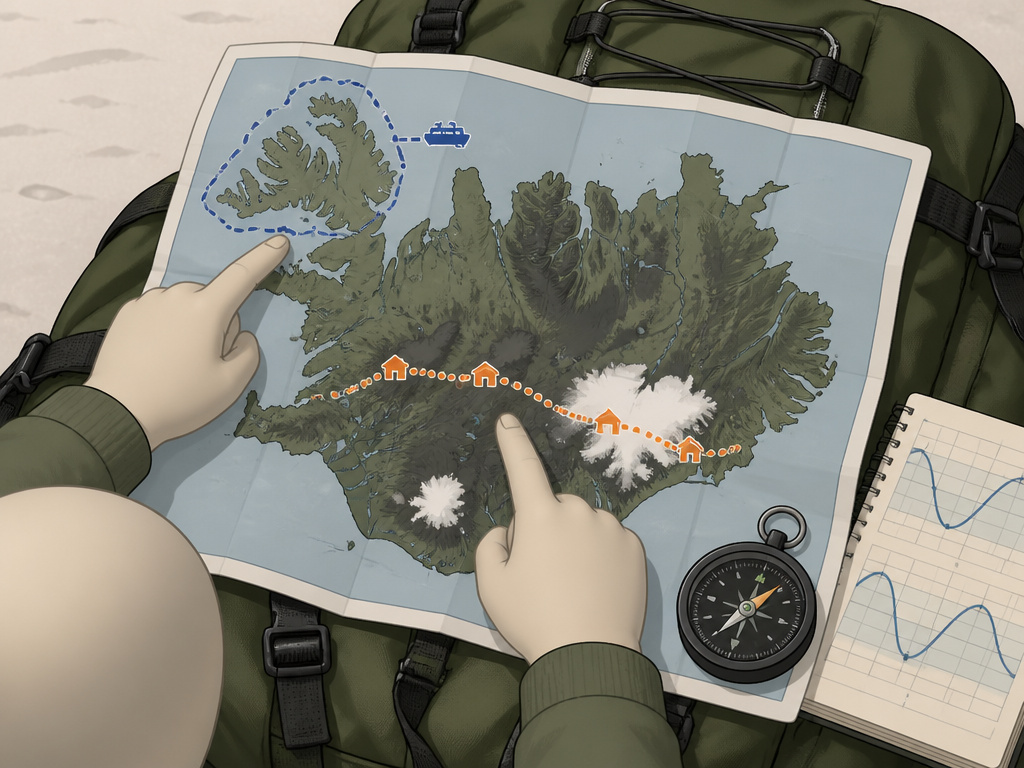
These two trails represent the opposite ends of the Icelandic backpacking spectrum. Your pick depends on your tolerance for logistics and solitude.
| Factor | Laugavegur Trail | Hornstrandir Nature Reserve |
|---|---|---|
| Terrain | Geothermal valleys, black sand deserts, glacial rivers. | Arctic coastline, sea cliffs, tundra, no trails in interior. |
| Infrastructure | Well-marked trail, hut system, seasonal bus access. | No facilities, no marked trails, access by summer-only ferry. |
| Logistics | Book huts far in advance. Coordinate bus to trailhead. | Requires meticulous tide planning, full self-sufficiency, bear-proof food storage. |
| Best For | First-time visitors, photographers, those wanting social trekking. | Experienced navigators, seekers of absolute solitude, wildlife viewers (Arctic foxes). |
The Laugavegur is the default for a reason. It’s stunningly diverse and logistically straightforward. The Hornstrandir is for the adventurer who looks at a map with no trails and feels anticipation, not anxiety.
The short version: Do the Laugavegur first. It teaches you Icelandic trail conditions, the river crossings, the weather shifts, the terrain, within a safety net of other hikers and huts. Use that experience to decide if Hornstrandir is your next step.
The One Rule That Trumps All Others

Leave No Trace is a philosophy elsewhere. In Iceland, it’s a physical imperative.
Icelandic moss (Rhacomitrium lanuginosum) is the green carpet covering vast lava fields. It grows about 1 cm per century. A single footstep can tear it from the volcanic rock, leaving a scar that will not heal in your lifetime.
This is why off-trail hiking isn’t just frowned upon; it’s a culturally offensive act of vandalism. The same goes for driving off-road, which is illegal outside of winter when the ground is frozen and snow-covered.
The landscape’s fragility is its defining feature. You are a guest walking across a living museum. Your responsibility is to pass through without leaving a single trace of your visit. Pack out every scrap of trash, stay on the worn path, and let the silence be the only thing you leave behind.
Frequently Asked Questions
Can you backpack in Iceland without a car?
Yes, but it requires planning. The Strætó public bus network reaches some trailheads like Landmannalaugar (via highland bus in summer). For remote areas like Hornstrandir, you depend on ferries. Most backpackers use a combination of buses, scheduled shuttles, and the occasional hitchhike to link trailheads.
Is backpacking in Iceland safe?
It can be, if you respect the weather and prepare. The main dangers are hypothermia from wet/cold conditions, river crossing accidents, and getting lost in sudden whiteouts. Registering with SafeTravel, carrying proper gear, and knowing when to turn back are your primary safety tools. There are no dangerous land animals.
Can I use a drone while backpacking in Iceland?
Drone use is heavily restricted. It is prohibited in all national parks, nature reserves, and many protected areas without a permit. It is also illegal to disturb wildlife or other people with a drone. The strong, gusty winds also make flying risky. For most backpackers, a drone is more trouble than it’s worth.
How much does backpacking in Iceland cost?
The cost is significant. Hut fees are expensive, food in Icelandic grocery stores is costly, and transport to trailheads adds up. A 5-day hut trek can easily cost several hundred dollars per person before flights. Tenting is cheaper for accommodation but requires a larger investment in quality gear.
What is the best month for backpacking in Iceland?
July and August offer the most reliable weather and full access to trails and facilities. However, they are also the most crowded. Late June and early September are excellent shoulder-season choices if you are prepared for colder temperatures and a higher chance of snow at altitude.
Before You Go
Backpacking in Iceland is a privilege, not a right. The country allows you into its raw heart with the explicit trust that you will follow its rules. That means camping legally, hiking only when the land is open, and carrying gear that won’t fail when the weather turns.
The landscape rewards that respect with an experience that recalibrates your sense of scale and solitude. You’ll earn every view through river crossings and wind-blasted ridges. Start with the Laugavegur, pack a sleeping bag rated for true cold, and book your huts the moment you have dates. The window is short, but the memory isn’t.


