What Is Considered a Carry-On Bag? Size Limits & Rules Guide
This post contains affiliate links. As an Amazon Associate, we earn from qualifying purchases.
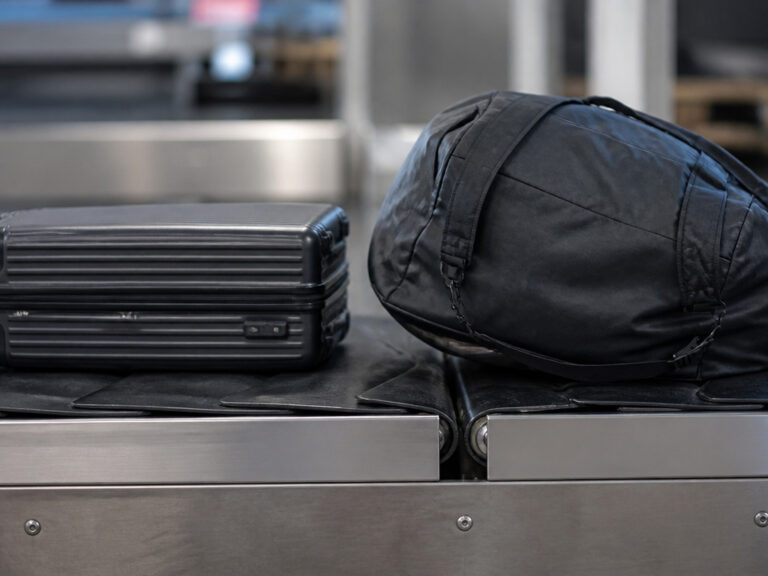
A carry-on bag is luggage you keep with you in the airplane cabin, subject to airline-specific size and weight limits. The most common reference dimensions are 56 × 45 × 25 cm (22 × 18 × 10 in), including wheels and handles. You are generally allowed one carry-on for the overhead bin plus one smaller personal item for under the seat in front of you.
That 22x18x10-inch box isn’t just a suggestion. It’s the physical limit of what fits in the overhead bins designed for most narrow-body jets, a standard codified by the International Air Transport Association (IATA). The space under the seat is just as finite. The rest of this guide breaks down the three layers that decide whether your bag flies with you: the universal size specs, your specific airline’s fine print, and the packing choices that keep you within both.
Key Takeaways
- The standard IATA carry-on dimensions are 22 x 18 x 10 inches (56 x 45 x 25 cm), but always check your airline’s specific “linear inch” or individual measurement limits.
- U.S. Federal law (14 CFR 121.589) requires airlines to scan and enforce carry-on size limits before boarding—exceeding them means you don’t fly with that bag.
- On Delta Connection flights with 50 seats or fewer, only a personal item that fits under the seat is allowed; roll-aboard bags will be gate-checked.
- The TSA’s 3-1-1 rule for liquids (3.4 oz bottles in a 1-quart bag) is separate from airline size rules and applies at security, not the gate.
- For interline trips (multiple airlines), your carry-on must meet the most restrictive rules of all carriers on your itinerary, often the smaller regional jet.
The Universal Carry-On Dimensions (And Why They Exist)
You see the numbers everywhere: 22 inches tall, 18 inches wide, 10 inches deep. This isn’t an arbitrary suggestion from luggage marketers. It’s the IATA’s general reference dimensions—56 × 45 × 25 cm—adopted because it’s the maximum volume that reliably fits in the overhead bins of the single-aisle aircraft (like Boeing 737s and Airbus A320s) that form the backbone of global air travel.
The 22″ x 18″ x 10″ (56x45x25 cm) standard exists because it represents the usable storage volume of a standard overhead bin on narrow-body aircraft. Exceeding these dimensions risks the bin door not closing, which is a federal safety violation.
Airlines then apply their own filters to this standard. Some, like Delta, use a linear inch calculation. Your bag’s length, width, and height added together cannot exceed 45 inches. Others, like many international carriers, enforce the individual measurements strictly: nothing over 22″ tall, period. This is why a bag advertised as “carry-on compliant” must always be checked against your airline’s published rules, not the tag on its handle.
Why the linear inch method? It allows for bag shape variety. A long, thin garment bag might be 24 inches tall but only 16 inches wide and 4 inches deep (44 linear inches), still passing Delta’s test even though it breaks the strict 22-inch height rule. Always do the math.
| Airline Policy Type | How It Works | Example | Risk If You Ignore It |
|---|---|---|---|
| Strict Dimensions | Each measurement (LxWxH) must not exceed the airline’s max. | 22″ x 14″ x 9″ (common limit) | A bag 23″ tall fails, even if it squishes. |
| Linear Inch Total | Length + Width + Height must not exceed a set number (e.g., 45″). | A bag measuring 24″ x 16″ x 5″ = 45″ total. | A bulky 22″ x 18″ x 10″ bag = 50″, failing by 5 inches. |
| Weight Limit | A maximum weight (e.g., 7 kg / 15.4 lbs) is enforced, often at the gate. | Weighing your bag before boarding. | A heavy bag will be gate-checked, possibly for a fee. |
The consequence of guessing wrong isn’t just a stern look. Under federal aviation regulation 14 CFR 121.589, airlines cannot allow a plane to taxi if carry-on baggage exceeds their program limits or isn’t properly stowed. In practice, that means you’ll be gate-checking your bag—and if it’s a tight connection or a small regional jet, it might be checked to your final destination, leaving you without essentials.
Personal Item vs. Carry-On: The Two-Bag Rule
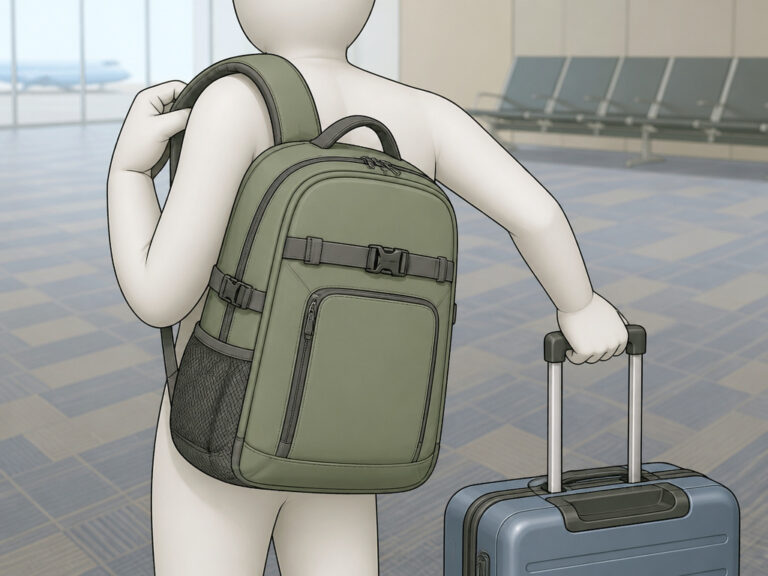
Most airlines permit one carry-on for the overhead bin plus one personal item for under the seat. This isn’t a kindness; it’s a space-allocation system. The personal item is your guaranteed storage, while overhead space is a contested resource.
A personal item must fit completely under the seat in front of you. Think: – A handbag, laptop backpack, or small duffel. – A camera bag or a briefcase. – The keyword is small. If you have to jam it under the seat, it’s too big.
Your carry-on is the larger bag destined for the overhead bin. This is your rolling suitcase, your weekender duffle, your spinner. The distinction collapses if you try to bring two roll-aboard bags. You’ll be stopped at the gate.
Where this goes sideways: Using a large travel backpack as a “personal item.” If it extends into the footwell after being shoved under the seat, the flight attendant will make you move it to the overhead bin, consuming your carry-on allowance. Now your actual carry-on has nowhere to go.
This rule has teeth on smaller planes. On Delta Connection flights operated with 50 seats or less, the policy is brutal: only a personal item is allowed on board. No exceptions for your fancy roller. It gets a pink gate-check tag, and you collect it on the tarmac after landing. If your itinerary includes a segment on a small regional jet, pack your essentials in your under-seat bag.
Airline Weight Limits and Why They Matter

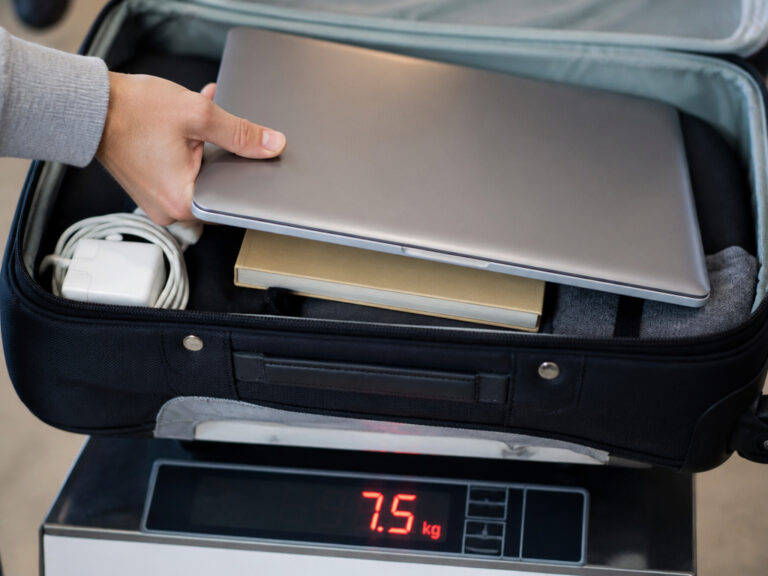
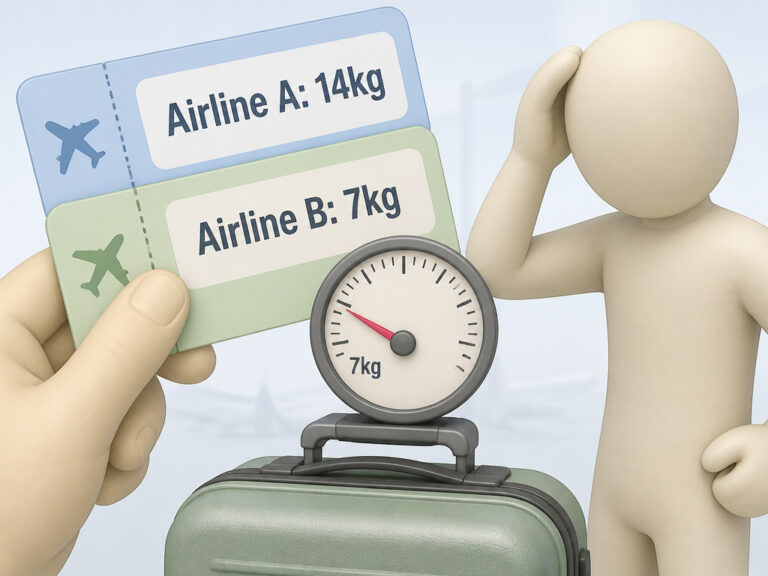
Size isn’t the only constraint. Weight matters, especially outside the U.S. Many international and budget carriers enforce strict carry-on weight limits, typically starting around 7 kg (15.4 lbs). This includes the weight of the bag itself.
The reason is occupational health and safety. Flight attendants are not required to lift passenger bags. If a bin is overstuffed or a bag is too heavy, it becomes a risk for crew injury and delays during boarding. When they suspect a bag is overweight, they’ll weigh it at the gate.
How to avoid the scale:
- Choose a lightweight bag. A hard-shell spinner can weigh 3-4 lbs empty; a nylon duffle might be under 2 lbs.
- Wear your heaviest items (jackets, boots) and move dense electronics (laptops, cameras) to your personal item, which is rarely weighed.
- Know your airline’s policy. U.S. Legacy carriers (Delta, United, American) rarely weigh standard carry-ons but will target obviously overstuffed bags. Budget carriers (Spirit, Frontier, most in Europe/Asia) weigh them routinely.
The penalty for an overweight bag is usually a fee to gate-check it, which is often more expensive than checking it initially. Sometimes, they’ll force you to repack on the spot.
What Definitely Doesn’t Count as a Carry-On
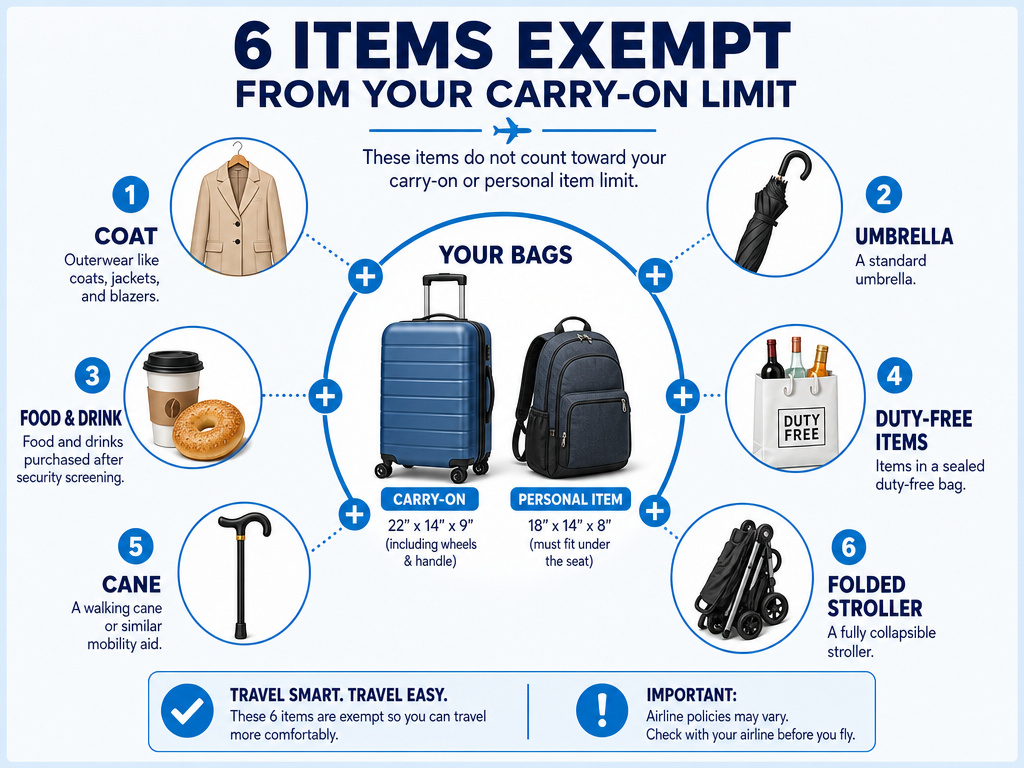
Some items are explicitly not considered part of your two-bag allowance. These are the “freebies” you can bring aboard in addition to your carry-on and personal item:
- A jacket or coat you wear or carry over your arm.
- An umbrella.
- Food or drink purchased after the security checkpoint.
- Duty-free items in the sealed, transparent bag provided by the retailer.
- Assistive devices like canes, crutches, or a wheelchair.
- A child safety seat or stroller checked at the gate.
These exceptions exist for practicality and safety. They don’t magically transform a prohibited bag into an allowed one. If you try to claim your oversized backpack is an “assistive device” without a medical need, you’ll be rightfully denied.
TSA Rules vs. Airline Rules: The Critical Difference
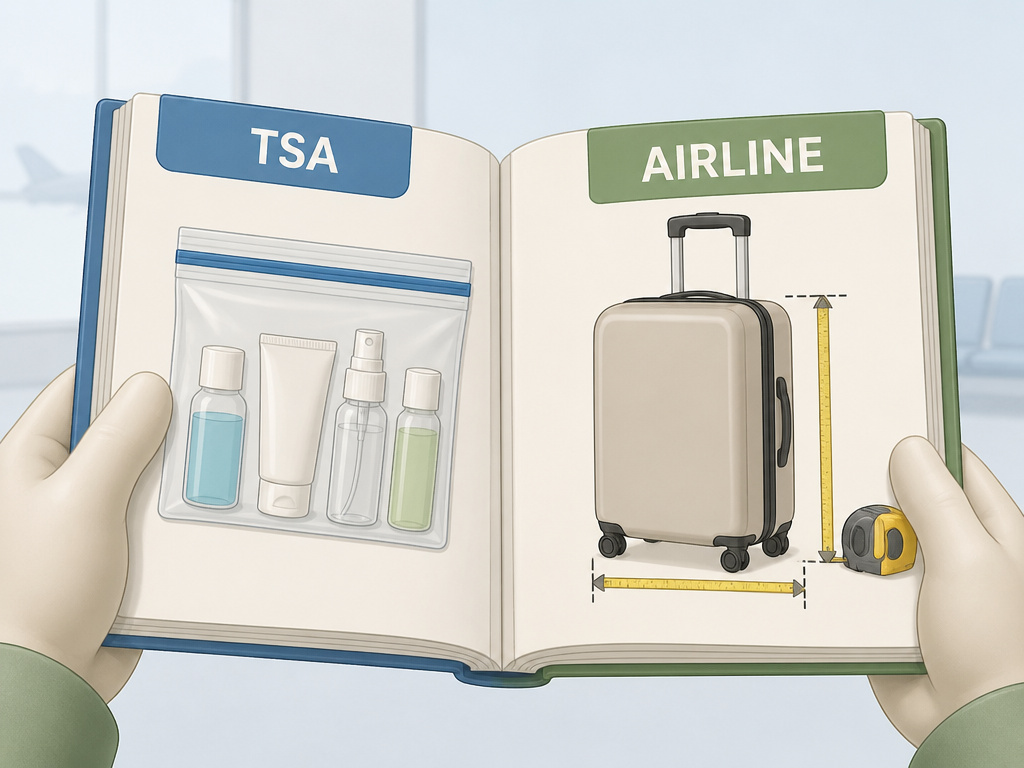
This is the confusion point for many travelers. The Transportation Security Administration (TSA) and your airline have separate, overlapping jurisdictions.
TSA Rules govern what can pass through the security checkpoint. Their most famous rule is 3-1-1 for liquids: containers of 3.4 ounces (100ml) or less, all fitting inside one clear quart-sized bag, one bag per passenger. They also prohibit sharp objects, tools, and firearms in carry-ons. A TSA officer doesn’t care if your bag is 23 or 24 inches tall; they care about what’s inside it.
Airline Rules govern what can physically enter the aircraft cabin. They set the size and weight limits discussed above. A gate agent doesn’t care about your shampoo bottle size; they care if your bag fits in the sizer.
Common mistake: Assuming TSA approval means airline approval. TSA will let your perfectly packed, 24-inch tall bag through security. The gate agent for your regional jet will not. You must satisfy both sets of rules independently.
Always check the TSA carry-on size FAQ for the latest security rules and your airline’s website for their cabin baggage policies. The FAA carry-on guidelines provide the safety framework that airlines build upon.
Choosing the Right Bag for Your Trip
Your itinerary dictates your bag. A single carry-on bag for a week is possible, but not if you’re hopping across three different airlines with varying rules.
For most domestic U.S. Travel on major airlines: A bag meeting the standard 22″ x 14″ x 9″ dimensions (like the Travelpro Maxlite 5 or the Samsonite Winfield 3) is a safe bet. It will fit the overheads and likely avoid scrutiny.
For international or multi-airline travel: You must research the most restrictive carrier on your route. If you’re flying a major carrier to a hub, then a small regional airline, your bag must meet the regional jet’s requirements. Often, this means a maximum carry-on size of 21″ x 15″ x 8″ or smaller. A soft-sided, compressible duffle (like the Patagonia Black Hole MLC 45L) is better here than a rigid spinner.
For budget airline travel: Assume they will enforce both size and weight limits strictly. Every ounce counts. A simple, lightweight backpack (like the Osprey Farpoint 40) that you can wear through the airport often draws less attention than a wheeled bag begging to be measured.
Here’s a quick decision table:
| Trip Profile | Best Bag Type | Critical Check |
|---|---|---|
| Nonstop, Major U.S. Airline | Standard 22″ wheeled carry-on | Linear inch total (usually 45″) |
| Trip with Regional Jet Leg | Soft-sided, compressible bag ≤ 21″ tall | Specific dimensions of the smallest plane |
| International / Budget Airline | Lightweight backpack (≤ 40L) | Weight limit (often 7-10 kg / 15-22 lbs) |
| “Personal Item Only” Fare | Under-seat backpack or tote | Actual under-seat dimensions of your aircraft |
Packing smart is its own skill. Efficient use of packing cubes, rolling clothes, and wearing bulky items can make a standard carry-on bag work for longer trips. The goal is to never need the overhead sizer.
Navigating Special Cases and Edge Cases
The rules bend, but they don’t break, for a few scenarios.
Interline Travel (Multiple Airlines): This is the highest-risk situation. If your ticket involves airlines A, B, and C, your carry-on luggage size must comply with the strictest rules among them. The IATA explicitly advises airlines to inform passengers of this, but many don’t. The onus is on you to check each carrier’s policy. The last flight of your day on a tiny plane dictates the size for your entire journey.
Overhead Bin Full: On crowded flights, airlines will gate-check carry-ons for free. This is a space issue, not a size issue. Your compliant bag gets a tag, you hand it over at the jet bridge, and you pick it up there upon arrival. Don’t pack critical medications or a single change of clothes in a bag you’re willing to gate-check.
Special Items: Items like musical instruments, fragile sports equipment, or urns require prior notification and approval. They may count as your carry-on, or they may require an extra seat. You must call the airline well in advance. Don’t show up at the gate with a cello expecting mercy.
The FAA carry-on baggage regulation (14 CFR 121.589) is the ultimate backstop. It legally requires proper stowage and allows crew to refuse bags that jeopardize safety. That regulation is why the rules feel inflexible—they are.
Frequently Asked Questions
What happens if my carry-on is one inch too big?
If it doesn’t fit in the airline’s sizing box at the gate, you will have to gate-check it. This is usually free but means you won’t have access to your bag during the flight. On a full flight, it might be checked to your final destination.
Can a backpack be a carry-on?
Yes, absolutely. A backpack is a very common type of carry-on item, provided it meets the airline’s size limits. Many travel backpacks are designed specifically to fit within standard carry-on dimensions.
Do carry-on size restrictions include wheels and handles?
Yes. Every airline specifies that their carry-on size limits include all protruding parts: wheels, handles, and any external pockets. This is why you must measure your bag fully extended.
Is there a standard weight limit for carry-ons?
No. Weight limits are set by each airline and vary widely. U.S. Majors rarely have a weight limit for carry-ons (though they do for checked bags). Many international and budget airlines have limits, commonly 7-10 kg (15-22 lbs).
Can I bring a purse and a backpack and a carry-on?
Typically, no. The standard allowance is one carry-on (overhead) and one personal item (under seat). A purse is your personal item. If you bring a purse and a backpack, the backpack must fit under the seat, and your carry-on goes overhead. Three bags will get you stopped.
How strictly are carry-on sizes enforced?
Enforcement is inconsistent but increasing. Major hubs and crowded flights see more enforcement. Budget airlines are very strict. Small regional jets are non-negotiable—if your bag doesn’t fit their smaller sizer, it’s not coming on board.
The Bottom Line
A carry-on bag is defined by your airline’s specific dimensions, not the label on the luggage store shelf. The 22x18x10-inch standard is your starting point, but your ticket’s fine print holds the real answer. Always verify your carry-on size restrictions directly with the airline, double-checking for any regional jet segments. Pack with the understanding that TSA rules and airline rules are separate hurdles. When in doubt, a smaller, softer, lighter bag and a ruthless packing strategy will beat a maxed-out spinner every time. Your goal isn’t to test the limits; it’s to walk onto the plane without a second glance from the gate agent.