What Size Is a Carry On Bag? The 106-Airline Compliant Fit
This post contains affiliate links. As an Amazon Associate, we earn from qualifying purchases.
A carry on bag size is not one number. It’s a set of dimensions you match to your specific airline, and the most universally compatible size is 55 x 35 x 20 cm (21.5 x 13.5 x 8 inches). This size fits the published limits of 106 out of 109 major airlines. The common “cabin approved” 56 x 45 x 25 cm bag fits only 13 airlines.
That gap between universal and common is where travelers get gate-checked. Airlines set their own rules, but the International Air Transport Association (IATA) recommends a voluntary maximum of 56 x 45 x 25 cm. Most U.S. Carriers use a limit around 22 x 14 x 9 inches (56 x 36 x 23 cm). European budget airlines like Ryanair and Wizz Air enforce smaller limits, often around 40 x 25 x 20 cm. You must always include wheels, handles, and external pockets in your measurements.
The rest of this guide maps the three layers you need: the ISO standard that baggage systems are built for, the airline-specific limits that override it, and the physical reality of enforcement at the gate. By the end, you’ll know which bag to buy and how to pack it so it never gets flagged.
Key Takeaways
- The single most compatible carry-on luggage size is 55 x 35 x 20 cm, which fits 97% of major airlines.
- Always measure your bag including wheels, handles, and any external pockets. An empty bag that fits can bulge over the limit when packed.
- U.S. Airlines rarely weigh carry-ons; international and budget carriers often enforce 7-10 kg weight limits strictly.
- Gate enforcement is visual and inconsistent in the U.S., but European budget airlines use sizer boxes aggressively and charge fees for non-compliance.
- Your bag must stow securely in an overhead bin or under the seat. The FAA carry-on baggage regulations emphasize this for cabin safety.
The Universal Carry-On Size That Actually Works
Forget the “standard” size sold in stores. Real-world airline data reveals a tighter, more reliable set of carry-on dimensions.
A bag measuring 55 x 35 x 20 cm (21.5 x 13.5 x 8 in) will be accepted by 106 of the 109 major airlines tracked in current datasets. In contrast, the commonly marketed “IATA cabin-approved” size of 56 x 45 x 25 cm fits only 13 of those 109 airlines. The extra width is the usual dealbreaker.
This 55x35x20cm spec is your true universal baseline. It clears the published limits for nearly every network carrier, including Delta, American, United, and Air Canada, while also sneaking under the stricter bars set by Ryanair, Wizz Air, and easyJet. If you buy one bag for mixed travel, this is the size to target.
Manufacturers know this. Models like the Travelpro Maxlite 5 (21″) and the July Carry On are built to these proportions. The Away Bigger Carry-On pushes slightly to 56x35x23cm, which still works for most U.S. Airlines but may require a careful check with European budget carriers.
| Airline Type | Typical Dimensions (H x W x D) | Fits 55x35x20cm? | Primary Risk |
|---|---|---|---|
| U.S. Network (Delta, United, American) | 22″ x 14″ x 9″ (56x36x23 cm) | Yes | Over-packing bulging width |
| European Network (Lufthansa, British Airways) | 55x40x23 cm | Yes | Weight limits (often 8 kg) |
| European Budget (Ryanair, Wizz Air) | 40x25x20 cm | No | Strict sizer box at gate |
| Asian Network (ANA, Japan Airlines) | 55x40x25 cm | Yes | Strict weight limit (often 10 kg) |
The table shows the landscape. Your 55x35x20cm bag is a safe default for the first three rows. The fourth row, budget airlines, requires a different strategy, usually a small backpack that qualifies as your personal item.
How Airlines Measure & Enforce Size
Airlines use three methods: linear inches, a sizer box, or a visual check. Your bag must survive the strictest one on your itinerary.
Linear inches is the sum of your bag’s height, width, and depth. Delta and Southwest use this. A common limit is 45 linear inches. Your 22-inch carry-on suitcase might measure 22x14x9, which sums to 45 inches exactly. That’s no accident, it’s the design target.
The sizer box is the arbiter of truth for budget carriers. It’s a metal or plastic bin at the gate with the airline’s exact maximum internal dimensions. If your bag doesn’t slide in easily, you pay. Ryanair’s box is 40x25x20cm. Wizz Air’s is 40x30x20cm.
Where this goes sideways: Assuming a soft-sided bag will “give” and fit a sizer box. The agent won’t force it. If the bag doesn’t drop in cleanly, you’re checking it and paying a fee that can double the cost of a budget ticket.
Visual checks are the norm at most U.S. Airline gates. Agents look for obviously oversized bags, ones that are overstuffed or are clearly large suitcases. This is where a compact, clean-looking bag like the Briggs & Riley Baseline carries an advantage. It looks the part, so it rarely gets a second glance.
Enforcement intensity follows money. Airlines that charge for checked bags are more vigilant at the gate because every oversize carry-on represents lost revenue. This is why Frontier and Spirit agents are more likely to wield a tape measure than Delta agents.
Weight Limits and Stowage Rules
Dimensions are only half the battle. Weight and where you put your bag are governed by separate rules.
Weight limits are a hard ceiling on international and budget airlines. ANA, for example, imposes a 10 kg (22 lb) total weight for your carry-on and personal item combined. European carriers often set limits of 8-10 kg. They will weigh bags at check-in or the gate. U.S. Carriers generally don’t have weight limits for carry-ons, but that’s a domestic luxury.
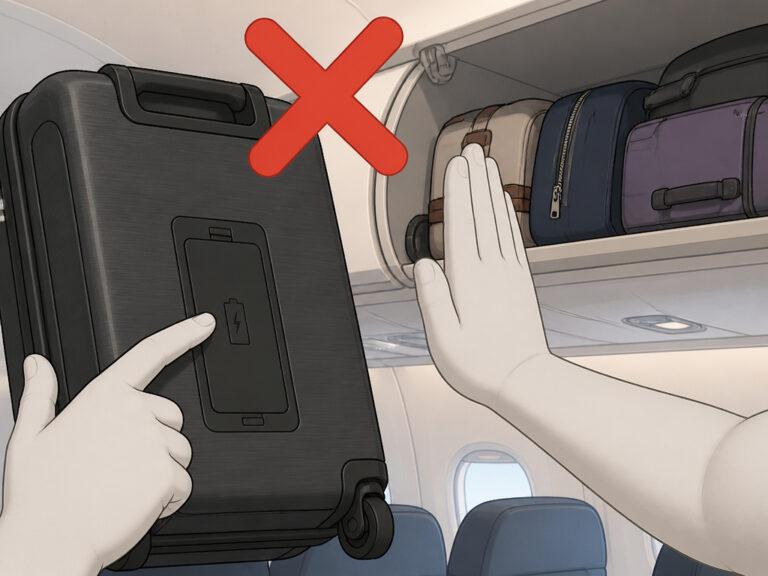
Stowage rules are safety regulations, not suggestions. The FAA carry-on baggage advisory circular AC 121-29B is clear: bags must be stowed in an approved compartment (overhead bin or under seat) and cannot obstruct aisles or exits. Flight attendants are required to verify this before departure.
Your bag must fit in the overhead bin or under the seat without forcing the bin closed. If a flight attendant can’t shut the bin lid without pushing, your bag is coming out. It will be gate-checked.
This rule explains why “expandable” bags are risky. A Delsey Carrousel Carry-On in its expanded state might fit the sizer but won’t fit in a full overhead bin on a regional jet. You’ll be re-packing at the gate while everyone watches.
How to Measure Your Own Bag Correctly
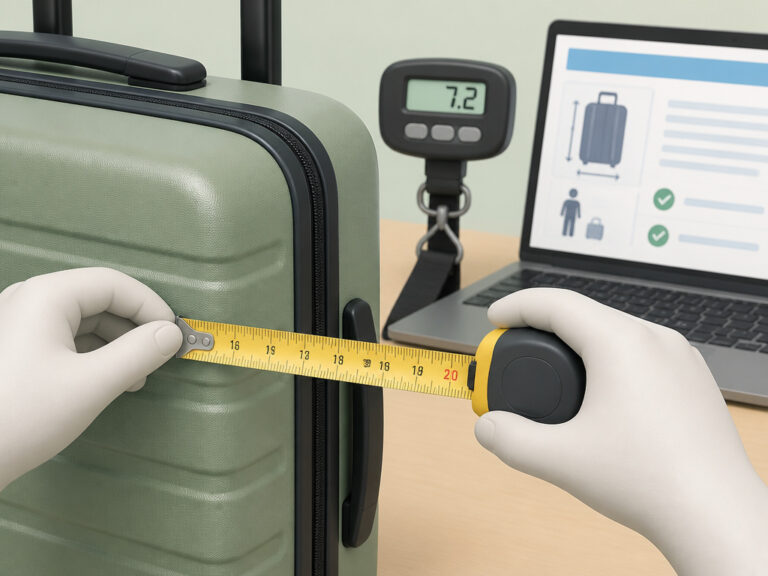
 You need a tape measure and the manufacturer’s spec sheet. The spec sheet gives you the design dimensions. Your tape measure tells you the truth after packing.
- Empty your bag. Measure the height, width, and depth at their widest points. Include fixed wheels, side handles, and any external pockets that protrude. Write these numbers down.
- Pack it as you would for a trip. Don’t under-pack. Fill it with clothes to simulate real use.
- Measure it again. This is your true traveling size. The width often grows by an inch or more on a soft-sided bag.
- Check the linear inches. Add the three packed dimensions together. Compare to your airline’s limit (e.g., 45 inches).
If your packed bag exceeds the limit, you have two choices: get a smaller bag or pack less. Compression packing cubes can help, but they can’t perform miracles on a bag that’s fundamentally too large.
What Counts as a Personal Item?
 Most airlines allow one carry-on bag plus one personal item. The carry-on bag size goes in the overhead bin. The personal item fits under the seat in front of you.
A personal item is typically a small backpack, purse, laptop bag, or briefcase. Dimensions are usually around 40 x 30 x 15 cm (16 x 12 x 6 inches). Budget airlines are strict on this; a too-large personal item will be counted as your carry-on, triggering a fee.
This two-bag system is your secret weapon against strict carriers. If flying Ryanair, your 40x25x20cm “carry-on” might be a small backpack under the seat. Your actual belongings go in a larger bag you pay to check. It’s a calculus of fees.
Frequently Asked Questions
Does a 24-inch suitcase count as a carry-on?
Almost never. A 24-inch suitcase exceeds the linear inch and sizer box limits of every major airline’s carry-on policy. It will be gate-checked. Southwest has the most generous U.S. Limit at 61 linear inches, and a 24-inch bag still might exceed that when wheels are included. Treat a 24-inch as checked luggage.
Do airlines include wheels when measuring?
Yes. Always. Wheels, handles, and any other rigid protrusions are part of the bag’s official dimensions. This is why a “21-inch” suitcase might actually be 23 inches tall when you include the wheels and telescoping handle. Measure from the bottom of the wheels to the top of the extended handle.
Can I use a duffel bag as a carry-on?
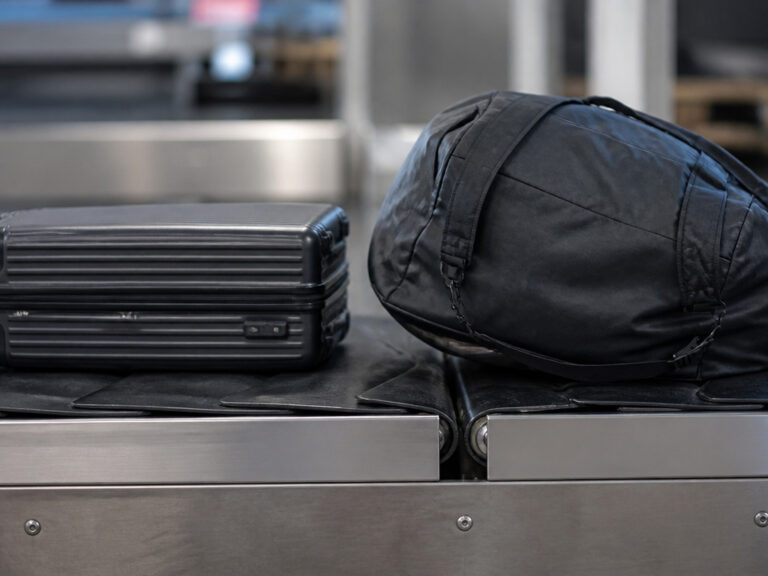
Yes, if it fits the dimensions. Duffels are great because they’re soft and can conform to a sizer box. The problem is over-packing. A duffel stuffed full becomes a round ball that won’t fit in the overhead bin lengthwise. Use a duffel with a structured base and don’t overfill it.
What is the IATA recommended size?
The IATA baggage reference manual suggests a maximum size of 56 x 45 x 25 cm (22 x 18 x 10 in). This is a voluntary guideline for airlines. Very few airlines actually use this as their limit because the 45 cm width is too large for many overhead bins. It’s more of an industry ceiling than a practical target.
What happens if my bag is too big at the gate?
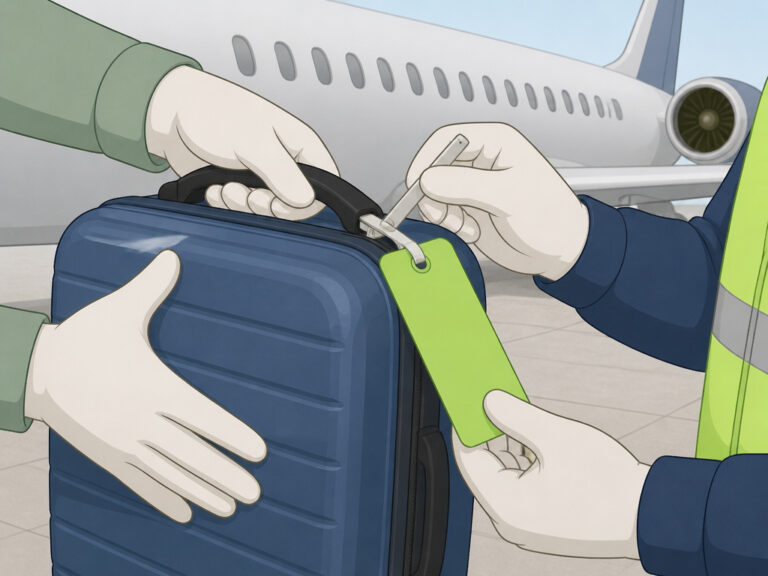
The gate agent will tag it for checked baggage. You will pay a fee, which is often higher than the pre-paid checked bag fee. On a budget airline, this can be $50-$100. You then leave your bag at the jet bridge, pick it up at baggage claim, and hope it makes the flight.
Before You Go
Buy a bag sized at 55 x 35 x 20 cm or one marketed as “international carry-on.” The Travelpro Maxlite 5 is a proven model. Always check your airline’s official baggage page 48 hours before your flight, rules change. Pack with a scale if flying internationally. And remember, the most forgiving carry-on size limit is the one you don’t test. When in doubt, go smaller.