TSA Rules: What Is Not Allowed in Your Carry-On Bag Today
This post contains affiliate links. As an Amazon Associate, we earn from qualifying purchases.
The TSA prohibits weapons, explosives, incendiaries, and replicas of these items in carry-on bags. Liquids, gels, and aerosols are limited to 3.4-ounce containers inside a single quart-sized bag. Batteries over 160 watt-hours, most tools, and any item a TSA officer deems a potential threat are also banned.
That list is the official baseline. It gets posted on signs and repeated in every basic guide. The friction starts in the details — the 160-watt-hour cap printed on your power bank, the “tamper-evident bag” clause for duty-free liquor, and the blanket authority handed to every officer at the checkpoint to prohibit anything that raises an alarm, literally or figuratively.
What follows is the breakdown of what “not allowed” actually means at the scanner: the absolute bans, the conditional limits, and the officer’s final call that overrides both.
Key Takeaways
- The 3-1-1 rule is about container size, not total volume. A 6-ounce bottle that’s half full is still prohibited.
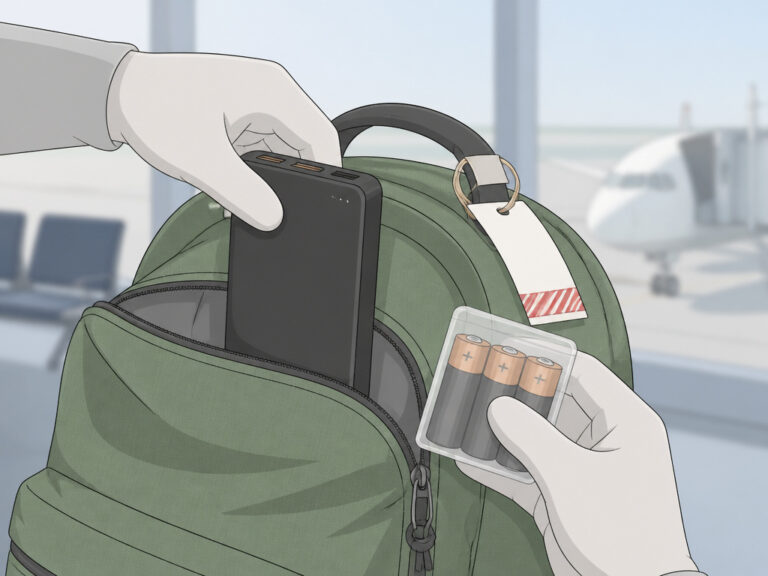
- Lithium batteries over 160 watt-hours are banned from passenger aircraft entirely. Many large power banks and portable generators exceed this.
- TSA officers have full discretion to prohibit any item they deem a potential threat, as clarified in an October 2023 Federal Register rule.
- Damaged or recalled batteries are prohibited unless made safe. A swollen laptop battery is a guaranteed flag.
- “Separate your electronics” isn’t a polite request. A cluttered bag guarantees a hand search and delays everyone behind you.
The Absolute No-Fly List: Weapons & Explosives
This category is non-negotiable and broadly defined. It includes the obvious—firearms, grenades, dynamite—and the less obvious but equally prohibited replicas. A toy gun that looks real enough to cause alarm is treated as a real gun until inspection proves otherwise. The same logic applies to replica explosives.
Common mistake: Assuming “tools” are okay if they’re for work. Most tools that could be used as a bludgeon or to dismantle aircraft interiors are banned from carry-ons. This includes hammers, drills, saws, and any wrench longer than 7 inches.
The TSA maintains a complete list of carry-on restrictions, but the officer at your checkpoint carries the final edition. If an item even resembles a prohibited weapon, expect it to be pulled for inspection. If it cannot be cleared quickly, it won’t fly.
The 3-1-1 Liquids Rule (And What “Liquid” Really Means)
The rule is precise: 3.4 ounces (100ml) per container, 1 quart-sized bag, 1 bag per passenger. The friction comes from the definition of “liquid.” It’s not just shampoo and soda.
Gels, creams, pastes, aerosols, and spreads all fall under the rule. This includes peanut butter, yogurt, lip gloss, sunscreen, and hand sanitizer. If it can conform to the shape of its container, the TSA classifies it as a liquid. A 6-ounce jar of face cream that’s three-quarters empty is still a 6-ounce container. It’s prohibited.
The part nobody mentions: The bag must be sealable. A ziplock that doesn’t close fully is technically a fail. Officers might let it slide on a slow day, but a busy checkpoint will see that bag pulled for re-packing.
Exemptions exist for medically necessary liquids, baby formula, and breast milk. You must declare these items for separate screening. The official TSA 3-1-1 liquids rule page also details the special rules for duty-free liquids purchased internationally, which must be in a secure, tamper-evident bag with a receipt dated within 48 hours.
| Common Item | TSA Classification | Carry-on Allowed? |
|---|---|---|
| Solid deodorant stick | Solid | Yes |
| Spray deodorant aerosol | Aerosol | Yes, if ≤3.4 oz and in quart bag |
| Toothpaste | Paste | Yes, if ≤3.4 oz and in quart bag |
| Peanut butter | Spreadable paste | No, unless ≤3.4 oz and in quart bag (most jars are larger) |
| Snow globe | Liquid | No, if it contains more than 3.4 oz of liquid, which most do |
Electronics & Battery Rules: More Than Just Laptops
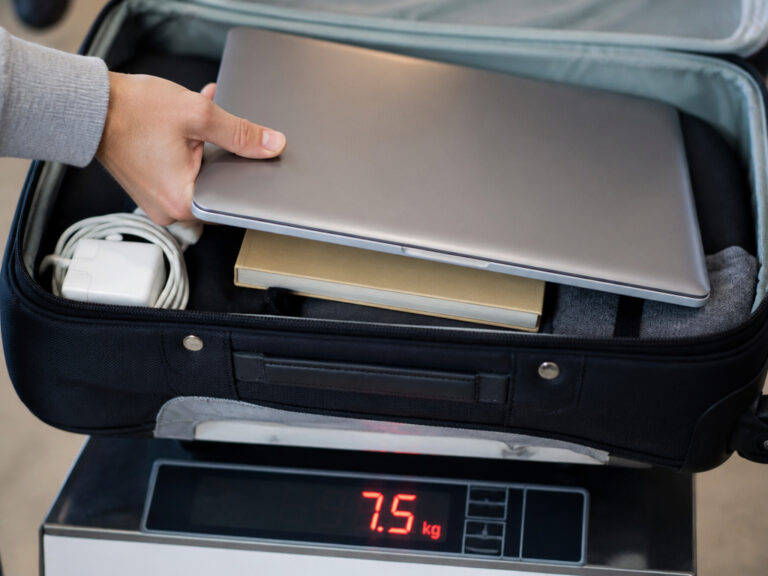
You know to pull out your laptop. The newer rule targets anything larger than a cell phone: tablets, e-readers, handheld game consoles. This isn’t about the device’s threat level. It’s about getting a clear X-ray image. A bag cluttered with wires and electronics looks like a tangled mess on the scanner, obscuring the outline of other items.
The real carry-on battery rules are set by the FAA, not the TSA. This is where people get tripped up by hard numbers.
Lithium batteries under 160 watt-hours are allowed in carry-on only. You can bring as many as your airline allows for personal use. Batteries between 100 and 160 Wh (like those in some high-end laptops) require airline approval. Batteries over 160 Wh are banned from passenger aircraft entirely.
Where this goes sideways: Damaged or recalled batteries. The FAA PackSafe guide explicitly forbids them unless the battery is removed or rendered safe. A swollen phone battery or a laptop under recall must stay home. Airlines will not let it on board.
| Battery Type | Watt-Hour (Wh) Limit | Carry-on | Checked Baggage |
|---|---|---|---|
| Power Bank / Spare Battery | Less than 160 Wh | Yes | No |
| Installed in Device (Laptop) | Less than 100 Wh | Yes | Yes (device off) |
| Installed in Device (Laptop) | 100–160 Wh | Airline approval required | No |
| Large Power Station / Generator | More than 160 Wh | No | No |
The TSA battery regulations align with the FAA’s, but enforcement happens at the checkpoint. If your power bank doesn’t have the Wh rating printed on it, officers are trained to assume the worst and prohibit it.
The “Other” Category: From Aerosols to Cremated Remains
 This is where the TSA’s official TSA A-Z list becomes your essential reference. Many surprising items have specific, non-intuitive rules.
Aerosol insecticides are banned in carry-ons but allowed in checked bags if not labeled as hazardous material. Camping stoves with residual fuel are completely prohibited. Cremated remains are allowed, but the container must be X-ray friendly; a lead-lined urn will be denied because officers cannot see inside it and will not open it out of respect.
One of the most current edge cases involves COVID-19 test kits. Unused kits are fine. Kits containing diagnostic samples (nasal swabs, vials) are considered a UN3373 Category B Infectious Substance. They are banned from carry-ons and must be packaged according to strict hazardous materials protocols if checked.
TSA Officer Discretion: This is the single most important rule that isn’t a rule. According to a 2023 Federal Register interpretive rule, a TSA screener can prohibit any item they determine poses a potential threat, regardless of the published lists. This discretion is intentional, allowing officers to respond to evolving threats and suspicious circumstances.
Tools, Sharp Objects, and Blunt Instruments
 The line here is drawn at potential use as a weapon. Disposable razors and cartridge razors are fine. Safety razor blades are allowed, but the handle must be separated from the blade cartridge. Utility knife blades, box cutters, and any loose razor blade are prohibited.
Easy to miss: Scissors are allowed if the blades are less than 4 inches from the pivot point. Anything longer is out. Your kitchen shears are almost certainly over the limit.
Most tools that could be used to bludgeon or pry are banned from carry-ons: hammers, crowbars, screwdrivers longer than 7 inches, drills, saws. They must go in checked baggage. This is one area where the TSA prohibited items list and common sense align poorly. A wrench from your car’s emergency kit could be flagged.
How to Pack to Avoid Problems
 Knowing the rules is half the battle. Applying them through smart packing is the other. The goal is to present a clear, organized bag that speeds the officer’s job.
- Use a quart bag for liquids and place it on top. Don’t bury it. This shows immediate compliance.
- Separate all electronics larger than a phone into their own bin. This isn’t optional on busy days.
- Check your tools. If it’s metal, heavy, and tool-like, assume it’s checked-baggage-only.
- Verify your battery ratings. Find the Wh rating on your power bank and laptop. If it’s missing or over 100, be prepared for questions.
- Declare special items immediately. Medical liquids, formula, large amounts of cash—tell the officer before your bag goes on the belt.
An organized bag is a fast bag. A cluttered bag guarantees a hand search, where the officer’s discretion becomes your problem. They will pull everything out in public. They will scrutinize every odd item. This is where forgotten prohibited items get discovered.
TL;DR: Pack like someone will unpack it under time pressure, because they will.
Frequently Asked Questions
Can I bring a multi-tool or Swiss Army knife in my carry-on?
No. Any tool with a blade is prohibited in carry-on bags. Even the small blade on a classic Swiss Army knife is banned. You must pack it in your checked luggage.
Are e-cigarettes or vapes allowed in carry-on bags?
Yes, but with critical caveats. They must be carried on your person or in your carry-on. They are absolutely forbidden in checked baggage due to fire risk from lithium batteries. You cannot use them on the plane.
What happens if I accidentally bring a prohibited item?
It depends on the item. If it’s a harmless mistake like a large bottle of shampoo, you’ll be given options: surrender it to TSA, exit security to place it in checked baggage (if time allows), or have someone take it. For weapons or explosives, expect law enforcement involvement, fines, and missing your flight.
Is food allowed in a carry-on?
Solid food is allowed. Liquid or gel-like food (yogurt, pudding, soup, spreadable cheese) is subject to the 3-1-1 liquids rule. A jar of pasta sauce over 3.4 ounces must be checked.
Are lighters allowed?
One lighter (standard Bic-type or Zippo) is permitted in your carry-on or on your person. Torch lighters (jet lighters) and lighter fluid are prohibited.
Before You Go
The TSA’s rules are a mix of absolute bans, specific limits, and human judgment. The lists are your starting point, but the officer at the scanner holds the final edition. Your best defense is knowledge and organization. Check the TSA What Can I Bring tool for any item you’re unsure about, and pack with the assumption your bag will need to be quickly and clearly understood by a stranger in ten seconds. That mindset, more than any list, is what gets you through without a hitch.