Items Not Allowed in Carry On Luggage Per TSA & FAA Rules
This post contains affiliate links. As an Amazon Associate, we earn from qualifying purchases.
The list of items not allowed in carry on luggage is defined by two overlapping rule sets: TSA security prohibitions (like weapons and large tools) and FAA hazardous material regulations (like certain batteries and chemicals). Liquids over 3.4 ounces, aerosols labeled as hazardous, and lithium batteries over 160 watt-hours are prohibited. Firearms, explosives, and realistic replicas are banned entirely.
These rules exist because an aircraft cabin is a sealed, pressurized tube flying at 30,000 feet. A security threat or a chemical fire in the cargo hold is a catastrophic scenario. The regulations are a compromise between what passengers need and what physics allows.
What follows is the breakdown you won’t get from a simple list: the difference between a TSA rule and an FAA rule, how to calculate your battery’s watt-hours, and the specific items that will get your bag pulled for a hand search every single time.
Key Takeaways
- The TSA’s 3-1-1 rule limits liquids, gels, and aerosols to containers of 3.4 oz (100ml) or less, all fitting in one quart-sized bag.
- Lithium-ion batteries above 160 watt-hours (Wh) are banned from passenger aircraft; those between 101-160 Wh require airline approval.
- Aerosol insecticides and other items labeled as hazardous material (HAZMAT) are never allowed in carry-on luggage.
- Firearms, replicas, and tools over 7 inches are prohibited in carry-on bags but may be allowed in checked baggage under strict packing rules.
- The final decision on any item rests with the security officer at the checkpoint.
The Two Rulebooks: TSA Security vs. FAA Hazardous Materials
You are dealing with two different agencies with two different goals. Confusing them is how travelers get tripped up.
The Transportation Security Administration (TSA) is concerned with security threats. Their list of prohibited items focuses on things that could hijack a plane or harm passengers and crew: weapons, explosives, and items that could be used as weapons. A sawzall blade is a TSA issue.
The Federal Aviation Administration (FAA) is concerned with safety and chemistry. Their FAA hazardous materials rules govern dangerous goods—items that could explode, catch fire, or leak toxic fumes due to pressure and temperature changes at altitude. A leaking battery or a can of spray paint is an FAA issue.
TSA security rules stop threats from reaching the cabin. FAA hazardous materials rules stop the plane itself from becoming the threat. An item can violate one, both, or neither set of rules.
Where they overlap, the stricter rule wins. This dual-layer system is why you can’t just read one list. You need to understand the intent behind the rule.
The Absolute No’s: Items Banned in Carry-On and Checked Bags
Some items are too dangerous to fly under any normal passenger circumstances. These are prohibited in both your carry-on and your checked luggage.
| Item Category | Examples | Primary Reason |
|---|---|---|
| Explosives & Flammables | Fireworks, flares, gunpowder, lighter fluid, strike-anywhere matches | FAA Hazard / TSA Security |
| Compressed Gases | Tear gas, pepper spray, oxygen tanks (non-medical), propane tanks | FAA Hazard (pressure risk) |
| Chemical & Toxic Substances | Chlorine, bleach, spillable batteries (car batteries), paint thinner | FAA Hazard (corrosive/toxic) |
| Realistic Replicas | Toy guns that look real, replica explosives | TSA Security (causes alarm) |
These are non-negotiable. If you show up with a road flare or a gallon of gasoline, you are not flying with it. The official TSA prohibited items page is the final authority, but these categories are universal deal-breakers.
Common mistake: Packing bear spray or pepper spray for an outdoor trip. These are prohibited in both carry-on and checked bags by the FAA as dangerous gases. You will surrender them at security.
The exception process is for trained cargo handlers with specific permits, not for passengers. Leave these items at home.
The 3-1-1 Rule for Liquids, Aerosols, and Gels
This is the most famous carry-on rule, and for good reason. It’s a constant source of confusion at the checkpoint.
The TSA liquids rule states: you can bring a single, quart-sized, clear plastic bag of liquids, aerosols, gels, creams, and pastes. Each container inside must be 3.4 ounces (100 milliliters) or less.
The rule exists because large quantities of liquids can conceal explosive materials. The bag must be placed in a bin for separate X-ray screening. If your bag is cluttered or the agent can’t get a clear scan, they will pull it for a hand search.
Where this goes sideways: The container size limit is about the labeled capacity, not the amount inside. A half-full 6-ounce toothpaste tube is not allowed, even if it only contains 2 ounces of paste. The rule targets what the container could hold.
The Medical & Infant Exceptions
The TSA and Transport Canada make explicit exceptions for medically necessary liquids and infant nourishment. This is a critical non-commodity detail most summaries gloss over.
Formula, breast milk, toddler drinks, and baby food are exempt from the 3-1-1 rule. You can bring quantities greater than 3.4 ounces in your carry-on. These items do not need to fit in the quart-sized bag. Ice packs and freezer packs required to cool these liquids are also allowed. Crucially, the infant or child does not need to be traveling with you to bring these items.
The same logic applies to prescription medications and liquid nutritional supplements for medical conditions. Declare these items for separate screening. This exemption is about necessity, not convenience.
Lithium Batteries: The Watt-Hour Ceiling
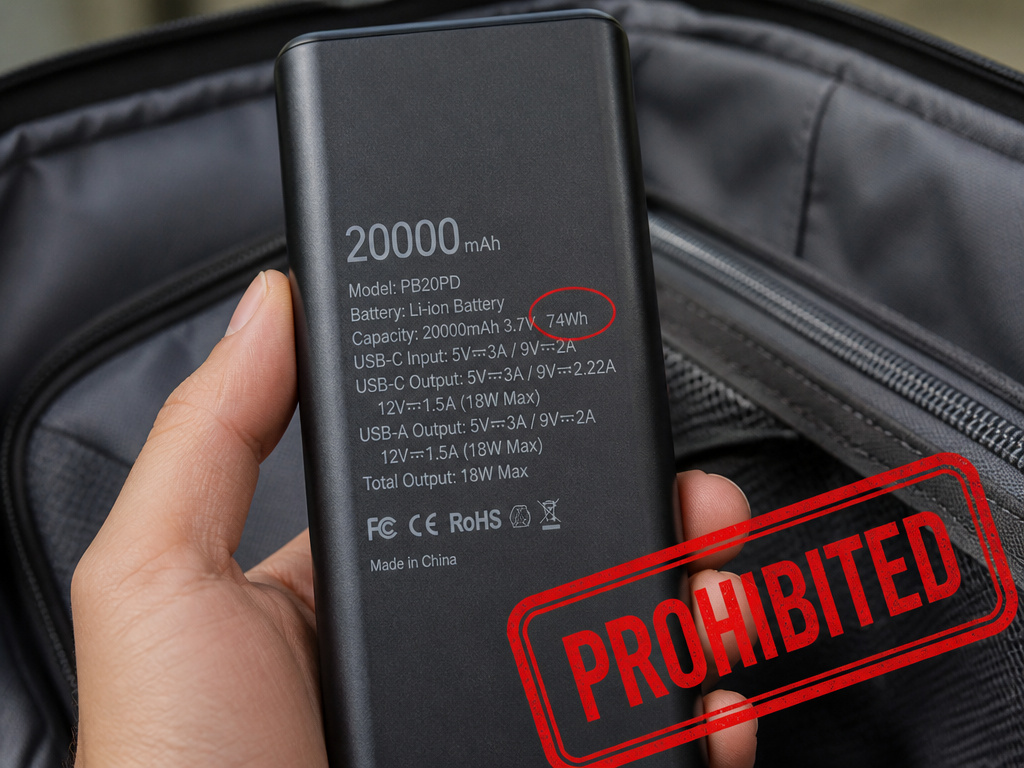 Battery rules are pure FAA hazardous materials territory. The risk is thermal runaway—a rapid, uncontrolled self-heating that can lead to fire. In the cabin, a flight crew can use a fire extinguisher. In the pressurized, inaccessible cargo hold, a battery fire can be catastrophic.
The rule hinges on watt-hours (Wh), a measure of total energy capacity.
| Battery Watt-Hour (Wh) Rating | Carry-On Baggage | Checked Baggage |
|---|---|---|
| 0–100 Wh (Most laptops, phones, cameras) | Allowed | Allowed only if installed in a device |
| 101–160 Wh (Some pro cameras, large power banks) | Allowed with airline approval (max 2 spare) | Prohibited |
| Over 160 Wh (Large power stations, e-bike batteries) | Prohibited on passenger aircraft | Prohibited |
Technical Snippet: To calculate watt-hours (Wh) if not labeled, multiply the battery’s voltage (V) by its amp-hour (Ah) rating. A 12V battery rated at 8Ah is 96Wh (12 x 8 = 96). For milliamp-hours (mAh), divide by 1000 first to get Ah.
Spare batteries (including power banks) must be carried in your carry-on, protected from short circuits by taping terminals or keeping them in original retail packaging. This is not a suggestion. A spare battery in checked luggage is a violation.
Damaged or recalled batteries are a hard no. The FAA PackSafe guide states they “must not be carried aboard an aircraft” unless the battery is removed or made safe. If your laptop battery is swollen, do not fly with it.
Tools and Sharp Objects: The 7-Inch Line
 This is where the TSA’s security mandate is clearest. The goal is to prevent anyone from having a weapon within the secure cabin.
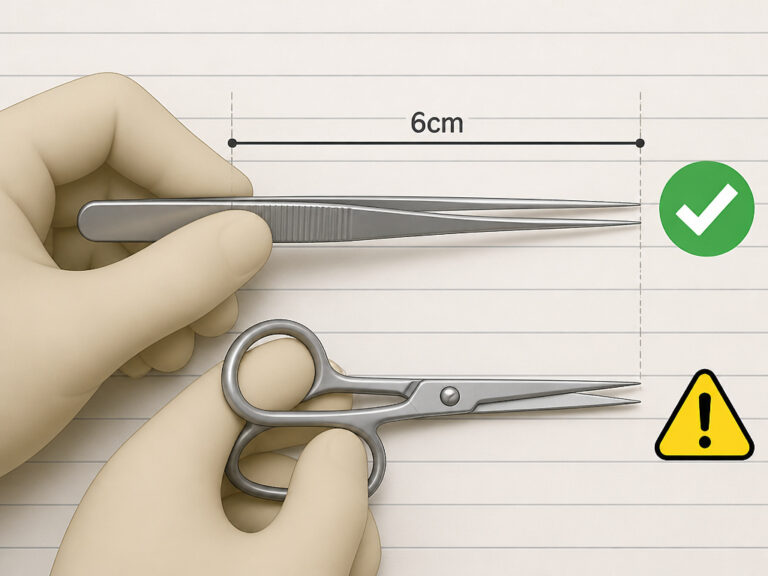
Tools allowed in carry-on must be less than 7 inches in length. This generally includes screwdrivers, wrenches, and pliers under that threshold. A standard multi-tool with a sub-7-inch blade is usually permitted, but agent discretion applies.
Tools prohibited in carry-on include any with a blade or shaft longer than 7 inches: hammers, saws, drills, crowbars, and axes. These are only allowed in checked baggage.
The part nobody mentions: “Blades” include drill bits and sawzall blades. A loose 8-inch drill bit in your carry-on is treated the same as a knife. Pack them in checked luggage or leave them behind.
The rules for razors and tweezers follow this logic. Disposable and cartridge razors are fine; straight razors and safety razor blades are not. Tweezers are allowed.
The Gray Area: Aerosols, Non-Spillable Batteries, and Camping Gear
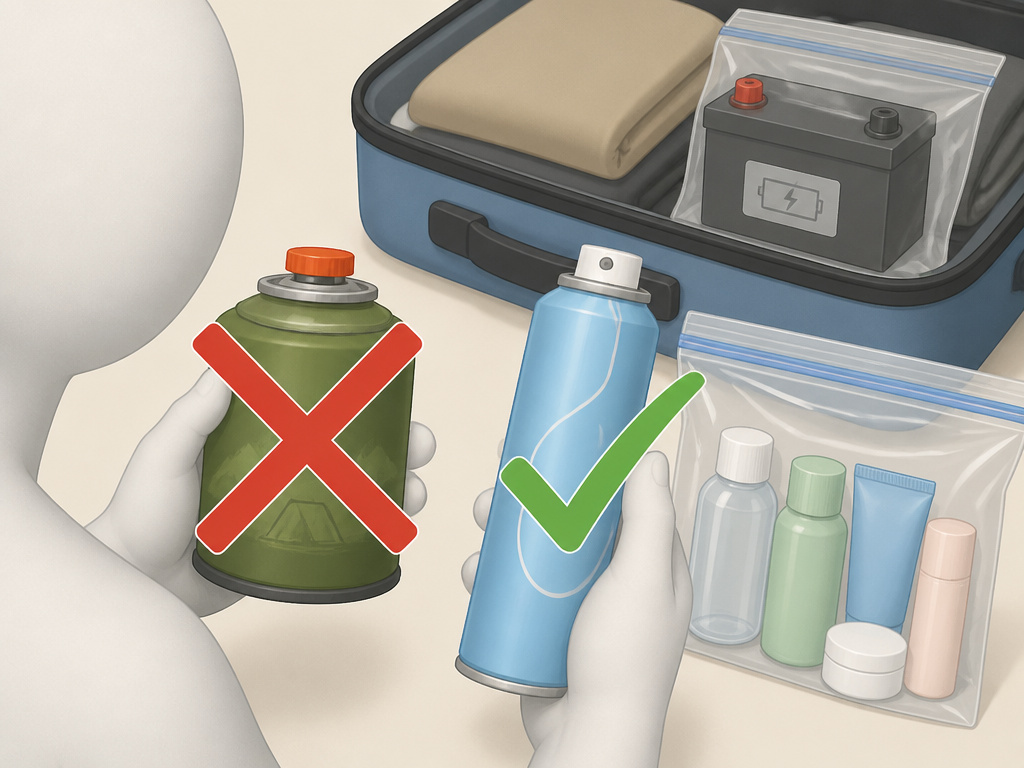 Some items fall into a regulatory gap between “personal care” and “hazardous material.” Their status depends entirely on the label.
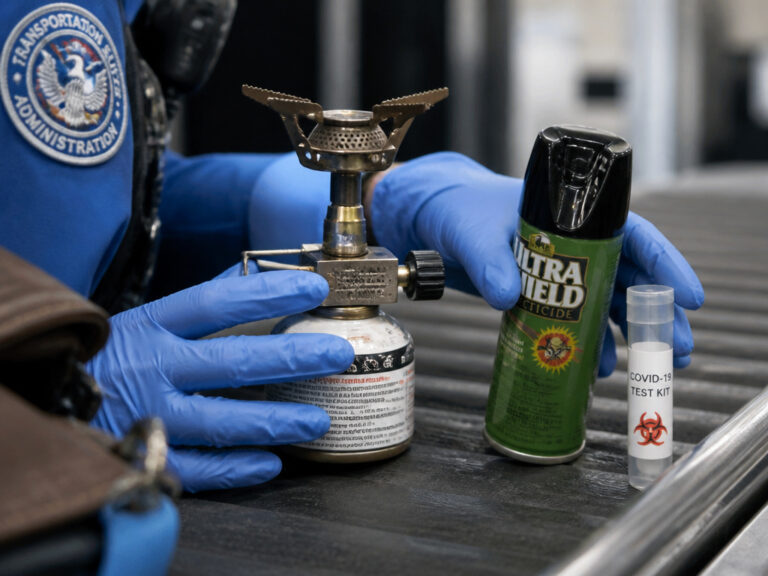
Aerosols (like hairspray or deodorant) are allowed in carry-on if they comply with the 3-1-1 rule. However, aerosol insecticides are never allowed in carry-on bags. They are permitted in checked bags only if they are not labeled as hazardous material (HAZMAT). If the can has a flame or caution symbol, it stays home.
Camp stoves and fuel canisters can go in checked baggage only if they are completely empty of all fuel and cleaned of all residue. Even a faint vapor smell can get your bag flagged. Spare fuel cartridges are prohibited entirely.
Non-spillable batteries (like sealed lead-acid or gel cells) are subject to watt-hour limits similar to lithium batteries. The rules for batteries in carry-on are complex for a reason—energy density is the common threat.
How to Pack to Avoid a Bag Search
You can know every rule and still get pulled aside. The X-ray machine sees density and shape. Clutter creates suspicion.
Do this:
- Use the quart-sized bag for all your liquid allowance. Don’t stuff it; lay items flat.
- Pack large electronics (laptops, tablets) in an easy-to-access sleeve so you can drop them into a bin quickly.
- Place any tools or dense metal objects at the top of your bag.
Avoid this:
- Wrapping cords around metal objects. It looks like a wire on the X-ray.
- Packing food or powders in a way that creates a dense, opaque block in your bag. The agent will need to see what it is.
- Forgetting about the liquid limit for items like snow globes or souvenir maple syrup. They count.
The TSA officer’s decision is final. Arguing about a prohibited item only guarantees you’ll miss your flight. If you’re unsure about an item, put it in your checked bag or don’t bring it.
Frequently Asked Questions
Are lighters allowed in carry-on luggage?
One standard disposable lighter (like a Bic) is permitted in your carry-on or on your person. Torch lighters (jet lighters), lighter fluid, and strike-anywhere matches are prohibited in both carry-on and checked bags.
Can I bring my power tool in my carry-on?
It depends on the tool. A cordless drill with a battery under 100 Wh is generally allowed. However, any tool with a blade or bit longer than 7 inches (like a circular saw or a long drill bit) is prohibited in carry-on. The tool itself may be allowed in checked baggage, but the battery must usually be removed and carried in your carry-on.
What happens if I accidentally pack a prohibited item?
If a prohibited item is found in your carry-on at the checkpoint, you will be given options: you can voluntarily surrender the item, place it in your checked baggage (if you have any and time allows), take it back to your car, or mail it to yourself from the airport (if a mailing service is available). You will not be fined for an honest mistake, but deliberately attempting to conceal a prohibited item can result in civil penalties.
Is food allowed in carry-on luggage?
Yes, solid food is allowed in any quantity. Liquid or gel-like foods (yogurt, pudding, soup, peanut butter) are subject to the 3-1-1 rule if they are over 3.4 oz. Spreadable cheeses often fall into this gel category. When in doubt, pack it in checked luggage.
Can I bring a bottle of wine in my carry-on?
Only if you purchased it after the security checkpoint in the duty-free area and it is placed in a secure, tamper-evident bag with the receipt visible. Otherwise, any liquid over 3.4 oz, including alcohol, must go in your checked baggage.
Before You Go
Packing a carry-on is an exercise in risk management. The core list of banned items hasn’t changed much in years: keep weapons, large tools, and big liquids out of the cabin, and keep high-energy batteries where crew can reach them.
The friction comes from the details—the watt-hour math, the HAZMAT label on an aerosol, the medical exemption for baby formula. Those specifics are what separate a smooth security check from a 20-minute bag dump.
Check the TSA What Can I Bring list for your specific item the night before you fly. When you get to the checkpoint, have your liquids bag and laptop ready to go. That preparedness is the one thing no algorithm can flag, and no officer can take away.