Can You Pack Deodorant in Carry On Luggage? TSA Rules Guide
This post contains affiliate links. As an Amazon Associate, we earn from qualifying purchases.
You can pack deodorant in carry-on luggage, but liquid, gel, and aerosol types must be in containers of 3.4 ounces (100 milliliters) or less. Solid stick deodorant has no size limit. The final decision always rests with the security officer, and in the EU, even stick deodorants can be classified as a “liquid” under broad regulations.
That 3.4-ounce line isn’t a suggestion. It’s the threshold where a toiletry goes from a personal item to a security incident. The difference between a smooth pass and a bag search comes down to the physical state of your deodorant and the exact volume printed on its container.
What follows is the breakdown most airport guides skip: the specific chemical definitions that trip up stick deodorants in Europe, the real-world consequences of a pressurized can in cabin air, and the one sentence you need to know if an officer questions your item.
Key Takeaways
- Spray, gel, and roll-on deodorants are subject to the 3.4oz (100ml) limit and must fit in your quart-sized liquids bag.
- Solid stick deodorant has no size restrictions in carry-on luggage for TSA, making it the most hassle-free option.
- TSA officers have final discretion; even an item within the rules can be denied if they deem it a security risk.
- In the EU/UK, stick deodorant can be classified as a “Liquid, Aerosol, or Gel” (LAG) under Commission Implementing Regulation (EU) No 2015/1998, leading to inconsistent enforcement.
- Checked baggage allows larger aerosol containers (up to 18oz/500ml each), but the total aerosol quantity per person is capped at 70oz (2kg).
The 3.4oz (100ml) Hard Limit
This number isn’t arbitrary. The liquid limit for carry-ons is a global aviation security standard designed to mitigate the risk of liquid explosives. For deodorant, the rule applies based on physical state, not product name.
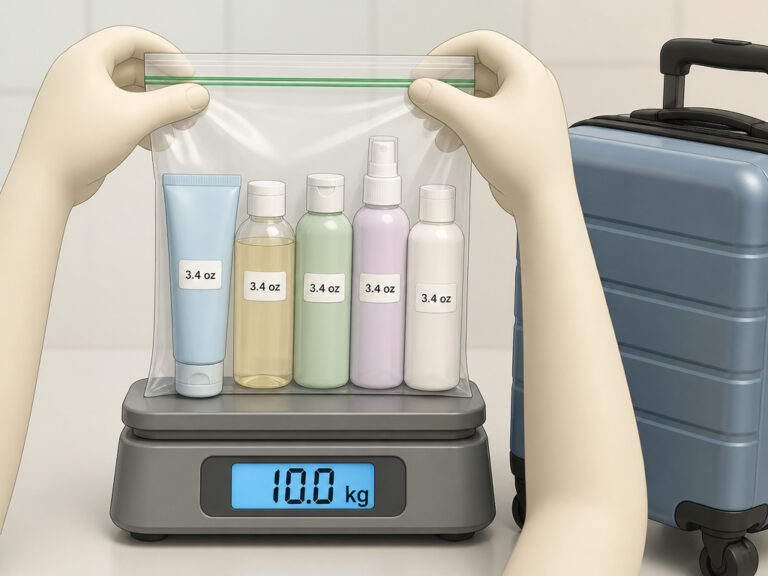
Aerosol, gel, cream, and roll-on deodorants are subject to the 3-1-1 liquids rule. Each container must be 3.4 ounces (100 milliliters) or less, all containers must fit inside one clear, quart-sized bag, and one bag is permitted per passenger.
The limit is based on the container’s maximum capacity, not the amount of product inside. A half-full 150ml spray can is still a 150ml container and will be confiscated. Officers are trained to read the label, not guess the volume.
Why the container size matters: Security scanners and manual checks assess potential threat volume, not actual content. A large canister could hold a threatening quantity of a substance, regardless of its labeled purpose. This is a fundamental principle behind all TSA liquid rules.
Solid vs. Spray vs. Gel: The Head-to-Head
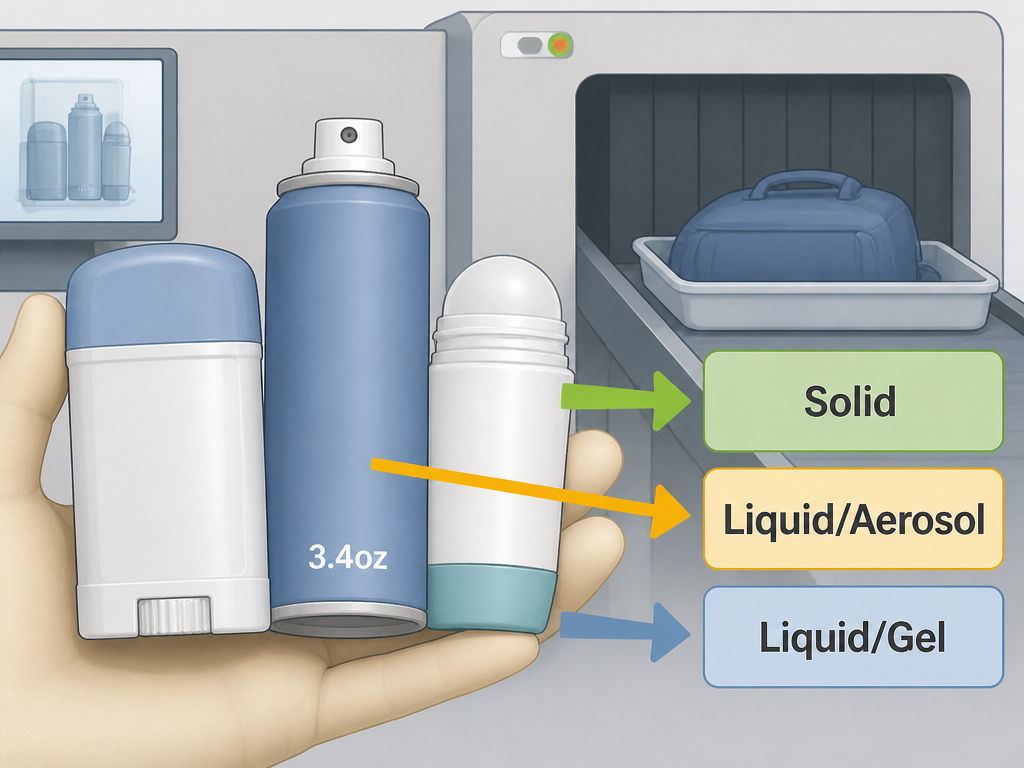
Not all deodorants are created equal in the eyes of security. Your daily choice decides your packing strategy.
| Deodorant Type | TSA Carry-On Classification | Key Rule | Best For |
|---|---|---|---|
| Solid Stick | Solid Item | No size limits, no liquids bag required. | Zero-hassle travel, any trip length. |
| Spray/Aerosol | Liquid/Aerosol | ≤ 3.4oz (100ml), must be in liquids bag. | Quick application, but requires planning. |
| Roll-On/Gel | Liquid/Gel | ≤ 3.4oz (100ml), must be in liquids bag. | Precise application, familiar feel. |
| Cream | Liquid | ≤ 3.4oz (100ml), must be in liquids bag. | Sensitive skin formulas. |
| Crystal/Mineral | Solid Item | No size limits, no liquids bag required. | Natural ingredient seekers. |
Solid stick deodorant is the undisputed champion for carry-on travel. A product like Dove Original Clean or Old Spice High Endurance Solid bypasses liquid rules entirely. You can pack a full-sized stick without a second thought.
Spray deodorant, like Dove Dry Spray or Axe Body Spray, is the most likely to cause problems. Beyond the size limit, the aerosol propellant itself is a concern. In the low-pressure cabin environment, a compromised canister can leak or even burst, which is why the FAA has strict aggregate limits for aerosols in checked bags.
Where this goes sideways: Assuming a “travel size” aerosol is compliant. Many drugstore “travel kits” include 150ml cans, which are over the limit. You must see “100ml” or “3.4oz” printed on the container.
Gel and roll-on deodorants occupy a middle ground. They’re liquids by definition, so the 100ml rule applies. The Sure Maximum Protection Roll-On and Banana Boat Mineral Gel are typical examples. The gel’s viscosity doesn’t matter; if it spreads, it’s a liquid.
Why Stick Deodorant Isn’t Always “Solid” in Europe
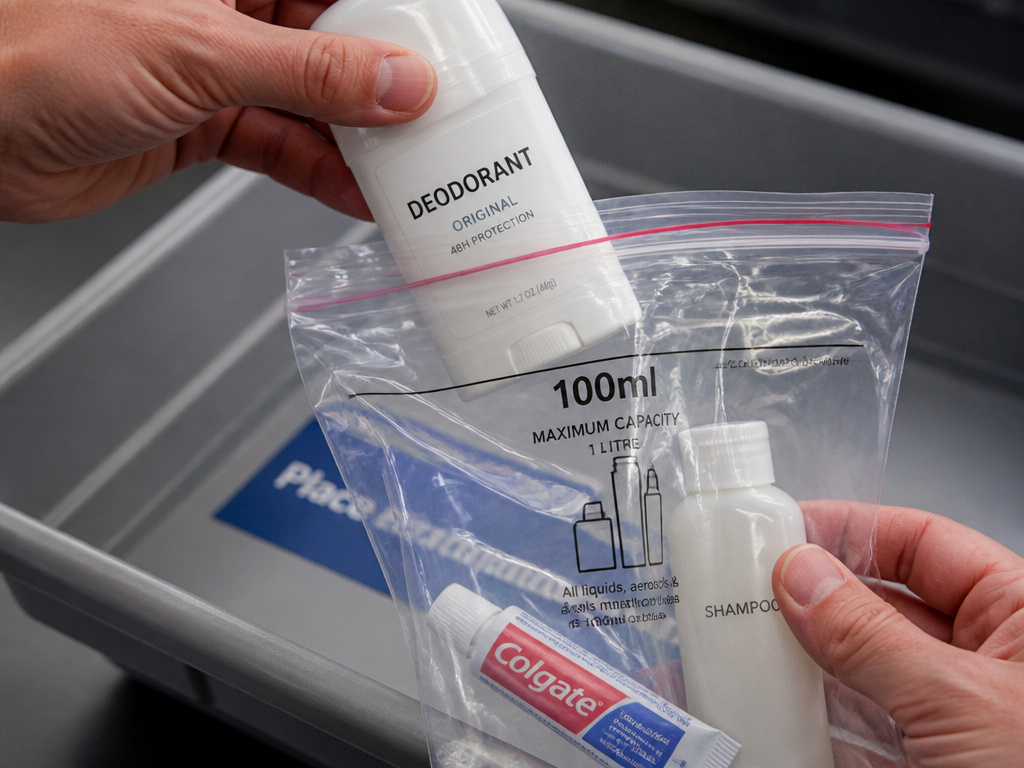
Here’s the nuance most US-focused guides miss. Under EU Commission Implementing Regulation (EU) No 2015/1998, security categories include “liquids, aerosols and gels” (LAGs), defined broadly as “pastes, lotions, liquid/solid mixtures.”
A stick deodorant can be reasonably included in the ‘liquids, aerosols and gels’ category. It can be argued as a ‘paste’ or ‘liquid/solid mixture’ under the regulation’s wording.
This isn’t theoretical. Ingredients in common sticks like Lady Speed Stick include cyclomethicone and PPG-14 butyl ether, which are liquids at room temperature. This makes the final product a “liquid/solid mixture.”
The consequence: Enforcement varies by airport and officer. You might sail through Berlin with a full stick, but have it confiscated in London if it’s deemed a LAG. The regulation gives them the legal basis to do so.
Your move: For travel within the EU/UK, treat a stick deodorant as a potential liquid. Either use a very small, 100ml-compliant stick or place it in your checked luggage to avoid the gamble. This inconsistency is a documented edge case in community travel forums.
Packing Strategies: Carry-On vs. Checked Luggage
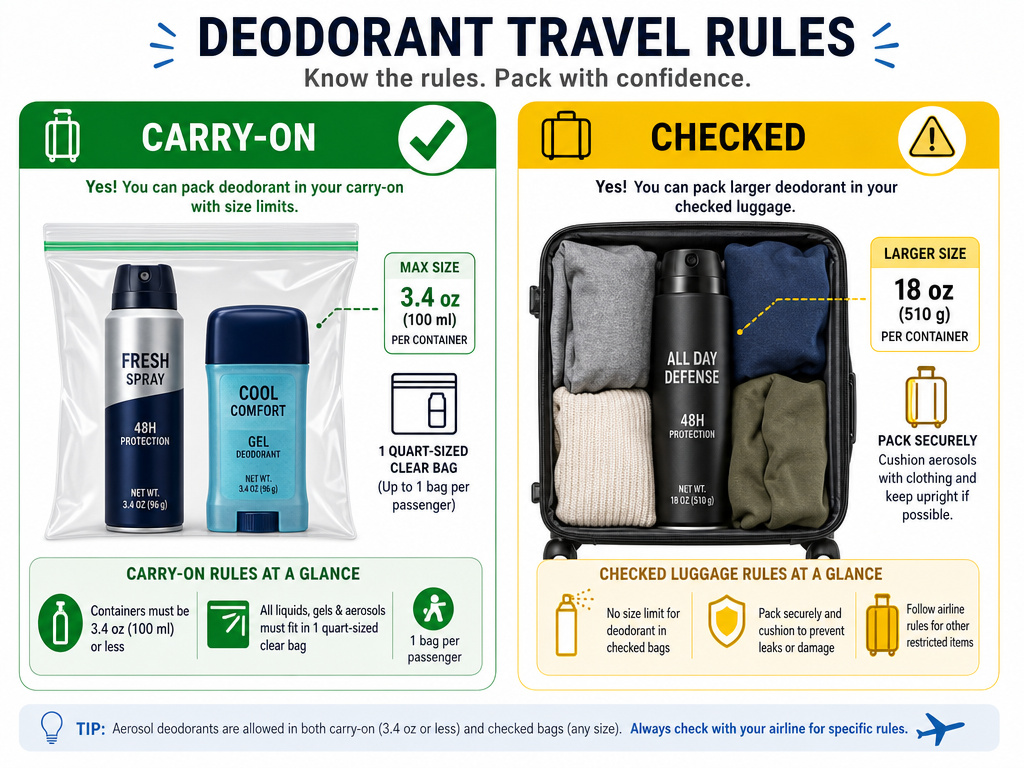
Your choice of bag changes the rules. Understanding the allowed carry-on items for liquids is just one part of a broader packing a carry-on strategy.
For Carry-On Only Travel:
- Opt for a solid stick or crystal. This is the single easiest way to comply. No bag, no measure, no worry.
- If you prefer spray or gel, buy a dedicated travel-size version. Look for the 100ml/3.4oz print. Don’t transfer product to a smaller bottle unless it’s explicitly designed for pressure (aerosols should never be decanted).
- Always use your quart-sized clear bag. This isn’t optional for liquids. It allows for rapid visual screening. Roll-ons and gels go here.
When Checking a Bag:
You have far more flexibility. The FAA allows larger aerosol containers in checked luggage—up to 18 ounces (500 ml) per can, with a total aggregate limit of 70 ounces (2 kg) per person.
Common mistake: Tossing an aerosol can loose in your suitcase. The hold’s pressure changes and rough handling can damage the valve. Wrap it in a plastic bag and cushion it with clothes to prevent a coating of deodorant over all your belongings.
This is where knowing the prohibited carry-on items list helps. While large aerosols are checked-bag only, items like flammable spray deodorants (some clinical strength brands) are banned entirely from both cabin and hold.
Navigating Security: Officer Discretion and “What If”
The printed rules are one thing. The human element is another. The TSA’s own page ends with: “The final decision rests with the TSA officer on whether an item is allowed through the checkpoint.“
This clause covers unusual situations. An officer might question a solid stick that appears melted or gel-like. They might deny an aerosol if the safety cap is missing. Your attitude and preparedness matter.
If your deodorant is questioned:
- Don’t argue. You will not win.
- Know the rule. You can calmly state, “I believe this is a 100ml aerosol, which is within the limit.” But be prepared to surrender it.
- Have a backup plan. This is why packing your preferred deodorant in checked luggage if possible, or choosing a solid stick, is the expert move.
Your goal is to understand the items allowed in carry-on so thoroughly that your bag presents no ambiguity. A compliant, well-organized toiletry kit moves fast.
Frequently Asked Questions
Is deodorant considered a liquid when flying?
Yes, for all forms except solid sticks and crystals. Sprays, gels, roll-ons, and creams are classified as liquids or aerosols and must follow the 3.4oz (100ml) limit in carry-on bags.
Can I bring a full-size stick deodorant on a plane?
Yes. According to TSA rules, a solid stick deodorant is not a liquid, so there are no size restrictions in your carry-on. However, in the EU/UK, it may be classified as a liquid under their broader regulations, so enforcement can vary.
Does the 3.4oz rule apply to checked luggage?
No. For checked bags, you can pack larger containers of liquid, gel, or aerosol deodorant. The FAA limits aerosols to 18oz (500ml) per container, with a total of 70oz (2kg) per person.
What happens if my deodorant is over the limit?
The TSA officer will confiscate it. You will not be able to take it through the checkpoint. You may be offered the option to exit security to place it in your checked bag (if you have one) or mail it to yourself, but this is time-consuming.
Can I bring prescription deodorant on a plane?
Yes. Prescription-strength antiperspirants (like those for hyperhidrosis) are exempt from the 3.4oz limit. You should declare them to the officer during screening and be prepared to show supporting documentation, such as a doctor’s note or prescription label.
Before You Go
The rule is simple, but the execution trips people up. Match the deodorant type to your bag: solid sticks for carry-on freedom, travel-sized sprays for short trips, and full-sized everything else for checked luggage. Remember the EU’s sticky definition of “liquid” and never forget that the officer holding your bag has the final say. Pack with that certainty, and you’ll keep your deodorant—and your cool—at security.