What Is a Hand Luggage | The IATA Size That Actually Matters
This post contains affiliate links. As an Amazon Associate, we earn from qualifying purchases.
Hand luggage is any bag you carry onto an aircraft and stow in the cabin, either under the seat in front of you or in an overhead bin. Its size, weight, and contents are governed by a mix of voluntary industry guidelines, binding airline policies, and federal safety regulations, with the most common benchmark being the IATA-recommended dimensions of 56 × 45 × 25 cm (22 × 18 × 10 in).
That definition is the simple part. The reality is a three-layer system: an industry suggestion, an airline contract, and a safety floor. The International Air Transport Association (IATA) suggests a size. Your airline converts that suggestion into a binding rule printed on your ticket. The Federal Aviation Administration (FAA) or your local aviation authority sets the non-negotiable safety floor beneath both, dictating what can never be on the plane regardless of size.
What follows is a breakdown of those three layers, the voluntary IATA standard, the specific and often punitive airline policies, and the absolute safety bans, plus the real-world enforcement shifts that are catching travelers off guard at the gate.
Key Takeaways
- The common 22 x 18 x 10 inch carry-on size is an IATA recommendation, not a global law. Airlines can and do set smaller limits.
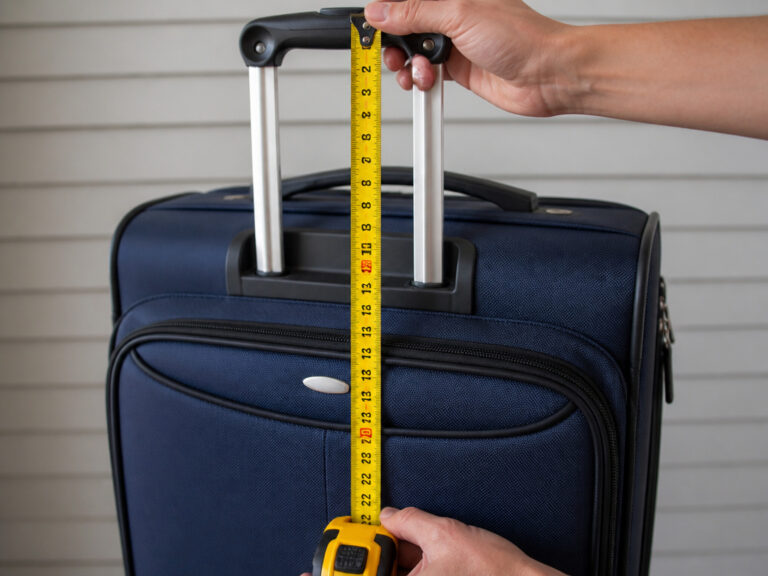
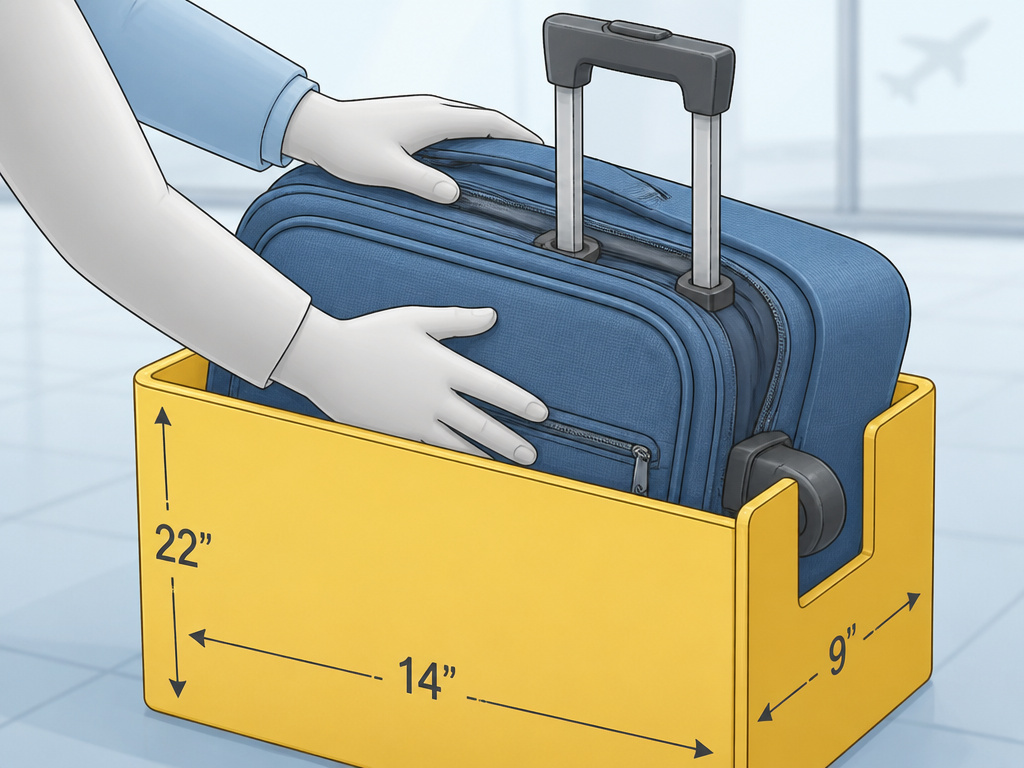
- Wheels, handles, and bulging pockets count toward the size limit. A sizer measures the bag’s outermost points, not the interior cavity.
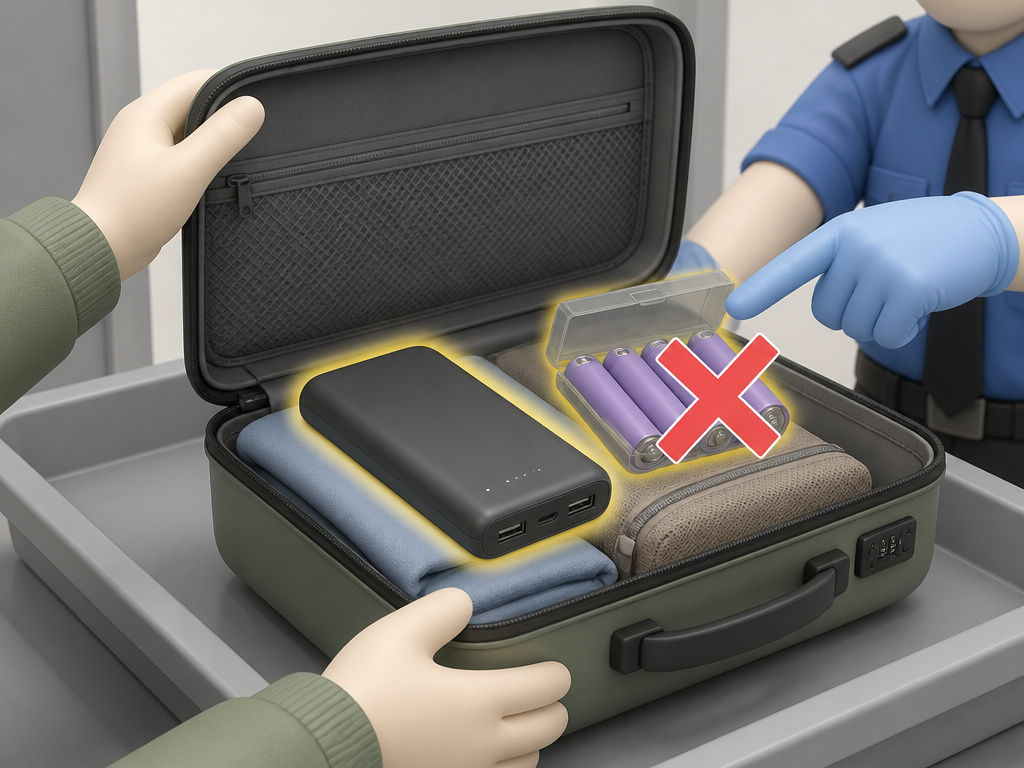
- Lithium batteries and power banks must stay in hand luggage due to fire risk; placing them in checked baggage violates dangerous goods regulations.
- Enforcement is tightening. Airlines are increasingly using sizers and scales at the gate to police size and weight, leading to last-minute fees.
- Your “personal item” must fit under the seat without blocking your foot space or the aisle. Oversized personal items are a primary target for gate agents on full flights.
The IATA Standard: A Voluntary Ceiling
Think of the International Air Transport Association (IATA) guideline as a ceiling, not a floor. It’s the maximum size the industry body suggests airlines adopt for smooth operations. The IATA-recommended dimensions are 56 cm × 45 cm × 25 cm (22 in × 18 in × 10 in). This measurement includes every protuberance: wheels, handles, side pockets stuffed with a paperback, the expansion zipper you cracked open by two inches.
The IATA develops internationally recognized baggage rules to support safe and efficient management. Its recommended maximum carry-on size of 56 × 45 × 25 cm includes wheels and handles, and some airlines also apply weight limits starting at 5 kg (11 lb). Items exceeding applicable limits may be placed in the aircraft hold.
This standard exists because a uniform size fits the overhead bins and under-seat spaces on most modern mainline aircraft. But here’s the catch: IATA itself states that each airline is responsible for setting its own rules. The guideline is voluntary. A budget carrier flying a fleet of smaller Airbus A320s or Boeing 737s will often set a lower limit, sometimes as tight as 40 x 20 x 30 cm, because their bins are physically smaller. You can review the general parameters in the Wikipedia entry on hand luggage, but your boarding pass is the final authority.
Where this goes sideways: Assuming the IATA size is your permission slip. A bag marketed as “carry-on compliant” that hits those exact dimensions has zero margin for error. If the airline’s sizer is even a millimeter smaller, or if your bag’s frame is rigid, you fail. The agent isn’t measuring the interior space you paid for; they’re measuring the plastic shell you bought.
Airline Policies: Your Binding Contract
When you buy a ticket, you agree to the airline’s contract of carriage. Buried in that document are the actual rules for your hand luggage. These rules are not suggestions. They break down into three controllable variables: size, weight, and piece count.
Most full-service global carriers (think Delta, Lufthansa, Emirates in certain classes) align with or generously interpret the IATA size. Budget airlines (Ryanair, Frontier, Spirit) are notoriously strict, with smaller sizers and lower weight limits. This is a direct revenue strategy: they sell ultra-low base fares and profit from ancillary fees, including those for oversized cabin bags.
Common mistake: Measuring your bag at home without the wheels and handle extended. The sizer at the gate doesn’t care about your interior packing cubes. It cares about the bag’s maximum outer dimensions the moment you try to slide it in.
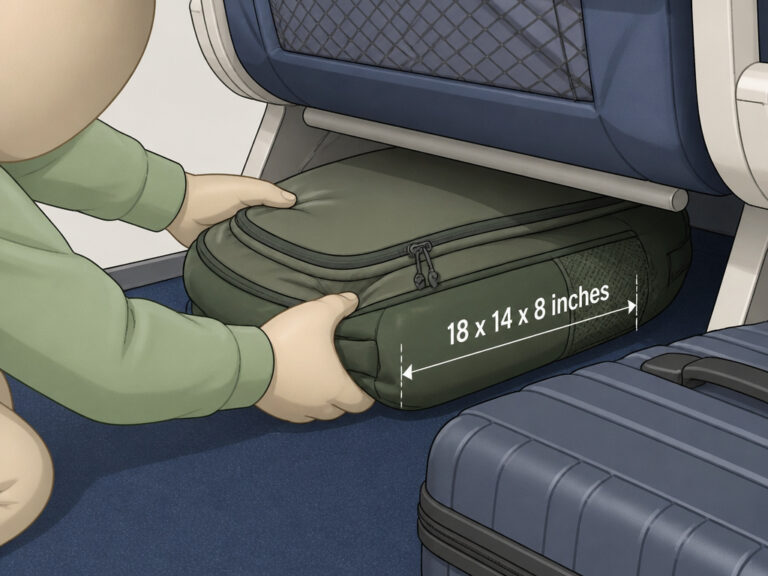
Consider the Delta backpack policy versus a Frontier backpack policy. Delta’s standard carry-on allowance is relatively generous, and a backpack that fits under the seat is typically waved through as a personal item. Frontier’s sizer for its free personal item is famously small (18″ x 14″ x 8″); a standard school backpack often fails unless it’s half-empty and compressible. The difference isn’t service quality, it’s business model.
The Size & Weight Crackdown
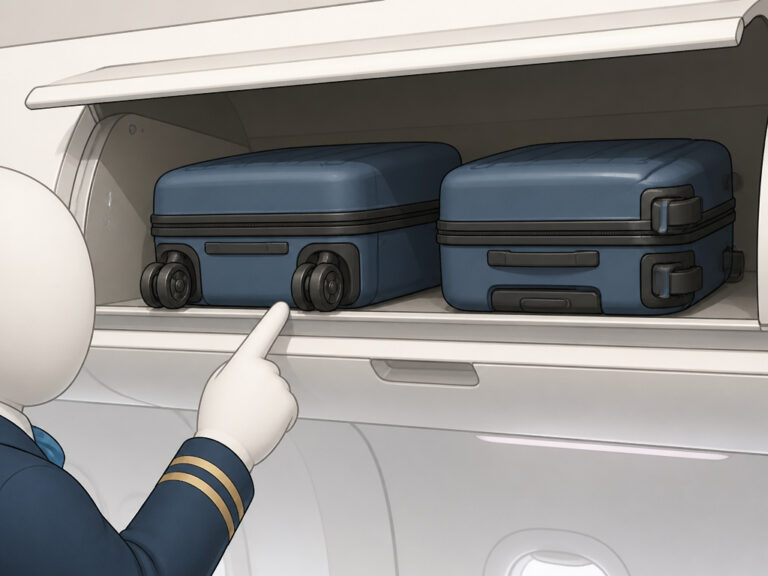
Airlines have always had these rules. The shift is in enforcement. Pre-pandemic, on a half-empty flight, gate agents might overlook a slightly bulging bag. Today, with flights consistently full and overhead bin space a precious commodity, enforcement is a revenue and operational necessity.
- Gate Sizers: Many airlines now position luggage sizers prominently at the gate. If your bag looks questionable, you’ll be asked to test it. If it doesn’t fit, you’re facing a gate-check fee that’s often higher than checking the bag at the counter.
- Weight Checks: While U.S. Carriers rarely weigh carry-ons, many international airlines, especially in Asia and Europe, enforce weight limits (commonly 7-10 kg or 15-22 lbs) at check-in or the gate. They have integrated scales at bag-drop kiosks.
| Airline Type | Typical Carry-On Size | Weight Limit Enforcement | Primary Risk |
|---|---|---|---|
| Full-Service (Delta, Lufthansa) | ~22″ x 14″ x 9″ | Rare (unless obviously heavy) | Bin space scarcity, gate-check for oversized bags |
| Budget (Ryanair, Frontier) | Strict, often < IATA standard | Common at check-in/gate | High last-minute fees for size/weight violations |
| International (Emirates, Singapore) | IATA standard or generous | Very common, strict 7-10 kg limit | Mandatory check-in for overweight bags |
The takeaway? Never assume your past experience with an airline is a guarantee. Check your airline’s website the week of your flight, rules change.
The Safety Floor: What Can Never Be Onboard
Above the airline’s commercial rules sits a layer of non-negotiable safety regulations. These are set by bodies like the FAA in the U.S. And are echoed globally. You can have a bag that perfectly fits your airline’s size limit and still have it confiscated at security because of what’s inside.
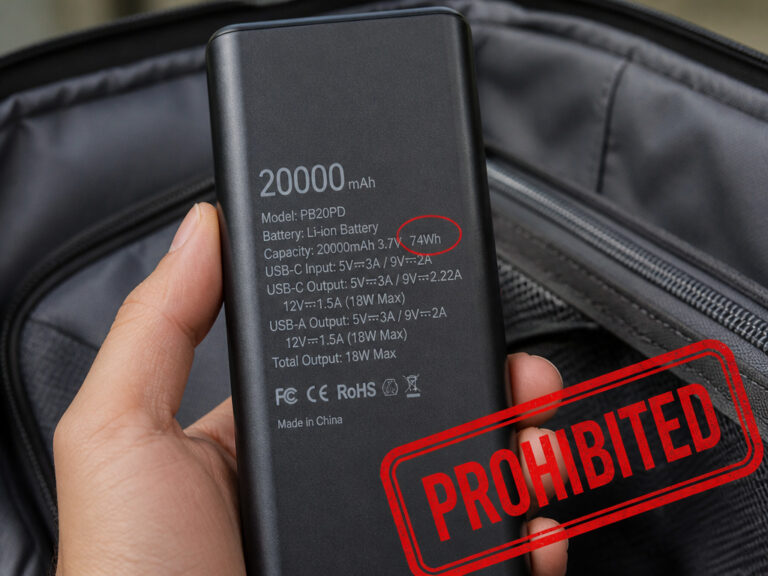
The most critical safety rule involves lithium batteries. Spare batteries and power banks must be carried in your hand luggage. This is not an airline preference; it’s a dangerous goods regulation. The risk is thermal runaway, a fire that can start in a lithium battery. In the cabin, a fire can be seen and addressed. In the cargo hold, it can be catastrophic. If security finds a power bank in your checked bag, they will remove it.
The FAA carry-on baggage advisory circular outlines the broader safety framework airlines must follow, ensuring bags are stowed so they don’t block aisles or become projectiles. But the lithium battery rule is the one that most directly impacts passenger packing.
Other universal safety bans include: * Sharp objects over a certain length (knives, scissors, tools). * Liquids, aerosols, and gels in containers larger than 3.4 oz (100ml), all placed in a single 1-quart clear bag. * Flammables like lighter fluid or certain paints.
These rules are enforced by airport security (TSA in the U.S.), not the airline. You can comply perfectly with your Delta carry-on rules and still lose an item at the security checkpoint.
Navigating the Personal Item Gray Area
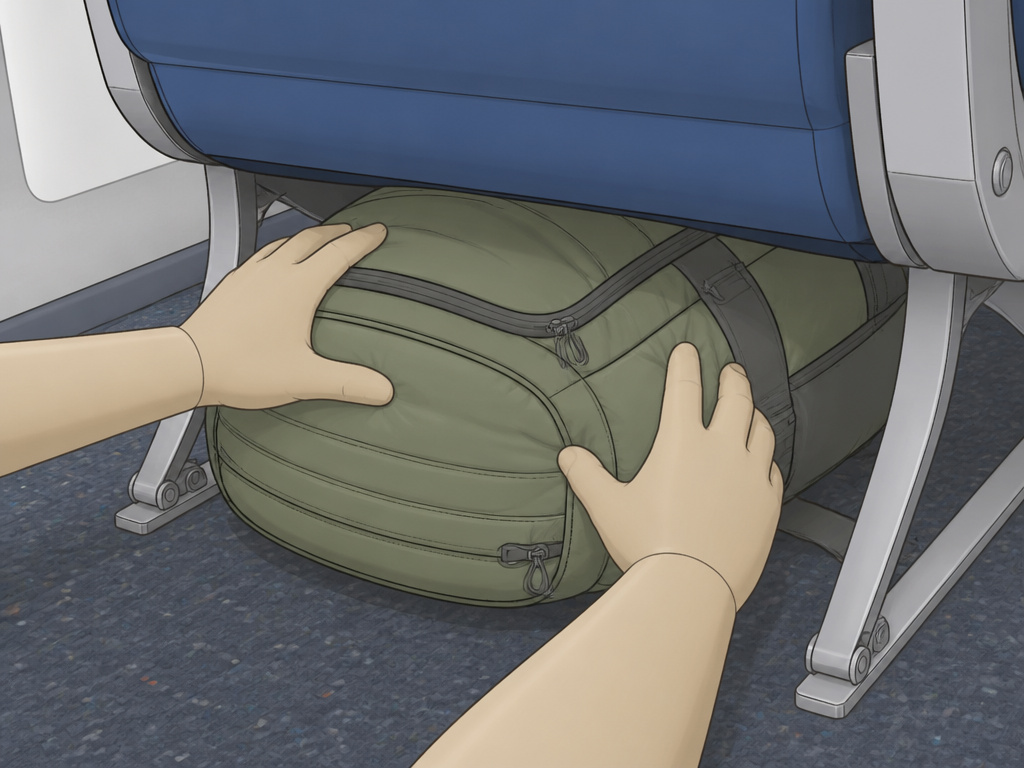
The “personal item” is the second bag most airlines allow in addition to your main carry-on. The official rule is simple: it must fit completely under the seat in front of you. In practice, this is a zone of constant negotiation and tightening scrutiny.
A personal item backpack is the most common choice. The problem arises when that backpack is a fully loaded 40-liter travel pack, not a slim daypack. On a crowded flight, a bulging backpack under the seat encroaches on your foot space and can block quick egress in an emergency. This is why the official FAA carry-on baggage rules stress that stowage must not obstruct passenger movement.
Where this goes sideways: Using a personal item as a second carry-on. Gate agents on packed flights are now specifically targeting passengers who appear to have two roll-aboard-sized bags. If your personal item looks like it should go in the overhead bin, you may be forced to gate-check your actual carry-on suitcase.
Airlines like Southwest are famously liberal with their personal item allowance, often allowing a carry-on suitcase plus a hefty backpack. Ultra-low-cost carriers like Spirit are the opposite; their sizer for the free personal item is ruthlessly small. Knowing your airline’s real-world tolerance is key. When in doubt, choose a bag you know will fit under any seat.
Real-World Scenarios & How to Prepare
The theory meets reality at the gate. Here’s how to avoid the most common pitfalls.
Scenario 1: The Size Challenge at the Gate
You’re boarding Group 5. The agent points to the sizer and asks you to test your bag. It’s the bag you’ve used for years. * Do: Remain calm. Remove any items from the external pockets. Compress the bag by sitting on it or tightening compression straps. Try the sizer again. * Don’t: Argue with the agent. They are enforcing a measurable standard. If it doesn’t fit, paying the gate-check fee is your only path onto the plane.
Scenario 2: The Unexpected Weight Check
At the check-in kiosk, the scale flashes red. Your carry-on is 2 kg over the 8 kg limit. * Do: Have a plan B. Wear your heaviest jacket or shoes. Move dense items (laptop charger, hardcover book) to your personal item or pockets. Most airlines only weigh the main carry-on, not what you’re wearing or holding. * Don’t: Try to hide the weight. Repack quickly and efficiently. If you must pay a fee, do so at the counter to avoid a higher charge at the gate.
Scenario 3: The Security Confiscation
TSA pulls your bag aside. They’ve found a prohibited item. * Do: Surrender the item calmly. You can often mail small items home from the airport. For expensive items like tools, you may be allowed to exit security and check the bag. * Don’t: Debate with TSA officers. Their guidelines are federal security directives, not airline policies.
Pro Packing List for Stress-Free Hand Luggage:
- Travel Documents & Wallet: Always on your person, not in any bag.
- Medications: In original containers, easily accessible.
- One Change of Clothes & Essentials: Assume your checked bag could be delayed.
- Electronics & Lithium Batteries: Laptop, phone, power bank, all in the cabin.
- Travel-Sized Toiletries: In a clear, quart-sized bag.
- Empty Water Bottle: Fill it after security.
- A Foldable Tote: Keep it empty inside your main bag until you’re on the plane, then use it for under-seat items.
Frequently Asked Questions
Can I bring a backpack and a carry-on?
Yes, on most airlines. This is the standard allowance: one carry-on for the overhead bin and one personal item (like a backpack) for under the seat. Always verify your specific airline’s rules, as budget carriers may restrict you to just the personal item on their lowest fare.
Do wheels and handles count in hand luggage size?
Absolutely. Every external protrusion counts. The IATA standard and airline sizers measure the bag’s maximum outer dimensions. A bag marketed as “22-inch carry-on” usually measures that including wheels and a retracted handle.
What is the difference between hand luggage and carry-on?
They are synonyms in most of the world. In North America, “carry-on” is the common term. “Hand luggage” or “cabin baggage” is more common in Europe and other regions. Both refer to bags you keep with you in the aircraft cabin.
Can I put lithium batteries in my hand luggage?
You must. Spare lithium batteries (including power banks) and devices containing them are prohibited in checked baggage by international dangerous goods regulations. They must be carried in your hand luggage.
What happens if my hand luggage is too big at the gate?
The airline will likely require you to “gate-check” the bag. This means they tag it and place it in the aircraft’s hold, and you collect it on the jet bridge after landing. A fee typically applies, which is often more expensive than checking the bag initially.
Why are airlines so strict about hand luggage now?
Full flights and limited overhead bin space are the main drivers. Strict enforcement ensures boarding finishes on time and that bins aren’t overstuffed, which is a safety issue. For budget airlines, it’s also a significant revenue source from fees.
Before You Go
Hand luggage isn’t just a bag you carry on; it’s a contract with three signatories: the industry, your airline, and the safety regulator. The IATA size is a helpful benchmark, but your airline’s published policy is the law you agreed to. The safety rules around batteries and liquids are non-negotiable.
Pack with those three layers in mind. Measure your bag’s outermost dimensions. Weigh it at home. Know your airline’s specific backpack carry-on rules and personal item size limits. Put your power bank in your personal item, not your checked suitcase.
That preparation is the difference between walking confidently to your gate and doing the last-minute bag shuffle in front of a boarding crowd. Your hand luggage should work for you, not against you.