Carry-On Luggage Size for Southwest: 24x16x10 Rules & Tips
This post contains affiliate links. As an Amazon Associate, we earn from qualifying purchases.
Southwest Airlines allows one carry-on bag measuring 24 inches long, 16 inches wide, and 10 inches high, including wheels and handles. You also get one personal item at 16.25 x 13.5 x 8 inches. There is no weight limit for carry-ons, but the bag must lift into the overhead bin unassisted.
That extra two inches in height and width compared to most other airlines is the whole game. It lets you pack a week’s worth of clothes and still slide the bag into the bin without a fight. But a bag sold as “24-inch” luggage often exceeds the 24x16x10 spec by an inch or more in one dimension, which is where travelers get stopped.
The rest walks through measuring your bag against the real limit, how gate agents decide what to pull aside, and what happens to your bag if it doesn’t pass. Since Southwest started charging for checked bags in May 2025, a gate-check isn’t just an inconvenience—it’s a $45 or $55 fee you planned to avoid.
Key Takeaways
- Southwest’s 24x16x10 carry-on is 2 inches taller and wider than the standard 22x14x9 used by American, Delta, and United.
- A “24-inch” spinner suitcase typically measures 26-27 inches tall with wheels extended; it will fail Southwest’s size test.
- Gate agents use visual checks, not sizer boxes, focusing on bags that bulge or have wheels/handles adding obvious bulk.
- If your bag is gate-checked for size on a flight booked after May 28, 2025, you pay the standard checked bag fee ($45 for the first bag).
- Your personal item must fit completely under the seat; oversized backpacks are the most common cause of gate-check on full flights.
Southwest’s Exact Carry-On Dimensions
Forget what the luggage tag says. Southwest’s policy isn’t about the marketing label “24-inch” or “carry-on sized.” It’s about three specific measurements printed in their contract: length, width, and height, with every protrusion included.
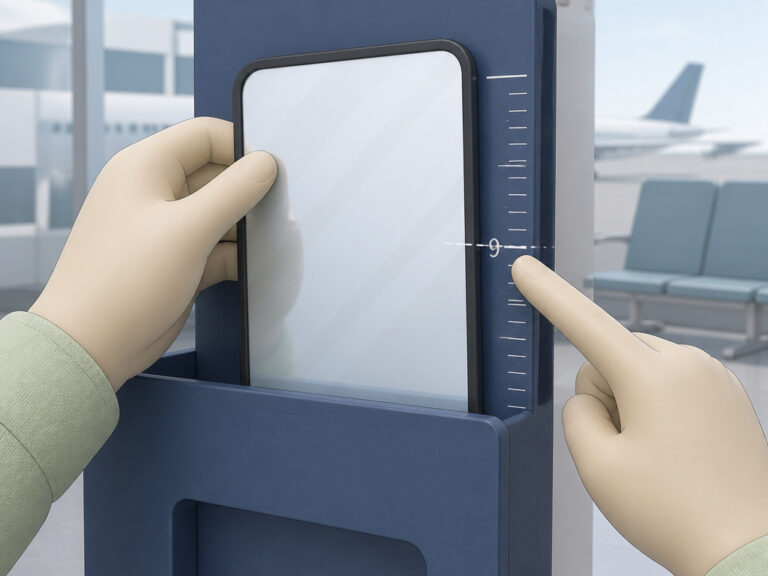
The official Southwest Airlines carry-on size is 24 inches in length, 16 inches in width, and 10 inches in height. Wheels, handles, side pockets, and any other attachments are part of that measurement.
The personal item limit is 16.25 x 13.5 x 8 inches. This box must fit entirely under the seat in front of you. A backpack that’s too tall to slide under without forcing it counts as your carry-on, not your personal item.
Why the “24-inch” label lies. Luggage manufacturers measure the internal frame, not the external dimensions with wheels and handles. A suitcase marketed as 24 inches will often stretch to 26 or 27 inches when you stand it up, wheels down. That extra two inches is the difference between the overhead bin latching shut and a gate agent pulling your bag.
| Measurement | Southwest Limit | Standard U.S. Airline Limit | What It Means |
|---|---|---|---|
| Length | 24 inches | 22 inches | The longest side of your bag. |
| Width | 16 inches | 14 inches | The side perpendicular to the length. |
| Height | 10 inches | 9 inches | Includes wheels and handles when upright. |
You need a tape measure. Place your bag upright, wheels extended and handle retracted. Measure from the floor to the highest point—usually the top of the retracted handle or a reinforced corner. That’s your height. Then measure length and width. If any number exceeds Southwest’s limit, the bag is not a compliant carry-on for their bins.
How Southwest Actually Enforces This
Southwest doesn’t use the physical sizer boxes you see at Spirit or Frontier gates. Their gate agents do visual checks. This sounds lenient, but it means they’re looking for the obvious outliers—bags that are visibly overstuffed, have wheels adding several inches, or are simply the wrong shape for the bin.
Enforcement tightens on flights above 90% occupancy. When the overhead bins are predicted to be full, agents walk the queue and pull bags that look borderline. Their target: bags that will waste bin space or prevent the bin from closing.
Where this goes sideways: Assuming a soft-sided duffel “compresses.” A fully packed 26-inch duffel might squeeze into a 24-inch space, but it creates a bulge that blocks the bin latch. The agent sees the bulge, not the tape measure reading, and flags it.
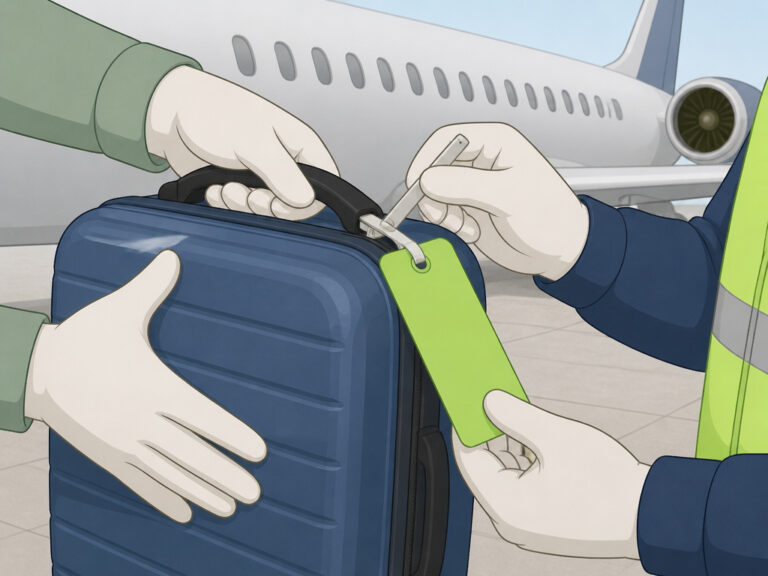
The CNBC Southwest baggage policy report from March 2025 noted that Southwest anticipated more carry-ons after bag fees began and equipped agents with mobile bag-tag printers for gate-checked items. That’s the process you trigger if your bag fails the visual check.
How to measure carry-on luggage correctly matters more here than with airlines that use sizers. You’re not trying to beat a box; you’re trying to make your bag look like it belongs in the bin. A hard-sided spinner with wheels that add 3 inches of height will always look wrong, even if it technically fits when laid on its side. A travel backpack with a clean, rectangular profile and low-profile wheels rarely gets a second look.
The One Mistake That Gets Bags Gate-Checked
The most common reason for a gate-check isn’t a suitcase being too tall. It’s a personal item that doesn’t fit under the seat. On a full flight, flight attendants will walk the aisle before departure and ask passengers to remove oversized items from under the seat so they can stow them elsewhere. If your backpack is sticking out, it gets tagged.
The consequence isn’t free anymore. For reservations booked on or after May 28, 2025, Southwest charges for checked bags. If your bag is gate-checked because it’s too large for the cabin, you pay the same fee as if you’d checked it at the counter: $45 for the first bag, $55 for the second. That fee applies immediately at the gate.
The agent has a mobile printer. They’ll tag your bag, charge your card on the spot, and send it to the belly. You don’t get a choice to repack or remove items. That’s why measuring your personal item is just as critical as measuring your carry-on.
Carry-On vs. Personal Item: Making the Pair Work
 You get two free items. The goal is to use both to their maximum legal dimensions without either one drawing attention. This is a packing strategy, not just a measurement exercise.
Your carry-on bag should be a hard-sided spinner or a structured travel backpack that holds its shape. The 24x16x10 limit is generous. A well-designed carry-on bag in that size, like the Travelpro Platinum Elite or the Samsonite Winfield 3, will use every cubic inch without bulging.
Your personal item is your overflow and in-flight essentials bag. A slim backpack like the Patagonia Black Hole Pack 25L or a tote that matches the 16.25×13.5×8 dimensions is ideal. This bag should be soft-sided so it can compress under the seat, but not so overpacked that it can’t slide in easily.
| Bag Type | Best Use | Risk If Oversized |
|---|---|---|
| Hard-sided 24″ Spinner | Main clothing, shoes, toiletries. | Height with wheels exceeds limit; gets gate-checked. |
| Travel Backpack (40-45L) | One-bag travel; fits bin when packed firm. | Looks bulky if overstuffed; attracts agent attention. |
| Personal Item Backpack | Laptop, documents, snacks, jacket. | Won’t fit under seat; removed at boarding for gate-check. |
| Duffel Bag | Soft-sided flexibility for odd-shaped items. | Loses shape, blocks bin latch; gate-checked for bin safety. |
Packing tips for this system are straightforward. Put heavy, dense items (shoes, toiletries) in the bottom of your carry-on. Use packing cubes to compress clothes and maintain the bag’s rectangular shape. Keep your personal item light enough that you can lift it with one hand while holding your boarding pass.
The combined capacity of a full 24x16x10 carry-on and a maxed-out personal item is enough for most trips up to seven days. You avoid the checked bag fees entirely. That’s a roundtrip savings of $90 to $110 compared to checking a bag both ways.
What Doesn’t Count Toward Your Limit
 Southwest’s policy, like all airlines, has exceptions. These items can be brought onboard in addition to your carry-on and personal item:
* A child’s car seat or stroller (gate-checked for free).
* Outer garments like a coat or jacket.
* Food for immediate consumption.
* An assistive device like a wheelchair or crutches.
* A small umbrella or walking cane.
Southwest’s policy, like all airlines, has exceptions. These items can be brought onboard in addition to your carry-on and personal item:
* A child’s car seat or stroller (gate-checked for free).
* Outer garments like a coat or jacket.
* Food for immediate consumption.
* An assistive device like a wheelchair or crutches.
* A small umbrella or walking cane.
A pet carrier counts as either your carry-on or your personal item. You must choose. You can’t bring a pet carrier, a roll-aboard, and a backpack.
Musical instruments follow a specific rule. If the instrument fits in the overhead bin or under the seat, it counts as one of your two items. If it’s too large, you must buy an extra seat for it. This is spelled out in Southwest’s Contract of Carriage—the legal document that governs your ticket.
FAQs
What if my carry-on is slightly over the size limit?
If it’s visibly over, a gate agent will likely ask you to gate-check it and pay the applicable checked bag fee. Slight overages (less than an inch) on a soft bag might go unnoticed if the bag isn’t overstuffed and the flight isn’t full.
Does Southwest weigh carry-on bags?
No. Southwest has no weight limit for carry-on bags. The only requirement is that you can lift your bag into the overhead bin without assistance. If you can’t, they may require you to check it.
Can I bring a backpack and a carry-on suitcase on Southwest?
Yes. That’s the standard allowance: one carry-on bag for the overhead bin (like a suitcase) and one personal item for under the seat (like a backpack). Just ensure both meet the size dimensions.
What are the checked bag fees if my carry-on is gate-checked?
For bookings made on or after April 9, 2026, the first checked bag fee is $45 and the second is $55. If your gate-checked bag is your only bag, you’ll be charged $45 at the gate.
Are Southwest’s carry-on size limits the same for all flights?
Yes, the 24x16x10 limit applies to all Southwest-operated flights within the U.S., including to Hawaii. If your itinerary includes a partner airline, their stricter carry-on size limits may apply for the entire journey.
The Bottom Line
Southwest’s carry-on policy is the most generous in the U.S. Sky, but that generosity ends at the tape measure. A real 24x16x10 bag gets you a week’s worth of luggage in the cabin for free. A bag sold as “24-inch” that’s actually 26 inches tall gets you a $45 charge at the gate.
Measure your bags with wheels and handles extended. Choose a personal item that slides under the seat without force. If both pass, you board with everything you need and walk past the baggage claim. That’s the point.