How to Clean a Suitcase: The Vinegar Trick That Cuts Odors
This post contains affiliate links. As an Amazon Associate, we earn from qualifying purchases.
To clean a suitcase, match the material to the method: hardside shells get a soap-and-water wipe; fabric exteriors need spot cleaning; wheels and trolleys require a brush and a vinegar-baking soda paste. Never use bleach, ammonia, or alcohol-based cleaners. Always air-dry completely before storage.
That distinction between hardside and softside isn’t just about looks. It decides which cleaners will strip the finish and which will just slide off. A polycarbonate shell can take a light polish. A ballistic nylon panel can’t. Skip the distinction and you’re cleaning a stain while creating a dull spot.
What follows: the exact supplies each brand recommends, the three-step process for wheels that actually stops the squeak, and the storage mistake that brings mildew back within a month.
Key Takeaways
- Hardshells hate alcohol. Cleaners with alcohol, bleach, or ammonia will permanently haze or discolor polycarbonate and ABS plastic.
- Wheels need a dry brush first. Vacuum or brush out hair, sand, and grit before any wet cleaning to prevent grinding paste inside the bearings.
- Odors need acid, not perfume. A 1:5 vinegar-water spray or a pouch of activated charcoal absorbs smells; Febreze just masks them and can leave a residue.
- Storage demands airflow. Close a slightly damp suitcase in a basement and you’ll open it to mildew. Leave it unzipped in a dry, temperate space.
- Never force a zipper. If it sticks, apply a tiny amount of petroleum jelly to the teeth, not silicone spray, which can stain fabric.
What You Actually Need to Clean a Suitcase
You don’t need specialty products. The effective toolkit fits in a grocery bag.
The Core Three:
- Soft, lint-free cloths (3-4). Microfiber is ideal. You’ll need one for washing, one for rinsing, and one for drying.
- Mild liquid soap. Dish soap like Dawn or a pH-neutral detergent. This is for the main wipe-down.
- White vinegar and baking soda. This duo handles wheels, trolley rust, and interior odors.
Conditional Adds:
- Soft-bristled brush (toothbrush or detailing brush). For scrubbing wheel wells and textured fabric without fraying.
- Hand vacuum with brush attachment. Essential for evacuating sand, crumbs, and hair from linings and corners.
- Silicone-based furniture or auto polish (for hardside only). Used after cleaning to restore shine and add a light protective layer. Never use a combo cleaner-polish.
- Leather conditioner (if applicable). A dedicated leather milk or cream for full-grain leather trim or cases.
Where this goes sideways: Using a magic eraser (melamine foam) on a colored hardshell. It’s an abrasive. It will absolutely remove scuffs, along with a micro-layer of the dye. On a black case you might not notice. On a cobalt blue Rimowa, you’ll have a faint grey patch.
Exterior Cleaning: Hardside vs. Softside vs. Leather
The shell material dictates your entire approach. Getting this wrong is how you end up with a permanently dull spot or a watermark.
Cleaning Hardside Luggage (Polycarbonate, ABS, Aluminum)
The goal is to remove marks without marring the surface. Rimowa explicitly advises a damp cloth with mild soap, or their branded Aluminium & Polycarbonate Care Cream for spot treatment.
The Process:
- Dust the entire case with a dry cloth.
- Dampen a second cloth with warm water and a drop of dish soap. Wring it out until it’s just damp, not dripping.
- Wipe the shell in sections, using straight lines, not circles, to avoid swirl marks.
- Rinse the soap off with a clean, water-dampened cloth.
- Dry immediately with a soft, dry towel.
For deep scuffs: A baking soda paste (baking soda + a few drops of water) on a soft cloth can buff very lightly. Test on an inconspicuous area first. For aluminum cases, follow the grain of the metal.
The part nobody mentions: After cleaning and drying, you can apply a silicone-based automobile or furniture polish to a hardshell. Samsonite recommends this to “preserve the luster and add resistance.” The key is using a pure polish, not a combination cleaner-wax. The cleaner part will just re-smear the dirt you already removed.
Cleaning Softside Luggage (Nylon, Polyester, Canvas)
Fabric is more forgiving on scratches but holds stains and odors. Spot cleaning is king.
The Process:
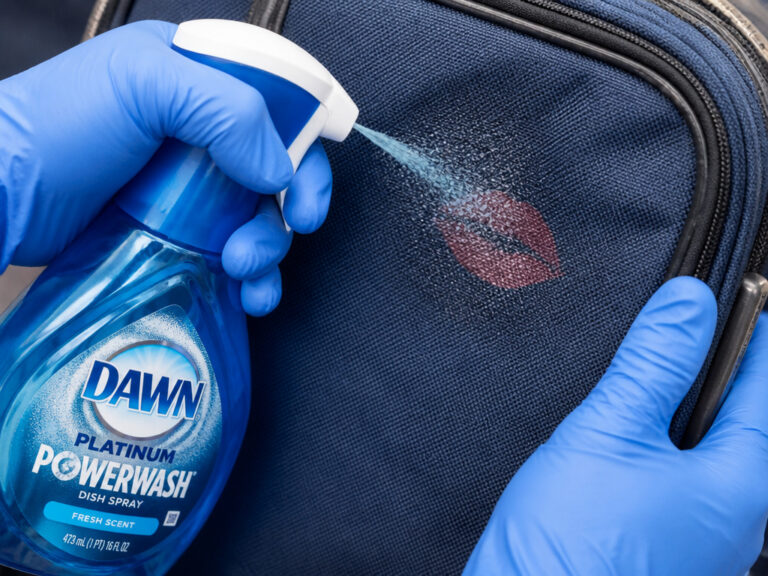
- Mix a few drops of dish soap into a bowl of warm water.
- Dip a soft-bristled brush (like a toothbrush) into the solution and gently agitate the stained area. Don’t soak the fabric.
- Blot, don’t rub, with a damp cloth to lift the soap and stain.
- Let it air dry completely. If the stain persists, a dedicated upholstery or carpet foam cleaner (tested on a hidden spot first) is your next step.
For overall grime: A soap and water solution applied with a damp sponge is often all it takes, according to Delsey. Never submerge a fabric suitcase.
Cleaning Leather Trim or Suitcases
Treat it like a fine leather shoe. Delsey’s leather protocol requires a brush, leather milk, shoe polish, and a chamois.
- Dust gently with a dry cloth.
- Apply leather milk or conditioner with a cloth, following the product’s instructions. Let it absorb fully.
- Apply a matching color shoe polish to restore color and shine.
- Buff gently with a chamois in a circular motion.
Leather hates prolonged moisture and heat. Never dry it in direct sunlight or with a heat source.
| Material | Best Cleaner | Absolute Avoid | Dry Method |
|---|---|---|---|
| Polycarbonate / ABS | Mild soap + water | Alcohol, bleach, ammonia | Soft cloth, air dry |
| Aluminum | Mild soap + water, branded cream | Abrasive pads, steel wool | Soft cloth, avoid water spots |
| Ballistic Nylon | Dish soap spot clean | Soaking, machine washing | Air dry, away from direct sun |
| Leather | Dedicated leather conditioner | Household cleaners, excess water | Chamois buff, room temperature |
The Critical Details: Wheels, Handles, and Zippers
These are the wear points. They fail first if you ignore them.
Cleaning and Lubricating Wheels
Wheels pick up hair, sand, and street gum. Delsey advises starting with a dry, long-bristled brush to dislodge debris, followed by a vacuum. For a deep clean, scrub with a brush dipped in a mixture of white vinegar and baking soda, then rinse.
If wheels become noisy, lubrication might help. The catch: for steel components, dry them thoroughly first to avoid oxidation. If rust is already present, treatment with lemon or heated white vinegar can be effective.
Maintaining the Trolley System
The telescoping handle and its metal rods are usually steel. Limit water and abrasive substances to prevent corrosion. A dry brush is usually enough. If you see rust on retractable bars, Delsey suggests a mixture of white vinegar and lemon juice.
A drop of lightweight silicone lubricant (not WD-40) inside the handle tubes can smooth action. Don’t overdo it.
Fixing a Sticky Zipper
Forcing a zipper bends teeth. The fix is simple: rub a tiny amount of petroleum jelly along the teeth on both sides. Zip and unzip a few times to work it in. This is safer for fabric linings than silicone spray, which can stain.
Common mistake: Packing a suitcase to the point where the zipper strain is visible. Samsonite warns to always unzip the case fully before opening or packing it. Partial tension warps the teeth over time, and the next repair is a full zipper replacement.
Interior Deep Clean and Odor Removal
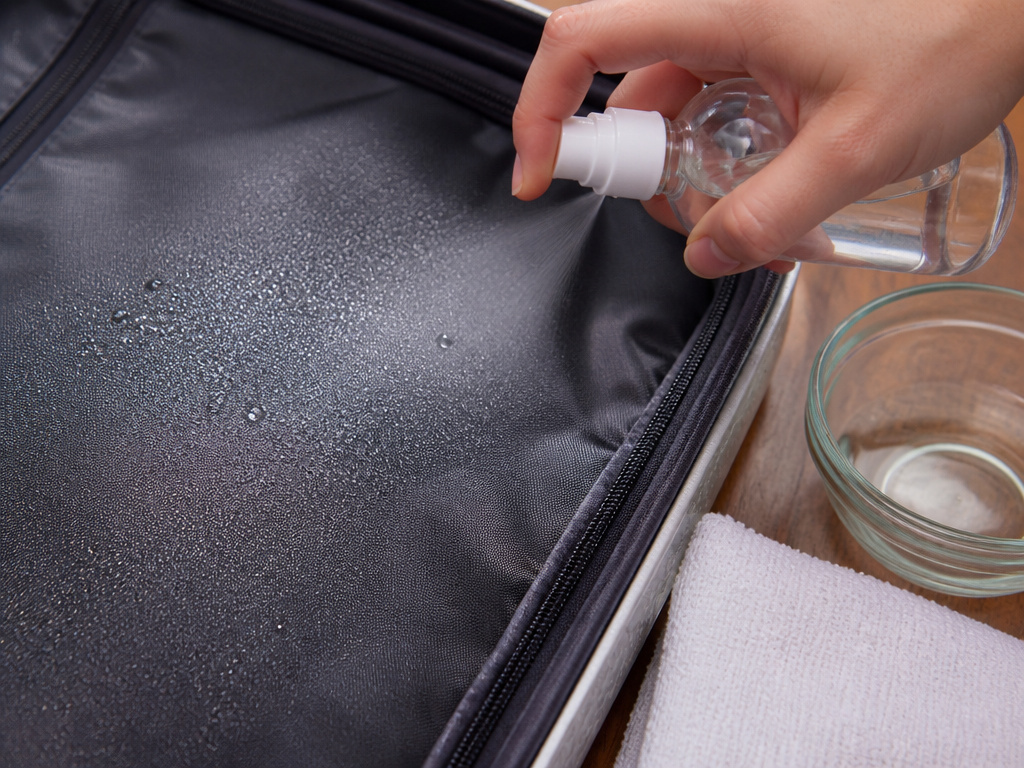
The inside sees sweat, food spills, and damp clothes. It’s also where offensive odors live.
Step-by-Step Interior Refresh:
- Empty and vacuum. Use a hand vacuum’s brush attachment to remove all debris.
- Check for removable linings. Some models, like the Samsonite Essens, have a lining you can machine wash at 30°C on a delicate cycle. Do not tumble dry.
- Spot clean the lining. For non-removable linings, use a cloth dampened with soapy water. Scrub stains gently in circular motions, then rinse with a water-dampened cloth.
- Tackle odors. For persistent smells, Samsonite recommends a 1 part vinegar to 5 parts water mixture sprayed inside, followed by thorough airing. Alternatively, place activated charcoal in the bag, close it, and leave it for a day or more. The charcoal absorbs the odor molecules.
- Dry, dry, dry. Prop the suitcase open in a well-ventilated area. Ensure it’s completely dry before you even think about storage.
A final tip from Delsey: avoid packing extremely dirty clothes directly. Isolate them in a plastic bag first. This is the single easiest way to keep the interior fresh.
How to Store Your Suitcase So It’s Ready to Go
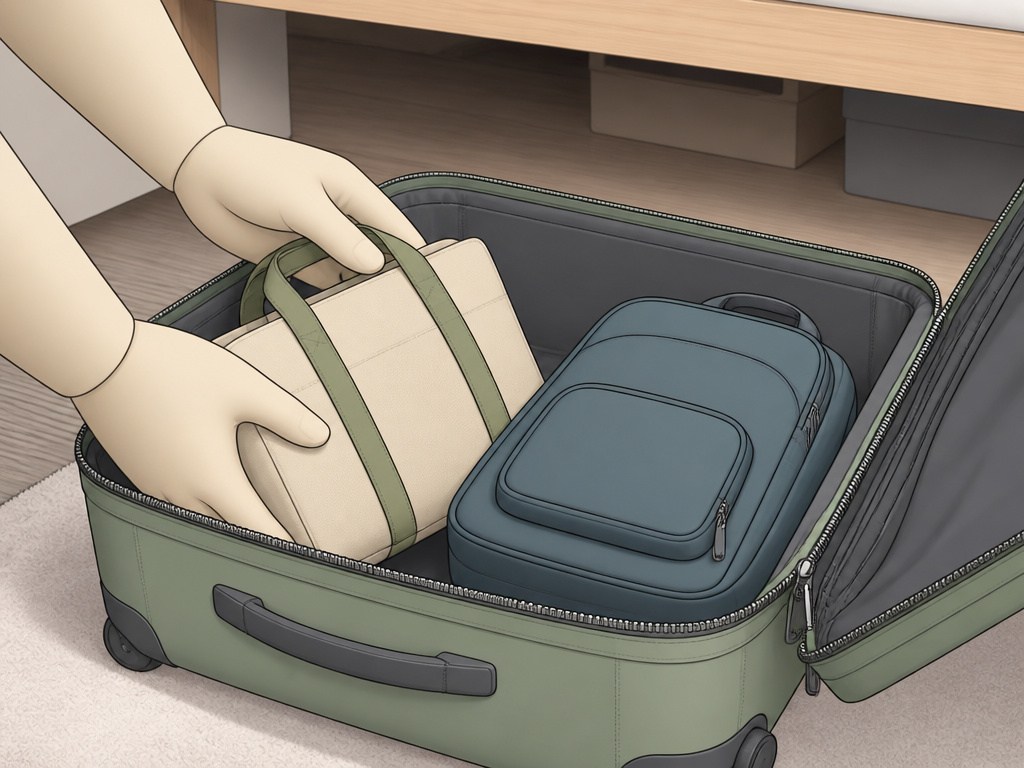
Improper storage causes more long-term damage than airport baggage handlers.
The Rules:
- Ensure everything is bone-dry. No moisture on the shell, in the lining, or on the wheels.
- Store smaller bags inside. Place your tote bag or packing cubes inside the main suitcase to save space and keep everything together.
- Leave it slightly unzipped. This prevents compression of the seals and allows for airflow.
- Pick the right place. Avoid damp basements, hot attics, and garages with temperature swings. A closet under a bed is ideal.
Worth knowing before you start: If you must store luggage in a problematic area (like a garage), Samsonite advises removing it occasionally, opening it up, and airing it out. This prevents mildew and maintains the material’s resilience.
Understanding your airline personal item policy helps here, too. If your carry-on backpack lives inside your checked suitcase between trips, you know exactly where it is and that it’s protected.
Frequently Asked Questions
Can I put my suitcase in the shower or bathtub to clean it?
No. Submerging a suitcase, even a hardside one, risks forcing water into the wheel bearings, handle mechanism, and lining. This leads to rust, mold, and permanent damage. Always clean with a damp cloth, not a deluge.
Is it safe to use Lysol wipes or Clorox wipes on my suitcase?
It’s risky. Most disinfectant wipes contain alcohols or bleach derivatives that can damage plastics and discolor fabrics. If you must disinfect, use a cloth lightly dampened with a 70% isopropyl alcohol solution, spot-test first, and dry immediately. Soap and water is safer and still effective.
How often should I clean my luggage?
Give it a basic exterior wipe-down and interior vacuum after every trip. Perform the full deep clean, wheels, trolley, odor treatment, once a year, or immediately if it gets visibly soiled or develops a smell.
Can I use the washing machine on a fabric suitcase or a duffel bag?
Almost never. Samsonite explicitly states not to machine wash backpacks or travel bags, as it damages coatings and fabric performance. The agitation and heat can warp frames, detach linings, and shrink materials. Hand washing is the only recommended method.
The Bottom Line
Cleaning a suitcase isn’t about making it look new. It’s about preventing the failures that strand you at check-in. Vinegar and baking soda fix the squeaky wheel. A dry cloth and mild soap preserve the shell. And storing it dry and open stops mildew before it starts.
Skip the fancy chemicals. Follow the manufacturer’s advice. Delsey for vinegar on steel, Samsonite for polish on hardside, Rimowa for their specific creams. Your bag will handle the next fifty flights because you handled the fifteen minutes after the last one.