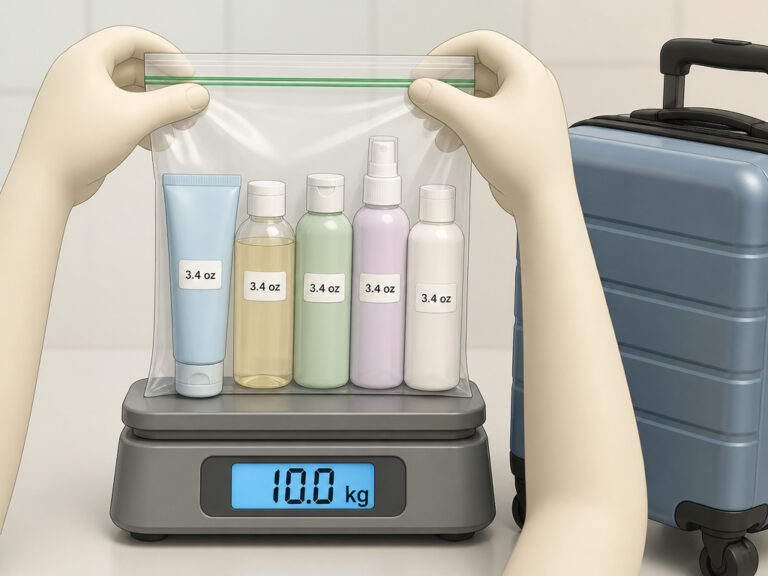
Can I Take a Small Mirror in My Hand Luggage? Carry-On Guide
This post contains affiliate links. As an Amazon Associate, we earn from qualifying purchases.
Yes, you can take a small mirror in your hand luggage. The TSA explicitly permits mirrors in both carry-on and checked bags, but the final decision rests with the security officer. The practical limit is your airline’s carry-on size restrictions—a mirror over 9 inches in any dimension will likely be gate-checked.
That officer discretion clause is where most online advice stops. It’s not a catch-all. It’s a specific legal provision that shifts the burden from a static list to human judgment on the spot. A mirror with a sharp metal edge or a pointed handle looks different under an X-ray than a plastic compact.
What follows: the TSA’s official line, the unspoken 7-inch rule frequent flyers use, how to handle battery-powered mirrors, and the stricter international rules that catch U.S. Travelers off guard. By the end, you’ll know exactly where to pack your mirror and how to present it at security.
Key Takeaways
- The TSA allows mirrors in carry-on and checked bags, but officers have final say.
- Airline carry-on size limits are the real constraint; a mirror over 9 inches risks a gate-check fee.
- Battery-powered mirrors with removable batteries must have the battery carried separately in your cabin bag.
- International flights operate under EU/UK regulations where “suspicious” items can be denied, regardless of size.
- Pack glass mirrors in your carry-on to control handling and prevent breakage in the cargo hold.
The TSA’s Official Stance on Mirrors
The Transportation Security Administration’s TSA official mirror guidance is clear: mirrors are permitted. You can find it listed on their “What Can I Bring?” page. This is your baseline permission.
Mirrors are permitted in carry-on and checked bags. The final decision rests with the TSA officer.
That second sentence is not a formality. It is the operational rule. Every item that passes through the checkpoint is subject to the officer’s assessment of whether it could be used as a weapon. This is why understanding the type of mirror matters as much as the size.
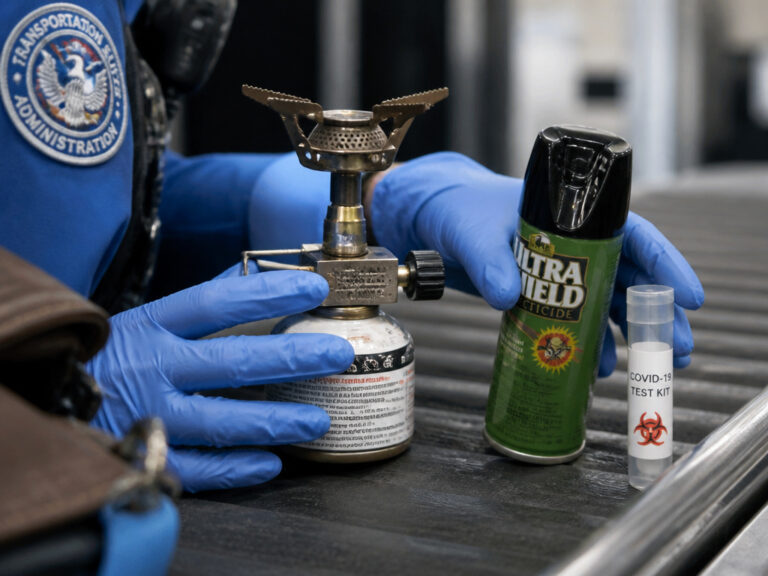
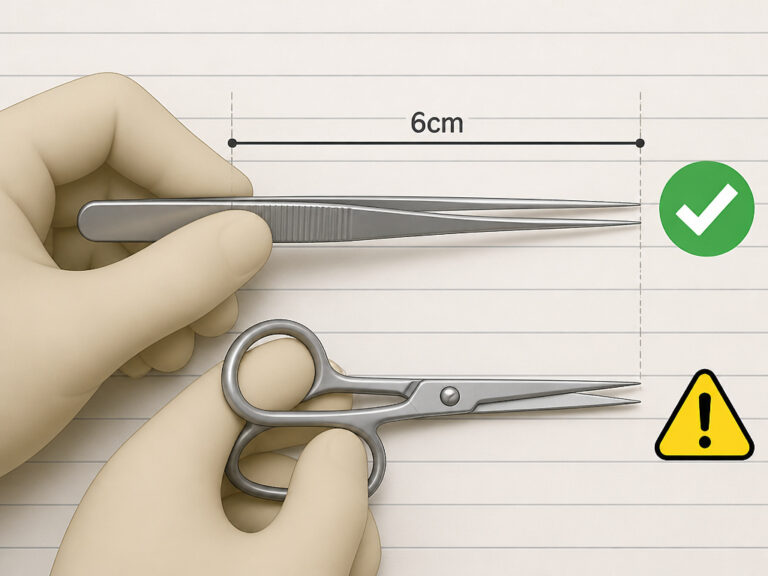
If your mirror has a sharp, unprotected edge, a heavy glass panel that could be snapped, or a handle that comes to a point, it enters a gray area. The officer is weighing it against the prohibited items list, which includes “blunt instruments.” Their job is to prevent any object that could cause serious injury in a confined cabin from passing. Your job is to make that decision easy.
Forget “TSA-approved.” That’s a marketing term, not a regulatory category. The TSA does not pre-approve items. They publish guidelines, and officers enforce them. Your mirror is not approved or disapproved until it goes through the X-ray and the officer screening it says so.
The Real Limit: Airline Carry-On Size
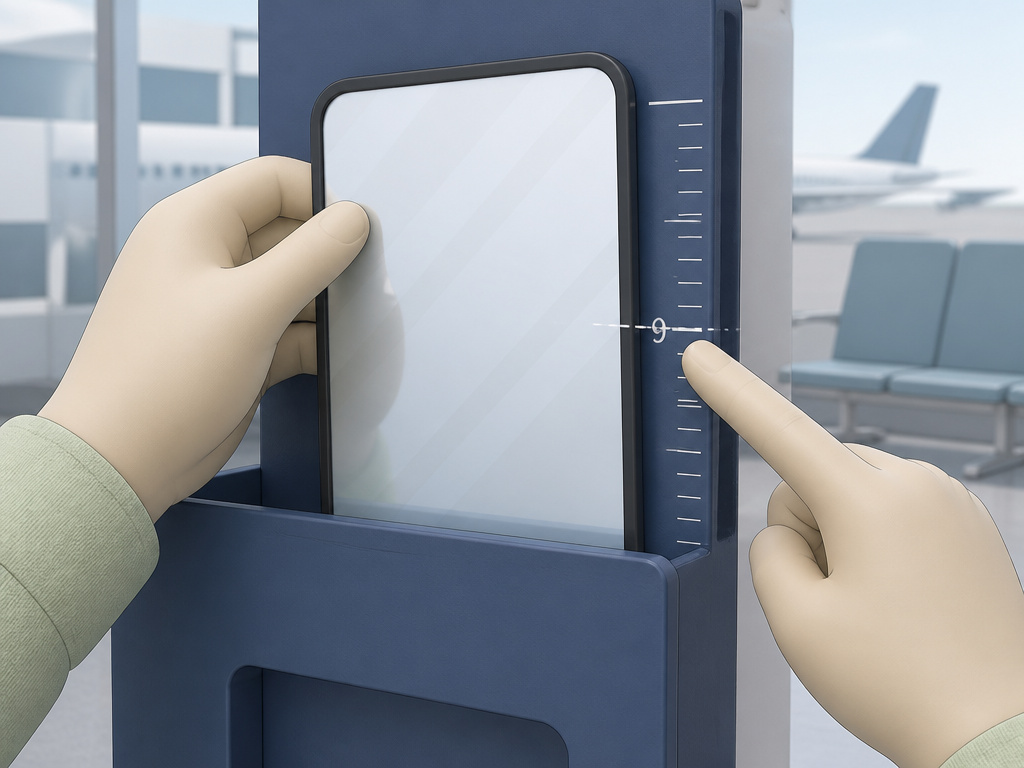
The TSA might pass your mirror, but your airline’s gate agent will stop it if it doesn’t fit. This is the disconnect that costs travelers time and money. Security cares about threat; the airline cares about space.
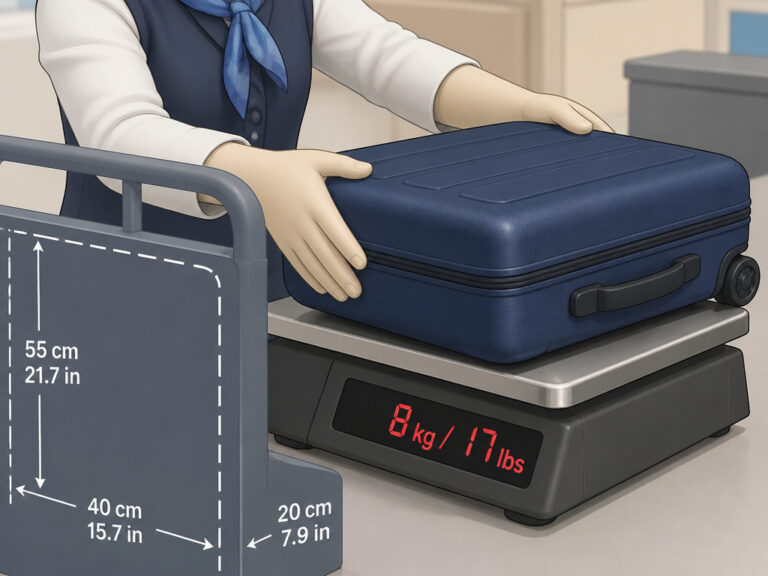
Most major U.S. Airlines use a standard carry-on sizer measuring roughly 22″ x 14″ x 9″. Your mirror isn’t measured in volume; it’s measured by its longest dimension. The community-driven rule of thumb is straightforward: – Under 7 inches: Almost certainly fine. – 7 to 9 inches: Gray area. Depends on the agent and how full the flight is. – Over 9 inches: High risk of being gate-checked.
I’ve seen a passenger in Charlotte delayed 20 minutes and charged $35 because a 10-inch vanity mirror wouldn’t fit under the seat in front of her. The gate agent called it a “personal item” and said it exceeded size limits. She had to check her entire carry-on. The mirror was TSA-compliant but airline-rejected.
| Mirror Type | Longest Dimension | Carry-On Likelihood | Primary Risk |
|---|---|---|---|
| Compact/Plastic Case | < 5 inches | Very High | Almost none |
| Folding Travel Mirror | 5 – 7 inches | High | Sharp edge on frame |
| Vanity Mirror (tabletop) | 7 – 9 inches | Medium-High | Airline size enforcement |
| Large Wall/Decorative Mirror | > 9 inches | Very Low | Gate-check fee, breakage |
Your carry-on luggage must fit in the overhead bin or under the seat. A large mirror can prevent that. Always check your airline’s specific carry-on dimensions before you assume anything fits.
Battery-Powered and Lighted Mirrors

A mirror with lights or a built-in fan adds a layer of scrutiny. You’re now dealing with both the mirror rules and the rules for batteries.
The rule is simple: if the battery is removable, take it out. Carry the loose battery in your cabin baggage. Lithium batteries are never allowed in checked luggage because of fire risk. If the battery is sealed inside, the device is generally permitted.
Where this goes sideways: Forgetting to remove a removable battery. The officer will see the dense battery cell in the X-ray, pull your bag, and you’ll have to open it at the checkpoint. It adds five minutes of hassle.
Be prepared to turn the mirror on if asked. This proves it’s a functional electronic device and not something else. Pack it so you can access it easily. Throwing a lighted mirror into the bottom of a stuffed bag is a guarantee for a secondary inspection.
This is the same logic that applies to power banks and other portable electronics. The TSA’s general carry-on rules for batteries always take precedence.
International Flights: EU and UK Regulations
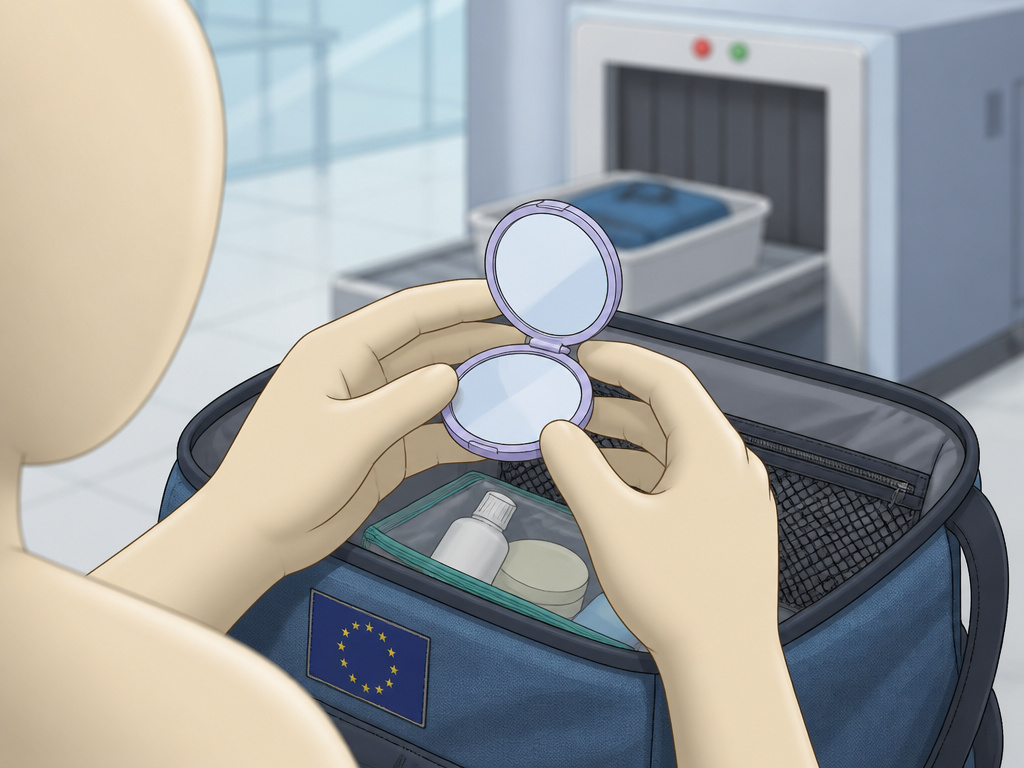
Flying to Europe? The TSA’s word is no longer the final authority. You are subject to European Union regulations, specifically EU Regulation 2015/1998, and the enforcement policies of the local airport security authority, like Spain’s Aena.
The EU’s prohibited items list includes “objects with a sharp point or cutting edge” and “blunt instruments.” A mirror is not explicitly listed, but a security officer can interpret a heavy hand mirror or one with a sharp metal rim as a blunt instrument.
More importantly, agencies like Aena publish a critical clause: security staff may deny any item that “arouses their suspicions,” even if it is not explicitly prohibited. This is a broader, more subjective power than the TSA’s “final decision” rule.
The difference is subtle but real. A TSA officer must link the item to a security threat (weapon potential). An EU officer can deny something simply because it seems unusual or its purpose is unclear. A large, heavy mirror in a carry-on might fit that description.
The UK’s GOV.UK hand luggage page doesn’t list mirrors either, operating under similar general restrictions. The principle is consistent: when in doubt, the officer’s judgment wins. For international travel, err on the side of smaller, obviously benign mirrors.
Packing Strategy: Carry-On vs. Checked Bag
Where you pack your mirror is a decision about risk management. The calculus changes based on the mirror’s material and value.
For glass mirrors, always choose carry-on. You maintain control over its handling. Checked baggage is thrown, stacked, and subjected to pressure shifts. A glass mirror packed between clothes in a soft suitcase will likely crack. In your carry-on, you can cushion it and keep it upright.
Common mistake: Packing a glass mirror in checked luggage to “save space” in the cabin bag. The replacement cost and hassle of cleaning glass shards from your clothes far outweigh the convenience.
For small, durable plastic mirrors, either option works. If you’re tight on carry-on space, tossing a compact into your checked bag is low-risk. Just remember the TSA advises that any sharp objects in checked bags should be “sheathed or securely wrapped to prevent injury to baggage handlers.” A mirror with a sharp edge falls under that advisory.
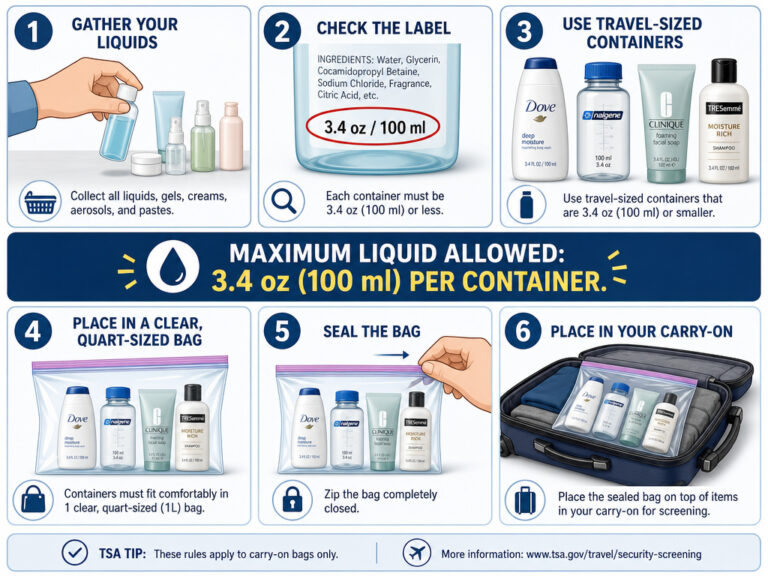
Consider your entire list of allowed carry-on items. If you’re also traveling with liquids over 3.4 ounces or full-size aerosols, those must go in checked baggage, freeing up cabin space for your fragile mirror.
Navigating Security Like a Pro
Your goal at the checkpoint is to be invisible. You want your bag to pass through the X-ray without triggering a stop. For a mirror, two things cause stops: ambiguity and perceived threat.
First, pack the mirror where it will lay flat against other items in your bag. Don’t pack it at a weird angle. The X-ray operator sees a dense, flat, rectangular object. If it’s sandwiched between clothes and a laptop, it looks like part of the bag’s structure. If it’s loose and angled, it becomes an object that needs identification.
Second, be ready to explain it. If your bag is pulled for inspection, calmly state, “That’s a makeup mirror” or “That’s a travel mirror.” Let the officer remove it. Do not reach into the bag yourself. Your cooperation speeds up the process.
This is the same mindset you use for other semi-restricted items like certain razors. You know the rule, you’ve packed compliantly, and you let the officer verify with minimal friction.
Frequently Asked Questions
Does a mirror count as a liquid?
No. Mirrors are solid objects. They are not subject to the 3-1-1 liquids rule. However, if your mirror has a liquid-filled level or contains a gel-based light diffuser, those components might be scrutinized separately.
Can I take a full-length mirror in my hand luggage?
Almost certainly not. A full-length mirror’s dimensions (often over 60 inches) vastly exceed any airline’s carry-on or personal item size limits. It would be considered fragile cargo and would need special shipping arrangements, not standard checked baggage.
What about mirrored compact makeup cases?
These are the easiest type to travel with. They are small, usually under 5 inches, with rounded edges and no obvious weapon potential. They rarely draw a second look from security. Just ensure any powder makeup inside is packed tightly to avoid a mess.
Can TSA make me throw away my mirror?
Yes. If a TSA officer determines your mirror is a security threat and you cannot or will not check it (or if you’re at the gate with no option to check), they can deny it entry. You would then have the choice to surrender it, take it back to your car, or mail it to yourself from the airport.
Is there a weight limit for a mirror in hand luggage?
The mirror itself isn’t weighed separately. It contributes to the total weight of your carry-on baggage. Most U.S. Domestic airlines don’t have a strict weight limit for carry-ons, but some international budget carriers do. A very heavy, large mirror could push you over a 15-22 lb limit.
The Bottom Line
You can bring a small mirror in your hand luggage. The TSA says yes. Your success hinges on two separate checks: security and the airline gate.
Keep it under 7 inches, ensure the edges aren’t sharp, and remove any batteries. For anything larger, be mentally prepared to check it. For international travel, think smaller and simpler.
Pack glass in your carry-on. Pack anything questionable where you can easily explain it. The system works on predictability. A standard makeup compact is predictable. A large, heavy hand mirror with a sharp metal rim is not. Choose predictability every time.