Do CPAP Machines Count as a Carry On? Airline & TSA Rules
This post contains affiliate links. As an Amazon Associate, we earn from qualifying purchases.
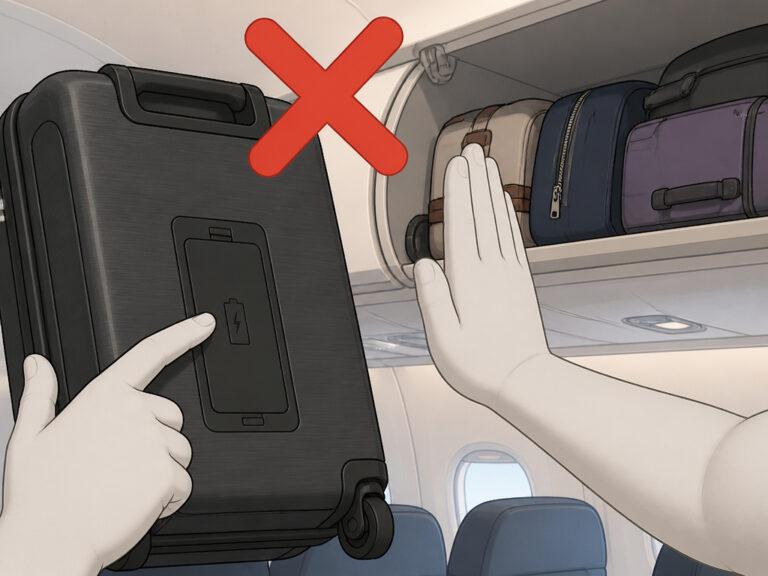
A CPAP machine does not count toward your standard carry-on luggage limit. It is considered a medical device and is exempt under regulations like the U.S. Air Carrier Access Act. You can bring it as an extra bag, but it must contain only the device and its necessary accessories—adding regular travel items voids the exemption.
The exemption is a rule, not a courtesy. It hinges on the bag’s contents being purely medical. Get that wrong, and your CPAP bag suddenly becomes your one permitted carry-on bag, forcing you to check your other luggage or pay a fee.
What follows is the breakdown: the federal and airline rules that create the exemption, the precise packing and security drill that keeps it valid, and the model-specific steps for using power in the air. This is the checklist that replaces guesswork.
Key Takeaways
- CPAP machines are exempt from standard carry-on baggage rules under U.S. Law and most airline policies, but the bag must contain only the device and its accessories.
- At security, you must remove the CPAP device from its case for X-ray screening, though masks and tubing can stay inside.
- For in-flight use, you must contact the airline at least 5 days ahead to request a seat with medical power; battery-operated units are simpler.
- Using an aftermarket or travel-specific bag like a CPAP backpack is allowed, but stuffing it with clothes or a laptop converts it into a standard carry-on.
- Always carry a printed FAA compliance letter for your specific device model (e.g., ResMed AirCurve 10 VAuto) to resolve security or gate agent questions.
The Short Answer: TSA and Airline Rules
The rule comes from two places: the Transportation Security Administration for getting through the checkpoint, and your airline’s policy for what goes in the overhead bin. They align, but you answer to both.
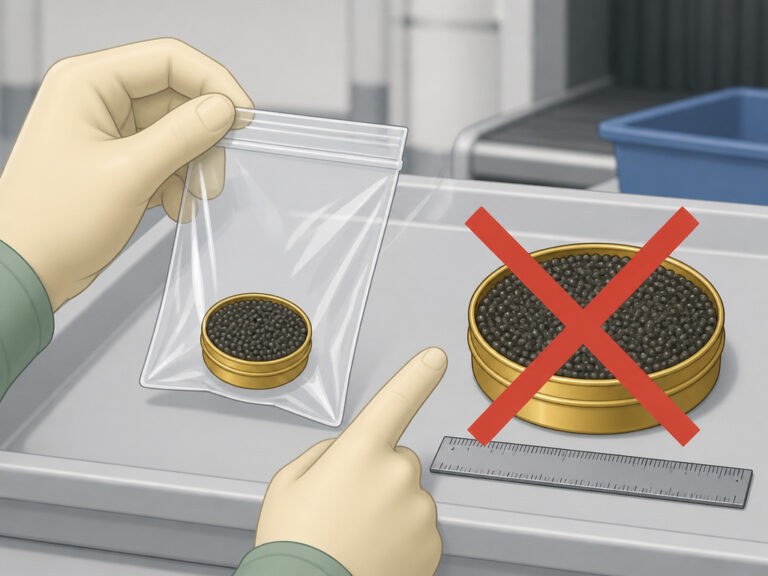
The TSA’s policy is procedural, not permissive. Their FAQ states a CPAP must be removed from its carrying case for X-ray screening. Facemasks and tubing can stay in the case. You can place the device itself in a clear plastic bag for the conveyor belt. This screening step is mandatory every time.
The airline’s policy governs the baggage limit. Major carriers like Qantas explicitly allow a CPAP as “an extra standard piece of carry-on baggage without charge.” The U.S. Department of Transportation cites the Air Carrier Access Act, which prohibits airlines from counting an assistive device toward baggage limits if the bag contains only the device and necessary accessories.
The gap between these two sets of rules is where travelers get tripped up. The TSA cares about screening. The airline cares about what’s in the bag. They do not communicate your intent to each other.
| Rule Source | What They Control | Key Requirement |
|---|---|---|
| Transportation Security Administration (TSA) | Security checkpoint screening | Remove device from case for X-ray. |
| Your Airline (e.g., Qantas, United, Delta) | Carry-on baggage limits & in-flight use | Bag must contain only medical device and accessories. |
| U.S. Air Carrier Access Act | Federal non-discrimination law | Prevents airlines from counting assistive devices as standard baggage. |
The part nobody mentions: This exemption is for the device’s bag, not for you. You still get your one standard carry-on bag and one personal item. The CPAP bag is a third, medical-necessity allowance. Trying to use it as a second regular carry-on is the most common reason for a gate agent to deny the exemption.
What “Medical Device” Really Means for Your Bag
The label “medical device” is a functional category, not a branding one. It applies to any machine prescribed for sleep apnea therapy: CPAP, BiPAP, and APAP machines. The exemption isn’t automatic because you have the machine; it’s conditional on how you pack it.
The rule is binary. The bag contains either: 1. Only the CPAP device, its power cord, mask, tubing, filters, and perhaps a small bottle of distilled water. 2. The CPAP device plus other, non-medical items like a change of clothes, a book, or your toiletries.
Scenario 1 qualifies for the exemption. Scenario 2 does not. In scenario 2, the entire bag becomes your one permitted carry-on luggage, and you must check your other bag or consolidate.
Common mistake: Using the CPAP bag’s extra space for a laptop or a jacket. That single non-medical item converts the bag’s status. Gate agents have the discretion to inspect it, and on busy flights where overhead space is tight, they will.
This is why many frequent travelers opt for a dedicated, compact travel CPAP like the ResMed AirMini. It’s small enough to fit inside your standard carry-on bag with your clothes, eliminating the two-bag juggle entirely while keeping the device protected. It’s a workaround that sidesteps the exemption question completely.
Packing and Security Screening: A Step-by-Step Walkthrough
Packing for the airport is different from packing for bedtime. You are optimizing for security efficiency and agent inspection, not for comfort.
Before You Leave Home:
- Empty the humidifier tank completely. The Philips DreamStation manual explicitly warns against traveling with water in the tank. Any residual liquid will trigger additional screening.
- Pack the device in a carry-on compliant case. Even the manufacturer’s cases, like the one for the DreamStation Go, are marked “for carry-on luggage only” and will not protect the device in checked baggage.
- Place the device and its accessories in a clear, quart-sized plastic bag. This isn’t mandatory, but the TSA suggests it for the X-ray belt. It keeps the machine clean and speeds up the process.
- Print your FAA compliance letter. For ResMed devices like the AirCurve 10 series, this letter lists specific product codes (e.g., 37050 for a VAuto model) and confirms electromagnetic compatibility for aircraft use. Have it on paper.
At the Security Checkpoint:
- Declare the CPAP. As you approach the bins, tell the officer, “I have a medical device in my bag.”
- Remove the device from its case. Place the CPAP machine itself in a bin. You can leave the mask, tubing, and hose inside the case.
- Send it through. Place the bin with the device and the case with accessories on the conveyor belt.
- Be ready for a secondary inspection. The device may be swabbed for explosive residue. This is standard and takes 30 seconds.
The entire process adds 3–5 minutes if you’re prepared. The delay comes from travelers who are surprised by the requirement to remove the machine, leading to a frantic unpacking at the belt.
Airline-Specific Policies and the “Baggage Limit” Loophole
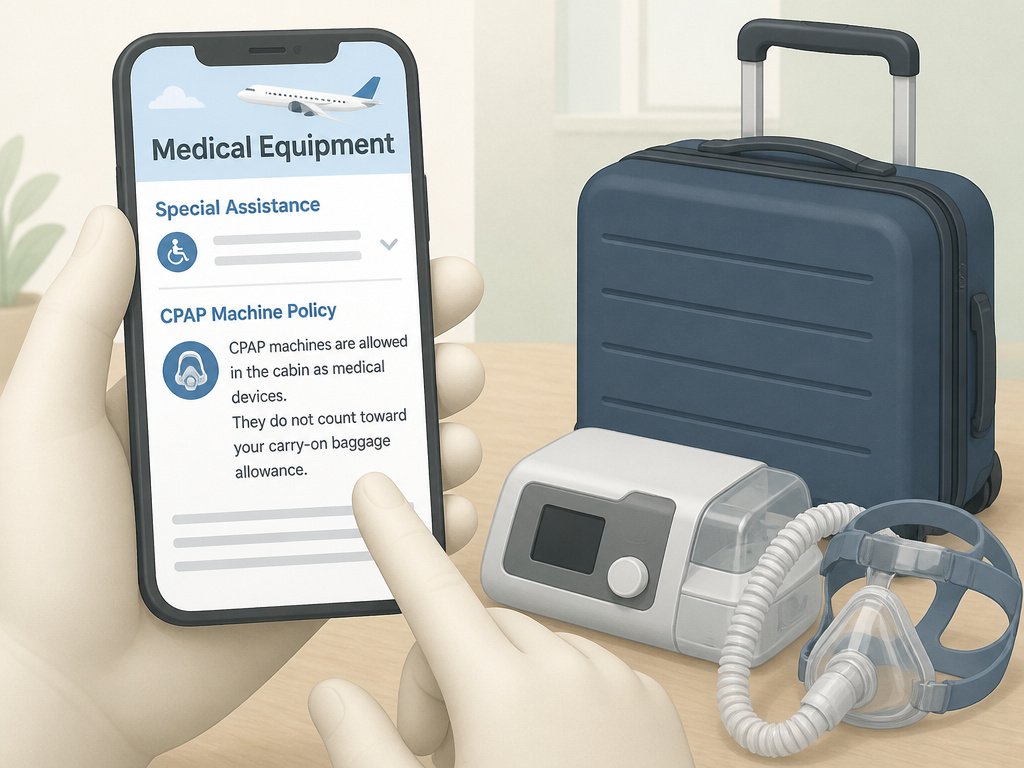
While U.S. Law and major airlines provide a blanket exemption, policies are not universal. Budget carriers and international airlines have their own manuals.
- Qantas & Major U.S. Carriers: Clear exemption. Qantas states no approval is needed, but a doctor’s letter is recommended.
- European Carriers (e.g., KLM): Generally allowed, but they emphasize contacting them ahead to “register” the device on your reservation, as stowage space can be limited.
- Budget Airlines (e.g., AirAsia): This is the known loophole. Some strictly count the CPAP bag as your one allowed carry-on bag. Reddit trip reports confirm AirAsia has enforced this.
| Airline Type | Typical CPAP Bag Policy | Action Required |
|---|---|---|
| Major Full-Service (Delta, Qantas) | Exempt, does not count toward limit. | None, but have documentation. |
| International Flag Carriers (KLM, Lufthansa) | Exempt, but may require pre-registration. | Contact customer service 72+ hours before flight. |
| Budget / Low-Cost Carriers (AirAsia, Ryanair) | May count as your only carry-on. | Check specific website policy; assume no exemption. |
The fix is always the same: check the airline’s “medical equipment” page. Do not rely on general carry-on luggage rules. The policy is almost always listed under “special assistance” or “medical needs.” If it’s ambiguous, call and get a confirmation code or email. A note on your reservation is your only proof if the gate agent disagrees.
Using Your CPAP During the Flight
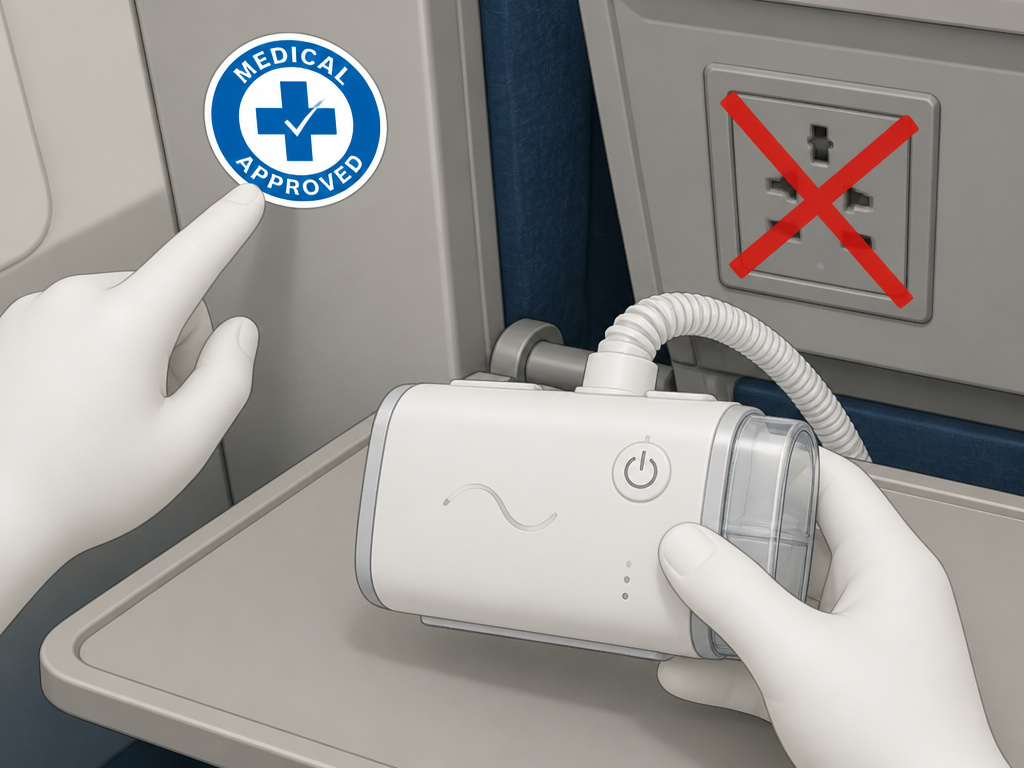
Using the machine in the air is a separate negotiation from carrying it on. You are now asking the airline to provide a resource—power—and to ensure you have a seat that can access it.
Power is the constraint. Most aircraft power outlets at seats are not rated for the sustained draw of a CPAP’s motor. You need “medical power,” which is a dedicated port or a verified seat.
- Battery-Operated is King. A device like the Philips DreamStation Go or the ResMed AirMini with its official battery pack is the simplest solution. It requires no airline coordination and works in any seat.
- Using Aircraft Power. If you must plug in, you must request it. Qantas requires a Travel Clearance Form submitted at least 5 days before departure for medical power. It is not available in all cabins or on all aircraft.
Before you start: Never assume your seat has usable power. The outlet symbol on a seat map does not guarantee medical-grade power. Failing to secure approval means a dead machine and a sleepless flight.
The request process is a formality for your safety. The airline needs to ensure your device’s power adapter is compatible and that the circuit won’t be overloaded. Provide your device model (e.g., ResMed AirSense 11 AutoSet) and its power specifications when you submit the form.
Frequently Asked Questions
Do I need a doctor’s note to fly with my CPAP?
You do not legally need one for U.S. Airlines, but it is strongly recommended. A note stating the machine is medically necessary for sleep apnea can resolve questions at security or the gate, especially for international travel. It carries more weight with airline staff than a manufacturer’s compliance letter.
Can I put my CPAP in my checked luggage?
You can, but you should not. The TSA allows it, but manufacturer manuals (like the one for the DreamStation Go) warn their cases are not designed for checked baggage. The risk of damage, loss, or theft is high. Your therapy is too important to risk.
Will my CPAP machine be damaged by the airport X-ray?
No. CPAP devices contain no film or components that are harmed by X-ray screening. The TSA procedure explicitly expects you to send it through the machine.
Does the brand of my travel bag matter?
No. The exemption applies to the contents, not the container. An aftermarket CPAP backpack is fine, as is the original case. However, if the bag looks like a regular backpack stuffed full, it may draw more scrutiny than a clearly medical-looking case.
What if my airline says my CPAP bag counts as my carry-on?
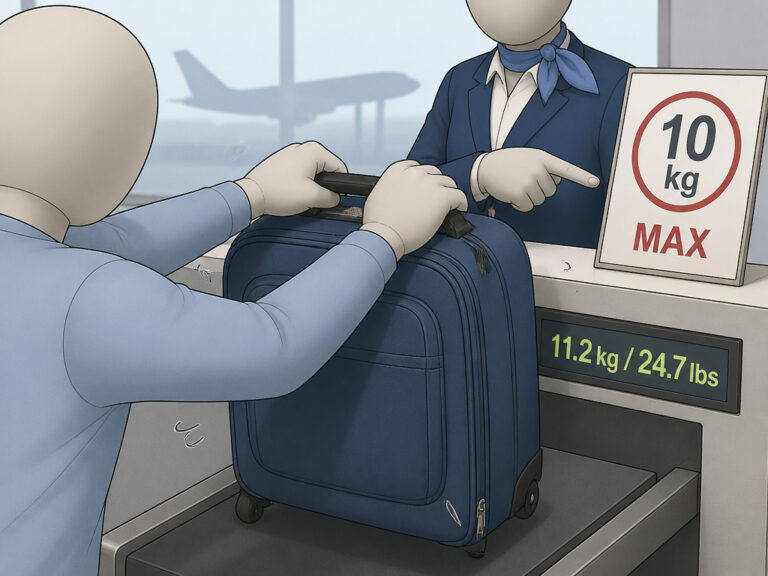
If you are flying a budget airline with a strict policy, you have two choices. First, consolidate: put the CPAP in your regular carry-on bag. Second, be prepared to check your other bag. Arguing at the gate with a printed policy from a different airline will not work.
The Bottom Line
A CPAP machine is not just another piece of carry-on luggage. It’s a medical device with a clear legal and procedural path through air travel. The exemption from baggage limits is real, but it’s fragile—it breaks the moment you pack a t-shirt alongside your mask.
Pack it clean, screen it separately, and coordinate in-flight power well ahead of time. For the simplest travel, consider a compact travel CPAP that fits inside your main bag. That removes the uncertainty and lets you focus on what matters: arriving rested and ready.