Is 24 Inch Luggage Carry On? The Critical 2-Inch Size Gap
This post contains affiliate links. As an Amazon Associate, we earn from qualifying purchases.
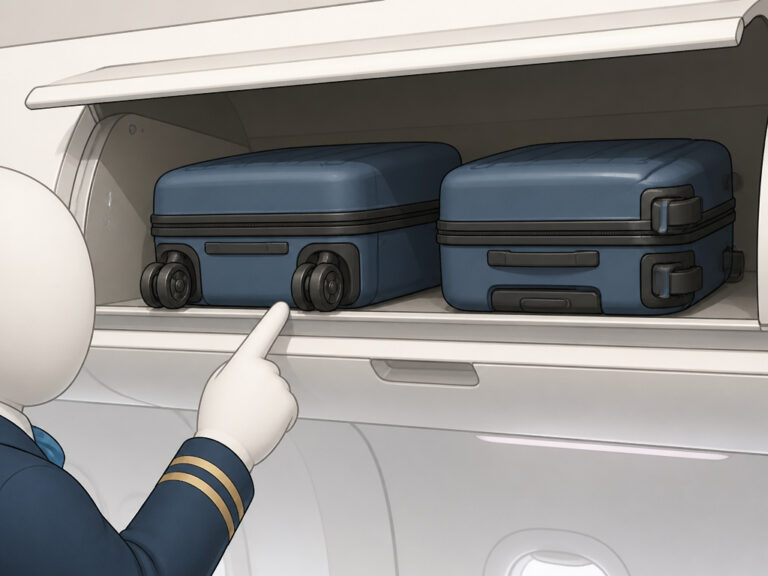
A 24-inch suitcase is almost never a carry-on for most major airlines. The standard carry-on limit is 22 inches in height, and a “24-inch” bag’s advertised height typically excludes its wheels and handles, which add 1-2 inches, pushing it over the limit. While a few airlines like Southwest use a linear-inch formula that a slim 24-inch bag might mathematically pass, the practical reality of overhead bin space on regional jets means it will likely be gate-checked.
That 2-inch gap is where the gate agent’s decision happens. Manufacturers label bags by interior length or an idealized measurement, but airlines measure the total exterior, wheels and telescoping handle included. A bag marketed as 24 inches often stands 26 inches tall on its wheels. That extra bulk is the difference between sliding it into the overhead and paying a checked-bag fee.
What follows: the exact math behind the 24-inch label, the two U.S. Airlines where it might work, the real weight trap, and a side-by-side look at actual 24-inch models from Travelpro, InUSA, Briggs & Riley, and Samsonite. By the end, you’ll know whether to pack that 24-inch spinner or leave it at home.
Key Takeaways
- A “24-inch” suitcase label almost always refers to its internal body length, not its total height with wheels and handle extended. The real height is usually 25–26 inches.
- The universal carry-on height limit for major U.S. Airlines (American, Delta, United) is 22 inches. A 24-inch bag fails this test before you even reach the gate.
- Southwest and Frontier use a linear-inch system (length+width+height). A slim 24x16x10 bag totals 50 linear inches, which is within Southwest’s 62-inch limit but may still not fit in a regional jet’s smaller overhead bin.
- Empty weight is a hidden trap. A 24-inch hardside often weighs 8–12 lbs empty, leaving little room for clothes before hitting typical 15–22 lb carry-on weight limits on international flights.
- If you must bring a 24-inch bag, book with Southwest or Frontier, pack it light, and be prepared to gate-check it if the overhead bins are full or the aircraft is a smaller regional jet.
The Short Answer: No, With a Few Exceptions
For American, Delta, United, and most international carriers, a 24-inch suitcase is not a carry-on. Their hard limit is 22 inches in height for a standard roller bag. Full stop.
The exception lives with two airlines: Southwest and Frontier. They use a linear-inch formula (length + width + height) instead of a strict height limit. Southwest allows 62 linear inches; Frontier allows 50. A perfectly proportioned 24x16x10 suitcase hits exactly 50 linear inches. On paper, that fits Frontier’s limit and leaves room on Southwest’s.
Where this goes sideways: The overhead bin on a regional jet like a CRJ-700 or an Embraer 175 is only about 22 inches tall at the opening. Even if your bag passes the linear-inch test, it physically will not fit. You’ll be gate-checking it.
So the honest answer is a conditional no. You might mathematically comply with one airline’s policy, but the physical reality of aircraft bins makes it a gamble. Treat a 24-inch suitcase as a checked bag, and any time it flies in the cabin, consider it a lucky break.
The Math Behind the 24-Inch Suitcase
Manufacturers and airlines measure differently. This mismatch is why you get confused at the gate.
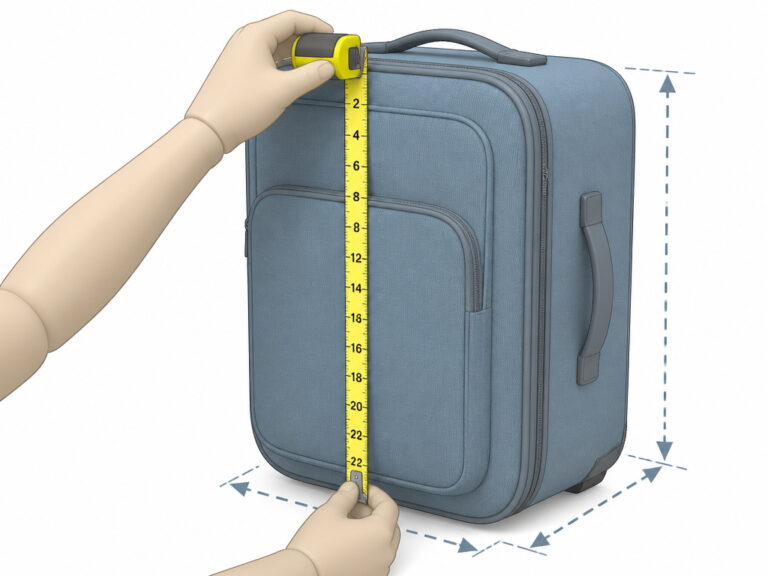
Airlines measure total exterior dimensions—every protruding part. They use a metal sizer box at the gate. If your bag doesn’t fit inside the box, it’s checked. The box accounts for the wheels, the telescoping handle, and any external pockets.
Manufacturers usually label a bag by its internal body height or sometimes by its main compartment length. The wheels, handle housing, and any raised feet are not included in that “24-inch” number.
Take the InUSA Royal 24 Inch Medium Hardside Spinner. Its product page lists the “Size” as 24 inches. But scroll down to the specs: the exterior measurement is 25.39 inches tall. Those extra 1.4 inches come from the wheels and the top carry handle. That’s what the airline measures.
| Bag Model | Advertised “Size” | Actual Exterior Height (with wheels/handle) | Source |
|---|---|---|---|
| Travelpro Optima Compact Carry-on | 22″ | 22″ | Travelpro product spec |
| InUSA Royal 24″ Medium Spinner | 24″ | 25.39″ | InUSA product spec |
| Briggs & Riley Baseline 24″ Compact | 24″ | 24″ (but depth expands to 14.5″) | Briggs & Riley product spec |
| Samsonite Paralux HS Spinner 67/24 | 24″ (in name) | 21.65″ | Samsonite product spec |
See the problem? The Samsonite bag labeled “24” is actually under 22 inches tall. The Briggs & Riley is exactly 24 inches tall but expands deeper, which can also violate bin depth rules. The InUSA is over 25 inches. The “24-inch” label tells you almost nothing about whether it will pass an airline sizer.
Common mistake: Buying a bag based on its advertised “inch” size without checking the manufacturer’s listed exterior dimensions. Always look for the line that says “Overall Dimensions (includes wheels and handles).”
Airline Policies: The Two That Might Let It Slide
 Most airlines have a simple rule: carry-on bags cannot exceed 22 x 14 x 9 inches. This is the standard for American, Delta, United, Alaska, and JetBlue (for overhead bins; JetBlue’s “personal item” sizer is smaller).
Two U.S. Carriers use a different system:
Southwest Airlines: 62 linear inches (L+W+H). Weight limit: None.
Frontier Airlines: 50 linear inches (L+W+H). Weight limit: 35 lbs.
A 24x16x10 bag is 50 linear inches. That meets Frontier’s size limit exactly and is under Southwest’s by a full foot. On paper, it works.
A suitcase of those dimensions would be within the size limit for domestic carry-on on American, Delta, and United: 22 inches high by 14 inches wide by 9 inches deep. In our lab it measured in at 22.25 inches high by 15 inches wide by 8.5 inches deep. That could be too big to bring on board.
The catch is the “personal item” sizer. Frontier and Spirit are notorious for enforcing their smaller under-seat sizer for anything not in the overhead bin. If your 24-inch bag goes overhead, you might pass. If the overheads are full, your bag must fit under the seat in front of you, and it almost certainly will not.
The Weight Trap Nobody Talks About
Even if you beat the size limit, weight will ground you. This is the silent killer for international travel.
A typical empty 24-inch hardside spinner weighs between 7.7 lbs (InUSA Royal) and 10+ lbs. The Xiaomi Luggage Classic Pro 24-inch model weighs approximately 8.8 lbs (4.0 kg) empty, per its official FAQ.
Now add clothes. A week’s worth of travel for one person easily adds 15–20 lbs. Suddenly your “carry-on” is pushing 25–30 lbs.
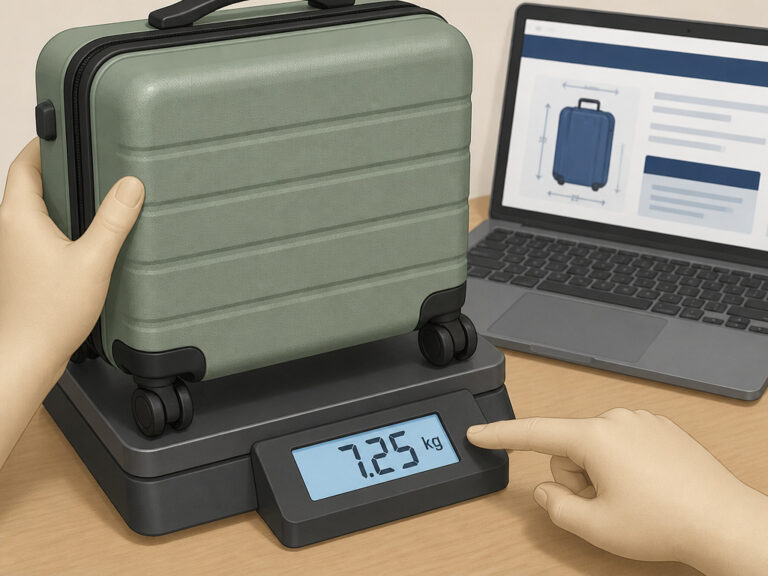
Most international airlines and some domestic ones (like Spirit) have strict carry-on weight limits, often between 15 and 22 lbs (7-10 kg). They will make you put your bag on a scale at the gate. Over the limit means a checked-bag fee, often more expensive than if you’d checked it initially.
| Airline Type | Typical Carry-On Weight Limit | Can a Packed 24″ Bag Meet It? |
|---|---|---|
| Major U.S. (Delta, American, United) | None (size only) | Yes, but it will be heavy to lift. |
| Budget U.S. (Spirit, Frontier) | 35-40 lbs | Usually, if packed lightly. |
| International (BA, Lufthansa, Air Canada) | 15-22 lbs (7-10 kg) | Almost never. A packed 24″ bag exceeds this. |
| Asian & Middle Eastern (Singapore, Emirates) | 15 lbs (7 kg) | No. The empty bag may exceed the limit. |
The math is brutal. An 8.8 lb empty bag leaves only 6.2 lbs for your belongings on a 15 lb limit airline. That’s a pair of jeans, two shirts, and a toiletries kit. You’re checking that bag.
Real 24-Inch Bags: A Side-by-Side Look
 Not all 24-inch bags are created equal. Their real dimensions dictate their fate.
- Travelpro Optima Expandable Compact Carry-on Spinner: This is the cheat code. Marketed as a 22-inch bag with dimensions of 22″ x 14″ x 9″, it’s built to the maximum carry-on size allowed by most airlines. It holds 39L. This is what a true carry-on looks like.
- InUSA Royal 24 Inch Medium Hardside Spinner: The specs don’t lie. Exterior: 25.39″ H x 16.34″ W x 10.23″ D. At 56 linear inches, it passes Southwest’s test. But at over 25 inches tall, it won’t fit in a standard 22-inch sizer. This is a checked bag.
- Briggs & Riley Baseline 24″ Compact Expandable Luggage: Exterior is 24″ x 16″ x 12-14.5″. The height is right at the edge, but the expandable depth pushes it to 14.5 inches—over the standard 9-inch depth for overhead bins. This one is designed as a compact checked bag, not a carry-on.
- Samsonite Paralux HS Spinner 67/24 Exp: Here’s the outlier. Despite the “24” in its name, its exterior height is only 21.65 inches. It’s actually a carry-on. The “24” likely refers to its capacity in liters. Always check the spec sheet.
The lesson? Ignore the name. Look for the line that says “Overall Dimensions” or “Exterior Dimensions including wheels and handles.” That’s the number that matters.
When a 24-Inch Bag Might Work (And How to Try)
 You’re determined to try. Here’s how to maximize your odds.
- Fly Southwest or Frontier. These are your only realistic shots in the U.S. Due to their linear-inch policies.
- Choose your aircraft. Avoid regional jets (CRJ, Embraer). Book mainline flights on Boeing 737 or Airbus A320 family aircraft, which have larger overhead bins. You can often find the aircraft type when booking.
- Pack it light. Stay under 25 lbs total. Use packing cubes to compress clothing and maximize space without bulging the bag.
- Be ready to gate-check. Have a small bag inside with your essentials—medication, laptop, passport—so you can hand over the suitcase without stress if the bin space runs out.
- Don’t expand it. If your bag has an expansion zipper, leave it closed. That extra inch of depth is the difference between fitting and not fitting.
Worth knowing before you start: Gate agents on busy flights are more likely to be strict. If the flight is full, they will start checking larger bags at the gate for free to speed up boarding. Your 24-inch bag will be first in line.
This isn’t a guarantee. It’s a calculated risk. The cost of losing that bet is a gate-check fee, which can be higher than checking the bag at the counter.
The Verdict: What to Buy Instead
If your goal is a reliable, no-hassle carry-on, buy a bag built to the 22-inch standard.
The Travelpro Optima Expandable Compact Carry-on is the benchmark because its 22x14x9 dimensions are certified for “nearly all major domestic airlines.” For a slightly larger option that still plays by the rules, look for a max carry-on size bag that hits the 22-inch height exactly.
For most people, the choice is binary: a true 22-inch carry-on for overhead bins, or a 24-26 inch checked bag for the hold. The 24-inch middle ground is a mirage that costs you time and money at the gate.
Bottom line: Assume your 24-inch suitcase is a checked bag. If it ever gets through as a carry-on, consider it a bonus. Plan for the worst, pack a personal item with your essentials, and you’ll never be surprised at the gate.
Frequently Asked Questions
Is 24 inch luggage allowed as a carry-on for international flights?
Almost never. International carriers like British Airways, Lufthansa, and Air Canada typically enforce a stricter 21-inch height limit for carry-on luggage. Asian airlines like Singapore Airlines can be as strict as 19 inches. A 24-inch bag will exceed these limits and must be checked.
What is the largest carry-on size allowed by most airlines?
The standard maximum carry-on size for most U.S. Airlines is 22 inches tall, 14 inches wide, and 9 inches deep. This 22x14x9 rule is used by American, Delta, and United. Always verify your specific airline’s carry-on size requirements before you fly, as a few, like Southwest, use a linear-inch system instead.
Can a 24 inch bag be a personal item?
No. A personal item must fit under the seat in front of you. Dimensions for that are typically around 18x14x8 inches. A 24-inch bag is far too large. Personal items are backpacks, laptop bags, or small handbags—not rolling suitcases.
How do I measure my suitcase for carry-on?
Use a tape measure. Measure the total exterior height (from the bottom of the wheels to the top of the handle), the width (side to side at the widest point, including any side pockets), and the depth (front to back, including any expansion zippers). These three numbers are what the airline checks against their carry-on size limits.
Are there any 24 inch carry-on suitcases?
True 24-inch-tall suitcases are not carry-ons. However, some bags are misleadingly named. The Samsonite Paralux HS Spinner 67/24, for example, is only 21.65 inches tall externally, making it a compliant carry-on. The “24” in its name refers to capacity, not height. Always check the manufacturer’s listed “exterior dimensions” or carry-on luggage dimensions.
Before You Go
A 24-inch suitcase is a checked bag. The 22-inch airline limit is real, and the sizer box at the gate doesn’t care about the number on your bag’s tag. It measures what’s in front of it. If you want to avoid fees and guarantee overhead space, buy a bag built to the 22x14x9 standard. If you need the extra space of a 24-inch bag, budget for the checked luggage fee and pack it accordingly. The certainty is cheaper than the gamble.