Defining Carry-On Luggage: The Hidden Rules Airlines Have
This post contains affiliate links. As an Amazon Associate, we earn from qualifying purchases.
Carry-on luggage is the bag you bring into the airplane cabin, stowed either in the overhead bin or under the seat in front of you. Its official dimensions are typically 22 inches long, 14 inches wide, and 9 inches deep, including wheels and handles. Most standard economy tickets include one carry-on bag plus a smaller personal item.
Most people think the biggest carry-on mistake is oversizing the bag. It’s not. The real mistake is forgetting that airline policies are a minefield of fine print, and your ticket type often dictates your rights more than the bag itself. You can have the perfect 22x14x9 suitcase and still get slapped with a $75 fee at the gate because you bought a basic economy ticket.
This guide cuts through the marketing fluff. You’ll get the exact size and weight specs, the real differences between major carriers and budget airlines, and the packing rules that actually matter at the security checkpoint. We’ll cover what you can and cannot bring, how to handle gate-checking, and the one thing you should never pack in your checked bag.
Key Takeaways
- Your ticket class, not just your bag size, determines if a carry-on is free. Basic economy on United, Delta, and American often restricts you to a personal item only.
- Weight limits are rare on major US airlines but standard internationally. Budget carriers like Frontier and Spirit enforce them strictly, usually capping carry-ons at 35-40 pounds.
- The TSA’s 3-1-1 rule for liquids is non-negotiable, but exceptions exist for medically necessary liquids, baby formula, and breast milk, declare them for separate screening.
- Lithium batteries and power banks must go in your carry-on. Airlines are increasingly banning them from checked luggage due to fire risk.
- Always pack critical items, medication, passports, electronics, jewelry, in your personal item. Even compliant carry-ons get gate-checked on full flights.
What Are the Exact Carry-On Size and Weight Limits?
The numbers on a bag’s tag are a starting point. The real limits are printed in your airline’s contract of carriage, and they vary wildly.
The common benchmark is 22″ x 14″ x 9″. That’s the typical sizer box at a US airport. It includes every protruding part, the wheels, the telescoping handle, the side pockets if they bulge. International flights often use a 21.5″ x 15.5″ x 9″ sizer, or a 45-46 linear inch total (length + width + depth). Calculating linear inches is simple. Grab a tape measure.
Common mistake: Measuring your bag empty, the true test is when it’s fully packed. A stuffed expandable compartment or an overstuffed front pocket can add an inch in every direction. You’ll feel the resistance sliding it into the overhead bin, and a gate agent will notice.
Weight is where airlines truly differ. Major US carriers like American, Delta, and JetBlue generally don’t publish a weight limit for carry-ons; they rely on the “can you lift it” rule. If you can heft it into the overhead bin unaided, it passes. International and budget airlines are a different story. British Airways allows a generous 51 pounds. Most European and Asian carriers set a limit between 15 and 22 pounds. Ultra-low-cost carriers are the strictest.
| Airline Type | Typical Size Limit | Typical Weight Limit | Enforcement Style |
|---|---|---|---|
| Major US Carrier (Delta, American) | 22″ x 14″ x 9″ | None (must fit overhead) | Casual at hub airports, strict at small gates |
| International Full-Service (Lufthansa, British Airways) | 21.5″ x 15.5″ x 9″ | 15–22 lbs (7–10 kg) | Frequent use of sizers and scales at check-in |
| Ultra-Low-Cost Carrier (Frontier, Spirit) | Personal item only on cheapest fare | 35–40 lbs for paid carry-on | Rigorous; sizer and scale at gate, fees charged immediately |
Your bag can be within spec and still not make it into the cabin. Smaller regional jets like the CRJ-200 or Embraer 145 have laughably small overhead bins. On a full flight, the gate agent will ask for volunteers to gate-check roll-aboard bags before boarding even starts. If there are no volunteers, they’ll start tagging bags from the back of the boarding group. It’s not personal. It’s physics.
TL;DR: Check your airline’s website for your specific route and fare. Assume 22″x14″x9″ and no weight limit is wrong more than it’s right.
Carry-On vs. Personal Item: The Two-Bag System
You get two bags in the cabin. The carry-on goes overhead. The personal item goes under the seat. The line between them is defined by size, not function.
A personal item is typically around 18″ x 14″ x 8″. It must fit completely under the seat in front of you without blocking your footwell or protruding into the aisle. A backpack, a large purse, a briefcase, a small duffel, if it squishes, it qualifies. This is your life raft. If the overhead bins fill up and your carry-on gets gate-checked, everything you can’t live without for 24 hours should be in this bag. Think passports, a laptop, medication, a change of clothes, your car keys.
I learned this the hard way on a packed flight from Orlando. My perfectly sized carry-on got tagged at the jet bridge. My personal item was a slim laptop bag with just my computer and a charger. I spent the weekend in someone else’s clothes, buying a toothbrush at a hotel gift shop. Now my personal item is a 26-liter backpack with a full change of clothes, my meds, and all my electronics. It looks bulky but still tucks under the seat.
The airlines are getting stricter about policing this. Frontier and Spirit are famous for their “personal item sizer” at the gate, a metal box usually measuring 18″ x 14″ x 8″. If your bag doesn’t fit without force, that’s a $99 fee at the gate, no exceptions. They make a significant portion of their revenue from these bag fees, so the agents are incentivized to check.
The 3-1-1 Rule and Prohibited Items
Security is a separate layer of rules from the airline. The TSA doesn’t care about your fare class. They care about what’s in your bag.
The 3-1-1 rule is straightforward: liquids, gels, aerosols, creams, and pastes must be in containers of 3.4 ounces (100 milliliters) or less. All those containers must fit inside one clear, quart-sized, resealable plastic bag. One bag per passenger. This includes things you might not think of as liquids, toothpaste, peanut butter, lip gloss, sunscreen. Spreadable foods count.
Common mistake: Forgetting that the 3-1-1 rule applies to the container size, not the amount left inside. A half-empty 6-ounce shampoo bottle is still a 6-ounce container. It will be confiscated.
There are exceptions. Medically necessary liquids, baby formula, breast milk, and juice for infants are allowed in reasonable quantities exceeding 3.4 ounces. You must declare these items for separate screening at the security checkpoint. Don’t try to hide them in your bag, that guarantees a full bag search and a delay.
The prohibited items list is longer. Sharp objects like knives, scissors (over 4 inches from the pivot point), and razor blades are out. Tools over 7 inches long are out. Firearms, pepper spray, and fireworks are obviously out. The rule that trips up many travelers involves batteries.
Lithium batteries and portable power banks are a major safety concern. Spare lithium-ion batteries must be carried in your carry-on luggage. They are prohibited in checked baggage because a fire in the cargo hold is catastrophic. The same goes for power banks. Furthermore, many airlines now forbid using power banks to charge devices during flight and require they be stored under the seat, not overhead. Always check the specific TSA carry-on size FAQ and your airline’s policy before you pack.
TL;DR: Pack all liquids in a quart bag. Pack all spare batteries and power banks in your carry-on. Assume anything sharp or tool-like is banned unless you confirm otherwise.
How Airlines Differ: Fees, Allowances, and Enforcement
Not all tickets are created equal. Your right to a carry-on is often printed on your boarding pass.
Major US airlines (Delta, American, United) include a carry-on and personal item with standard Main Cabin or above tickets. Their basic economy fares are different. For domestic routes, United and American basic economy do not allow a full-size carry-on, just a personal item. Delta’s basic economy still includes a carry-on. It’s a critical distinction. International basic economy on these carriers usually does include a carry-on bag.
Ultra-low-cost carriers (ULCCs) like Frontier, Spirit, and Allegiant treat bags as a primary revenue source. Their cheapest fare typically only includes a personal item that fits under the seat. A full-size carry-on for the overhead bin costs extra, purchased online or at the airport for a higher fee. The Frontier Airlines personal item must fit their sizer, or the gate fee can be more than the ticket itself.
| Airline / Fare | Carry-On Allowance | Personal Item Allowance | Typical Carry-On Fee |
|---|---|---|---|
| Delta Basic Economy (Domestic) | 1 included | 1 included | $0 |
| United Basic Economy (Domestic) | Not allowed | 1 included | $35+ at gate |
| American Basic Economy (Domestic) | Not allowed | 1 included | $75 at gate |
| Frontier / Spirit Lowest Fare | Not included, paid add-on | 1 included (strict size) | $60–$99 at gate |
| JetBlue Blue Basic | 1 included | 1 included | $0 |
| International Basic Economy (Most) | 1 included | 1 included | $0 |
Enforcement is inconsistent but predictable. At a major airline hub, agents might let a slightly oversized bag slide if the flight isn’t full. At a small regional airport or on a packed flight, they will use the sizer. ULCCs almost always have an agent at the gate with a sizer and a scale, especially on popular routes. Their business model depends on collecting those fees.
Packing a Carry-On: What to Bring and What to Leave
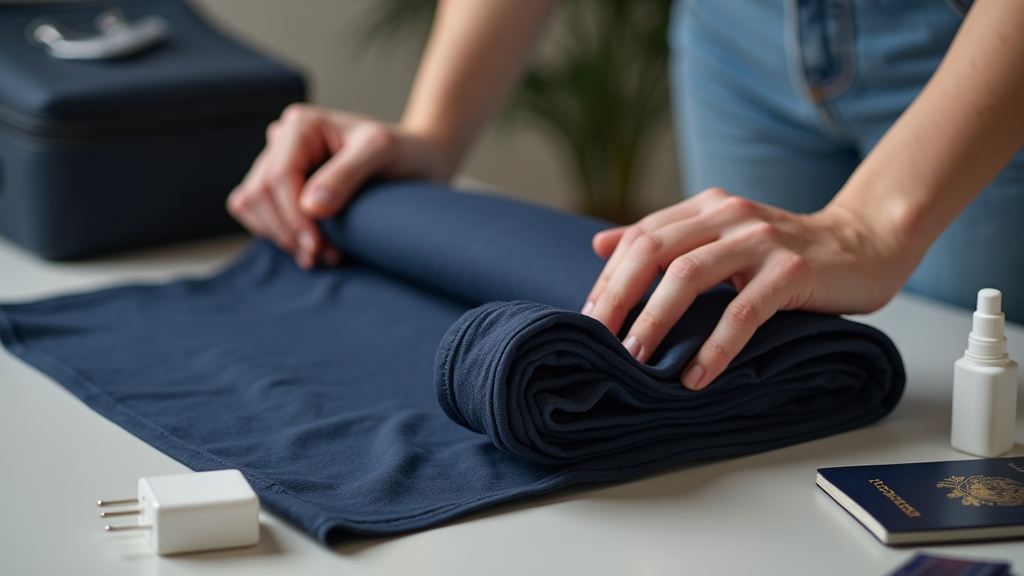
Packing for carry-on-only travel is a skill. It’s about maximizing utility while minimizing bulk.
Start with a packing list. Choose versatile, layerable clothing. Roll clothes instead of folding, it saves space and reduces wrinkles. Use packing cubes to compress items and organize your bag. Wear your bulkiest shoes and jacket on the plane.
Your personal item should hold all critical items: travel documents, wallet, phone, charger, medication, a change of underwear, and any valuable electronics. If your carry-on gets gate-checked or lost, this bag is your survival kit. I never put my laptop or camera gear in the overhead bin. Ever.
Consider solid alternatives to liquids. Shampoo bars, solid deodorant, and toothpaste tablets bypass the 3-1-1 rule entirely. They’re also less likely to leak and ruin your clothes. For other essentials, transfer products into small, reusable travel bottles.
Be strategic with electronics. A universal travel adapter, a multi-port charger, and short charging cables save space and weight. Remember the TSA security screening rule: you’ll need to remove large electronics like laptops and tablets from your bag at security. Pack them in an easy-to-access sleeve or at the top of your bag.
TL;DR: Roll clothes, use packing cubes, and put every single critical item in your personal item under the seat.
Gate-Checking and Overhead Bin Wars
Even with a perfect bag, you might lose it at the gate.
Gate-checking happens when the overhead bins fill up. Airlines will ask for volunteers first, offering to check bags to the final destination for free. If not enough people volunteer, they will mandate it, starting with the last boarding groups. If you’re in Group 9 on a full flight, assume your roll-aboard is getting a tag.
There’s a procedure. The gate agent will tag your bag and give you a claim check. You leave your bag at the end of the jet bridge just before entering the plane. You collect it at your arrival gate, not at the carousel. This is usually faster than regular baggage claim. The risk is minimal, but it’s why your essentials stay with you.
The scrum for overhead space is real. Bin space is first-come, first-served. Boarding early helps. So does packing a bag that fits wheels-first. The single biggest bin hog is a bag placed sideways. If everyone wheels in their bag lengthwise, more bags fit. It’s a simple piece of government carry-on advice that most people ignore.
On smaller planes, the calculus changes. Regional jets have tiny bins. Flight attendants will often pre-emptively gate-check any roll-aboard bag, regardless of boarding group. They’re not being rude. The bins physically cannot hold a standard 22-inch suitcase. Knowing your aircraft type when you check in can set your expectations.
The 4 Tools That Replace a $200 Service Visit
You don’t need to buy specialized travel gear. You need a few simple, reliable items that solve specific problems.
- A Digital Luggage Scale. This is the single best $15 you’ll spend. Guesswork on weight leads to fees at the check-in counter. Hook it to your bag’s handle, lift, and read the display. It removes all anxiety about international weight limits.
- A Flexible Tape Measure. The sizer box at the airport is the final judge, but this lets you pre-check at home. Measure length, width, and depth, including all protrusions. Add the numbers to confirm linear inches.
- Clear Quart-Sized Bags (a 10-pack). Don’t rely on the flimsy, single-use bag you might find at security. Buy a pack of sturdy, reusable ones. They zip securely, won’t tear, and you can prep your liquids days before a trip.
- A Packable Daypack. This serves as your emergency personal item if your main one fails the sizer test. It folds into its own pocket, weighs nothing, and can be stuffed with your overflow items in a pinch. It’s also perfect as a shopping bag or beach bag at your destination.
Skipping the luggage scale means you’re weighing your bag on a bathroom scale, which is notoriously inaccurate for odd-shaped objects. You’ll be over by two pounds and pay a $100 overweight fee. The tape measure catches expandable compartments you forgot about. The daypack is your get-out-of-jail-free card when you buy souvenirs.
Frequently Asked Questions
Can I bring a carry-on and a personal item on every airline?
No. Most full-service airlines allow both, but many ultra-low-cost carriers like Frontier and Spirit sell a carry-on as a separate add-on to their cheapest fares. On those tickets, only a personal item that fits under the seat is included. Always check your specific fare rules before you fly.
What happens if my carry-on is slightly oversized?
It depends on the airline and the agent. At a major carrier, you might get a pass if the flight isn’t full. At a budget airline, you will almost certainly be charged a gate-check fee, which is often more expensive than purchasing the carry-on allowance online in advance. When in doubt, pay for the allowance online, it’s always cheaper.
Are there any items I should never put in a checked bag?
Yes. Always pack these in your carry-on: prescription medications, valuable electronics (laptops, cameras, tablets), important documents (passports, vital paperwork), jewelry, car keys, and any critical equipment you need for a meeting or event. Also, spare lithium batteries and power banks are prohibited in checked luggage by IATA baggage standards due to fire risk.
How strict is the TSA with the 3-1-1 rule?
Extremely strict at the checkpoint. Officers are trained to look for large containers and non-compliant bags. However, exceptions are clearly defined for medically necessary liquids, baby formula, and breast milk. You must declare these items for separate screening. Trying to sneak a large bottle of shampoo through will result in a bag search and a delay.
Can I lock my carry-on bag?
You can use any lock you want, but be aware that TSA officers have the authority to open and inspect any bag. If they need to get in and your lock isn’t TSA-approved, they will cut it off. TSA-approved locks have a special keyway that allows officers to open them with a master key without damaging the lock.
What’s the best type of bag for a carry-on?
hard-shell spinner suitcase with four wheels offers the best protection for fragile items and maneuvers easily in crowded airports. A soft-sided duffel or backpack is more forgiving if you need to squeeze it into a tight overhead bin. The choice often comes down to your personal packing style and destination.
Before You Go
Carry-on luggage is a privilege defined by your ticket, not a right. The size limit is just the first hurdle; the weight limits, the liquid rules, and the airline-specific fees are where trips get expensive. Your personal item is your insurance policy, pack it like your trip depends on it, because sometimes it does.
Measure your bag with a tape measure when it’s fully packed. Check your airline’s website for your exact route and fare class. Put every critical item in the bag that goes under the seat in front of you. That’s the sequence. Everything else is commentary.
The goal isn’t to beat the system. It’s to understand it well enough that you never have to think about it at the gate. You just walk on.