Carry-On Rules: Is a Book Bag Considered a Carry-On Item?
This post contains affiliate links. As an Amazon Associate, we earn from qualifying purchases.
A book bag is considered a carry-on if it must go in the overhead bin, and a personal item if it fits under the seat. The classification hinges on three things: its packed dimensions, your specific airline’s size limits, and your fare class. Most major US airlines use a 22” x 14” x 9” (or 45 linear inch) limit for overhead carry-ons, while personal items are typically around 18” x 14” x 8”.
The real answer lives in the numbers printed on the airline’s policy page, not the bag’s style. A backpack that slips under seat 17C on a Delta mainline flight becomes an overhead-only item on a 50-seat Delta Connection turboprop. The fare you bought decides this before you even pack.
What follows: the exact size thresholds for five major carriers, the mechanical reason Basic Economy changes everything, and the one packing mistake that turns a compliant bag into a $65 gate-check fee.
Key Takeaways
- Your fare class is the first filter. Basic Economy on United, JetBlue, and Frontier restricts you to one personal item only, your backpack is your carry-on.
- Measure your bag packed, not empty. A bag marketed as “carry-on compliant” often gains an inch in depth when full, which is the difference between the sizer and a fee.
- Delta Connection flights (50 seats or less) have a hard rule: only personal items fit on board. Any larger backpack gets gate-checked with a pink tag, free of charge but out of reach.
- International airlines like ANA and Asiana add a combined weight limit, usually 10 kg (22 lbs), for your carry-on and personal item together, a scale check at the gate is common.
- The FAA’s carry-on baggage advisory prioritizes safe stowage; a flight attendant can refuse any bag they cannot secure in the bin without force, regardless of its measurements.
The 45-Second Rule for Backpack Classification
You can classify any backpack in under a minute. Ignore the marketing terms on its tag. The process is binary: if it fits under the seat in front of you on your specific aircraft, it’s a personal item. If it must go overhead, it’s a carry-on. The airline’s sizer box at the gate is the final judge, but you can preempt it.
Where this goes sideways: Trusting the bag’s advertised “airline-approved” dimensions when it’s empty. The Reddit post about the Qubed bag from TK Maxx is the perfect example, packed with a laptop and shoes, it bulged past the sizer. The advertised dimensions were technically correct for the empty shell, but useless for travel.
Your first move is to check your boarding pass for your fare code and aircraft type. This tells you the rules before you leave home.
Airline Carry-On Size Limits: The Specifics
Policies are not universal. A backpack that walks onto a Southwest flight might trigger a fee on Spirit. The standard US domestic size for an overhead carry-on is 22” x 14” x 9”. Some airlines, like Delta and American, use a 45 linear inch total (length + width + height) rule instead. Personal item dimensions are always smaller.
Here is how five major US carriers break down. These numbers come from their official policy pages.
| Airline | Overhead Carry-On Size | Personal Item Size | Basic Economy Rule |
|---|---|---|---|
| Delta | 22″ x 14″ x 9″ (or 45 linear inches) | Must fit under seat | Carry-on allowed |
| American Airlines | 22″ x 14″ x 9″ (including handles/wheels) | 18″ x 14″ x 8″ | Carry-on allowed |
| United Airlines | 9″ x 14″ x 22″ | 9″ x 10″ x 17″ | No overhead carry-on (personal item only) |
| Southwest | 24″ x 16″ x 10″ | 16.25″ x 13.5″ x 8″ | Carry-on allowed |
| JetBlue (Blue Basic) | Not allowed for this fare | 17″ x 13″ x 8″ | No overhead carry-on (personal item only) |
Delta and American are the most backpack-friendly for budget fares. Their Basic Economy tickets still include a full-size overhead carry-on. This is a major differentiator. If you’re buying the cheapest ticket and need your backpack overhead, these are your targets.
United and JetBlue Blue Basic use the personal item as a hard limit. Your backpack must squeeze into the smaller personal item dimensions listed. If it doesn’t, you’re paying a gate-check fee, $65 on JetBlue, $60-plus on United to upgrade your fare at the gate.
Common mistake: Assuming “personal item” is a purse or laptop bag. On these airlines, your backpack is your one allowed item. You cannot also bring a separate laptop bag unless it fits inside your backpack before you board.
Southwest’s larger overhead bin allowance (24″ x 16″ x 10″) is a relic of their open-bin design on older 737s. It’s more forgiving, but your backpack still must fit under the seat to count as a personal item. Their policy is clear: if it doesn’t fit under seat 12A, it goes overhead, taking your carry-on slot.
When Your Backpack Becomes Checked Baggage (Against Your Will)
Three scenarios force a gate-check, regardless of your bag’s size. They are about cabin capacity, not your compliance.
- Regional Jets (Delta Connection, United Express). Aircraft with 50 seats or less have minuscule overhead bins. Delta’s policy is explicit: only personal items that fit under-seat are allowed on board for these flights. Your full-size backpack gets a pink gate-claim tag and goes in the cargo hold. It’s free, but you won’t see it until you land at the jetbridge.
- Full Flights. The FAA’s carry-on baggage advisory states airlines must verify proper stowage before departure. If the overhead bins are full, the last 20 passengers to board will often be gate-checked. Position in the boarding order matters.
- The Flight Attendant’s Call. Per the same FAA advisory, flight attendants are authorized to refuse any bag they cannot stow safely. If your overstuffed backpack prevents an overhead bin from latching, they will tag it. No debate.
The fix for the first two is simple: board earlier. For the third, pack less. A bag that is difficult for you to lift overhead is impossible for a flight attendant to secure during turbulence.
International Airlines: The Weight Limit Wild Card
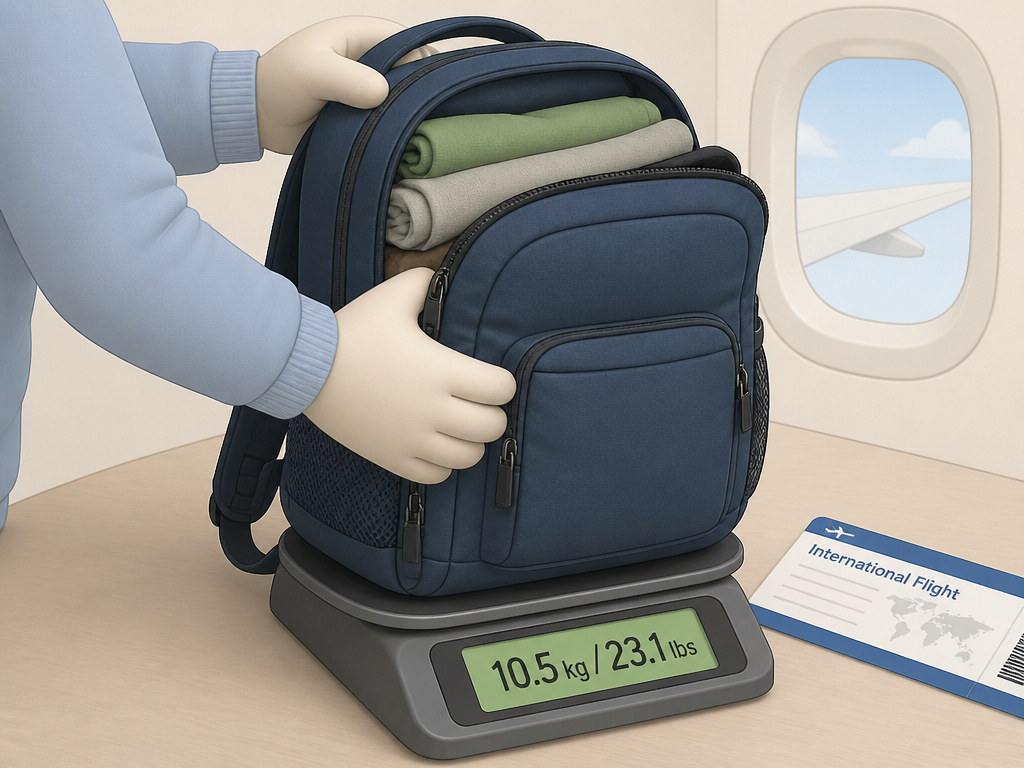 Flying to or from Asia or Europe introduces a second variable: weight. U.S. Domestic carriers rarely weigh carry-ons. Many international airlines do, and they are strict.
- ANA (All Nippon Airways): The combined weight of your carry-on and personal item must not exceed 10 kg (22 lbs). Their personal item size limit is also specific: 40 cm × 30 cm × 20 cm (about 16″ x 12″ x 8″).
- Asiana Airlines: Same 10 kg weight limit. Their personal item dimensions mirror ANA’s: 40 cm x 30 cm x 20 cm.
- British Airways: Has a 23 kg (51 lb) weight limit for carry-ons in economy, which is generous but still a ceiling.
These rules stem from the IATA passenger baggage rules, which reference typical carry-on weight limits starting at 5 kg (11 lbs) for global consistency. The IATA standard size is 56 × 45 × 25 cm (22 × 18 × 10 in), notice the slightly taller 10-inch depth compared to the U.S. 9-inch standard.
A 10 kg limit sounds light. It is. A packed 22-inch rolling suitcase can hit 8 kg alone. Add a 3 kg laptop backpack, and you’re over. This is why experienced international travelers use a lightweight carry-on like the Travelpro Maxlite 5 and wear their heaviest jacket onto the plane.
Tools and Tactics: How to Guarantee Compliance
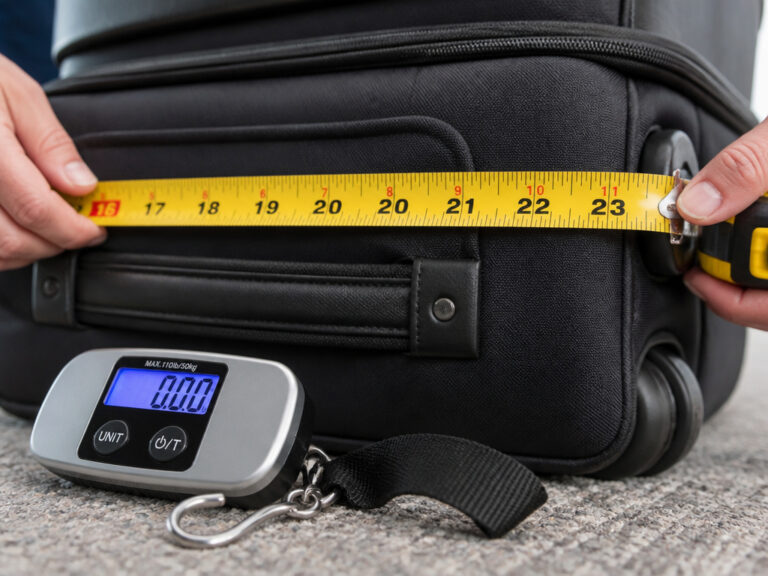
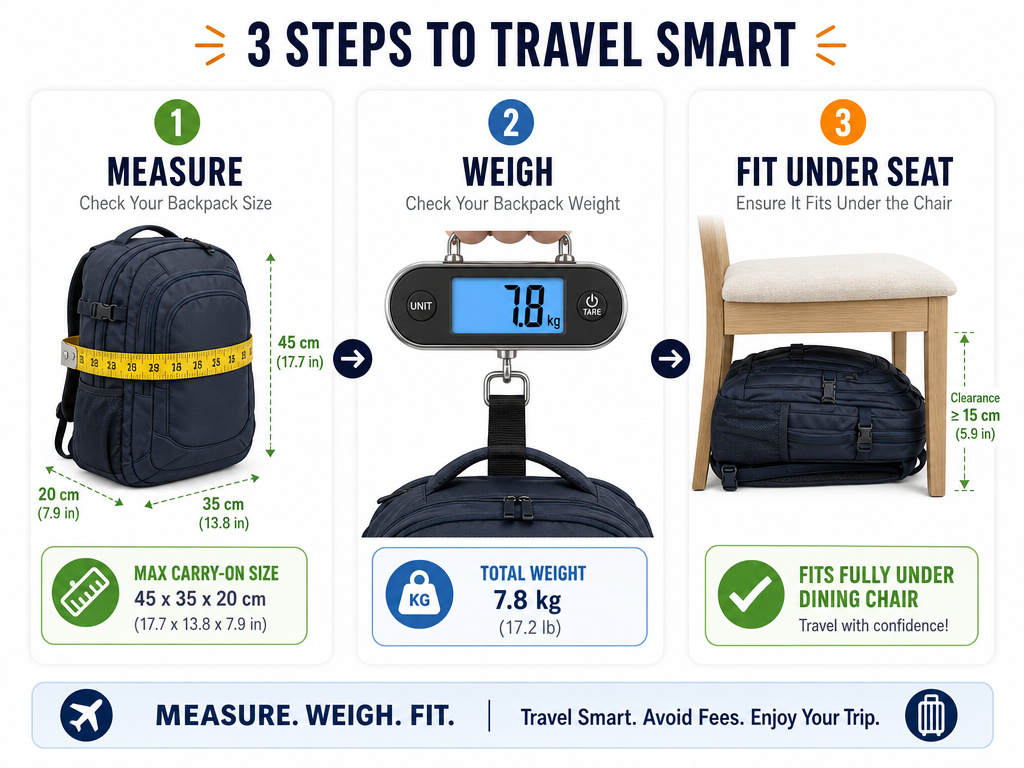 You need two tools: a tape measure and a luggage scale. The process takes five minutes.
Step 1: The Packed Measurement.
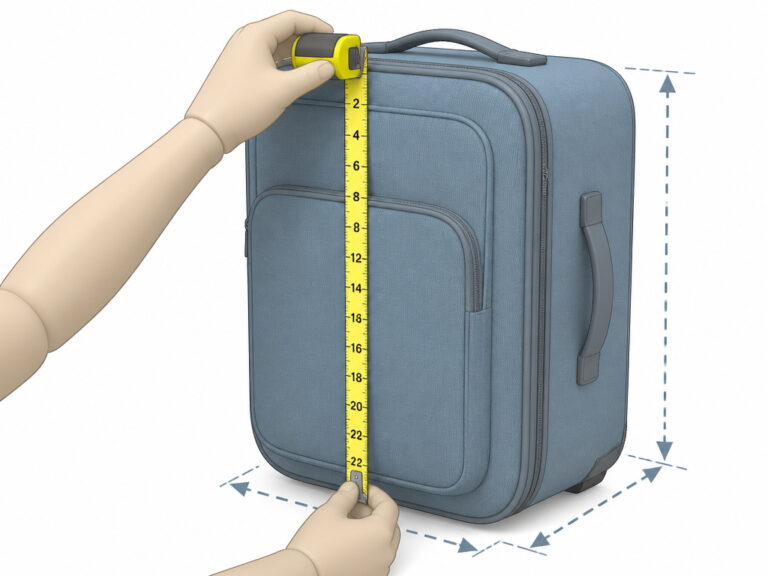
Pack your backpack exactly as you would for the trip. Don’t leave out the charger or the paperback. Measure its length, width, and depth at the widest points, including any external pockets that bulge. Compare these numbers to your airline’s personal item and carry-on dimensions from the table above. This is your first go/no-go.
Step 2: The Weight Check.
If flying internationally, put the entire packed backpack on a luggage scale. If you’re close to 8 kg, you have almost no room for a personal item. Redistribute weight to your pockets or wear layers.
Step 3: The Under-Seat Test.
Place your packed backpack under a dining room chair. The standard seat height is a decent proxy. Can you push it fully underneath without crushing it? If the chair legs press into the fabric, the bag is too tall. This visual test beats guessing.
The goal is to turn a subjective gate agent decision into an objective fact. Your bag fits. You have the numbers. That confidence changes the interaction.
The One Bag That Does It All
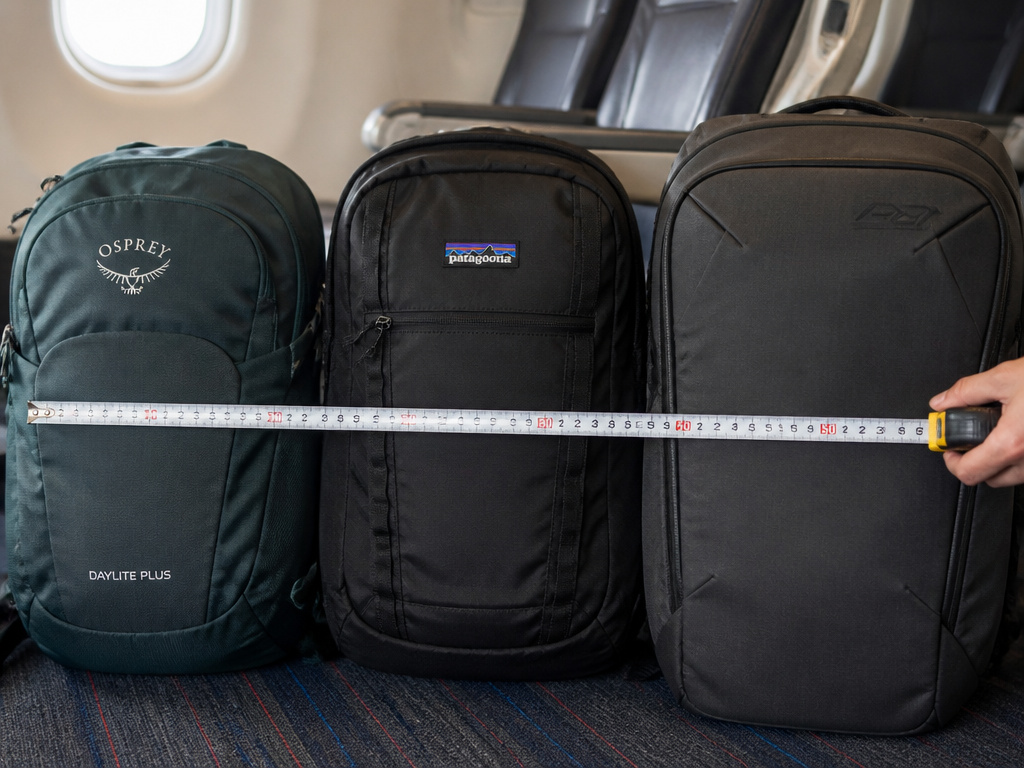 If you want a single backpack that will pass as a personal item on even the strictest airlines (United Basic Economy, JetBlue Blue Basic), the target dimensions are 17″ x 13″ x 8″. This is JetBlue’s limit, and it’s among the smallest.
The Osprey Daylite Plus 20L is built to these specs. It’s 17″ tall, 13″ wide, and 8″ deep when fully packed. The Patagonia Refugio 26L is another contender, its slim profile and structured back panel prevent overstuffing past the critical depth measurement.
For a backpack that can serve as a full-size overhead carry-on on Delta or American, look for the 45 linear inch tag. The Peak Design Travel Backpack 45L (it’s in the name) is designed to this exact metric. It compresses down for under-seat use and expands to the maximum legal overhead size.
These are specific tools for a specific job. A generic school backpack might work, but it’s a gamble. These are guarantees.
Frequently Asked Questions
Can I bring a book bag and a carry-on suitcase?
Yes, on most full-economy and above fares. You are typically allowed one overhead carry-on bag and one personal item. Your book bag would be the personal item if it fits under the seat. On Basic Economy fares with United or JetBlue, you can only bring the one book bag.
Do airlines measure every backpack?
No, but they can. Enforcement is visual and inconsistent in the U.S. Until it isn’t. Budget carriers like Frontier and Spirit use sizer boxes aggressively at the gate. European and Asian airlines are far more likely to weigh and measure. Assume you will be checked and pack accordingly.
What if my backpack is slightly too big?
If it’s visibly oversized, the gate agent will direct you to check it. This usually incurs a fee higher than checking it at the ticket counter, $65 to $100 at the gate is common. If it’s just slightly overstuffed, you may be asked to “gate-check” it for free, retrieving it plane-side upon arrival.
Does a laptop bag count as a personal item?
Yes, a laptop bag is a standard example of a personal item. However, if you also have a backpack, one of them must fit inside the other before you board, unless you have a fare that allows both a carry-on and a personal item. You cannot carry two separate personal items.
Are there items that don’t count as a personal item?
Yes. Most airlines explicitly exclude the following from your baggage allowance: a jacket, umbrella, food for immediate consumption, diaper bag (one per child), and assistive devices like crutches. You can bring these in addition to your carry-on and personal item.
Before You Go
The question isn’t “Is a book bag a carry-on?” It’s “What are the dimensions for my airline and my fare?” The answer is a set of numbers, not an opinion. Find those numbers on the airline’s official baggage page before you pack.
Measure your bag full. Weigh it if you’re crossing an ocean. And if you’re flying a regional jet or a discount fare, assume your backpack is your only bag. That preparation is the difference between walking on and paying up.