Can You Carry On a Garment Bag? Avoid This Size Trap at the Gate
This post contains affiliate links. As an Amazon Associate, we earn from qualifying purchases.
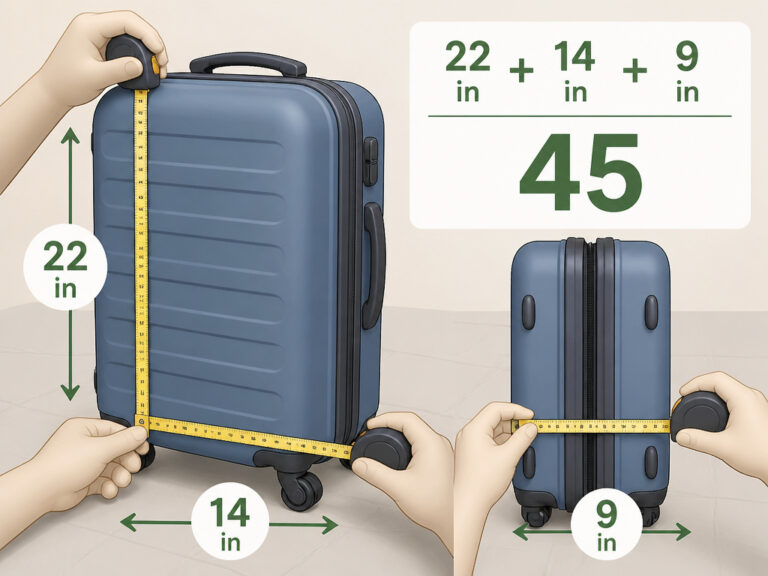
You can carry on a garment bag on most airlines, but it counts as your one allowed carry-on bag, not a personal item. It must fit within the airline’s specific size limits for carry-on luggage, typically measured in linear inches (length + width + height) and often capped at 45 inches for U.S. Carriers. A hanging tri-fold bag often attracts gate-agent scrutiny even if its dimensions technically comply.
The “carry-on or personal item?” question decides whether you can also bring a laptop bag or a small suitcase. If the garment bag doesn’t fit under the seat, it’s your carry-on. That means everything else you want in the cabin must fit in a single under-seat personal item.
What follows: the exact size limits for Delta, United, Southwest, and ANA, the one bag style that consistently avoids trouble, and the packing trick that cuts a garment bag’s bulk in half before you even reach the gate.
Key Takeaways
- A garment bag is your carry-on, not your personal item. You get one plus one, a garment bag plus a purse or laptop bag.
- U.S. Airline limits hover around 45 linear inches (22” x 14” x 9”). Southwest is the outlier at 24” x 16” x 10”.
- A hanging tri-fold garment bag is the highest-risk style for gate-checking, even when its folded dimensions are legal.
- On Delta Connection flights (50 seats or less), only personal items are allowed. Your garment bag will be gate-checked.
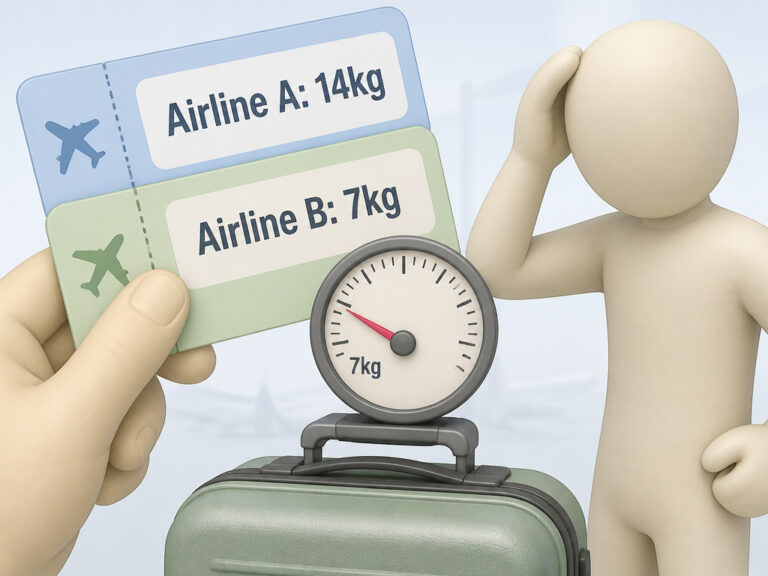
- All Nippon Airways (ANA) enforces a strict 10 kg (22 lb) weight limit for your combined carry-on and personal item.
The Garment Bag vs. Personal Item Distinction
Forget what a garment bag looks like. The only thing that matters to an airline is where it gets stowed. If it goes in the overhead bin, it’s your carry-on bag. If it fits under the seat, it’s a personal item.
Delta’s policy is the clearest example. They allow one carry-on bag and one personal item. The carry-on must fit in the overhead bin. The personal item, a purse, briefcase, laptop bag, must fit under the seat. A garment bag that cannot be squeezed under the seat in front of you is, by definition, your carry-on.
Common mistake: Assuming a slim garment bag is a “personal item” because it’s not a suitcase. If it won’t go under the seat, it’s not. You’ll be repacking at the gate.
This rule is absolute on basic economy fares for airlines like United (except on transatlantic routes). Those tickets only permit one under-seat item. A garment bag, regardless of size, disqualifies you from bringing a roller bag. You must choose.
Why does this distinction exist? The Federal Aviation Administration mandates all carry-on items be stowed in an enclosed compartment or under a seat before takeoff and landing. An item too large for under-seat storage must have a guaranteed spot overhead. Since overhead space is finite and first-come-first-served, airlines strictly limit the number of bins each passenger can claim.
The “Irregular Item” Problem with Tri-Folds
A hanging tri-fold garment bag presents a unique problem. When folded, its dimensions might mathematically add up to 45 linear inches. But its shape is awkward, long, flat, and floppy. It doesn’t stack neatly like a suitcase.
Many gate agents, per industry discussion, will flag this as an irregular item and ask you to check it. Their logic is practical, not mathematical: a tri-fold can slide out of a full bin when the door opens, or it can prevent the bin from closing if laid over other bags. The risk of delay or injury isn’t worth the technical compliance.
The workaround is simple but not guaranteed. Some airlines allow a garment bag as a carry-on if it can be laid flat in the overhead bin. Calling the carrier ahead of time to ask is better than assuming.
Airline-Specific Garment Bag Rules
All airlines publish size limits. The numbers look similar, but the differences matter when you’re holding a tape measure. Enforcement varies, but the printed rule is your only defense if a gate agent questions your bag.
| Airline | Carry-On Size Limit | Linear Inch Limit | Key Garment Bag Note |
|---|---|---|---|
| Delta Air Lines | 22” x 14” x 9” | 45 linear inches (114 cm) | Garment bag is the carry-on. On Delta Connection (≤50 seats), carry-ons are not allowed; bag will be gate-checked. |
| United Airlines | 22” x 14” x 9” | 45 linear inches (114 cm) | Soft-sided garment bags up to 51 linear inches can be your carry-on, replacing the standard bag. |
| Southwest Airlines | 10” x 16” x 24” | 50 linear inches | Unique “height” dimension is only 10”. A thick garment bag may exceed this even if length/width comply. |
| All Nippon Airways (ANA) | 55 cm x 40 cm x 25 cm (21.7” x 15.7” x 9.8”) | 115 cm (45.3 linear inches) | 10 kg (22 lb) total weight for carry-on + personal item combined. Exceeding size may require buying an extra seat. |
| American Airlines | 22” x 14” x 10” | 45 linear inches | Also allows the soft-sided garment bag exception up to 51 linear inches. |
The United and American “soft-sided garment bag” exception is critical for longer garments. A 51-linear-inch bag gives you several extra inches to play with. The bag must remain soft-sided, no rigid frames.
Where this goes sideways: Assuming ANA’s 45-inch limit is the same as Delta’s. ANA’s limit is 115 cm, which is 45.3 inches, close, but not identical. Their real enforcement bite is the 10 kg weight limit for everything in your hands. A heavy laptop in your personal item can push a garment bag over.
The Weight Limit Nobody Talks About (ANA)
For most U.S. Carriers, weight is not a factor for carry-ons. For ANA and many Asian airlines, it is the primary constraint. Their policy states the total combined weight of your carry-on bag and personal item must not exceed 10 kg (22 lbs).
This changes your packing math entirely. A structured garment bag with a semi-rigid panel, shoes, and a suit can easily hit 15 lbs. Add a 5 lb laptop bag, and you’re over the limit before you’ve packed a phone charger. You’ll be forced to check something at the counter, likely for a fee.
The 5-Step Check Before You Fly With a Garment Bag
 Don’t just measure your bag. Follow this sequence to guarantee it boards with you.
- Identify your fare class. Are you on a basic economy ticket? If yes, your garment bag is likely your one allowed item. Check your airline’s specific rules. United’s basic economy (except transatlantic) forbids overhead bin use.
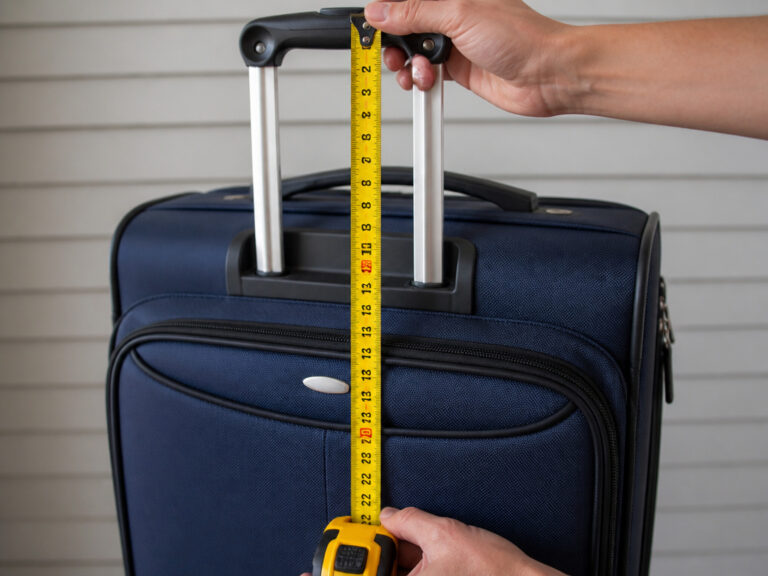
- Measure your packed garment bag. Use a tape measure. Get the length, width, and height when the bag is fully packed as you intend to travel. Include the thickness, a common fail point.
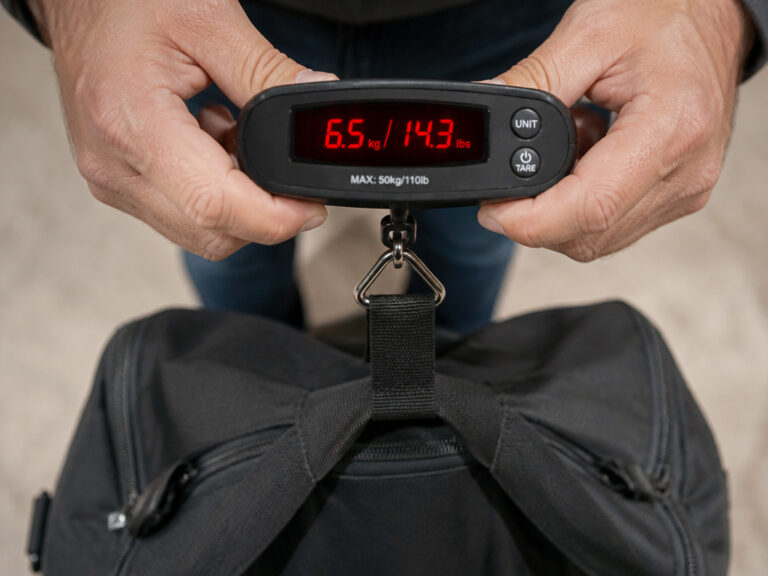
- Calculate linear inches and check weight. Add L+W+H. Compare it to your airline’s limit (45 inches for most). If flying ANA or a similar carrier, weigh your packed garment bag and your personal item together on a bathroom scale.
- Assess the bag’s shape. Is it a rectangular duffel-style or a floppy tri-fold? If it’s a tri-fold, mentally prepare for a possible gate-check conversation.
- Have a backup plan. Know what you’ll do if asked to check the bag. Can you remove a suit and wear it on the plane? Can you shift essentials to your personal item? This forethought prevents panic at the gate.
Skipping step one is how people end up paying $60 to check a bag they thought was free. Skipping step three on ANA means a surprise fee at the check-in counter.
How to Pack a Garment Bag to Meet Carry-On Limits
 Packing technique directly affects your bag’s dimensions. The goal is to reduce bulk and create a more regular, stackable shape.
The Inverted Shoulder Fold (for jackets):
This is the standard method used by tailors for travel. Turn one shoulder inside out by pushing the padding inward. Tuck the other shoulder into it. Fold the jacket in half. This contains the sleeves and minimizes the folded thickness.
Pants and Consolidation:
Fold trousers along their creases, then concertina them into a tight bundle. Place them flat in the bottom of the garment bag compartment. Use the dry-cleaning plastic bag trick, slipping the garment into the thin plastic bag before folding reduces friction and stops creases from setting as deeply.
The Shoe Problem:
Shoes are dense, bulky, and ruin a garment bag’s slim profile. If your bag has a dedicated shoe pocket at the bottom, use it. Otherwise, wear your dress shoes on the plane or pack them in your personal item. Never let shoes dominate your garment bag’s volume.
Easy to miss: The bag’s own structure adds inches. A “22-inch” garment bag often measures 22 inches on the internal hanging compartment. The external fabric, handles, and padding can add 1-2 inches per side. Always measure the packed exterior.
Convertible Duffle vs. Hanging Tri-Fold
Your choice of bag style is the single biggest factor in hassle-free travel.
| Feature | Convertible Carry-On Duffle | Hanging Tri-Fold |
|---|---|---|
| Shape When Packed | Rectangular, like a standard carry-on. | Long, flat, and irregular. |
| Overhead Bin Fit | Stacks easily with other rollers and duffels. | Often laid on top of other bags; can block bin closure. |
| Gate-Agent Scrutiny | Low. Looks like normal luggage. | High. Often flagged as an irregular item. |
| Best For | Air travel where overhead bin space is contested. | Car travel, trains, or as a checked bag. |
| Example | Modoker Convertible Garment Duffle | Amazon Basics 46-Inch Trifold |
The convertible duffel is designed to cheat the system. It zips from a garment carrier into a rectangular duffel shape. Gate agents see a normal bag. It’s the safer choice.
The hanging tri-fold is what most people picture as a “garment bag.” It’s fine for a checked bag or car trip. Relying on it as your sole carry-on is a gamble that pays off only on light flights with generous gate staff.
What If Your Garment Bag Is Too Big?
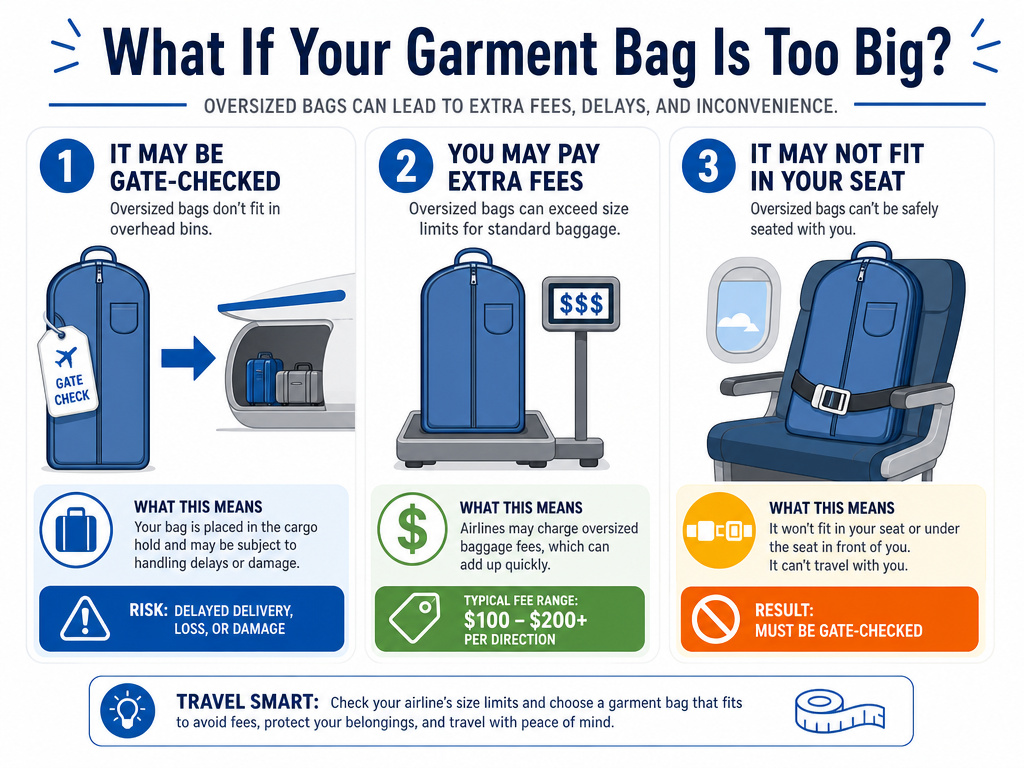 You have three paths if your bag exceeds limits or you’re forced to check it.
1. Gate-Checking.
This is the most common outcome. The gate agent tags your bag, you leave it at the end of the jet bridge, and it’s returned to you on the jet bridge after landing. It’s free, but the bag travels in the cargo hold. Use a sturdy bag and consider a garment folder for extra protection.
2. Checking at the Counter.
If you’re over weight (ANA) or knowingly oversized, you’ll check it normally. Fees apply. For a wedding suit or dress, this is a high-risk option due to potential loss or delay.
3. The “Extra Seat” Option.
ANA explicitly states that a carry-on exceeding their size limit may require the purchase of an additional seat. This is for items like musical instruments. For an extremely bulky garment bag (e.g., containing a wedding gown with a full hoop skirt), it’s a pricey but secure alternative. You must arrange this in advance.
Before you start: Never pack irreplaceable items like heirloom jewelry or essential medication in a garment bag you might check. Always keep those in your personal item, which stays with you.
Frequently Asked Questions
Can a garment bag be a personal item?
Only if it fits completely under the seat in front of you. This is nearly impossible for any garment bag designed to hold a suit or dress without severe folding. In practice, a garment bag is virtually always your carry-on item.
Do any airlines have closets for garment bags?
Some larger aircraft used by Delta, United, and American on long-haul routes have first-class closets. Flight attendants may hang a garment bag there at their discretion, but it’s not guaranteed. Most domestic and regional jets have no closets.
Is a suit bag the same as a garment bag?
Retailers use the terms interchangeably, but a “suit bag” often implies the thin, non-structured bag from a dry cleaner. A “garment bag” for travel should have structure, padding, and a carrying handle. For air travel, you want the structured version.
Can I bring a garment bag and a carry-on suitcase?
No. The garment bag is your carry-on suitcase. You are allowed one carry-on (the garment bag) and one personal item (a purse, laptop bag). You cannot have two overhead bin items.
What’s the best garment bag for carry-on travel?
Convertible duffel-style bag is the most reliable. The Modoker Convertible Garment Duffle or the Halfday Travel Garment Duffel 45L are built around a structured gusset that stays within carry-on dimensions. They look like standard duffels to gate agents.
Before You Go
A garment bag can absolutely be your carry-on. Success hinges on three things: knowing it counts as your one overhead bin item, measuring its packed dimensions against your specific airline’s rules, and choosing a rectangular, convertible bag over a floppy tri-fold.
Print your airline’s carry-on policy page. Measure your packed bag the night before. Have a plan for your shoes. That’s the difference between walking onto the plane with your suit ready to wear and starting a trip with a wrinkled mess in a checked bag.