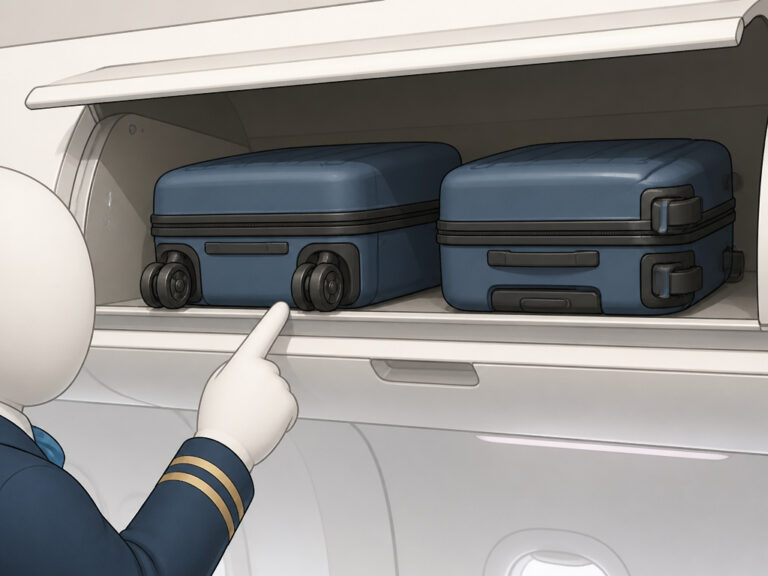
The Exact Size of a Carry-On Bag & How to Measure Yours
This post contains affiliate links. As an Amazon Associate, we earn from qualifying purchases.
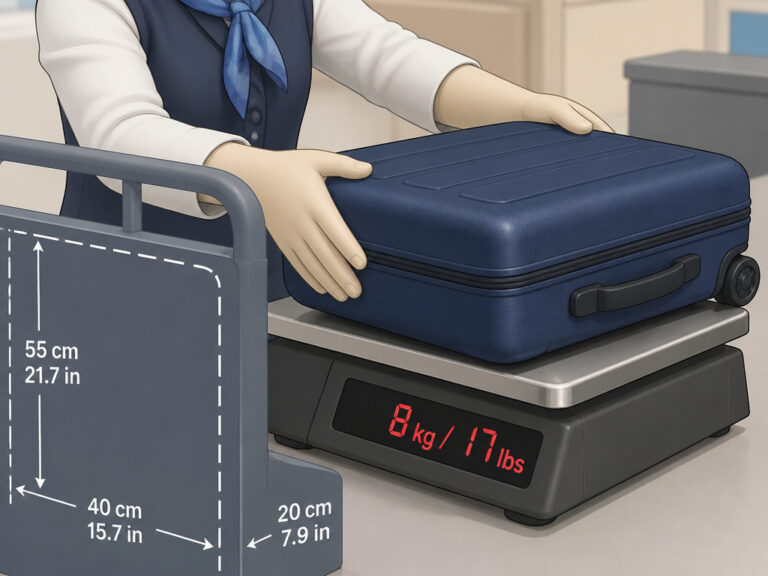
A standard carry-on bag size is 22 x 14 x 9 inches (56 x 36 x 23 cm), but that’s only one of two measurement systems airlines use. The more universal limit is 45 linear inches (114 cm), the sum of your bag’s length, width, and height. Major US carriers like Delta use linear inches; strict international airlines like Icelandair enforce individual dimension caps as tight as 21.6 x 15.7 x 7.8 inches (55 x 40 x 20 cm).
That linear-inch number is the real ceiling. It’s the FAA’s recommended maximum for any item stowed in an overhead bin, detailed in their official advisory. Most domestic gate agents won’t pull out a tape measure if your bag looks close. Fly to Reykjavik or Tokyo, and you’ll see a physical sizer box at the gate, your bag either fits inside it, or it gets checked.
What follows: the two measurement systems, why weight limits sneak up on international travelers, and the specific bag models that clear the strictest airlines without a second glance.
Key Takeaways
- The 45 linear inch rule is the FAA’s base standard and is used by Delta, American, and Southwest. Your bag’s length + width + height must not exceed this sum.
- International and budget airlines enforce individual dimensions, often 21.6 x 15.7 x 7.8 inches (55 x 40 x 20 cm). A bag that’s an inch too deep will fail.
- US airlines rarely weigh carry-ons. Many Asian and European carriers impose a 10 kg (22 lb) weight limit. ANA and Icelandair are strict examples.
- Soft-sided bags have more wiggle room than hard-shell suitcases when facing a sizer box. Compression and flexibility can make the difference.
- Always check your airline’s official baggage policy page, not third-party summaries. Partner flights and regional jets have different rules.
The Two Systems: Linear Inches vs. Individual Dimensions
You need to know which game you’re playing. US legacy airlines and some international carriers use linear inches. Budget and most non-US airlines use fixed individual dimensions. Mixing them up is how you pay a gate-check fee.
The FAA’s carry-on baggage advisory circular (AC 121-29B) recommends that carriers ensure bags fit in an overhead bin or under a seat without forcing the bin closed. The 45 linear inch (114 cm) total is the common translation of that safety rule into a measurable limit.
Delta’s policy is the clearest example of the linear-inch system. Your bag’s length, width, and height added together cannot exceed 45 inches. The individual dimensions also cannot surpass 22” x 14” x 9”. That second clause is where people get tripped up, a bag that’s 23″ long, 11″ wide, and 11″ deep hits 45 linear inches but fails the 22″ length rule. It’s two checks, not one.
Switch to a carrier like ANA (All Nippon Airways). Their rule is purely about individual dimensions: 55 cm x 40 cm x 25 cm (21.6 x 15.7 x 9.8 inches). They also add a 10 kg total weight limit for your carry-on and personal item combined. This is the standard for most Asian and European airlines.
| Measurement System | How It Works | Used By | Key Limit |
|---|---|---|---|
| Linear Inches | Sum of Length + Width + Height | Delta, American, Southwest, Air Canada | 45 linear inches (114 cm) max |
| Individual Dimensions | Each side measured separately | Icelandair, ANA, Ryanair, Emirates | Often 55 x 40 x 20 cm (21.6 x 15.7 x 7.8 in) |
| Hybrid | Must pass both linear inch AND side checks | Delta (for max size) | 45″ total AND no side over 22″x14″x9″ |
The enforcement difference is physical. A linear-inch check is visual. An agent looks at your roller bag and decides if it’s reasonable. An individual-dimension check uses a metal or plastic box at the gate. Your bag must fit entirely inside the sizer. Wheels and handles count.
Where this goes sideways: Assuming the “standard” 22x14x9 bag is universal. Fly Icelandair with a bag that’s 23 inches deep instead of 20, and you’ll be gate-checking it for a fee. That extra three inches is the difference between the US standard and the international norm.
Carry-On Bags That Actually Fit (And One That Doesn’t)
Forget the “cabin approved” sticker on a suitcase in a department store. That label is meaningless. You need a bag built to the tightest spec on your itinerary.
The data from size-checking 109 airlines shows a counterintuitive truth. A bag measuring 55 x 35 x 20 cm (21.6 x 13.8 x 7.8 inches) fits 97% of airlines worldwide. The common “cabin approved” size of 56 x 45 x 25 cm fits only 11%. Width is the usual dealbreaker.
For most travelers who fly a mix of US and international carriers, these are the proven picks:
- Travelpro Maxlite 5 21″ Carry-On Spinner: Dimensions are 21.6″ x 14.5″ x 9″. It’s soft-sided, so it compresses slightly in a sizer box. At 5.4 lbs, it leaves plenty of margin under a 10 kg weight limit. This is the workhorse.
- Away The Bigger Carry-On (International): This model is specifically sized at 21.7″ x 13.7″ x 7.9″ for strict airlines. The hard shell offers no compression, so the dimensions are critical, it’s designed to pass the Icelandair test.
- Briggs & Riley Baseline 21″ Carry-On: The premium choice with a lifetime guarantee. Its dimensions are 21″ x 14″ x 8.5″, safely under the common caps. The construction is durable enough for weekly travel.
The bag to avoid for international travel is any generic 24-inch spinner. None of the major international airlines will accept it as a carry-on. It will be tagged for the cargo hold every time.
Airline Enforcement: When Rules Become Reality
Policies on a website are one thing. What happens at the gate is another. Enforcement is a spectrum, from casual to ruthless.
US domestic flights are the most forgiving. Gate agents for Delta, American, and United are looking for obvious outliers, the massive roller duffels, the overstuffed backpacks. They rarely use sizer boxes unless a bag is clearly oversized. This visual check is why so many travelers think their 24-inch bag is fine. It works until it doesn’t.
European and Asian budget airlines are the strictest. Ryanair, Wizz Air, and Icelandair are famous for placing sizers at the gate and charging passengers whose bags don’t fit. The fee often exceeds the cost of the ticket. These airlines derive significant revenue from baggage fees, so they have a financial incentive to measure.
Common mistake: Packing a heavy winter coat and boots in your carry-on for a trip to Iceland. Icelandair’s 10 kg weight limit includes your personal item. Hit the limit with a dense hard-shell suitcase, and you’re repacking at the counter while the boarding line stares.
Full-service international airlines like ANA, Lufthansa, and Singapore Airlines fall in the middle. They have sizers available and will use them if the flight is full or if a bag looks suspect. Their focus is on safety and ensuring overhead bins close easily, not on fee collection. Their weight limits, however, are strictly enforced at check-in.
Weight Limits and Liquid Rules You Can’t Ignore
 Dimensions get the attention. Weight and liquid rules are the silent tripwires.
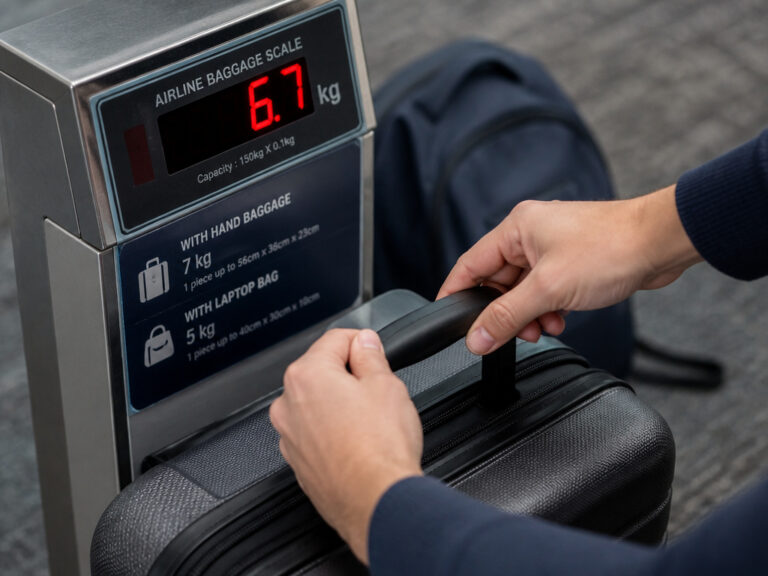
Weight limits are almost exclusively an international concern. Most US carriers have no weight limit for carry-ons. Frontier (35 lbs) and Hawaiian (25 lbs) are notable exceptions. Across the Atlantic and Pacific, a 10 kg (22 lb) limit is standard. ANA, Icelandair, British Airways, and Qantas all enforce this. Your carry-on and personal item combined cannot exceed this weight. A laptop, camera, and a hard-shell suitcase can easily hit 10 kg.
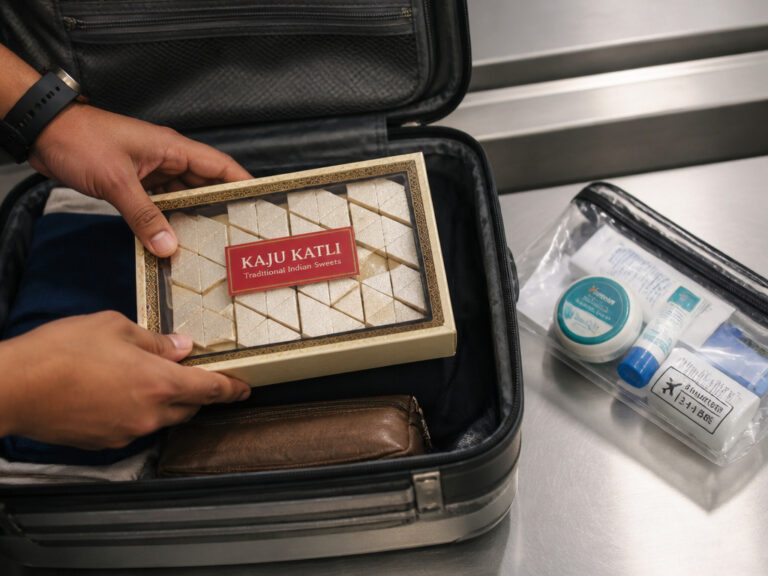
Liquid rules are global and non-negotiable. The TSA’s 3-1-1 rule (3.4 oz containers, 1 quart-sized bag, 1 bag per passenger) is mirrored worldwide. ANA’s policy is typical: containers over 100 ml (3.4 oz) are prohibited, even if partially full. All liquids must fit in a single, transparent, resealable bag no larger than one liter.
Medications, baby formula, and breast milk are exempt from the liquid rules. You can carry reasonable quantities in your carry-on without placing them in the plastic bag. Declare them at security for separate screening.
| Symptom | Likely Cause | Where It’s Enforced |
|---|---|---|
| Bag tagged at gate | Exceeds individual dimension limits | Europe/Asia budget airlines (Ryanair, Icelandair) |
| Asked to weigh bag at check-in | Exceeds 10 kg (22 lb) weight limit | Full-service international carriers (ANA, Lufthansa) |
| Liquids confiscated at security | Containers over 3.4 oz / 100 ml, or not in quart bag | All airports (TSA & international equivalents) |
| Carry-on gate-checked for free | Flight is full, overhead space is limited | Any airline, especially on small regional jets |
Exceptions and Edge Cases That Change the Rules
 The printed policy is the baseline. Your specific situation can rewrite it.
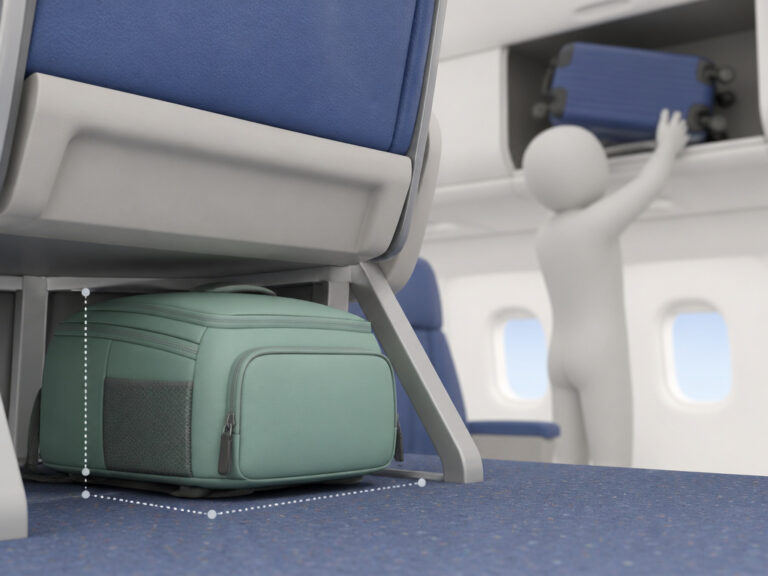
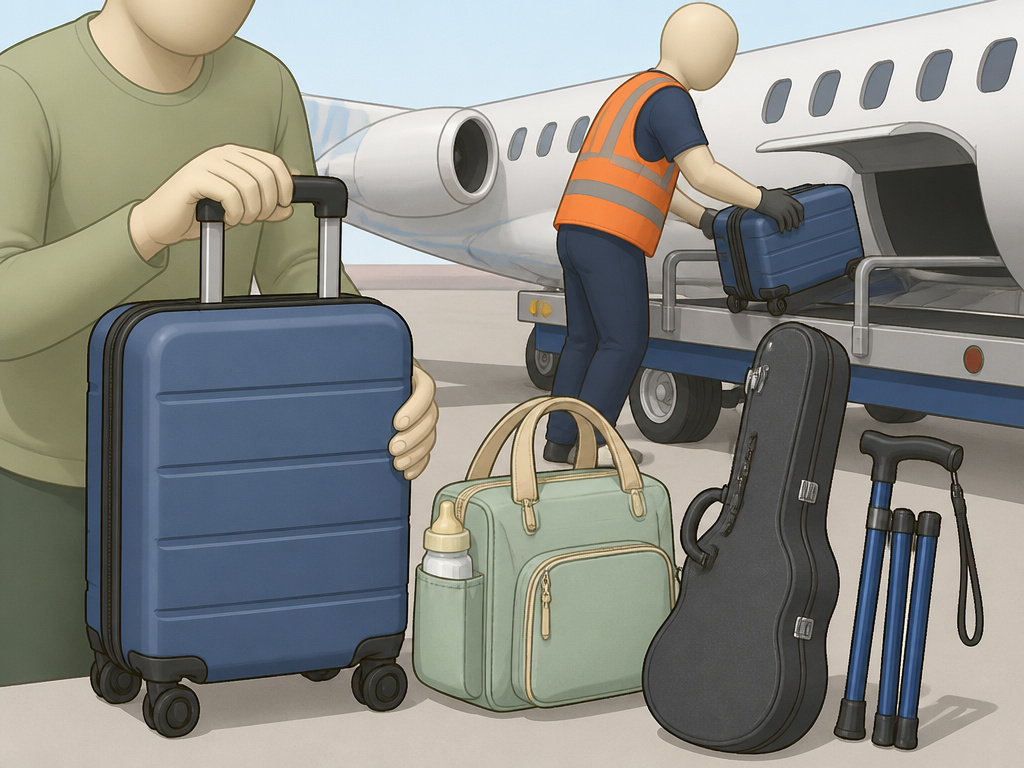
Small Regional Jets (50 seats or less): Delta Connection and similar regional flights often have no overhead bin space. You may only bring a personal item that fits under the seat. Your carry-on roller will be gate-checked planeside for free and returned on the jetbridge after landing. This isn’t a penalty, it’s a physics problem.
Infants-in-Arms and Pets: Most airlines allow an additional carry-on bag for essential baby items (diaper bag, collapsible stroller) or for a pet in the cabin. This is in addition to your standard allowance. Check your airline’s “special items” policy.
Musical Instruments and Assistive Devices: Small instruments like violins or guitars that fit in the overhead bin or under the seat are exempt from standard size rules. Collapsible wheelchairs, crutches, and other assistive devices also do not count toward your carry-on limit. The FAA carry-on baggage advisory circular explicitly notes that properly used child restraint seats and assistive devices are not considered standard carry-on baggage for stowage limits.
Partner Airlines and Codeshares: You booked through Delta, but one leg is operated by Aeromexico. Aeromexico’s baggage rules apply for that segment. Their carry-on size limit might be different. Always verify the policy of the operating carrier, not just the marketing airline.
How to Check Your Bag Before You Fly
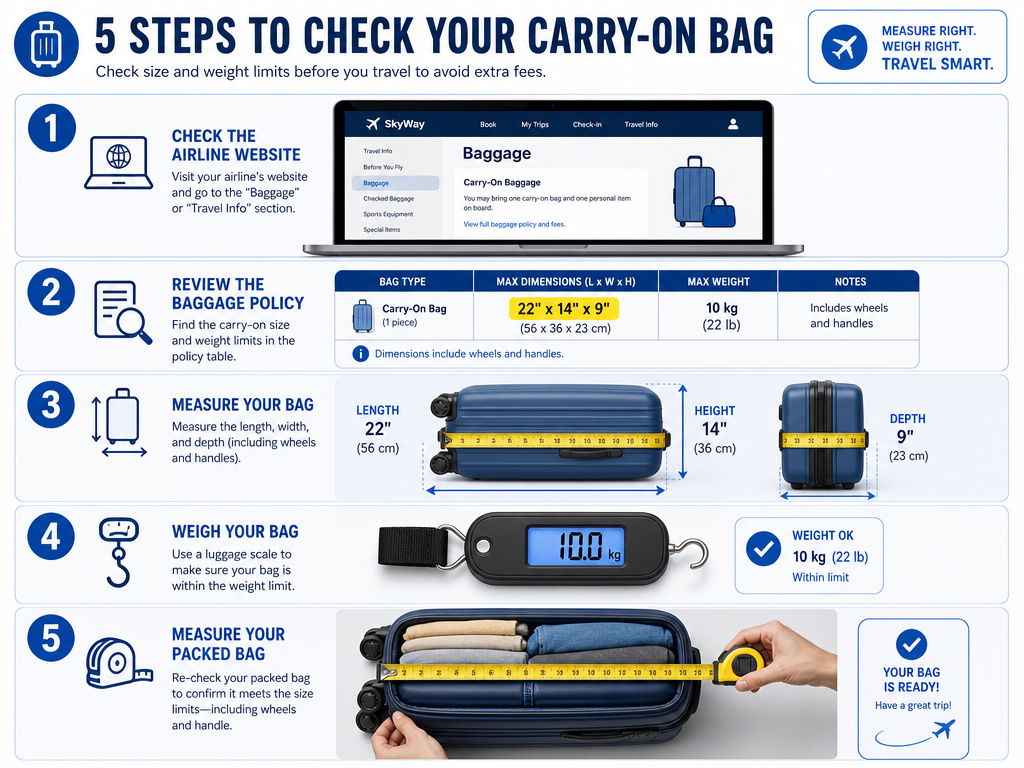 Don’t guess. Don’t rely on a blog post from last year. Do this instead.
- Go to the airline’s official website. Navigate to “Baggage” or “Travel Information.”
- Find the “Carry-On Baggage” policy page. This is the primary source. Look for a table with dimensions in both inches and centimeters.
- Note the measurement type. Does it list a “linear inch” total (e.g., 45″) or individual dimensions (e.g., 22″ x 14″ x 9″)? This tells you which system to use.
- Check for weight limits. This is often in a separate subsection. If you’re flying internationally, assume 10 kg until proven otherwise.
- Measure your own bag. Use a tape measure. Include wheels, handles, and any external pockets that bulge when full. Measure the bag packed as you intend to travel.
For an industry-wide view, the IATA baggage reference manual sets the standards most airlines follow, though each carrier implements them differently. Your airline’s page is the final word.
Frequently Asked Questions
Is a 24-inch suitcase a carry-on?
No. A 24-inch suitcase exceeds the maximum carry-on size for every major US and international airline. It will be required to be checked. The largest acceptable carry-on is typically 22 inches in height, including wheels.
Do airlines actually measure carry-on bags?
US airlines usually do not, unless your bag is visibly oversized. European budget airlines (Ryanair, easyJet) and strict international carriers (Icelandair, ANA) frequently use sizer boxes at the gate. They are far more likely to measure.
What if my carry-on is slightly too big?
If it doesn’t fit in the overhead bin or under the seat, the airline will gate-check it. On US domestic flights, this is often free. On budget European airlines, you will pay a fee that can be higher than checking the bag initially. It’s always cheaper to comply.
Can I bring a backpack and a carry-on suitcase?
Yes, this is the standard allowance: one carry-on bag for the overhead bin and one personal item (backpack, purse, laptop bag) for under the seat. Airlines like Spirit and Frontier sell this as a separate “carry-on” option, so check your fare type.
Does a duffel bag count as a carry-on?
Yes, a duffel bag is treated as a carry-on bag if its dimensions exceed the personal item size. Its flexible shape can be an advantage at a sizer box, but it must still fit within the airline’s published carry-on luggage limits.
Before You Go
Your carry-on’s size isn’t a single number. It’s two systems: the flexible 45 linear inches for US travel and the rigid 55x40x20 cm box for much of the world. Pack for the strictest rule on your itinerary.
Measure your bag with a tape measure, wheels and all. Check your airline’s official baggage policy page 48 hours before departure, not a third-party summary. If you’re flying a mix of carriers, choose a bag like the Travelpro Maxlite 5 or the Away International model that’s built for the tighter standard.
That three-inch difference in depth is the line between walking on and paying up. Know which side of it your bag is on.