Can You Check In Carry On Luggage for Free? The Gate-Truth
This post contains affiliate links. As an Amazon Associate, we earn from qualifying purchases.
You can check in carry-on luggage for free, but only when the airline asks for volunteers at the gate or is forced to check it due to a lack of overhead space. This “gate-check” is free. Checking your carry-on bag at the ticket counter before security is never free unless your fare includes a checked bag allowance. The free gate-check offer is an airline operational tool, not a passenger right.
That free gate-check comes with a critical catch. The airline controls the offer, and they can revoke it the moment overhead bin space is theoretically available. Your strategy cannot rely on it.
What follows is the 2026 reality: three scenarios that trigger a free check, the exact fare classes that block it, and the one measurement mistake that turns a free check into a $75 fee at the jet bridge.
Key Takeaways
- Free checking only happens at the gate, not the ticket counter. Airlines use it to manage overhead bin space on full flights.
- Basic Economy and similar discount fares on airlines like United, JetBlue, and Air Canada often exclude carry-on bags entirely—bringing one to the gate results in a fee, not a free check.
- If the airline forces you to gate-check because your bag is too big or heavy, it’s typically free. If you volunteer before they ask, it’s also free.
- International carriers like Lufthansa, Qantas, and Qatar Airways enforce strict weight limits (often 7-8 kg). Exceed them, and you’ll pay to check the bag at the gate.
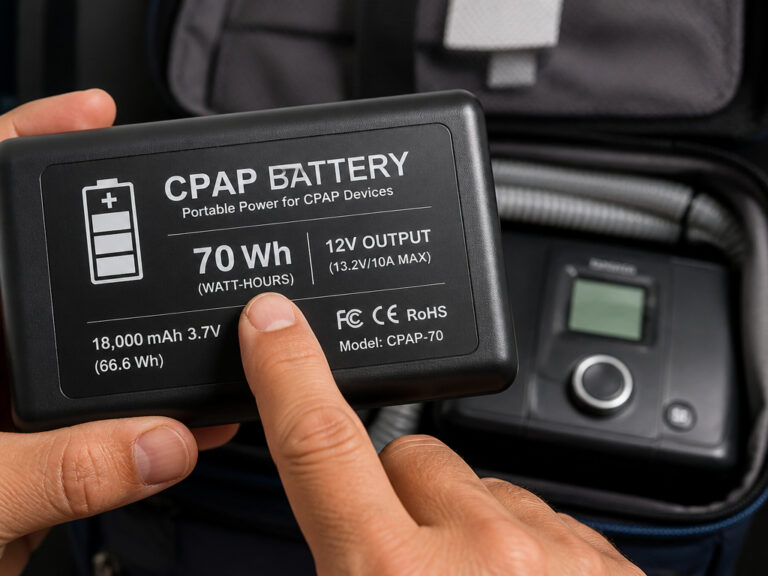
- Always remove laptops, medications, and breakables before handing over any bag for gate-checking. These items are not covered for damage in the cargo hold.
The Short Answer: When “Free” Actually Means Free
The question “can you check in carry on luggage for free” has two answers, and the one that matters depends on where you are in the airport.
At the ticket counter or during online check-in, the answer is almost always no. Checking a bag there is a service with a published fee. Your carry-on is designed for the cabin; switching its destination to the cargo hold is a revenue opportunity for the airline. This is why a carry-on bag fee at booking is usually $30-$40, while a gate-check fee for the same bag can hit $75.
At the gate, the answer can be yes. This is where airline operations override the fee schedule. Flight attendants need the boarding process to finish on time. If overhead bins fill up, the last twenty passengers have no place for their rollers. The solution is a free gate-check.
The FAA advisory circular on baggage (AC 121-29B) explicitly tasks airlines with ensuring carry-on baggage is stowed so that “flight attendants can close the bins without using force.” When bins are full, the free gate-check is how they comply.
This isn’t generosity. It’s logistics. Understanding this distinction is the difference between expecting a freebie and navigating the system.
The 2026 Enforcement Shift
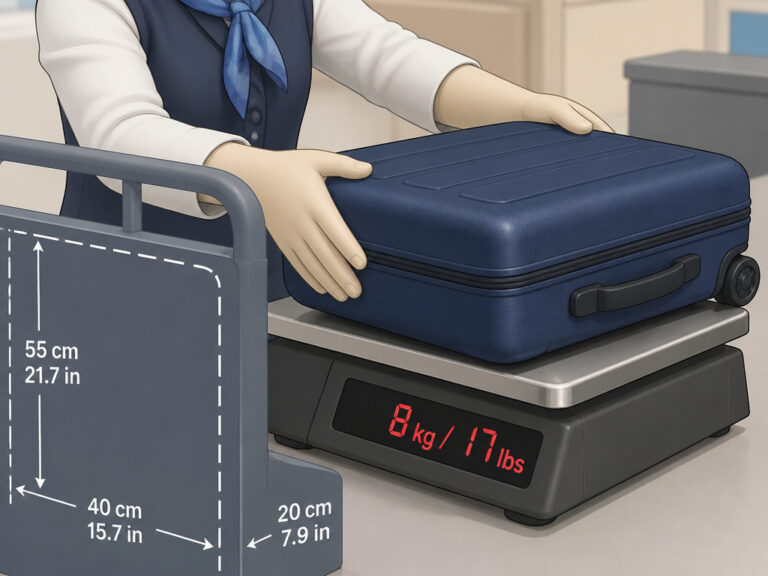
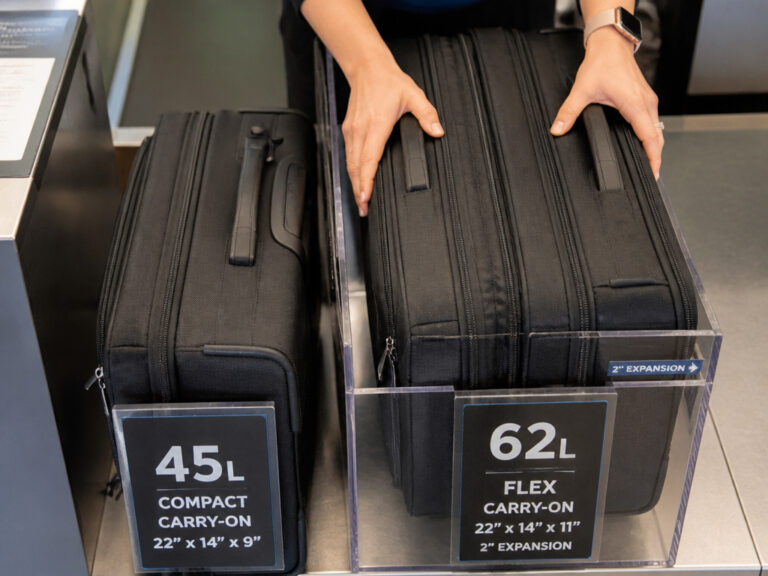
Airlines haven’t changed their rules. They’ve changed their willingness to look the other way. For years, a bag that was slightly oversized or overstuffed might slide through. In 2026, automated laser scanners at gates and mandated use of the metal sizer frames are standard at major hubs.
Your bag is now measured against the literal, rigid standard. The “squish-it-to-fit” loophole for soft-sided bags is closed. This enforcement spike is directly connected to the free gate-check question. Airlines would rather check ten bags for free at the gate than delay departure by fifteen minutes while passengers play overhead bin Tetris.
When Do Airlines Offer Free Gate-Checking?
Airlines follow a simple decision tree. You get a free check when it solves a problem for them, not for you.
| Scenario | Who Initiates | Cost | The Passenger’s Leverage |
|---|---|---|---|
| Pre-emptive Volunteer Request | Airline, via gate announcement | Free | High. You get a claim tag and often get your bag back at the jet bridge. |
| Bin Space Full | Airline, when overheads are full | Free | None. Your bag is going below, like it or not. |
| Bag Fails Sizer/Weight Check | Airline, due to non-compliance | Usually a fee ($25-$75) | None. You pay for the violation. |
| Discount Fare Without Carry-On | Passenger, by bringing a bag | Fee (e.g., United’s $75) | None. You chose a fare that excluded the bag. |
The volunteer request is your best window. Airlines like Southwest and JetBlue make these announcements routinely on full flights. They need a specific number of bags—”We need 12 more”—to guarantee smooth boarding. Saying yes here gets you a free gate-check tag and priority return of your bag at the destination, often at the jet bridge.
Wait until they’re forcing people, and you lose control. Your bag goes into the system and comes out at baggage claim.
The Fare-Class Trap
This is where most travelers get a nasty surprise. On legacy carriers, your ticket’s fare class dictates your baggage rights.
United’s Domestic Basic Economy ticket does not include a carry-on bag. Bring one to the gate, and the agent won’t offer a free check. They’ll charge you $75. JetBlue’s Blue Basic fare has the same restriction. European low-cost carriers like Ryanair and easyJet built their model on this: the posted fare is for you and a personal item only. Everything else costs.
Where this goes sideways: Buying a Basic Economy ticket without reading the baggage rules. You see others with rollers and assume you can bring one. The gate agent sees your fare code and reaches for the credit card terminal.
Always check your fare’s baggage allowance before you pack. The gate is the most expensive place to find out you were wrong.
How to Actually Get Your Bag Checked for Free (The 2026 Method)

The game is about positioning and timing. You can’t force a free check, but you can maximize your chances.
- Book a fare that includes a carry-on. This sounds backward, but it’s step one. If your fare excludes the bag, you start in a hole. A standard Main Cabin or Economy ticket on Delta, American, or Alaska includes the roller.
- Do not overstuff your bag. A carry-on that bulges beyond its frame will not fit the sizer, even if its base dimensions are correct. This turns a potential free volunteer check into a forced fee check.
- Listen for the gate announcement. On a full flight, agents will start asking for volunteers 30-45 minutes before boarding. This is your moment. Go to the desk and take the tag.
- Remove your critical items first. Laptop, medication, a day’s worth of clothes. Put them in your personal item. Once that tag goes on, your bag is destined for the cargo hold.
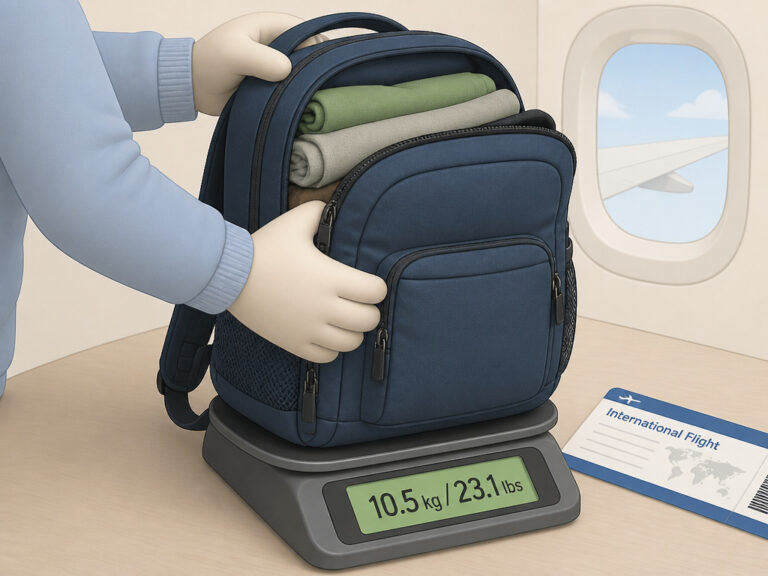
- Know your airline’s weight limit. For U.S. Domestic flights, this rarely matters. For any international itinerary, it’s everything. Qatar Airways and Singapore Airlines enforce a 7 kg (15.4 lb) limit. Exceed it, and you’ll pay to check the bag. Use a luggage scale.
The goal is to be the solution to the airline’s bin-space problem, not the cause of a compliance problem.
The Interline Complication
A multi-airline trip adds a layer of risk. The IATA interline baggage rules exist precisely because baggage allowances can differ on each leg of your journey.
You might fly from New York to Reykjavik on Delta (no weight limit) and then from Reykjavik to Berlin on Icelandair (strict weight limit). If your bag is over Icelandair’s limit, you could be charged at the gate in Reykjavik, even though Delta let it through.
IATA’s official baggage policy guidance states carriers on interline itineraries should inform passengers of all relevant rules, but this often gets lost in the booking process. The burden falls on you.
When your ticket involves two airlines, research the carry-on baggage weight and size rules for the strictest carrier on your route. Pack to that standard.
What’s the Difference Between Gate-Check and Regular Check?

This isn’t semantics. It’s about where your bag goes and how it’s handled.
A regular checked bag is surrendered at the ticket counter or curb. It enters the airport’s automated baggage system, travels on conveyor belts, and is loaded into the aircraft’s hold by ground crew. It is retrieved at your destination’s baggage claim carousel.
A gate-checked bag is taken from you at the jet bridge door. It is hand-carried down the stairs and placed in a specific compartment near the door, often last-in, first-out. On arrival, it’s usually brought back to the jet bridge for pickup. This is faster and involves less automated handling, which means slightly lower risk of loss or damage.
The trade-off? You have to carry your bag through the airport. For a carry-on bag that’s at its weight limit, this can be a workout. If you can’t lift it into the overhead bin, you shouldn’t be gate-checking it—you should have paid to check it properly at the start.
Airline-by-Airline: The Real “Free Check” Policies

General advice fails at the gate. You need your airline’s specific playbook.
| Airline | Free Gate-Check Offer | Weight Limit Enforcement | Biggest “Free Check” Killer |
|---|---|---|---|
| Southwest | Frequent, proactive volunteer requests. | Rarely on domestic. | Overhead bins fill fast due to open seating. |
| Delta / American | Typically only when bins are full. | Rarely on domestic. | Basic Economy fares on some routes (American). |
| United | When bins are full. | Rarely on domestic. | Domestic Basic Economy fare excludes carry-on ($75 gate fee). |
| JetBlue | Common on full flights. | Rarely. | Blue Basic fare excludes full carry-on. |
| Frontier / Spirit | Rare. They charge for carry-on. | Yes, often enforced. | Their business model is à la carte fees. |
| Lufthansa / Air France | Less common; they plan for bin space. | Yes. Strict (8-12 kg). | Exceeding the strictly enforced weight limit. |
| Qantas / Qatar | Very rare. | Yes. Very strict (7 kg). | Even 0.5 kg over can trigger a fee. |
The pattern is clear. U.S. Legacy carriers use free gate-checks as a pressure valve. Ultra-low-cost carriers (ULCCs) and most international airlines view baggage as a firm revenue line. Their limits are real, and their scales are calibrated.
Frequently Asked Questions
Did airlines make gate-checking free in 2026?
No. The policy has always existed. What changed in 2026 is the widespread use of automated gate scanners and mandatory sizer checks, which create more situations where bags must be gate-checked. This makes the free check more visible, but it’s not a new benefit.
Is it better to gate-check or check a bag?
It depends on your priorities. Gate-checking is free (when offered) and often means faster bag return. Regular checking costs money but means you don’t have to haul your bag through the airport. If you have a tight connection, a gate-checked bag is less likely to be misrouted than one checked at the ticket counter.
Can I refuse to gate-check my bag?
You can try, but if the flight attendant determines there is no overhead space, you have no alternative. Per the FAA carry-on baggage regulations, they have the final authority on stowage. Refusing can result in being denied boarding.
What happens if my gate-checked bag is lost?
Gate-checked bags are tracked with a claim tag, just like regular checked bags. They are covered by the same airline liability limits for loss or damage. However, airlines often prioritize locating gate-checked bags since they were hand-loaded.
Are backpacks ever gate-checked for free?
Yes, but it’s less common. If the overhead bins are full and your backpack is the only item left that needs space, it may be gate-checked. Airlines typically target rolling carry-on luggage first. A standard backpack that fits under the seat is almost never taken.
Before You Go
The free carry-on check is a tactical tool, not a universal right. It exists at the intersection of full flights, efficient boarding, and precise carry-on size limits.
Your move is to pack a compliant bag, know your fare’s rules, and listen at the gate. When the announcement comes, decide: do you want the convenience of walking off the plane without waiting, or the ease of not hauling your bag through the terminal? The free check gives you that choice—but only if you’re ready to take it.
Assume you will have to lift your bag into the overhead bin. Hope that you get the option to send it below for free. That’s the 2026 travel mindset.