Is a Diaper Bag a Personal Item? Official Airline Policies
This post contains affiliate links. As an Amazon Associate, we earn from qualifying purchases.
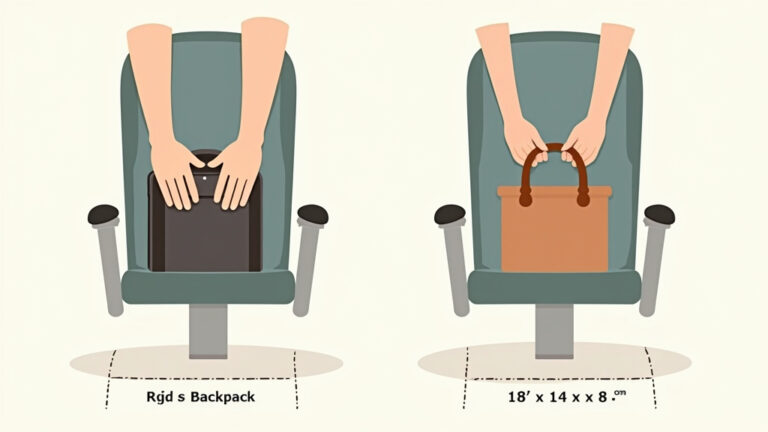
A diaper bag counts as your personal item on most airlines. The Federal Aviation Administration allows one carry-on bag and one personal item per passenger, but airlines universally make an exception for families. Your diaper bag is considered the personal item for your infant or young child, so it is typically allowed in addition to your own carry-on bag. The critical factor is its size; it must fit under the seat in front of you.**
A diaper bag almost always counts as a personal item on an airplane. The Federal Aviation Administration (FAA) allows one carry-on bag and one personal item per ticketed passenger, but airlines universally make an exception for families. Your diaper bag is generally considered the personal item for your infant or young child, often allowed in addition to your own personal item and carry-on. The critical factor is its size, it must fit under the seat in front of you.
Most parents get this wrong by assuming the policy is the same everywhere. They pack a massive, overstuffed bag shaped like a turtle shell and are shocked when a gate agent at a budget airline asks them to check it. The diaper bag is a necessity, not a free pass for a second suitcase.
This guide breaks down the official policies of every major U.S. carrier, shows you exactly how to measure and pack your bag, and gives you the scripts to use at the gate so you never pay an unexpected fee.
Key Takeaways
- A diaper bag is your child’s designated personal item, separate from your own allowance on nearly every major airline.
- Size is the ultimate decider. If your bag is too large or rigid to fit under the seat, it becomes a carry-on and may incur fees.
- Budget airlines like Frontier and Spirit are the exception. Their strict personal-item-only fares mean you must size your diaper bag to their exact, smaller dimensions.
- Always separate baby liquids (formula, milk, juice) for TSA. They are exempt from the 3-1-1 rule but must be declared for separate screening.
- The most reliable source is always the airline’s official website. Policies for international carriers and lap infants can vary.
The Official Rule: Diaper Bag as Personal Item
The rule exists because airlines recognize traveling with children is a special logistical challenge. A diaper bag isn’t a luxury; it’s emergency gear. The standard FAA passenger allowance is one item for the overhead bin and one smaller item for under the seat. When you have a lap infant or a child in their own seat, the airline extends that same two-item logic to them. Their “carry-on” is often the collapsible stroller you gate-check, and their “personal item” is the diaper bag.
A diaper bag is generally permitted as an additional personal item for infants and young children traveling with an adult. This allowance is separate from the adult’s standard carry-on and personal item allotment and is subject to the same under-seat size requirements.
This policy is almost uniform across major U.S. carriers. The real test happens with budget airlines and at the boarding gate when the flight is full. A gate agent staring down a packed Airbus has less patience for a bag that’s clearly pushing the limits.
TL;DR: Your child’s diaper bag is their personal item. It must fit under the seat. This rule is standard for American, Delta, United, Southwest, and JetBlue.
Airline-by-Airline Policy Breakdown
Never assume. While the spirit of the rule is consistent, the letter, especially the exact dimensions, is not. Major carriers are generous. Budget carriers are precise. This table shows where the differences matter.
| Airline | Diaper Bag Policy | Personal Item Size Limit | Critical Note |
|---|---|---|---|
| American Airlines | Allowed as an additional item for a child. | 18″ x 14″ x 8″ (45 x 35 x 20 cm) | Policy explicitly states “diaper bag” as an example of a child’s personal item. |
| Delta Air Lines | Permitted for a child traveling with an adult. | Varies, but typically similar to American. | One of the most family-friendly; agents rarely challenge a reasonably sized bag. |
| United Airlines | Allowed in addition to standard baggage for a child. | 17″ x 10″ x 9″ (43 x 25 x 22 cm) | Their sizer is slightly smaller. A bulky backpack-style diaper bag might not fit. |
| Southwest Airlines | Two carry-on items per person; a diaper bag counts as the child’s second item. | 18.5″ x 13.5″ x 8.5″ (47 x 34 x 21 cm) | Their generous “two bags fly free” includes the child’s diaper bag as one of them. |
| JetBlue | Considered a personal item for the child. | 17″ x 13″ x 8″ (43 x 33 x 20 cm) | Basic Blue fares only include a personal item, so size compliance is mandatory. |
| Frontier / Spirit | Must fit within the strict personal item allowance included in your fare. | 18″ x 14″ x 8″ (Frontier), 18″ x 14″ x 8″ (Spirit) | This is the trap. Your diaper bag IS your personal item. No extra allowance unless you pay for a carry-on. |
The budget airline line is where families get caught. I saw a couple at a Frontier gate last summer arguing over a $99 fee. They had a rolling carry-on, two personal backpacks, and a giant, structured diaper bag. The agent pointed to the fare rules: one personal item per person. The diaper bag was the child’s item, but it was too stuffed to fit the sizer. They paid to gate-check it. The lesson is simple. On Frontier or Spirit, your diaper bag must be your most compact, squishable bag. It’s not an “extra.”
Common mistake: Assuming a budget airline’s “personal item” allowance includes a separate diaper bag, it doesn’t. The diaper bag must comply with the single, strict size limit, or you pay.
How to Choose and Measure Your Diaper Bag
This isn’t about cuteness. It’s about cubic inches and pliability. The best travel diaper bag is a soft-sided backpack, not a structured tote. A backpack compresses vertically when shoved under a seat. A tote with a rigid base does not.
First, know your airline’s dimensions from the table above. Then, get a measuring tape. Measure your bag’s length, width, and depth when it’s fully packed as you intend to fly. Don’t measure it empty. The weight of contents makes a soft bag sag and expand outward. Now, do the “footprint test.” Place the packed bag on the floor. Its footprint should be smaller than the area under an airplane seat. If it looks like a piece of checked luggage, it is.
Here are the three bag types that work, and one that fails:
* Backpack Style: The winner. Even weight distribution, hands-free, and easily compressible. The Patagonia Black Hole 25L or a simple Jansport right-sizer bag are perfect examples.
* Messenger/Sling Bag: Good for quick access. Can be bulky if overpacked. Must be worn across the body to keep hands free.
* Convertible Tote-Backpack: A decent compromise. Use the backpack straps for the airport and the tote handles for quick digs during the flight.
* Hard-Sided “Box” Bags: The failure. These look chic but have zero give. They will not fit under the seat and will be flagged as a carry-on every time.
When you’re choosing a personal item bag, the same principles apply. The bag must be a tool, not a statement.
Packing Your Diaper Bag for Flight Day
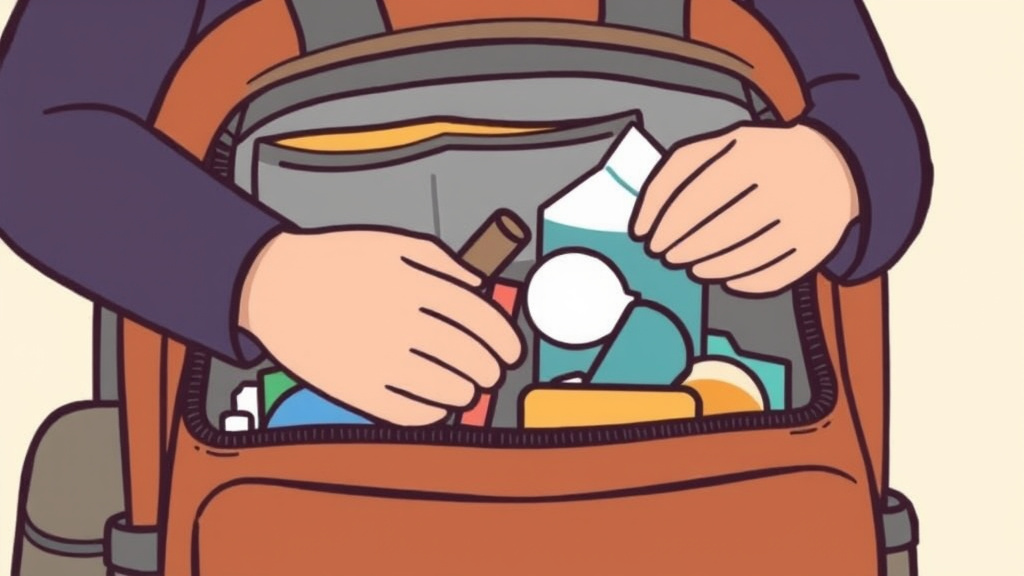
Packing is a strategic exercise in risk mitigation. You’re preparing for a known journey with unknown variables: delays, spills, blowouts, and pressure-related meltdowns (yours and the baby’s).
Follow this numbered sequence. Skip a step, and you’ll be that parent digging through a black hole at 30,000 feet while your toddler paints the tray table with yogurt.
- Start with a Clean, Empty Bag. This seems obvious. I once grabbed my bag from the car trunk and found a half-eaten, liquefied banana from three days prior at the bottom of a pocket. Start fresh.
- Create a “TSA Quick-Access” Pocket. This is for documents and liquids. Place your ID, boarding passes, and a clear quart-sized bag containing any adult liquids (hand sanitizer, moisturizer) here. In a separate, obvious section, pack all baby liquids, pre-measured formula bottles, breast milk, pouches. You must declare these for separate screening.
- Pack the Core Essentials (The Non-Negotiables). This is your disaster kit. Pack one diaper per hour of travel, plus three extra. Include a full pack of wipes, a portable changing pad, a full change of clothes for the baby, and a clean shirt for you. A plastic bag for soiled clothes is not optional.
- Add the Comfort and Distraction Layer. Snacks that aren’t messy (puffs, teething crackers). A favorite small, quiet toy or lovey. A pacifier clip is worth its weight in gold during takeoff and landing to help with ear pressure.
- Do a Final Size and Weight Check. Zip it up. Lift it. Can you comfortably carry it through the airport while also managing a child? Now, gently compress it from the top. It should give a few inches. If it’s a solid brick, remove something.
The goal is a bag that is full but not strained. The seams should not be taut. A overstuffed bag is the first thing a gate agent notices.
Navigating the Airport and Boarding
The theory meets reality at security and the gate. This is where your preparation pays off or your plan falls apart.
At the TSA checkpoint, you have rights with baby items. Formula, breast milk, juice, and baby food in quantities greater than 3.4 ounces are allowed. You must remove them from your bag and inform the officer you are carrying them. They will be screened separately, often with a quick vapor test. Do not hide them. Announcing them upfront speeds the process. This is different from the standard carry-on content rules for other liquids.
At the gate, be proactive. If you have a backpack as a personal item and a diaper bag, wear the backpack and carry the diaper bag in your hand. Make it clear you have two distinct items. When the gate agent makes the announcement about checking larger bags for free, assess your situation. If the flight looks full and your diaper bag is even slightly bulky, consider gate-checking your adult carry-on instead. Your essentials are in the diaper bag under the seat.
I once tried to use a premium, oversized diaper backpack as my personal item on a packed United flight to Denver. It fit under the seat, but just barely, jutting into my foot space. The flight attendant asked me to shift it, which blocked the aisle briefly. I now use a smaller, sleeker pack for travel days. The fancy one stays in the car.
Special Scenarios and Tricky Questions
What if you have two children? What about an international airline? The basic principle scales, but you must verify.
Traveling with Multiple Children
Each ticketed child (including a lap infant) is typically entitled to their own diaper bag as a personal item. If you have a 2-year-old in a seat and a 6-month-old on your lap, you can usually have two diaper bags. This is where a personal item packing strategy matters. You might use one bag for diapers/wipes for both, and a smaller second bag for toys, snacks, and changes of clothes. Consolidate where you can.
Lap Infant vs. Purchased Seat
A lap infant usually gets the diaper bag allowance. A child with their own seat gets the full adult allowance: one carry-on and one personal item (the diaper bag). This is a key detail when reviewing airline-specific size limits.
International and Budget Airlines
This is the grayest area. European carriers like Aer Lingus and Ryanair have their own rules. Aer Lingus is famously family-friendly, often allowing the diaper bag plus a small handbag. Ryanair is notoriously strict. Their carry-on bag size limits are rigid, and their sizers are unforgiving. For any non-U.S. airline, a direct visit to the “Traveling with Children” section of their website is the only safe move. Do not rely on third-party summaries.
Frequently Asked Questions
Can a diaper bag be a carry-on instead of a personal item?
Technically, yes, if it meets the larger carry-on luggage dimensions for the overhead bin. But this is a strategic error. You want immediate access to diapers and wipes during the flight. Using it as your personal item keeps it at your feet.
Do I need to tell the airline I’m bringing a diaper bag?
No, you do not need to pre-register it. However, you should be prepared to verbally confirm it at the check-in counter or gate as your child’s personal item.
What if my diaper bag is slightly over the personal item size?
You are at the mercy of the gate agent. On a busy flight, they are more likely to enforce the rules and may ask you to check it or pay a fee. A soft bag you can squeeze into the sizer has a better chance than a hard-sided one.
Can my personal item be a small duffel bag with my baby’s stuff in it?
Absolutely. A small duffel bag as a personal item is an excellent choice if it’s the right dimensions. The label “diaper bag” is not required; the function is.
Are there items not allowed in a diaper bag on a plane?
Yes. Standard TSA prohibitions apply. No sharp scissors (baby nail clippers are okay), no large containers of non-baby liquids, and no flammable items. Always check the latest TSA guidelines before you pack.
The Bottom Line
A diaper bag counts as a personal item because airlines aren’t completely unreasonable. They know you need it. Your job is to respect the size constraints that make the cabin work for everyone else. Choose a soft, compressible bag. Measure it packed. Know your airline’s exact policy, especially if you’re flying a budget carrier.
Pack with precision, diapers, wipes, a change of clothes, and baby liquids accessible for TSA. At the airport, wear your own backpack and carry the diaper bag. Be polite and proactive with gate agents.
Do that, and the bag disappears into the background, just another piece of gear for the mission. That’s the goal. Not an argument at the gate, not a surprise fee, just you and your family, ready to go.