Your Guide on How to Clean a Marc Jacobs Tote Bag Properly
This post contains affiliate links. As an Amazon Associate, we earn from qualifying purchases.
Clean a Marc Jacobs tote bag by first identifying its material, canvas, jacquard, leather, or nylon, then using the correct method. For canvas, spot clean with mild soap and water or perform a controlled sink soak. Never machine wash. For leather, use a dedicated leather cleaner and conditioner, avoiding water submersion. The brand’s one-year warranty explicitly excludes stains, color transfer, and normal wear, so proper cleaning is your only protection against permanent damage.
That warranty clause is the whole game. Marc Jacobs states that stains, fading, and “normal wear and tear” are not manufacturing defects. If you ruin the bag trying to clean it, or if a stain sets, the official position is that you own the consequence. This turns cleaning from a cosmetic chore into a preservation necessity.
What follows is a material-by-material breakdown: the safe spot-clean for small spills, the full sink immersion for canvas (when you must), the non-negotiable rules for leather, and the moment you hand the bag to a professional. We’ll also cover why that viral washing machine hack is a one-way ticket to a misshapen bag.
Key Takeaways
- The one-year Marc Jacobs warranty does not cover stains, fading, or wear and tear. Effective cleaning is your only defense against permanent damage.
- Never machine wash a Marc Jacobs tote, even on a delicate cycle. The agitation and spin can permanently distort the bag’s structure and damage printed graphics.
- Leather totes must never be submerged. Water causes leather to shrink, crack, and become brittle. Use a dedicated leather cleaner and conditioner like Lexol.
- For persistent organic odors (like vomit), enzymatic cleaners are required; soap alone won’t break down the proteins causing the smell.
- Printed canvas and jacquard are delicate. Salt, alcohol, and abrasive cleaners cause irreversible wear and cracking on the printed surface.
Understanding Your Tote’s Material (This Dictates Everything)
The first step isn’t grabbing a sponge. It’s finding the label, usually inside the bag or on a side seam. Marc Jacobs uses four primary materials: canvas, jacquard (a woven, often patterned fabric), leather, and nylon. Your method changes completely based on what you find.
Canvas and jacquard goods are a delicate material and can suffer from abrasion, cracking and wear if not handled properly. Salt and atmospheric agents in general can cause irreversible wear.
That’s from the brand’s care guidelines. It means the printed logo and patterns aren’t just ink; they’re a surface layer prone to damage. Leather has its own directive: let it dry naturally if wet and rub gently with a soft cloth. Nylon is the most forgiving, but the advice is consistent, avoid harsh chemicals.
If the label is missing or worn, the touch test works. Canvas and jacquard feel like a sturdy, woven fabric. Leather is supple or grained. Nylon has a smoother, often slightly synthetic feel. Guessing wrong is how cleaning becomes damaging.
The Absolute Don’ts: Warranty Limits and Viral Myths
Before you touch a stain, know what you’re working against. The Marc Jacobs warranty lasts one year from purchase and covers manufacturing defects. The exclusions list is your cleaning boundary map.
| What’s NOT Covered | Why It Matters for Cleaning |
|---|---|
| Stains | Spills, ink, makeup, dirt—all are considered “mishandling” or “improper use.” |
| Color fading / dye transfer | Sun exposure or color bleeding from clothes won’t qualify for repair or replacement. |
| Normal wear and tear | Scratches on leather, fraying on canvas corners, general aging. |
| Damage from accident | This includes damage from a failed cleaning attempt. |
This framework explains why the brand’s official advice is so cautious. They recommend avoiding cleaning agents altogether because any damage that results falls on you.
The biggest myth is the washing machine. TikTok and some blogs suggest a cold, gentle cycle. This is terrible advice.
Common mistake: Machine washing a canvas tote. Even on a delicate setting, the agitation and high-speed spin can permanently stretch seams, distort the bag’s shape, and cause the printed graphics to crack or peel. It may not happen on the first wash, but the damage is cumulative and irreversible.
The same goes for dunking a leather tote in water. Leather is skin. Submersion strips its natural oils, leading to shrinkage, stiffness, and cracks as it dries. A professional clean a tote bag is always a safer path than a home gamble.
The Canvas & Jacquard Deep Clean (Step-by-Step)
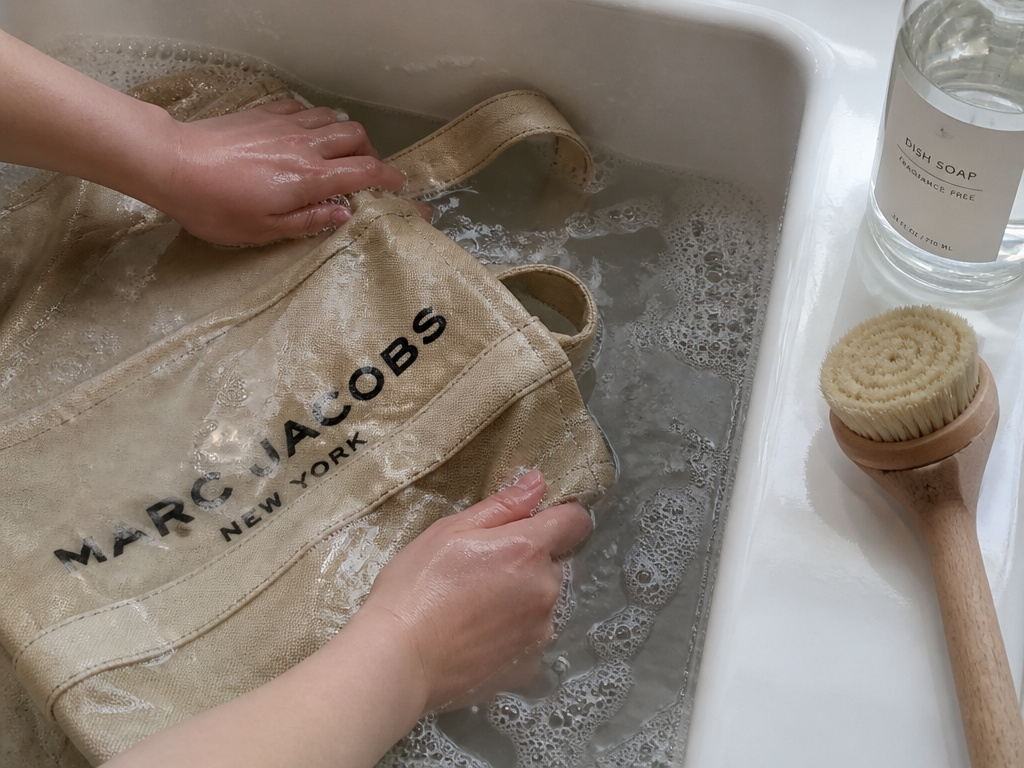 For canvas and jacquard Marc Jacobs totes, you have two paths: spot cleaning for minor issues and a full sink soak for general grime or larger stains. This is the controlled alternative to the washing machine.
You’ll need:
- A clean sink or basin
- Lukewarm water
- Mild dish soap or laundry detergent (clear, dye-free)
- Soft-bristled brush or clean microfiber cloth
- White towels
Step 1: Prep the bag.
Empty it completely. Use a vacuum with a soft brush attachment to remove dust and debris from the interior and exterior. This prevents grinding dirt into the fabric during washing.
Step 2: Mix your solution.
Fill your sink with enough lukewarm water to submerge the bag. Add a teaspoon of mild detergent. Avoid soaps with dyes, fragrances, or bleach.
Step 3: Submerge and agitate gently.
Place the bag in the water. Gently press it down to soak thoroughly. Use your hands to softly agitate the water through the fabric for 2-3 minutes. Focus on stained areas with a soft brush using circular motions, never scrub hard.
Step 4: The rinse is crucial.
Drain the soapy water. Refill the sink with clean, lukewarm water. Submerge and agitate the bag again to rinse. Repeat this rinse process 2-3 times until the water runs completely clear. Soap residue attracts more dirt.
Step 5: Dry with shape in mind.
Press gently on the bag in the sink to remove excess water. Do not wring or twist. Stuff the bag with white towels or a dry pillowcase to help it retain its shape as it dries. Hang it in a well-ventilated area away from direct sunlight or heat sources. This entire canvas tote cleaning process can take 24-48 hours.
Where this goes sideways: Skipping the thorough rinse. Leftover detergent slowly attracts soil and can make the fabric look dingy faster than before you cleaned it.
Leather Care: A Different Game
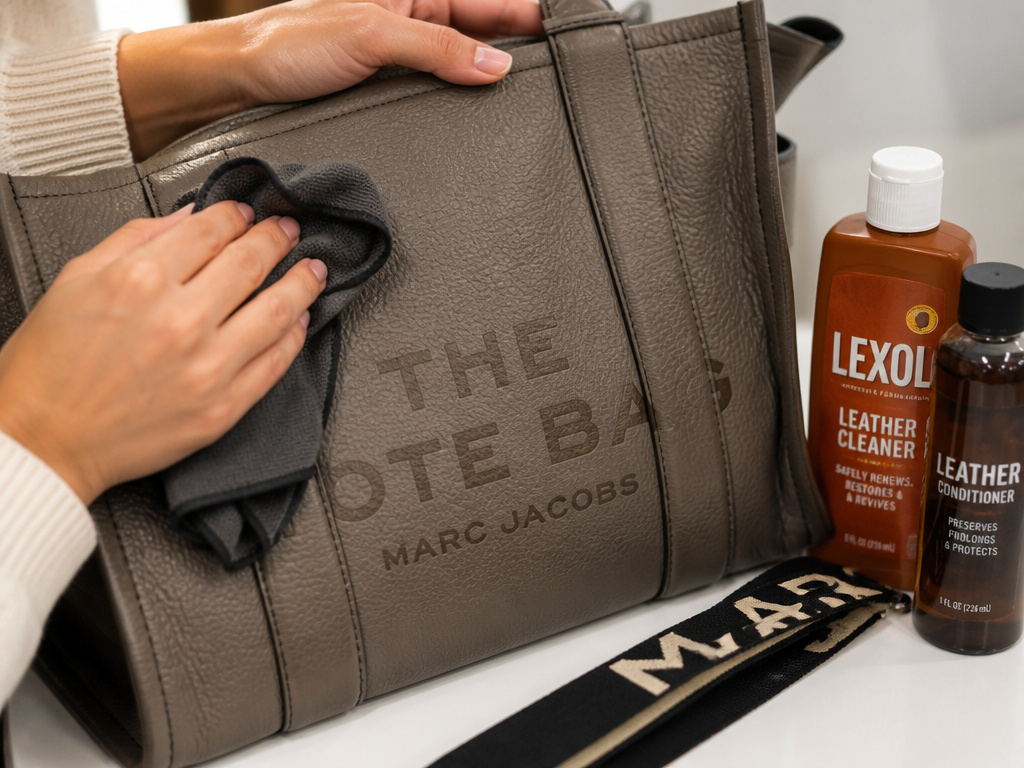 Cleaning a leather Marc Jacobs tote is about maintenance, not rescue. The goal is to remove surface dirt and replenish oils before the leather dries out and cracks.
The non-negotiable rule: keep it dry. Use a barely damp microfiber cloth for dust. For dirt, use a cleaner made specifically for smooth or grained leather. Lexol Leather Cleaner is a standard for a reason, it’s pH-balanced and non-abrasive.
Apply the cleaner to a cloth, not directly on the bag. Wipe in small circles, working on one section at a time. Follow immediately with a leather conditioner like Lexol Leather Conditioner or Bickmore Bick 4. The conditioner penetrates to keep the leather supple and prevent the cracking you see on neglected bags.
Condition every 3-6 months, or whenever the leather starts to feel dry to the touch. For the webbing strap, a slightly damp cloth with a drop of soap will handle skin oils and dirt. Dry it completely before storing.
This dedicated approach is similar to the care required for a durable Lands’ End canvas tote, different materials, same principle of preventative maintenance.
Nylon and Spot Cleaning for All Materials
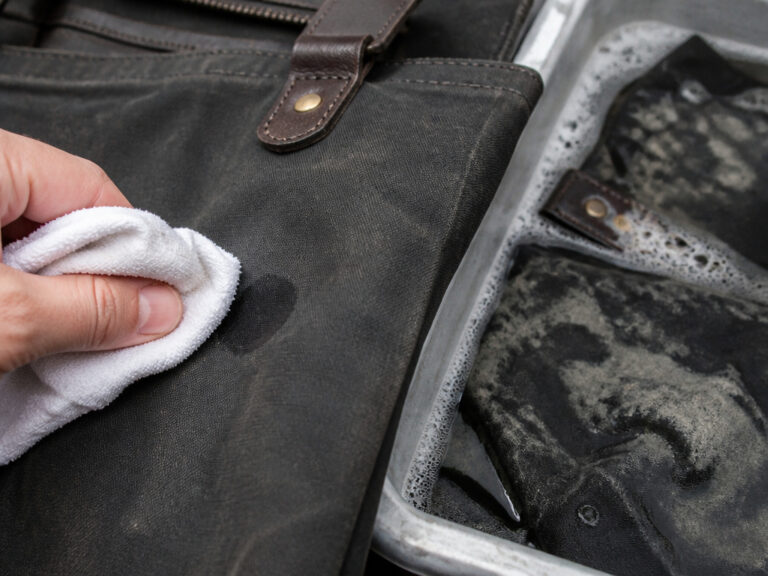
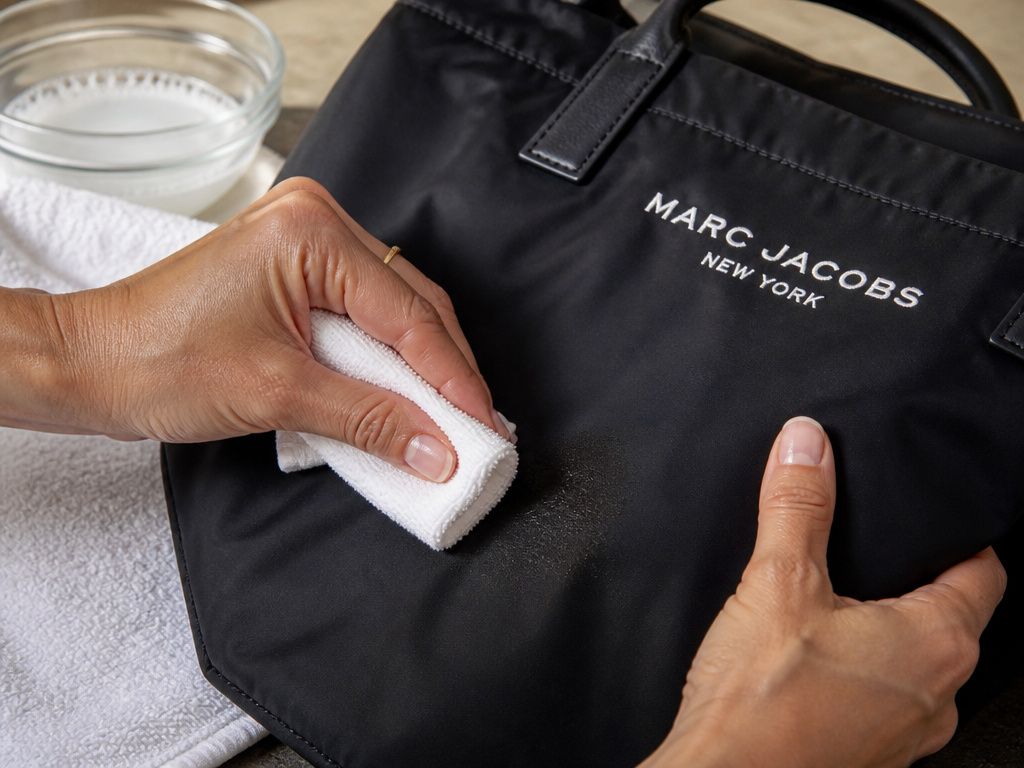 Nylon Marc Jacobs bags (often from the travel or accessory lines) are the most resilient. The brand-approved method is a white, lint-free microfiber cloth dipped in soapy water, wrung out until just damp.
Blot stains, don’t rub. If blotting doesn’t work, use a light, circular buffing motion on the stain. Follow with a clean, damp cloth to rinse the area, then blot dry with a towel. Let it air dry completely.
This spot-cleaning method is your first line of defense for any material, be it canvas, jacquard, or leather. For a small coffee spill on canvas, mix a drop of dish soap in a cup of water. Dampen a cloth corner, blot the stain from the outside in, and rinse with a water-only cloth. The key is minimal moisture.
It’s the same logic behind how to clean an LL Bean tote, contain the problem before it requires a full immersion.
When Home Cleaning Fails: Odors and Professional Help
Some problems defy soap and water. Organic stains, vomit, milk, food, leave proteins that soap doesn’t break down. You’ll wash the bag three times and the smell remains, as one Reddit user discovered after a travel sickness incident.
In that case, you need an enzymatic cleaner. These are designed for pet stains and break down the odor-causing proteins. Test it on an inside seam first. Apply, let it sit for the recommended time, then proceed with a gentle clean. This is a last resort before professional help.
Easy to miss: The inside lining. Grime, crumbs, and pen marks accumulate inside. Use a vacuum attachment first, then spot clean the lining fabric as you would the exterior, using even less water to prevent moisture from seeping into the structural layers.
You should call a professional when: * The stain is large, old, or unknown. * The bag is a delicate printed canvas or jacquard you’re not comfortable with. * The leather is stained or visibly damaged. * Odors persist after an enzymatic treatment.
Look for a “handbag clinic” or a dry cleaner experienced with luxury accessories. Standard dry-cleaning chemicals can be too harsh for the screen-printed graphics. Ask them about their experience with designer bags first. The cost is an investment against the price of a Marc Jacobs tote.
Storage and Long-Term Preservation
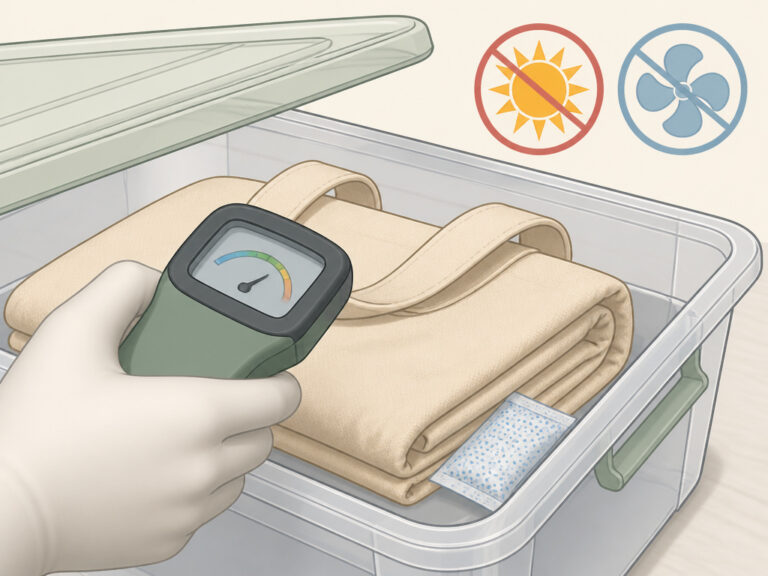
Cleaning is pointless if you store the bag poorly. Stuff it with acid-free tissue paper or a clean pillowcase to maintain its shape. Store it in the original dust bag at room temperature, away from direct sunlight.
Black and dark-colored totes are especially prone to fading. A closet interior is better than a shelf near a window. This simple step does more to preserve the bag’s color than any cleaning product.
Think of storage as the final phase of cleaning. A well-organized closet also makes it easier to organize a tote bag for your next use, keeping the interior clean from the start.
Frequently Asked Questions
Can I put my Marc Jacobs tote in the washing machine?
No. Do not machine wash any Marc Jacobs tote bag. The agitation and spin cycle can permanently misshape the bag, weaken seams, and damage printed surfaces. The brand explicitly advises against it, and any resulting damage voids the warranty.
How do I clean the inside of my Marc Jacobs tote?
First, empty the bag and vacuum the interior with a soft brush attachment. For fabric linings, use a slightly damp microfiber cloth with a tiny amount of mild soap to spot-clean stains. Blot, don’t scrub. For leather linings, use a leather cleaner. Always ensure the interior is completely dry before storing.
What cleaner is safe for Marc Jacobs leather?
Use a pH-balanced leather cleaner like Lexol Leather Cleaner. Apply it with a soft cloth, not directly on the bag. Always follow cleaning with a conditioner like Lexol Leather Conditioner to replenish oils and prevent cracking.
Will Marc Jacobs repair a stained bag?
No. The one-year warranty explicitly excludes stains, dye transfer, and damage from accidents or mishandling. Stain removal is considered routine maintenance, not a covered defect. Your options are professional cleaning or living with the stain.
How do I keep my black Marc Jacobs tote from fading?
Store it in its dust bag inside a closet, away from direct sunlight. Sun exposure is the primary cause of color fading, and dark colors show it most. Regular conditioning for leather can also help maintain color depth.
Can I use baby wipes on my canvas tote?
It’s not recommended. Many baby wipes contain alcohols, fragrances, or moisturizers that can leave a residue on the canvas or affect the printed graphics. A plain, damp microfiber cloth is safer and more effective.
The Bottom Line
Cleaning a Marc Jacobs tote is a risk-management exercise. The warranty provides no safety net for stains or cleaning damage, so the safest methods are gentle, material-specific, and patient. Never use a washing machine. For canvas, a controlled hand wash beats a machine disaster. For leather, dedicated cleaner and conditioner are non-negotiable. When in doubt, a professional handbag cleaner is a smarter investment than a replacement bag. Your tote’s longevity depends on the care you take after the purchase, not the label sewn inside it.