Can You Take Razors in Cabin Bags? TSA & UK Airline Rules
This post contains affiliate links. As an Amazon Associate, we earn from qualifying purchases.
You can take most razors in hand luggage. Disposable razors, cartridge razors (like Gillette or Schick), and electric razors are explicitly permitted by both the TSA and UK authorities. The prohibition targets “razor-type blades” – loose blades, straight razors, and safety razor blades not in a cartridge. These must go in checked baggage, properly sheathed. An officer’s final discretion is the wild card that can override any printed rule.
That final point about officer discretion is the one that turns a smooth airport morning into a 20-minute argument at the bin table. The rules are clear on paper, but the human holding the scanner decides what passes. Your packing strategy has to account for that variable.
What follows is the breakdown of the two main regulatory frames you’ll face – the U.S. TSA and the UK’s GOV.UK rules – plus the physical tactics for packing blades so they don’t slice through your bag and the one type of “razor” that’s banned even without a blade inside.
Key Takeaways
- Disposable, cartridge, and electric razors are always carry-on safe. These are your zero-risk options for hand luggage on any flight.
- “Razor-type blades” are the target of the ban. This includes loose blades, straight razors, and the removable blade from a safety razor. They must be in checked baggage.
- A TSA or UK Border Force officer has the final say. Even a permitted item can be confiscated if the officer deems it a security risk. Arguing guarantees a delay.
- Blades in checked bags must be sheathed or wrapped. Tossing a loose blade into your suitcase risks injury to baggage handlers and can lead to your bag being searched and delayed.
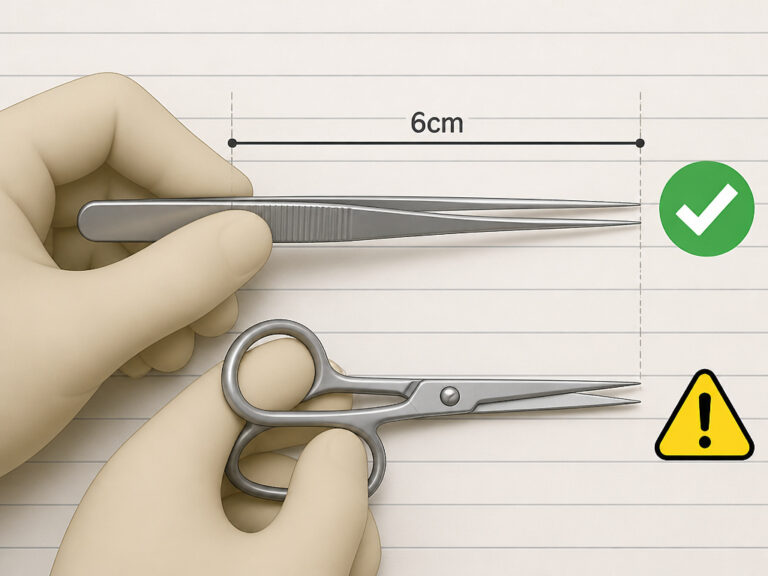
- UK rules use a 6cm blade length as a key threshold. For knives and scissors, this is the cut-off. For razor blades, the rule is simpler: they’re not allowed in hand luggage at all.
The Clear-Cut Rules: What’s Allowed and What’s Not
The regulations aren’t about shaving. They’re about separating blades that are inherently secure from those that can be instantly weaponized. A blade fixed inside a plastic cartridge doesn’t present the same immediate threat as a bare, handheld sliver of steel.
The U.S. Transportation Security Administration (TSA) and the UK’s Department for Transport (via GOV.UK) publish the lists that matter. You can find the official word on the TSA razor blade policy and the TSA sharp objects overview. These are the primary sources, not blog summaries.
Fixed-cartridge razor blades (disposable razor) are allowed in hand luggage. Knives with a sharp or pointed blade and/or blade longer than 6cm are not allowed in hand luggage. – GOV.UK Hand Luggage Restrictions
The table below is your quick-decide guide. Match your razor to the left column, then follow the right.
| Razor Type | Carry-On Luggage | Checked Luggage | Critical Note |
|---|---|---|---|
| Disposable / Cartridge Razor (Gillette, Schick, etc.) | Yes | Yes | The blade is permanently enclosed in plastic. This is the TSA’s definition of a “safety razor.” |
| Electric Razor / Shaver | Yes | Yes | Remove it from your bag at security like a laptop. No blade, no problem. |
| Safety Razor (e.g., Merkur, Edwin Jagger) | Handle Only | Blade & Handle | The blade must be removed and placed in checked baggage. The empty handle can go in carry-on. |
| Straight Razor | No | Yes | Never allowed in the cabin. Must be sheathed or in a protective case inside checked luggage. |
| Loose Razor Blades (for safety razors, utility knives) | No | Yes | Must be securely wrapped (e.g., in cardboard and tape) to prevent injury to baggage handlers. |
The “handle only” rule for safety razors is where people get tripped up. The TSA’s 2023 Federal Register update is explicit: officers at checkpoints cannot remove blades for you. If you forget, you’re walking back to the ticket counter or dropping your blade in the trash.
Why the Rules Are Shaped This Way: The Security Mechanism
This isn’t arbitrary bureaucracy. The rules map directly to the time and access a potential threat would have inside the sterile area of an airport or onboard an aircraft.
A disposable cartridge razor requires a deliberate, multi-step disassembly to free the blade. It’s not a tool of opportunity in a pressurized conflict. An electric razor has no exposed cutting edge at all. These items pose “little risk” as defined in the TSA’s own operational guidelines.
A loose double-edge blade or a straight razor, however, is immediately operational. The 2023 TSA clarification goes a step further, explicitly prohibiting empty box cutter and utility knife housings in carry-ons. Why? Because an empty housing can enhance the lethality of a hidden blade a passenger might otherwise smuggle in a different way. The rule blocks the assembly of a weapon from components.
The UK’s 6cm blade length rule for knives and scissors creates a bright line for screeners. It’s a measurable, objective standard that speeds up decision-making at the checkpoint. For razor blades, the standard is zero tolerance – their small size and extreme sharpness make them a unique category.
Common mistake: Assuming “safety razor” means the whole unit is safe for carry-on. The TSA’s permitted item list includes “safety razors (including disposable razors).” In their regulatory language, “safety razor” means disposable. Your traditional safety razor is treated as a “razor-type blade” the moment the blade is installed.
Navigating Officer Discretion: The Real-World Wild Card
The printed rules are your baseline. The officer at the X-ray machine is your reality. The TSA and UK Border Force explicitly state that the final decision rests with the officer at the checkpoint. This is the non-commodity variable that travel blogs often soft-pedal.
An officer can prohibit any item they believe poses a security threat. This could be because of how it looks on the scanner, because it’s an unusual item they can’t identify, or because of the overall context of your screening. Arguing with “but the website says…” is a losing strategy. It will not change their mind, and it will absolutely slow you down.
Your goal is to be an unremarkable, compliant passenger. Packing only clearly permitted razors removes one potential point of friction. If you must travel with a straight razor or blades, the checked bag is the only sane choice. For frequent flyers, dedicating a cheap cartridge razor or an electric shaver to your dopp kit eliminates this variable entirely. It’s a small investment for predictability.
Packing for Success: A Tactical Guide
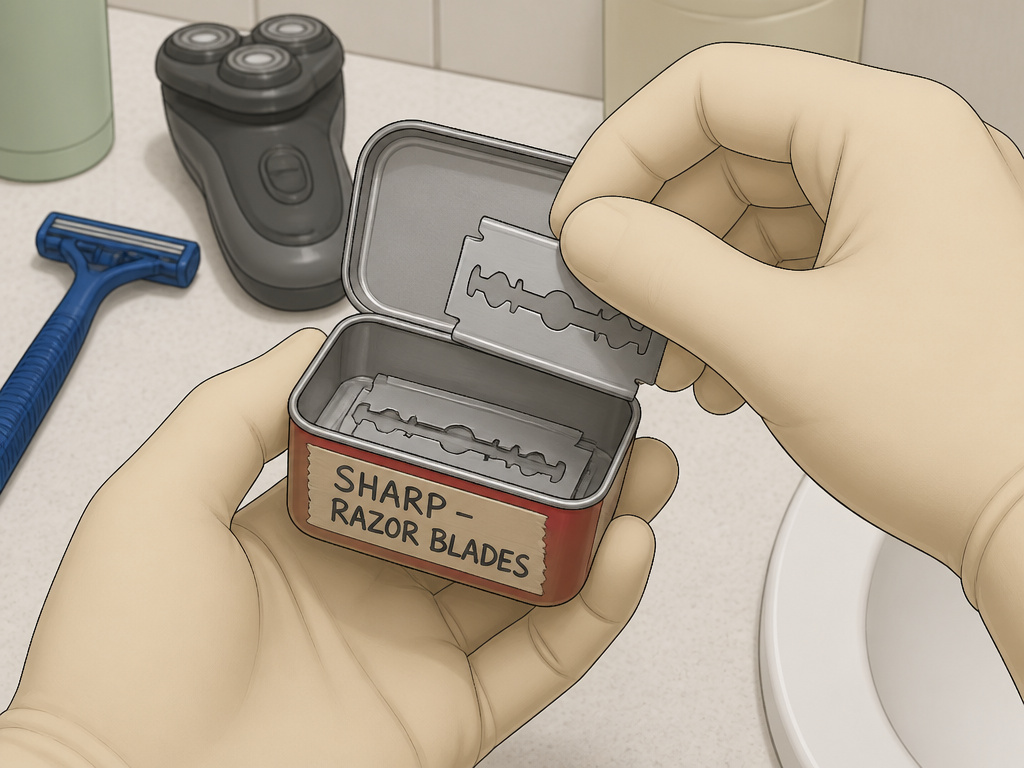 Packing razors correctly is a two-part operation: first, assigning them to the right bag, and second, securing them so they can’t cause damage.
For Carry-On (The Easy Bag):
- Disposable/Cartridge Razors: Toss it in your toiletry kit. No case needed.
- Electric Razors: Keep it with your other electronics for easy removal at security. Ensure the battery is charged – a dead device might prompt additional screening.
- Safety Razor Handles: If you’re carrying the blade-free handle, it’s just a piece of metal. Still, tuck it into your toiletries so it doesn’t roll around.
For Checked Luggage (The Blade Bag):
This is where care matters. The TSA mandates that “any sharp objects in checked bags should be sheathed or securely wrapped to prevent injury to baggage handlers and inspectors.”
- Safety Razor Blades: The best practice is a blade bank – a small, rigid container specifically for used blades. For travel, a small, hard-sided container like an Altoids tin works. Put the blades inside, tape the tin shut, and label it “SHARP – RAZOR BLADES.”
- Straight Razors: They must be in a protective travel case, ideally the one it came in. If the case isn’t rigid, wrap the razor in a cloth, then secure it in the center of your packed clothing.
- The Wrap-and-Tape Method: For a few blades, fold them into a small piece of cardboard, then seal them with packing tape. The cardboard prevents the blade from cutting through the tape and your bag’s lining.
Don’t forget the supporting cast. Shaving cream falls under the liquid limit for carry-ons. That means containers of 3.4 ounces (100ml) or less, all fitting into a single quart-sized, clear, resealable bag. A solid shaving soap stick is a clever workaround, as it’s not a liquid or gel. Our guide to the TSA liquid rules has the full details.
US vs. UK: A Quick Regulation Comparison
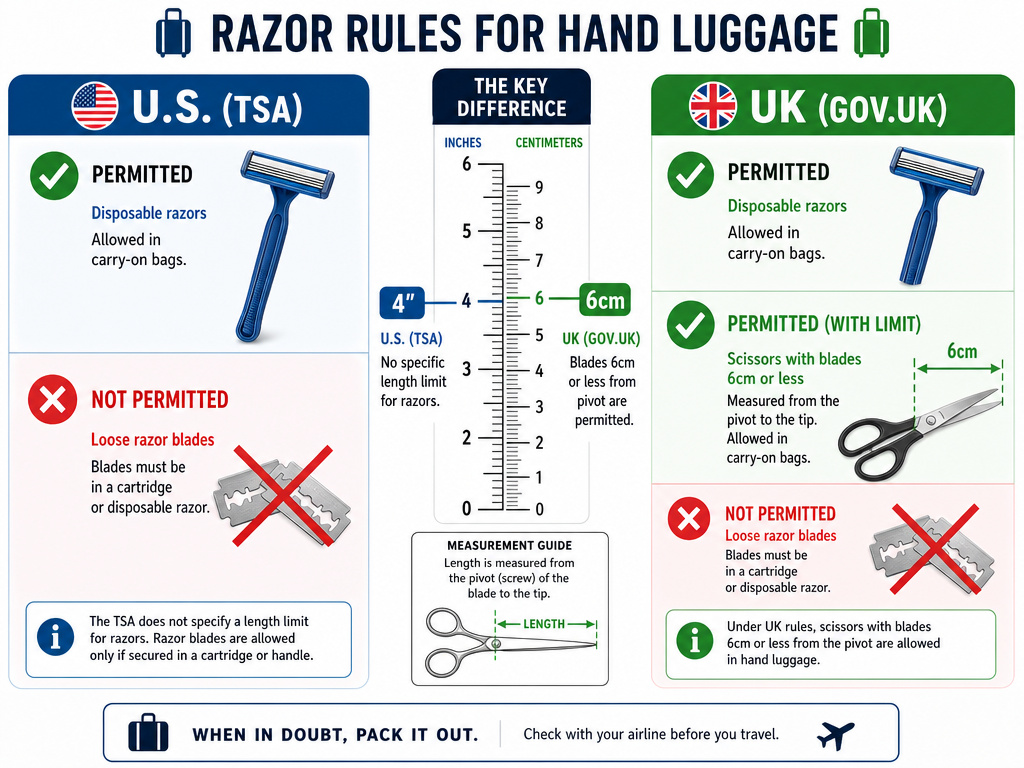 While the core principle is the same, the specifics differ slightly between the two major aviation security regimes. Knowing which set of rules applies to your departure airport is crucial.
| Aspect | U.S. (TSA) | UK (GOV.UK) |
|---|---|---|
| Disposable/Cartridge Razors | Explicitly permitted in carry-on. | Explicitly permitted in carry-on. |
| Loose Razor Blades | Prohibited in carry-on. | Prohibited in carry-on. |
| Straight Razors | Prohibited in carry-on. | Prohibited in carry-on (falls under knife prohibition). |
| Key Blade Length Metric | Scissors with blades > 4 inches (from fulcrum) are prohibited. | Knives/scissors with blades > 6cm are prohibited. |
| Officer Discretion | Explicitly stated: “The final decision rests with the TSA officer.” | Implicit in security protocols; officers have authority to refuse any item. |
The 6cm mark is your guide for other sharp items in the UK. Small sewing scissors? They’re likely fine if the blades are under that length. A pocket knife? Almost certainly not. When reviewing the list of prohibited carry-on items, always check the jurisdiction of your departure airport.
Frequently Asked Questions
Are disposable razors allowed on planes?
Yes, always. Disposable razors and cartridge razors (like Gillette Mach3 or Schick Hydro) are explicitly permitted in both carry-on and checked luggage by the TSA and UK authorities. The blade is fixed within a plastic cartridge, making it secure.
Can I take a safety razor in my carry-on?
You can only take the handle of a safety razor in your carry-on. The double-edge blade itself is prohibited. You must remove the blade at home and pack it securely in your checked luggage. A TSA officer will not remove it for you at the checkpoint.
What about electric razors?
Electric razors are fully permitted in both carry-on and checked bags. They contain no loose blade, so they pose no security concern. Remember to remove it from your bag for separate screening at the security checkpoint, just like a laptop.
Why was my allowed razor confiscated?
This is officer discretion in action. Even if your razor is technically permitted, if the officer cannot identify it, if it looks suspicious on the X-ray, or if they simply judge it a potential risk, they can confiscate it. Arguing will not help. For absolute certainty, stick to disposable or electric razors in your carry-on.
How should I pack razor blades in checked luggage?
Blades must be sheathed or securely wrapped to protect baggage handlers. The best method is to place them in a small, rigid, closable container like a blade bank or a taped-shut metal tin. You can also wrap individual blades in cardboard and secure them with packing tape. Never toss loose blades into your suitcase.
Can I bring shaving cream?
Yes, but in your carry-on it must comply with the liquids rule: containers of 3.4 ounces (100ml) or less, all placed inside a single, quart-sized, clear plastic bag. Larger containers must go in checked baggage. Consider a solid shaving soap as a liquid-free alternative.
The Bottom Line
Packing razors comes down to a simple filter: is the blade permanently enclosed or not? If yes (disposable, cartridge, electric), your carry-on is fine. If no (loose blade, straight razor), it belongs in your checked bag, wrapped like the hazard it is.
The most common travel mistake is confusing the term “safety razor.” To the TSA, that means a disposable. Your grandfather’s double-edge razor is a “razor-type blade” the moment you insert a blade. Assume the officer at the scanner has zero time for semantics.
For friction-free travel, designate a cheap cartridge razor or a reliable electric shaver as your flyer. It sidesteps the gray area of officer judgment entirely. Your general packing guide should always treat sharp edges as the special case they are – because to security professionals, that’s exactly what they are.