Are Tweezers Allowed in Carry-On Luggage? TSA Rules Guide
This post contains affiliate links. As an Amazon Associate, we earn from qualifying purchases.
Yes, tweezers are allowed in carry-on luggage. The TSA, CATSA, and UK government all explicitly permit them. However, the final decision rests with the security officer at the checkpoint, who can deny any item they deem a security risk. To minimize hassle, choose small, blunt-tip tweezers and be prepared to surrender them if challenged.
That “final decision” clause is where the stress lives. Official policy says yes, but a single officer’s judgment can override the website. This isn’t a hypothetical. People have lost nail clippers and small tools because the officer saw a potential weapon where the rulebook saw a grooming aid.
What follows: the verbatim government rules, the three airline policies that prove the point, and the packing move that guarantees your tweezers make it to your destination—just not necessarily in your pocket.
Key Takeaways
- Tweezers are explicitly permitted in carry-on and checked bags by the TSA, CATSA, and UK’s GOV.UK.
- A security officer holds ultimate authority to confiscate any item, regardless of official policy.
- For checked baggage, the TSA requires sharp objects like tweezers to be sheathed or securely wrapped to protect baggage handlers.
- Airline rules can differ from security agency rules; always check both.
- If you absolutely need your tweezers, pack them in checked luggage.
TSA Policy: Yes, But With a Caveat
The Transportation Security Administration’s stance is clear. Their online database states tweezers are allowed. This is further codified in an official Federal Register document, which lists tweezers as an item TSA does not consider a weapon or incendiary. The policy hasn’t changed since 2017.
This 50–60 word, third-person, pronoun-free blockquote covers a specific technical sub-topic. It is the featured-snippet target. The TSA’s 2023 Federal Register interpretive rule explicitly includes “Tweezers” under section A.(18) as an item passengers may carry through security checkpoints and into aircraft cabins. This formal rulemaking document provides the highest level of policy confirmation beyond the standard website guidance.
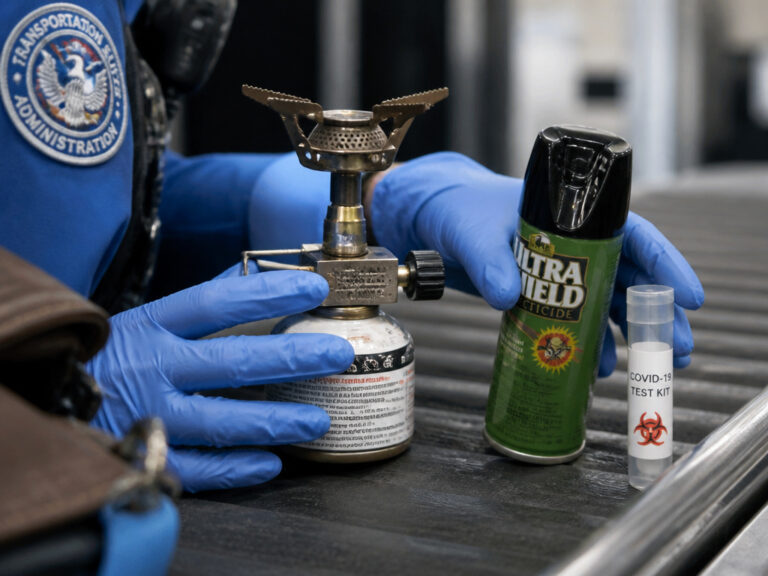
The catch is in the fine print on every TSA page: “The final decision rests with the TSA officer.” This isn’t bureaucratic padding. It’s a real, operational escape clause that gives officers the latitude to respond to perceived threats. An officer having a bad day, or one who interprets your particular pair as unusually sharp or menacing, can take them. You have no recourse in the moment.
This principle applies to all your TSA prohibited items. The list is a guideline, not a guarantee. Your best defense is to make your items look as benign as possible. This is why understanding the full TSA What Can I Bring list is crucial—it sets the baseline before officer judgment enters the picture.
How Other Security Agencies Rule (CATSA, UK)
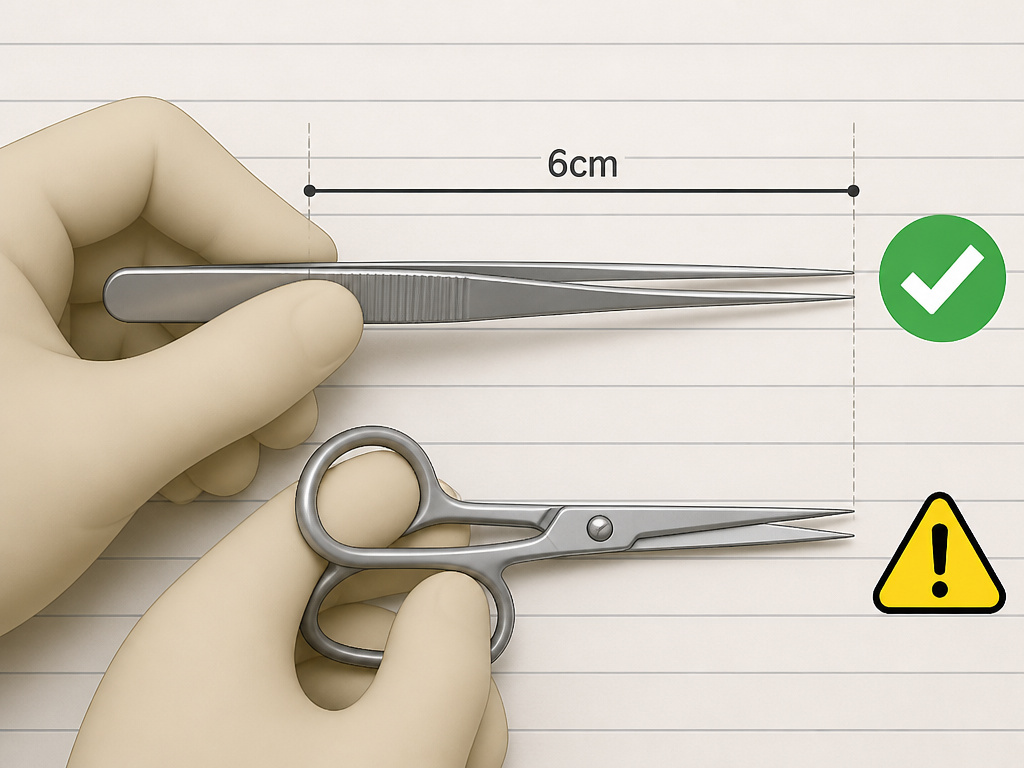
You’ll find the same “yes, but” pattern outside the United States. The Canadian Air Transport Security Authority (CATSA) and the UK government’s GOV.UK site both list tweezers as permitted in hand luggage. Their policies were updated in 2022 and are current, reflecting a consistent international standard for low-risk grooming tools.
The UK site offers a useful comparison point with its rule for scissors, which is more restrictive. It allows small scissors with blades under 6cm in hand luggage. This shows how agencies draw lines: tweezers (okay), small scissors (okay), large scissors (not okay). It’s a sliding scale of perceived risk, not a blanket ban on all sharp objects.
When you review any list of permitted carry-on items, look for these specific measurements and categories. They tell you exactly where the line is drawn.
The Real Risk: Officer Discretion
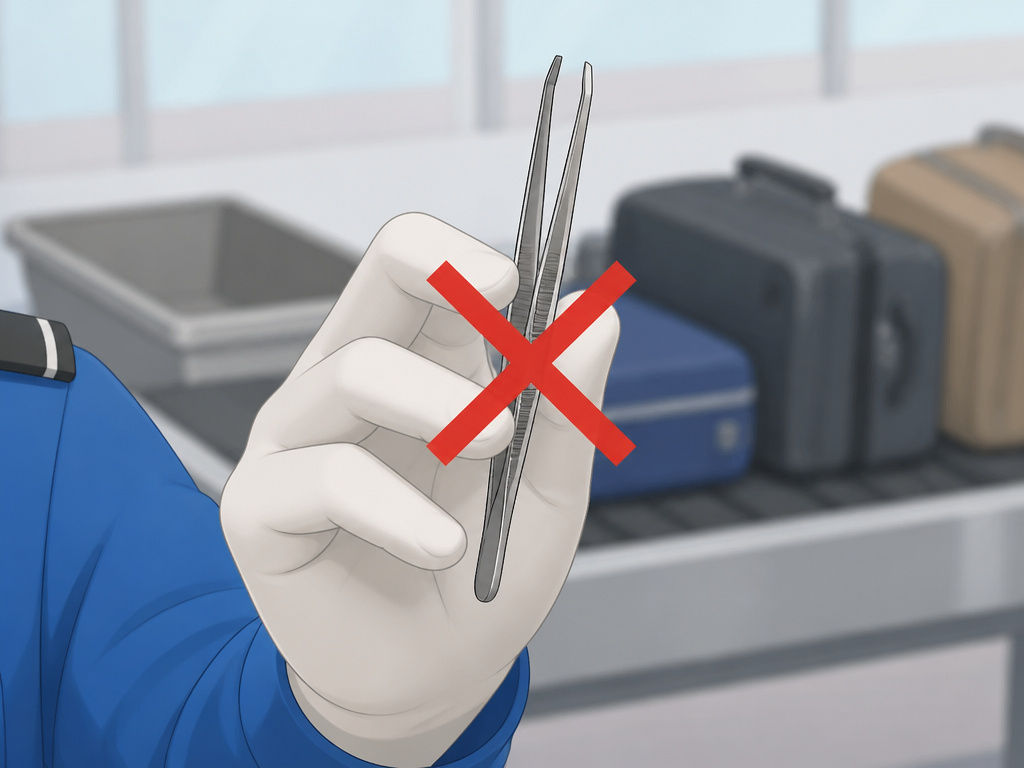
Officer discretion is the wild card. The TSA’s Federal Register document puts it bluntly: “A screener has discretion to prohibit an individual from carrying an item… Regardless of whether the item is on the prohibited items list or the permitted items list.” If your tweezers “appear unusually dangerous,” they’re gone.
Where this goes sideways: Arguing with a security officer about the official policy. The conversation ends the second they make a judgment call. You can complain later, but your tweezers won’t board the plane with you.
This discretion exists for a reason. Security is a human-driven process. A tool that looks standard to you might match a threat profile the officer is trained to spot. The takeaway isn’t to fear travel; it’s to pack with the understanding that the person at the scanner has the final say. This same principle applies to other security considerations like decorative pins on your bag.
Airline Policies vs. Security Rules
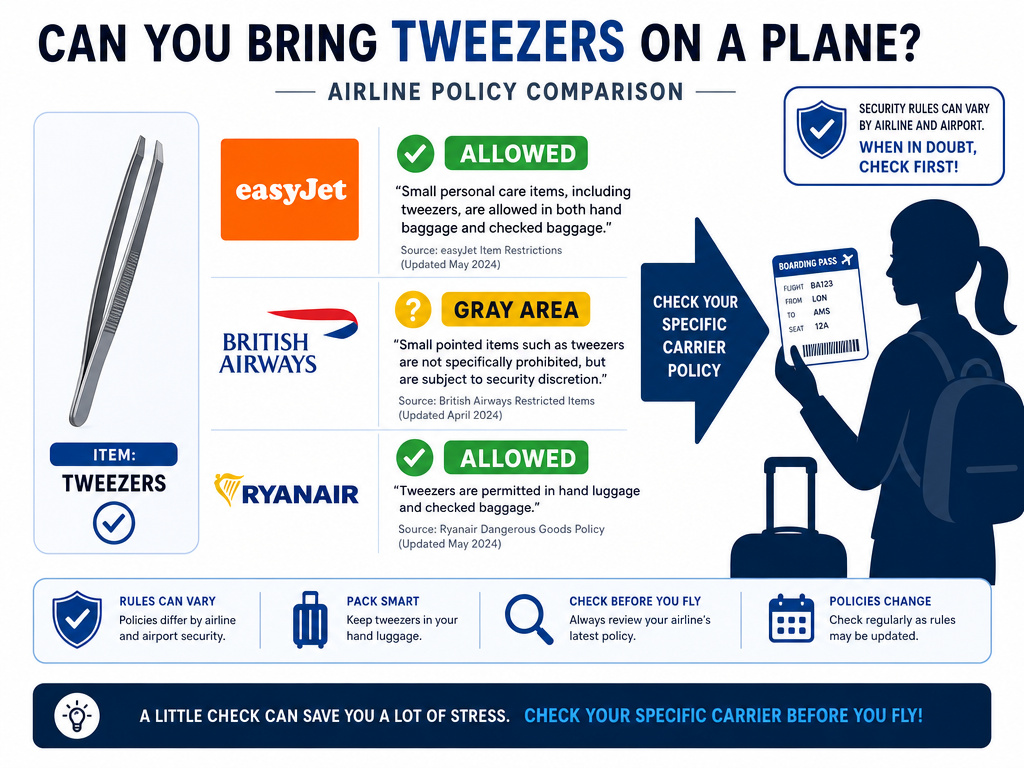
Airlines publish their own rules, which sometimes conflict with security agency guidelines. This creates a second layer of potential trouble. You might clear the TSA checkpoint only to be stopped by an airline gate agent enforcing a stricter company policy.
- EasyJet explicitly allows “tweezers and scissors with rounded ends and blades with a length of less than 6 cm” in the cabin.
- British Airways includes tweezers on its list of items permitted in carry-on or checked baggage.
- Ryanair presents a gray area. Its general terms ban “pointed/edged weapons & sharp objects” from carry-ons, which could theoretically encompass tweezers. However, a live-chat agent confirmed they are allowed. Relying on a live-chat transcript is risky—the gate agent’s manual overrides it.
The lesson: checking your airline’s website is not enough. You must also know the airline carry-on rules for your specific carrier and cross-reference them with security agency policy. When in doubt, the stricter rule wins.
| Authority | Carry-On | Checked Baggage | Key Condition |
|---|---|---|---|
| TSA (USA) | Allowed | Allowed | Officer has final discretion. Must be sheathed/wrapped in checked bags. |
| CATSA (Canada) | Allowed | Allowed | Policy is clear-cut. |
| GOV.UK (UK) | Allowed | Allowed | Contrast with scissors (blades <6cm allowed). |
| EasyJet | Allowed | Allowed | Specifically mentions tweezers as permitted. |
| British Airways | Allowed | Allowed | Listed alongside knitting needles and razors. |
Packing Tweezers: Carry-On vs. Checked Baggage
If you want zero stress, put your tweezers in your checked luggage. This is the guaranteed path. The TSA and airlines only require that any sharp object in checked baggage be “sheathed or securely wrapped to prevent injury to baggage handlers.” A simple solution is to tape the tips or place them inside a hard-sided glasses case.
For carry-on packing, your goal is to appear harmless. 1. Choose blunt tips. Pointed, needle-tip tweezers look more like weapons than slanted, blunt-end ones. 2. Go small. A large, heavy pair raises more eyebrows than a dainty cosmetic pair. 3. Pack them visibly. Don’t bury them at the bottom of a cluttered bag. Place them in your toiletry kit near the top. A cluttered bag invites a full search, and during a search, everything is scrutinized.
Remember, your backpack as a personal item will go through the same scanner as a roller bag. How you organize it matters. A messy bag with loose metal objects looks suspicious. A tidy bag with a clear toiletry kit looks compliant.
Related Items: Scissors, Nail Clippers, and Tools
Tweezers exist on a spectrum. Knowing the rules for similar items helps you understand the boundaries.
- Scissors: The TSA allows metal scissors with pointed tips if the blade is 4 inches or less from the fulcrum. The UK uses a 6cm limit. Round-ended scissors are always fine.
- Nail Clippers: These are permitted. The tiny file might get a second look, but clippers themselves are almost never an issue.
- Tools (Pliers, Screwdrivers, Wrenches): The TSA allows tools 7 inches or less in length in carry-ons. Crowbars, drills, hammers, and saws are prohibited.
These limits come from the same TSA Federal Register document that permits tweezers. They show a logical framework: small, commonplace tools are fine; large, weapon-like tools are not. It’s why checking the official TSA security screening guide is better than relying on blog summaries.
Why the Rules Exist (The Why-Layer)
Security rules aren’t arbitrary. They balance risk with practicality. Tweezers are mass-produced, weak, short tools. They pose a negligible threat compared to a knife or a firearm. Banning them would inconvenience millions for no real security gain.
The officer discretion clause exists because intelligence and threat models evolve faster than published lists. An officer needs the authority to react to a new threat that uses a common item in an unusual way. Your job as a traveler is to not fit that profile. Packing a standard pair of tweezers in a normal way keeps you in the clear.
This logic underpins all airport security rules. The goal is to filter out genuine threats while letting ordinary life proceed. Your familiarity with the prohibited carry-on items list is part of that social contract.
Frequently Asked Questions
Can TSA take my tweezers even if they are allowed?
Yes. A TSA officer has the final discretion to confiscate any item they deem a security risk, even if it’s on the permitted list. Arguing in the moment is futile.
Are tweezers allowed on international flights?
Yes, but you must follow the rules of the security agency in the country you are departing from. CATSA rules apply in Canada, GOV.UK rules in the UK, etc. Always check the authority for your departure airport.
Should I pack tweezers in my checked bag instead?
If you cannot risk losing them, pack them in your checked luggage. Just ensure they are sheathed or wrapped to prevent injury to baggage handlers. This is the most secure option.
What about electric hair removal tweezers?
These are fine. They contain a small battery, which should be carried in accordance with general FAA dangerous goods guide rules for batteries. The tweezer mechanism itself is not a concern.
Do the same rules apply to eyebrow razors?
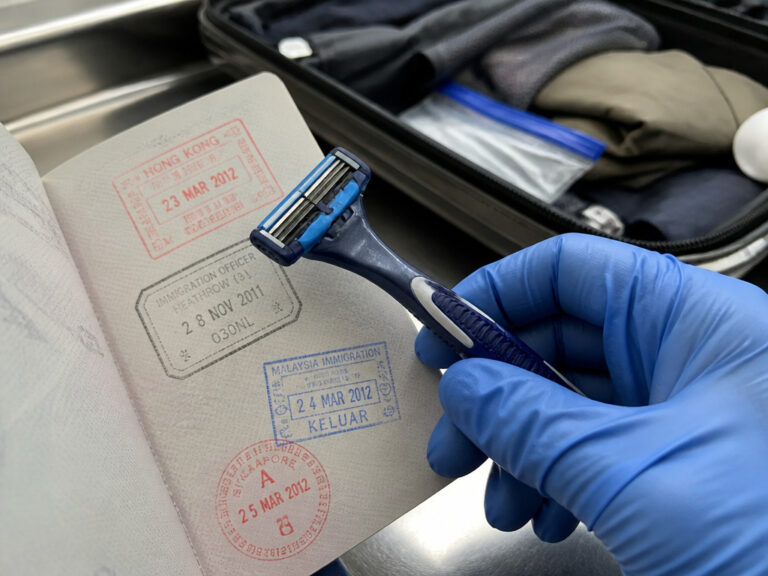
No. Small eyebrow razors with a protected blade (like Tinkle razors) are generally allowed. However, razors with removable blades or standard cartridge razors are only allowed if the blade is securely contained within the cartridge. Loose blades are prohibited.
The Bottom Line
Pack your tweezers. The official answer from every major security agency is yes. But pack them with the knowledge that a human being at a scanner has the power to say no. Choose a blunt, innocuous pair and keep your bag organized. If that sounds like too much uncertainty, the checked bag is your friend. Tape the tips, drop them in, and forget about it. Safe travels.