What Can I Pack in My Suitcase? The FAA’s 40-Pound Bag Limit
This post contains affiliate links. As an Amazon Associate, we earn from qualifying purchases.
You can pack most of your travel gear in a suitcase, but the real limits are the airline’s size and weight rules, your bag’s own structural load range, and a short list of prohibited hazardous materials. The FAA’s carry-on guidance caps overhead bin weight to prevent injury, and most wheeled luggage hits its load limit around 40 pounds — a number already printed in your bag’s manual.
That gap between what fits and what flies is where bags fail. A checked suitcase can hold 50 pounds by airline policy, but the Osprey Farpoint 40‘s manual says its load range is 20-40 pounds. Go over 40, and the wheel axle bends on the first baggage carousel drop. The rules aren’t just suggestions; they’re the difference between your stuff arriving and your bag being a broken shell on the tarmac.
What follows: the FAA’s actual stowage rules, the IATA’s dangerous goods list you’ve only skimmed, the manufacturer specs hidden in PDF manuals, and a packing method that uses your bag’s real capacity instead of guessing.
Key Takeaways
- Your suitcase has a maximum load rating printed in its manual, often 40 pounds for wheeled carry-ons and 50 pounds for large duffels. Exceeding it voids the warranty and breaks wheels or frames.
- The FAA advises airlines to limit weight in overhead bins to prevent articles from falling out; flight attendants can refuse overweight bags at the gate.
- Category B infectious substances, including many diagnostic specimens, are prohibited in checked and carry-on luggage per IATA rules without special packaging.
- Compression straps inside a bag are for stabilizing clothes, not for squeezing an overload — over-tightening warps the zipper track and the seam fails within two trips.
- For most week-long trips, a 40-liter travel pack like the Osprey Farpoint 40 is the default. It fits overhead, meets the 40-pound load limit, and won’t tempt you to overpack.
The 40-Pound Limit Your Bag’s Manual Already Told You
Look up your luggage model online and find the manufacturer’s PDF manual. You’ll see a “LOAD RANGE” or “Maximum Load” spec. For the Osprey Farpoint 40 Travel Pack, it’s 20-40 lb | 9-18 kg. For the Osprey Transporter 65 duffel, the manual lists no upper limit, but the construction suggests 50 pounds.
This number isn’t a marketing suggestion. It’s the load at which the bag’s frame, wheels, and stitching are tested. A wheeled suitcase’s axle is a hollow aluminum tube rated for a specific shear force. Exceed it, and the tube crumples at the hub on the first impact from a baggage handler’s throw.
Where this goes sideways: Assuming the airline’s 50-pound checked bag limit is safe for any suitcase. Your bag’s own limit is often lower. A 50-pound payload in a 40-pound-rated bag will shear the wheel bolts within three airport transfers.
Why does this matter mechanically? The load isn’t evenly distributed. When a bag is dragged, all weight pivots on the two rear wheels. A 50-pound bag places over 25 pounds of direct shear force on each wheel axle. Most axles are designed for a 20-pound shear ceiling. The metal fatigues, cracks, and the wheel detaches. You’ll hear a grinding pop, then a wobble, then a collapse.
| Bag Type | Typical Load Range | What Breaks First | Timeline If Overloaded |
|---|---|---|---|
| Wheeled Carry-On (e.g., Osprey Farpoint 36) | 20-30 lb | Wheel axle / retractable handle weld | 1-2 trips |
| Travel Backpack (e.g., Osprey Farpoint 40) | 20-40 lb | Shoulder strap anchor points | 3-4 trips |
| Large Duffel (e.g., Osprey Transporter 65) | Up to 50 lb | Carry handle stitching | Immediate risk on checked baggage belt |
The fix is simple. Weigh your packed bag before you leave. A basic bathroom scale works. If you’re over the bag’s load range, remove items. This isn’t about airline fees; it’s about your bag surviving the journey.
Bottom line: Your bag has a load rating. Find it. Respect it. The airline’s limit is the ceiling for fees; your bag’s limit is the ceiling for integrity.
What the FAA Actually Says About Carry-On Weight
The FAA carry-on baggage advisory circular (AC 121-29B) doesn’t set a universal weight limit for passengers. Instead, it guides airlines on how to manage their own programs. A key line: flight attendants should “ensure carry-on baggage and cargo do not exceed the FAA-approved weight limitations or load limits for the specific place they are stowed.”
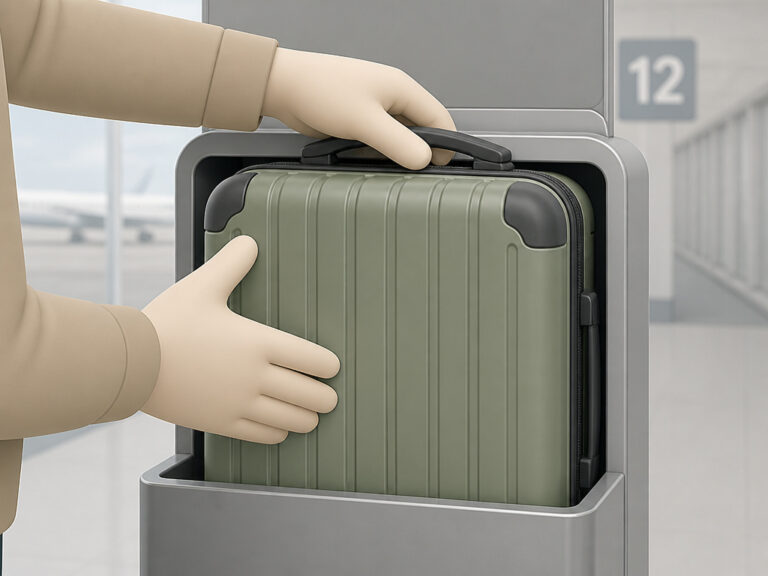
This means every overhead bin and under-seat area on an aircraft type has a certified load limit. The flight crew’s job is to prevent bins from being overloaded, both for balance and because an overstuffed bin can’t close securely. Items fall out when the door opens, causing injury.
Flight attendants should not place items in overhead bins that exceed bin weight limits and that they should be able to close the bins without using force. They should also make sure that passengers do not overload the bins.
In practice, this translates to gate agents weighing or eyeballing bags that look overly heavy. If your wheeled carry-on strains to roll, they can tag it for checking. The rule exists because a 40-pound bag falling from an overhead bin accelerates fast enough to fracture a collarbone.
So, while you might technically fit a 50-pound payload into your carry-on suitcase, the airline’s operational rules—grounded in this FAA guidance—can stop you at the jet bridge. Your packing strategies must account for lift-ability, not just dimensions.
The IATA’s No-Fly List: What You Absolutely Cannot Pack
The IATA Dangerous Goods Regulations (DGR 65th Edition) govern what’s forbidden on aircraft. Everyone knows about explosives and flammables. The non-commodity edge case is Category B infectious substances.
Category B includes diagnostic specimens, like blood or tissue samples for routine testing. The IATA rules state clearly: “Passengers and crew members are prohibited from transporting infectious substances as or in carry-on baggage, checked baggage or on their person.”
Common mistake: Assuming a sealed medical kit from a clinic is fine for checked luggage. Unless it’s packaged under IATA’s strict triple-packaging rules (leak-proof primary receptacle, absorbent material, rigid outer box), it’s prohibited. Airlines will refuse it, and you’ll be left at the counter repacking.
Other commonly overlooked prohibited items include: * Certain lithium batteries (spares over 100Wh, damaged/recalled batteries). * Liquid nitrogen as a refrigerant, even for scientific samples, without specific “NOT RESTRICTED” packaging. * Some camping gear – cylinder stoves must be completely purged of fuel, not just “empty.” * Large quantities of dry ice (more than 2.5 kg per person requires airline approval).
The IATA list is long, but the principle is short: when in doubt, leave it out. Or ship it via a cargo service that handles dangerous goods. The consequence isn’t just a confiscated item; it’s a fine and potential delay for the entire flight.
Packing Liquids, Aerosols, and Gels: The Real 3-1-1 Rule

The TSA’s 3-1-1 rule is commodity knowledge. The non-commodity insight is how containers fail. A 3.4oz bottle of shampoo is allowed. But if it’s in a flimsy plastic bottle, cabin pressure changes can cause it to bulge and leak, contaminating your entire bag.
The rule exists because of the total volume of flammable liquid a single carry-on bag could theoretically contain. The limit is tactical, not arbitrary.
Here’s how to pack liquids so they survive the flight: 1. Place each bottle in a separate, small ziplock bag before putting it in the quart-sized clear bag. This double-bagging contains any single leak. 2. Screw caps on tightly, then back off a quarter-turn. This allows pressure to equalize without forcing the cap off. Re-tighten after landing. 3. For checked bags, wrap the entire quart bag in a towel or place it in a sealed plastic container. A burst sunscreen bottle in a suitcase is a permanent, greasy stain.
Easy to miss: “Gels” include peanut butter, yogurt, and even spreadable cheese. If it’s spreadable at room temperature, it’s likely a gel. These fall under the 3.4oz limit for carry-ons.
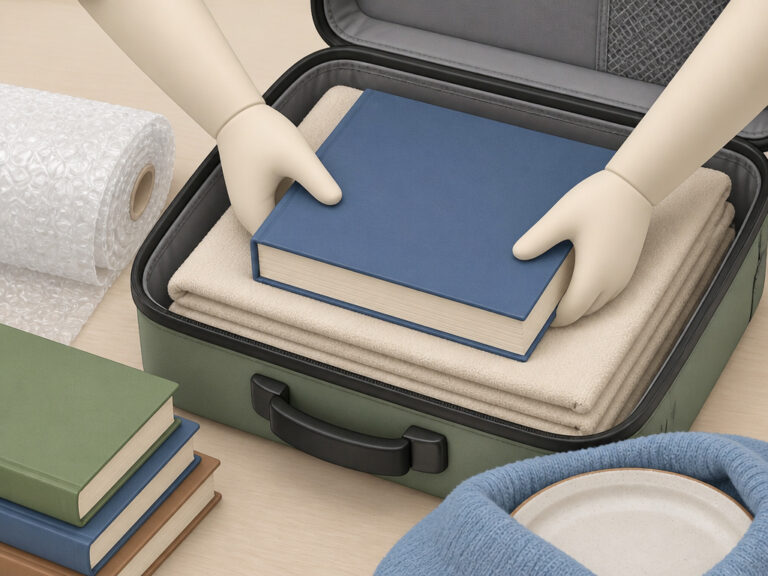
What about checked luggage? You can pack larger liquids, but you must prevent catastrophic leaks. Place all toiletries in a sealed, hard-sided case within your suitcase. The step-by-step packing method for checked bags always starts with a leak-proof core.
Electronics and Valuables: The Carry-On Imperative
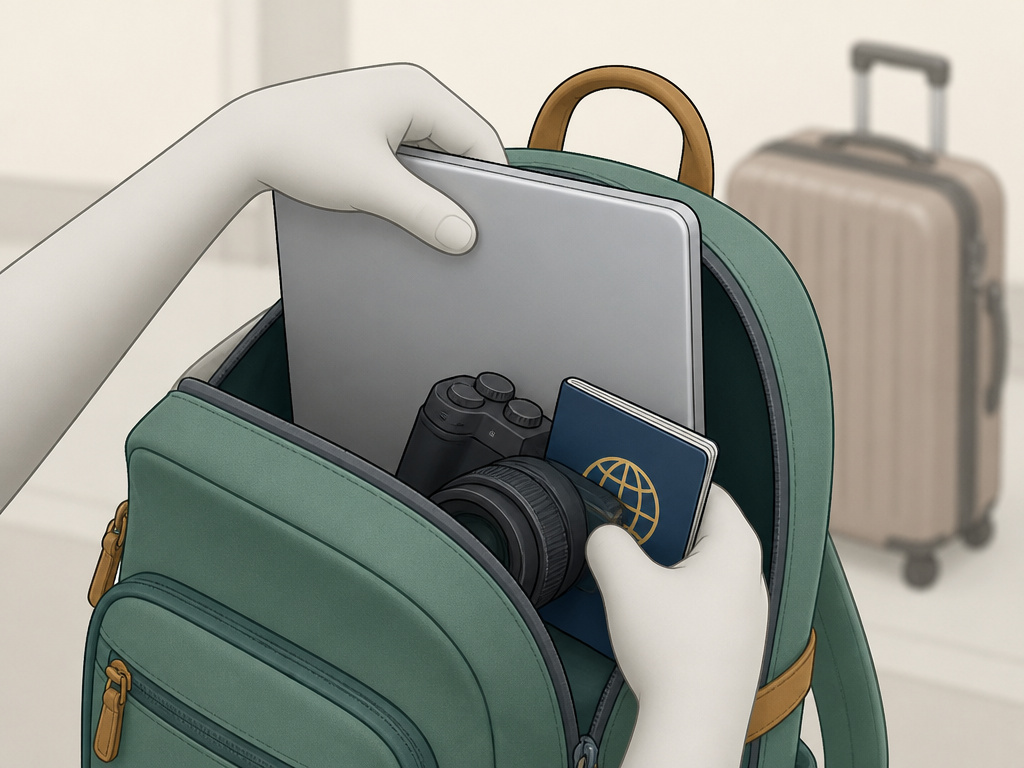
Laptops, cameras, jewelry, medication, and important documents should never go in a checked suitcase. The reason isn’t just theft; it’s temperature and handling.
A checked bag’s cargo hold can reach freezing temperatures. Lithium-ion batteries can lose charge and, in rare cases, become unstable. Medications can degrade. A camera’s lubricants can thicken. The TSA backpack rules allow you to keep these items in your personal item.
Furthermore, checked baggage is subject to routine searches. TSA agents are careful, but they aren’t packing experts. Your neatly folded clothes will be inspected and re-stowed, possibly not as neatly. Delicate items can be damaged in the process.
A simple rule: If you can’t afford to lose it, don’t check it. Your backpack as personal item is your insurance policy.
Choosing the Right Bag for Your Trip Type
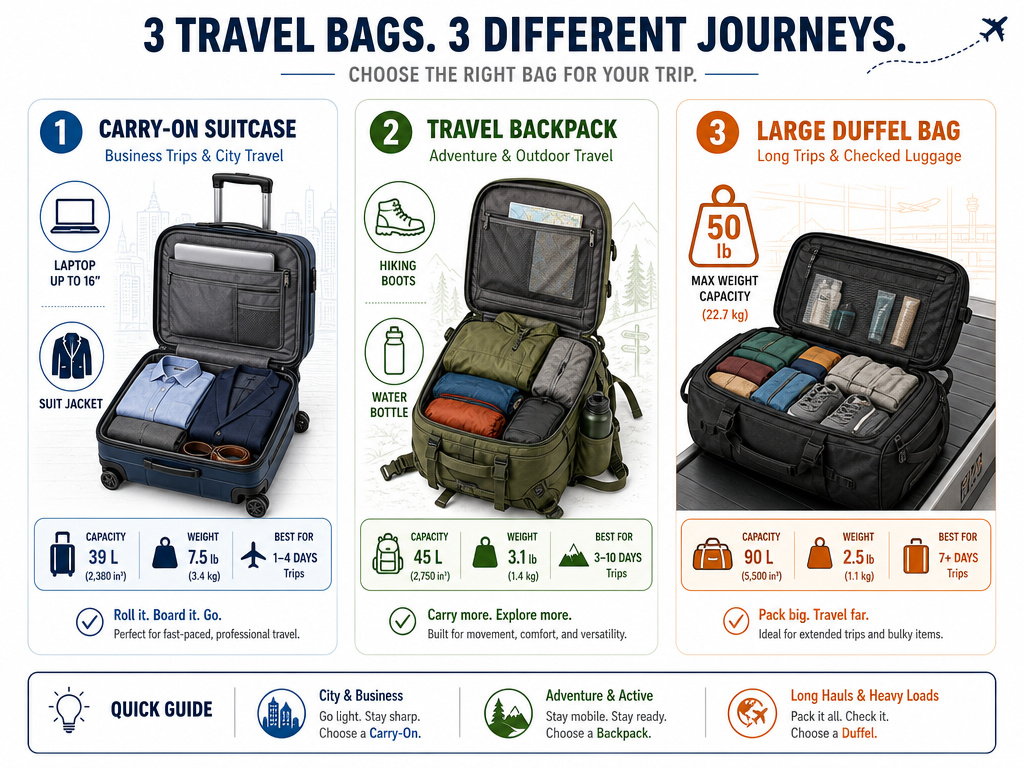
Your destination and itinerary dictate the bag, not the other way around. Packing for a week in a city is different from packing for a two-week hiking trip.
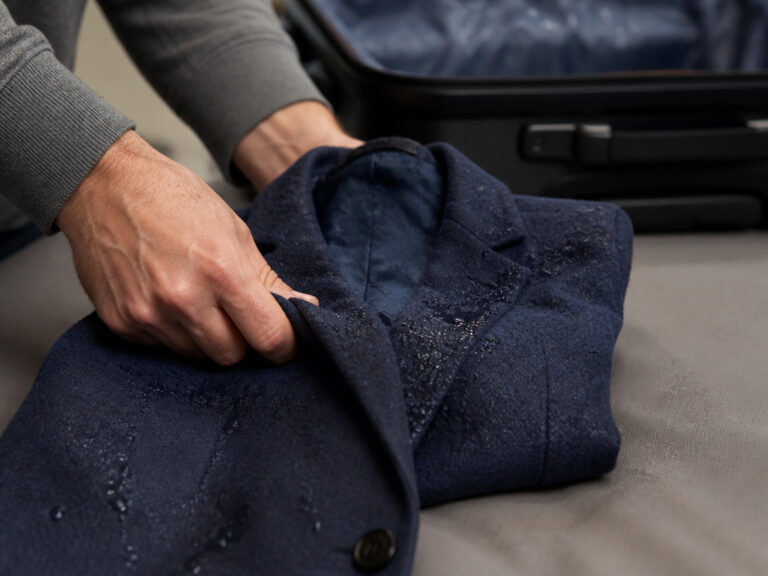
- Urban Travel / Business: A wheeled carry-on like the Osprey Farpoint Wheeled Travel Pack 36L. It meets domestic carry-on size, protects a suit blazer in a separate compartment, and rolls on smooth floors. The load limit is 30 pounds, which is plenty for business attire and a laptop.
- Mixed Terrain / Adventure: A travel backpack like the Osprey Farpoint 40. It’s a backpack when you’re on cobblestone streets or hiking to a hostel, but it opens like a suitcase for easy packing. Its 40-pound load range handles heavier gear like boots.
- Long-Term / Moving: A large duffel like the Osprey Transporter 65. It’s a checked bag, so you can use the full 50-pound airline allowance. The simple construction means fewer parts to break, and the durable 780D packcloth fabric resists abrasion on baggage belts.
The wrong bag creates friction. A wheeled bag in a rustic village is a nightmare. A backpack for a formal conference looks out of place. Match the tool to the task.
How to Actually Pack a Suitcase: The Layer Method
Forget rolling versus folding. The core idea is density management. You want to fill every cubic inch without creating pressure points that stress zippers.
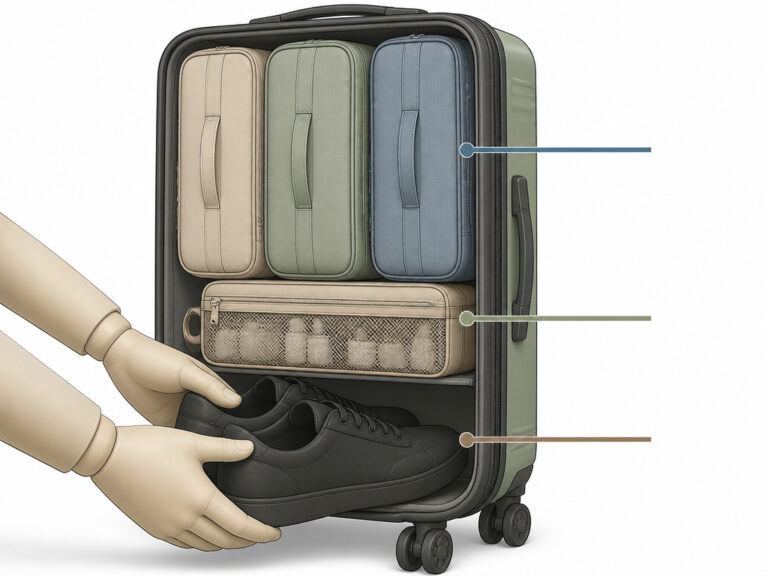
Start with the heaviest, least compressible items at the wheel end of your suitcase. Shoes, toiletry kits, hard-sided electronics cases. This places the weight low and over the wheels when upright, improving stability.
Next, create a flat layer of folded clothes like pants and jackets. Use this layer to fill the voids between the heavy items.
Then, pack rolled clothes (t-shirts, socks, underwear) into the remaining gaps. The rolls act as cushions and fill irregular spaces.
Finally, place lightweight, crushable items like a puffy jacket or a soft pillow on top as the final layer before closing.
Use the internal compression straps only to secure this built stack, not to crush it further. Cinch them snug, not tight. Over-tightening bends the internal frame sheet on travel packs, creating a permanent curve.
This method distributes weight evenly, protects fragile items, and makes unpacking a reverse of packing—efficient. It’s the difference between a bag that carries well and a bag that bulges and strains at every seam.
Frequently Asked Questions
Can I pack food in my checked suitcase?
Yes, but with major caveats. Non-perishable, sealed, dry foods are fine. Avoid anything liquid, creamy, or smelly. International borders have strict agricultural restrictions, so declare all food items. Fresh fruit, meats, and cheeses are often confiscated.
Are power banks allowed in checked luggage?
No. The FAA prohibits spare lithium-ion power banks (portable chargers) in checked baggage. They must be carried in the cabin. This is due to fire risk; a fire in the cabin can be addressed, but a fire in the cargo hold is catastrophic.
How strict are airlines about personal item size?
Very strict on budget carriers like Frontier and Spirit. They use sizing boxes at the gate. If your backpack doesn’t fit, you’ll pay a hefty gate-check fee. For major carriers like Delta and Southwest, they’re more lenient unless the bag is obviously oversized. Know your airline’s personal item rules.
Can I lock my checked suitcase?
Yes, but use a TSA-approved lock. TSA agents have master keys to open these locks for inspection. If you use a non-TSA lock, they will cut it off if they need to inspect your bag.
Before You Go
Packing a suitcase is a physics problem wrapped in a policy document. The answer to “what can I pack” lives in three places: the airline’s website, the IATA’s dangerous goods list, and your bag’s own forgotten manual.
The 40-pound load limit on your wheeled carry-on is real. The FAA’s bin weight guidance is real. The ban on Category B biological substances is real. Ignore them, and you’re gambling with your gear.
So check your bag’s manual tonight. Weigh your packed bag tomorrow. And put anything you can’t replace in your backpack with you on the plane. That’s the whole game.