Can You Take Indian Sweets in Hand Luggage? Security Guide
This post contains affiliate links. As an Amazon Associate, we earn from qualifying purchases.
You can take most Indian sweets in hand luggage if you match three things: the sweet’s consistency (solid vs. syrupy), its packaging (airtight and scannable), and your destination country’s specific food import rules.
You can take most Indian sweets in hand luggage if you match three things: the sweet’s consistency (solid vs. syrupy), its packaging (airtight and scannable), and your destination country’s specific food import rules. Dry sweets like barfi, laddoo, and kaju katli pass security as regular food. Syrupy sweets like gulab jamun fall under the universal 100ml liquid rule for carry-ons.
The universal mistake is treating all mithai the same. A box of soan papdi sails through. That same box of rasgulla in syrup gets pulled aside, opened, and likely confiscated if it’s over 100ml. The difference isn’t the sugar — it’s the water content.
This guide covers the exact split between solid and liquid sweets, how to pack each type to survive the X-ray belt, and the non-negotiable customs rules for the UK, Canada, the US, and other common destinations. It also names the airlines that are stricter and the one ingredient that guarantees seizure.
Key Takeaways
- Dry over syrupy every time. Solid sweets (barfi, peda, tilkut) are treated as standard food. Syrupy sweets (gulab jamun, jalebi in syrup) are liquids under the TSA 3-1-1 rule.
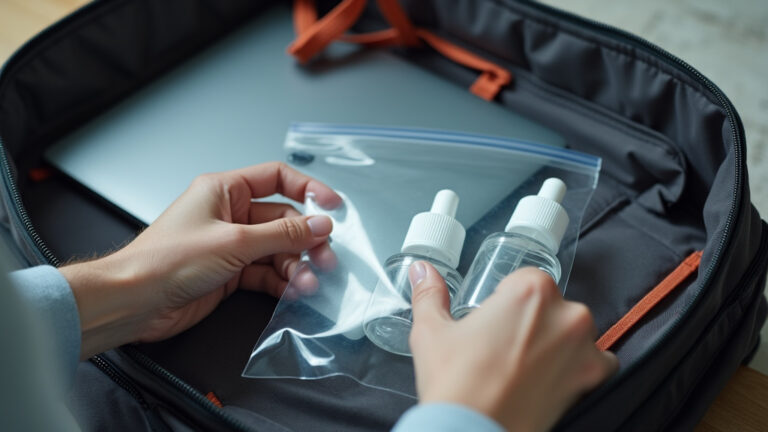
- The 100ml limit is absolute. Any syrupy sweet in your carry-on must be in a container of 100ml (3.4 oz) or less, and all such containers must fit inside one clear, quart-sized plastic bag.
- Destination rules trump airport security. You can clear Delhi or Heathrow security with dry mithai, but UK Border Force will confiscate any sweets containing fresh dairy or meat. Canada limits you to 20kg of sweets total.
- Homemade needs a declaration. Commercially packaged, sealed sweets face fewer questions. Homemade sweets must be declared at customs and may be subject to agricultural inspection.
- Poppy seeds (khas-khas) are a hard no. Many countries, including the UAE and Singapore, prohibit foods containing poppy seeds due to trace opiate content. These sweets will be seized.
The Solid vs. Syrupy Split: What’s Allowed in Cabin Bags
Head design changes the entire process. Look at the business end of your trimmer.
Airport security categorizes items by physical state, not cultural significance. A laddoo is a solid. A rasgulla swimming in sugar syrup is a liquid gel. That single distinction decides whether your treat passes in your backpack or gets rerouted to checked luggage.
The universal 3-1-1 rule for liquids, aerosols, and gels applies to any food item with a similar consistency. This includes syrups, chutneys, yogurt, and sweets suspended in liquid. Each container must be 3.4 ounces (100 milliliters) or less, all containers must fit inside one clear, quart-sized plastic bag, and one bag is permitted per passenger.
Dry, Solid Sweets (Always Allowed in Hand Luggage)
These are the safe bets. They won’t leak, they survive pressure changes, and they look like food on the X-ray.
– Barfi (milk, coconut, besan)
– Laddoo (besan, motichoor, boondi)
– Kaju Katli
– Mysore Pak
– Soan Papdi
– Dry Fruit Halwa (in solid, cake form)
– Chikki
– Tilgul (Tilkut)
– Peda (dry variety, not floating in syrup)
– Badam Halwa squares
Pack them in a hard-sided, airtight container. A Tupperware-like box is perfect. It prevents crushing from other items in your backpack carry-on rules and contains any potential powder or crumb spillage. Security may still ask you to open it, but they’ll see a solid mass and wave it through.
Syrupy, Wet Sweets (Subject to the 100ml Liquid Rule)
This is where people get caught. The sweet itself isn’t banned, but the liquid medium is restricted.
– Gulab Jamun in syrup
– Rasgulla in syrup
– Jalebi (especially fresh, dripping in syrup)
– Ras Malai
– Shawhi Tukda
– Any “mithai” stored or sold in a sugary syrup
If you must carry these in your cabin bag, you have one path: repackage. You cannot take a 500g box of gulab jamun through security. You can take a 100ml container of them. Transfer a few pieces with their syrup into a small, leak-proof container under 100ml. Place that container inside your clear quart-sized bag with your travel-sized shampoo and toothpaste.
Common mistake: Carrying a large, sealed commercial box of rasgulla in your carry-on — the syrup qualifies as a gel, and the entire box will be confiscated at the security checkpoint if it’s over 100ml. You’ll watch it go into the bin.
TL;DR: Pack solid sweets in airtight containers. For syrupy sweets in hand luggage, obey the 100ml limit and use your liquids bag. Otherwise, check them.
Packaging: How to Make Security Say “Yes” Instead of “Stop”
Wind direction decides whether the head feeds or jams.
Your packaging isn’t just about freshness. It’s a communication tool for the security officer staring at the X-ray monitor. A messy, opaque bag signals “inspect me.” A neat, transparent container signals “food, move on.”
Follow this packing sequence for any sweets in your carry-on luggage definition:
- Choose the right container. A hard-sided plastic container with a snapping lid is the gold standard. It won’t collapse, it contains odors, and it looks deliberate. Avoid flimsy plastic bags or original cardboard boxes that can tear.
- Layer for stability. Place a sheet of parchment paper or foil at the bottom. Add your sweets in a single layer if possible. Top with another sheet. This prevents sticking and makes individual pieces easier to remove if inspected.
- Seal against odor. Strong aromas of cardamom, ghee, or saffron can permeate your bag. A tight seal minimizes this, which is a courtesy to fellow passengers in a confined cabin. It also keeps moisture out.
- Place it for easy access. Don’t bury your sweets at the bottom of your bag. Keep the container in an easy-to-reach outer pocket or at the top of your main compartment. If security asks to see it, you won’t have to unpack everything.
What happens if you skip these steps? The container cracks under pressure from a heavy laptop. The syrup leaks onto your clothes. The officer can’t identify the gloopy mass on the X-ray and pulls you aside for a manual search, unrolling every garment. That adds 15 minutes to your queue time, minimum.
For international journeys over eight hours, consider a vacuum sealer for dry sweets. It reduces bulk, locks in freshness absolutely, and creates a very obvious, uniform package for X-rays. Just ensure the sealed bag has no sharp corners that could puncture other items.
TL;DR: Hard container, parchment layers, tight seal, easy access. This sequence turns a potential security hassle into a five-second glance.
International Travel: The Real Sticking Points
Clearing your departure airport is only half the battle. The arrival customs desk holds the real veto power. Their rules aren’t about security — they’re about agriculture, dairy safety, and prohibited substances.
| Destination | Key Restriction | Consequence if Violated |
|---|---|---|
| United Kingdom | No fresh dairy or meat products. Dry, long-shelf-life sweets are generally allowed. Homemade sweets are scrutinized. | Confiscation and disposal of prohibited items. Possible fine for non-declaration. |
| Canada | Total limit of 20kg of food per person. Dairy-based sweets are permitted if commercially packaged. Must be declared. | Items over the limit may be seized. Undeclared commercial food can lead to a $400 penalty. |
| United States | Dairy and egg-based sweets are allowed. Strict prohibition on any foods containing poppy seeds (khas-khas). Must be declared. | Poppy seed items are destroyed. Failure to declare any food can result in a $300 fine. |
| Australia & New Zealand | Extremely strict on any dairy, egg, nut, or seed-based products. Almost all homemade sweets are prohibited. | Immediate confiscation and destruction. Significant fines for biosecurity breaches. |
| UAE & Singapore | Zero tolerance for poppy seeds (khas-khas). Even trace amounts on besan or halwa can lead to seizure. | Confiscation. Potential legal complications depending on quantity. |
I once carried a beautifully packaged box of homemade kaju katli for family into Canada. I declared it. The CBSA officer opened it, saw the loose silver leaf, and asked if I had the original receipt for the nuts and dairy. I didn’t. He explained that without commercial proof of pasteurization, he had to assume a risk. He let it through with a warning, but the next passenger with similar items saw theirs taken. Now I only carry sealed, branded boxes for international gifts.
The declaration step is non-negotiable. On your customs form, you must check “Yes” for “Food, fruits, plants, meats, or other agricultural products.” When you approach the officer, state: “I have commercially packaged Indian sweets.” Or, “I have homemade sweets.” They will then decide to wave you through, inspect visually, or send for further agricultural screening.
Skipping declaration because you think your sweets are “safe” is the most common, costly error. The fine for a first-time offense in the US starts at $300. It’s not about the threat of the sweet; it’s about the principle of lying on a federal form.
TL;DR: Your destination’s customs rules matter more than airport security. Always declare sweets, avoid poppy seeds, and prefer commercially packaged items for international flights.
Airline-Specific Policies: Low-Cost vs. Full-Service Carriers
While security (TSA, CATSA) sets the baseline rules, individual airlines can impose stricter policies. Your airline backpack allowances for weight and size also apply to the bag carrying your sweets.
Most airlines treat properly packaged food as part of your personal item allowance. However, some low-cost carriers (LCCs) with strict weight limits for cabin bags might view a heavy container of sweets as a problem if your bag is already borderline.
- Air India & Vistara: As full-service carriers, they follow standard international norms. Packaged sweets in reasonable quantities are unproblematic. They are familiar with passengers carrying mithai.
- IndiGo, SpiceJet, AirAsia India: These LCCs enforce cabin bag weight limits (often 7kg) strictly. A 2kg box of sweets could push you over. If you’re close to the limit, pack sweets in your checked luggage instead.
- International Carriers (British Airways, Lufthansa, Emirates): Similar to Air India. The main hurdle is your destination’s customs, not the airline’s policy. Ensure your carry-on bag remains within the maximum carry-on size limits.
The main risk with airlines isn’t confiscation — it’s being forced to check your bag at the gate because it’s too heavy. If your sweets are in that bag, they’ll go into the hold. That’s fine for dry sweets, but syrupy sweets in checked luggage must be packed for battle: double-bagged in zip-lock bags, placed in the center of your suitcase, and surrounded by soft clothing to absorb any potential leakage from pressure changes.
Common mistake: Packing a heavy metal tin of laddoo in a cabin bag for a low-cost airline flight — the bag weighs 9kg at check-in, you get hit with an overweight fee that costs more than the sweets themselves.
Call it overthinking. But checking your airline’s specific cabin baggage weight policy on their website takes two minutes. It beats a 2,000-rupee surprise at the counter.
Special Scenarios: Homemade, Allergens, and Temperature
Some situations need extra forethought. The rules get granular.
Homemade Sweets vs. Commercial
Grandma’s special barfi is a gesture of love. It’s also a higher scrutiny item for customs agents worldwide.
– Commercial: Sealed, branded packaging with ingredient labels is the gold standard. It looks processed and safe. Keep the receipt if possible, as it proves commercial origin.
– Homemade: You must declare it. Be prepared to describe the ingredients simply: “milk solids, sugar, cardamom.” Avoid jokes or vague terms. The agent may inspect it visually or, rarely, take a sample for disposal. Never attempt to bring homemade sweets containing fresh milk or cream into countries with strict dairy import bans (like Australia).
Allergen Awareness
Indian sweets are dense with common allergens: nuts (cashew, almond, pistachio), dairy (khoya, ghee, milk), and sometimes sesame (til). This matters for two reasons:
1. In-Flight Safety: Be considerate. Don’t open a packet of strong, nut-heavy sweets mid-flight if you’re in a tight cabin. It’s a courtesy.
2. Customs Declarations: Some countries ask specifically about nuts and seeds. Be accurate on your declaration form. Lying about allergens is a serious issue if it triggers a reaction in a processing facility.
Perishable & Temperature-Sensitive Sweets
Sweets made with fresh khoya, malai, or cream cheese spoil without refrigeration. You have a short window.
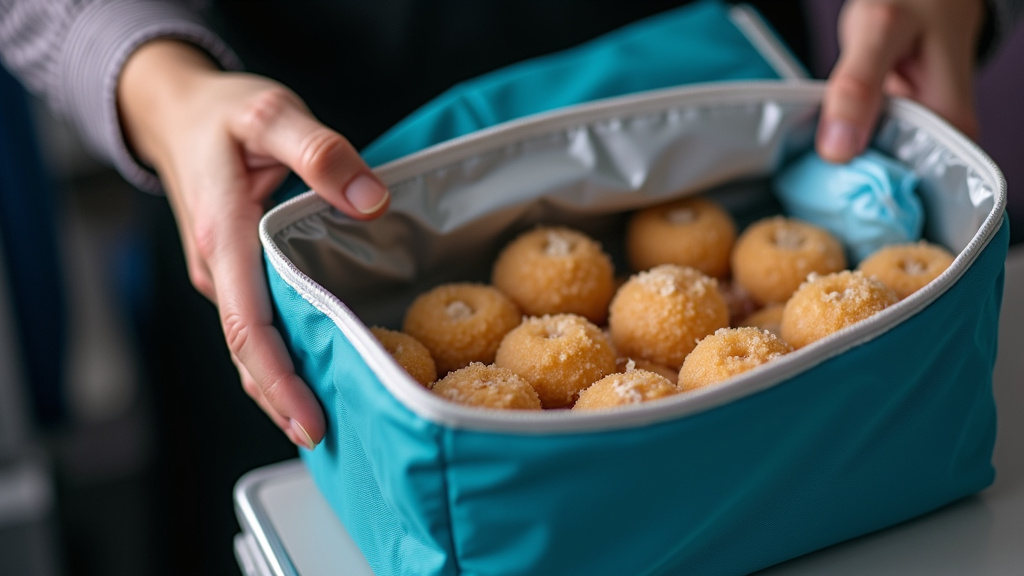
– For flights under 4 hours, pack them in an insulated lunch bag with a small, frozen gel pack. The gel pack must be completely frozen solid when you go through security. If it’s partially melted and slushy, it’s a liquid and subject to the 100ml rule.
– For longer journeys, it’s often not worth the risk. The sweet may spoil, become a mess, and smell. Choose dry, shelf-stable alternatives instead.
TL;DR: Commercial packaging simplifies everything. Declare homemade items honestly. For perishable sweets, use a frozen gel pack and keep journeys short.
Frequently Asked Questions
Can I carry a full mithai box like from Haldiram’s in hand luggage?
Yes, if the sweets inside are dry (like soan papdi, dry barfi) and the box is sealed. If the box contains gulab jamun or rasgulla in syrup, and the total syrup volume is over 100ml, it cannot go in your carry-on. You must pack it in checked luggage or leave it behind.
What happens if I don’t declare my sweets at customs?
If caught, you face a fine. In the United States, the civil penalty for a first-time violation of failing to declare agricultural items is typically $300. The items will be confiscated and destroyed. It’s an administrative penalty, not a criminal charge, but it’s an expensive lesson.
Are sandesh or cham cham allowed in hand luggage?
It depends on the moisture content. A dry, firm sandesh is a solid. A soft, moist cham cham in syrup is treated as a gel. If the sweet weeps moisture or is stored in syrup, apply the 100ml liquid rule for carry-on bags.
Can I take sweets in my hand luggage on a domestic flight within India?
Yes. Domestic Indian security (BCAS rules) is generally more permissive with food items than many international agencies. Both dry and syrupy sweets are usually allowed in reasonable quantities in cabin baggage. However, individual airlines like IndiGo still enforce cabin bag weight limits, so heavy boxes could be a problem.
What is the single most confiscated Indian sweet at airports?
Gulab jamun. Travelers see the sweet, not the syrup. They toss the box into their carry-on and get stopped at the liquid screening checkpoint every single time. The second most confiscated are sweets containing poppy seeds (khas-khas) at destinations like Dubai or Singapore, where they are strictly prohibited.
How should I pack sweets for checked luggage?
Treat it like fragile, potential leakage. Place sweets in an airtight, hard container. Seal that container inside a large, zip-top plastic bag. Surround the bag with soft clothing in the center of your suitcase. This triple-layer method contains any leaks from pressure changes and protects the sweets from crushing.
Before You Go
You can take Indian sweets in hand luggage successfully by planning around the three fixed points: consistency, packaging, and destination law. Dry sweets in airtight containers are your safest, most hassle-free bet for the cabin. Syrupy sweets must obey the 100ml limit or go in the hold.
The real trip-ender isn’t airport security — it’s the customs desk at your arrival gate. Declare everything. Know that poppy seeds are a universal red flag. And when in doubt, choose the commercially sealed box over the homemade one for international trips.
Pack smart, declare honestly, and the only sweetness you’ll lose is the one you share at your destination.