Properly Clean Your LL Bean Boat and Tote | No Shrinkage
This post contains affiliate links. As an Amazon Associate, we earn from qualifying purchases.
Clean your LL Bean Boat and Tote by spot cleaning with a mild detergent and cool water, working with the canvas grain. For a full clean, hand wash in cool water and air dry flat. Machine washing is possible but voids the warranty, risks shrinkage, and changes the bag’s stiff texture to a broken-in feel.
That warranty clause isn’t a suggestion. L.L. Bean officially recommends spot cleaning only for a reason—the 24-ounce cotton canvas and double-stitched nylon seams are built for durability, not repeated immersion. Deviating from “spot clean” shifts the risk to you.
What follows is a breakdown of all three methods: the official spot clean, the safe hand-wash workaround, and the rogue machine wash. Each section includes the specific consequence of skipping a step, from voided guarantees to permanent shrinkage measured in inches.
Key Takeaways
- L.L. Bean’s official care instruction is “spot clean only.” Any other method technically voids the product’s guarantee.
- Hand washing in cool water is the safest method for a full clean. Hot water begins the shrinking process immediately.
- Machine washing will shrink the bag and permanently soften its signature stiff canvas. One owner reported about an inch of shrinkage in length and width.
- Never wring or twist a wet tote. Press it against itself or roll it in a towel to remove water without distorting the shape.
- Air dry flat and away from direct sunlight. Machine drying guarantees shrinkage and sun exposure fades colors over time.
Spot Cleaning: The Official Method
L.L. Bean’s product page states “spot clean” as the sole cleaning directive. This isn’t a lack of detail; it’s a boundary. The bag’s legendary longevity is tied to keeping the heavyweight canvas dry and the structural seams intact.
Spot cleaning limits water exposure to the stained area only, which preserves the bag’s original shape, color, and textured hand. Full immersion, even in a basin, stresses the thread and can lead to premature seam failure.
You need a mild detergent, cool water, a small bowl, and a light-colored sponge or rag. The light color matters. A dark sponge can transfer dye onto the canvas, creating a new stain you cannot remove.
Mix one teaspoon of detergent like Dr. Bronner’s Pure Castile Liquid Soap into a cup of cool water. Dampen your sponge, wring it nearly dry so it’s just sudsy, and scrub the soiled area along the grain of the canvas. Rinse the sponge with clean water and wipe the area to remove soap residue. Let it air dry completely before using the bag again.
Common mistake: Using hot water for spot cleaning. Heat starts the shrinking process even on a small area, which can pucker the canvas around the clean spot.
Skip the light-colored cloth and you risk dye transfer. Use hot water and you initiate localized shrinkage. The process is simple, but the specifics are non-negotiable.
Hand Washing: The Safe Deep Clean
When spot cleaning isn’t enough—think beach sand, spilled coffee, or general grime—hand washing is your next step. It’s the full-clean method that balances effectiveness with the lowest risk of physical damage.
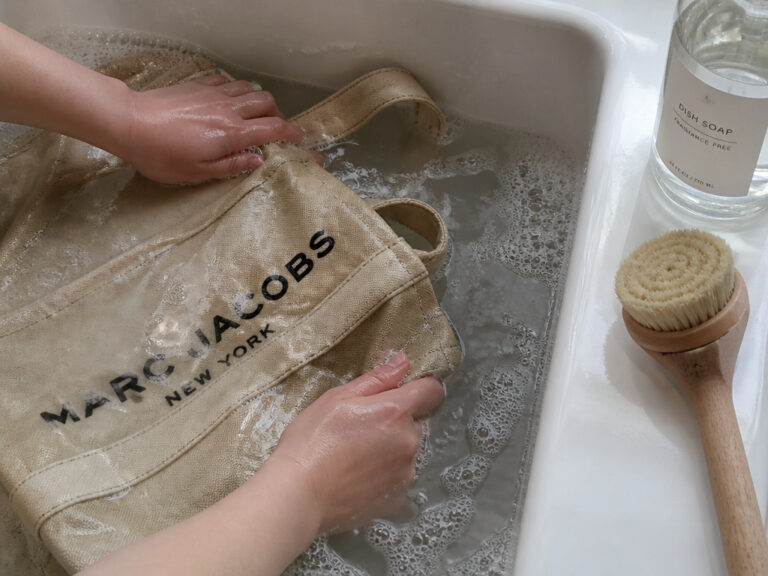
Fill a bathtub or large basin with cool water. Add a small amount of mild detergent and swish to dissolve. Submerge the tote and gently agitate it with your hands. Let it soak for 10-15 minutes. Drain the soapy water, refill with cool clean water, and rinse the bag until the water runs clear.
Do not wring the bag. Wringing or twisting puts asymmetric stress on the seams and can permanently distort the rectangular shape. Instead, press the bag against the side of the basin or against itself to squeeze out water. For a heavier bag like the extra-large tote, lay it flat on a clean towel, roll the towel up, and press firmly to absorb moisture.
| Step | Tool/Method | Risk If Skipped |
|---|---|---|
| Fill Basin | Bathtub or large container | Inadequate space prevents proper agitation and rinsing. |
| Agitate & Soak | Cool water, mild detergent | Dirt remains trapped in the canvas weave. |
| Rinse | Multiple cycles of cool water | Soap residue attracts more dirt and stiffens the fabric as it dries. |
| Remove Water | Pressing, towel-rolling | Wringing distorts the bag’s shape and strains the double-stitched seams. |
| Dry | Air dry flat, out of direct sun | Sunlight fades colors; drying in a bunched shape sets permanent wrinkles. |
This method is detailed in other canvas tote bag care guides, but the pressing-not-wringing step is the one most people replace with a quicker, more destructive move.
Can You Machine Wash an LL Bean Boat and Tote?
Yes, you can. You shouldn’t, but you can. Machine washing is the rogue method that changes everything about the bag—its size, its feel, and its standing with L.L. Bean.
The primary source is clear: machine washing invalidates any guarantees L.L. Bean makes. If your bag’s seams split after a wash cycle, you own the problem. The secondary consequence is physical. The agitator and spin cycle are brutal on canvas, and hot water will shrink the bag.
One owner’s report quantified it: a warm wash (around 110°F) shrunk their tote by about an inch in length and width. The bag no longer fit the large drill case it was meant to carry.
Where this goes sideways: Assuming “delicate cycle” is safe. The spin cycle alone, even on cold, can torque the seams and permanently soften the canvas from stiff to floppy.
If you proceed, use cold water only and a gentle cycle. Place the tote inside a mesh wash bag meant for delicates to minimize abrasion. Wash it alone or only with other heavy canvas items. When it emerges, it will look misshapen and bedraggled. Reshape it by hand while wet, then air dry flat. The final texture will be softer, more broken-in.
Bottom line: Machine washing solves deep-set stains at the cost of the bag’s original character and warranty. It’s a trade, not a cleaning.
The Tools and Products That Actually Work
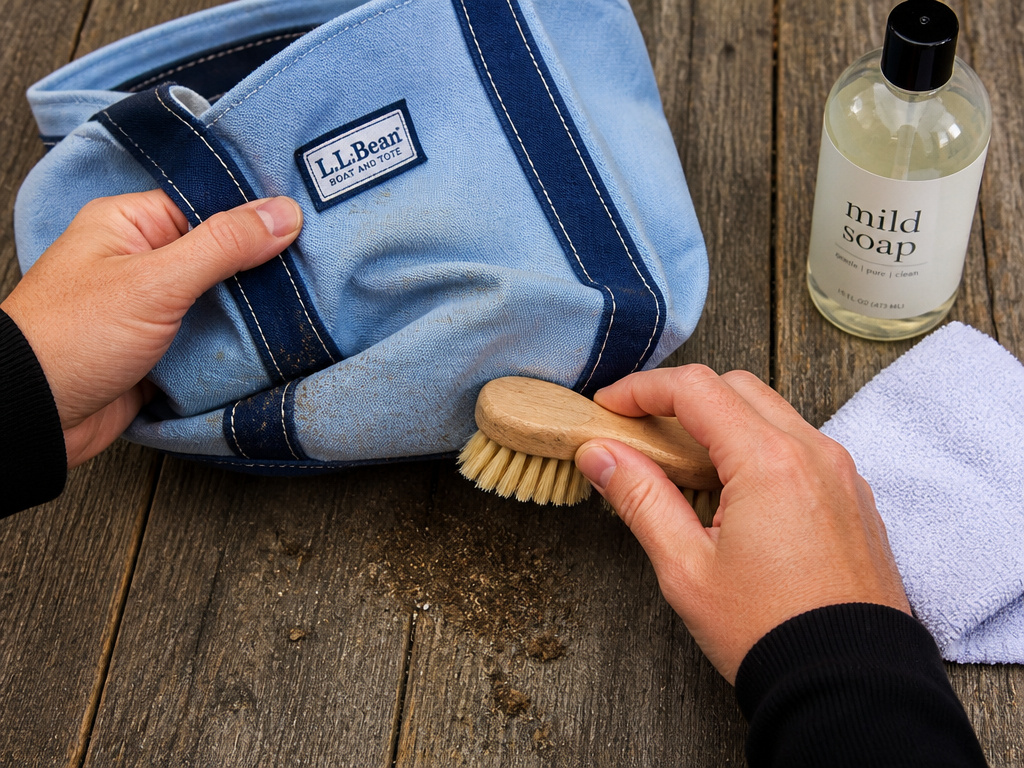 You don’t need specialty cleaners. You need the right basics used the right way. A harsh detergent will degrade the cotton fibers as surely as hot water will shrink them.
Start with a mild liquid detergent. Dr. Bronner’s Castile Soap is a frequent recommendation because it rinses clean without residues. For stubborn greasy stains on the canvas body, a dab of saddle soap on a damp cloth can work wonders without harsh scrubbing. If your tote has leather handles, treat them separately after cleaning with a leather conditioner to prevent drying and cracking.
Your toolkit should also include a soft-bristled brush for knocking off dry dirt before any wash, and a light-colored microfiber cloth for spot cleaning. The brush prevents grinding grit into the fabric during washing. The cloth ensures no dye transfer.
For machine washing, the non-negotiable item is a large mesh wash bag. It buffers the canvas from the washer’s agitator. Without it, the bag’s straps and seams snag and stretch.
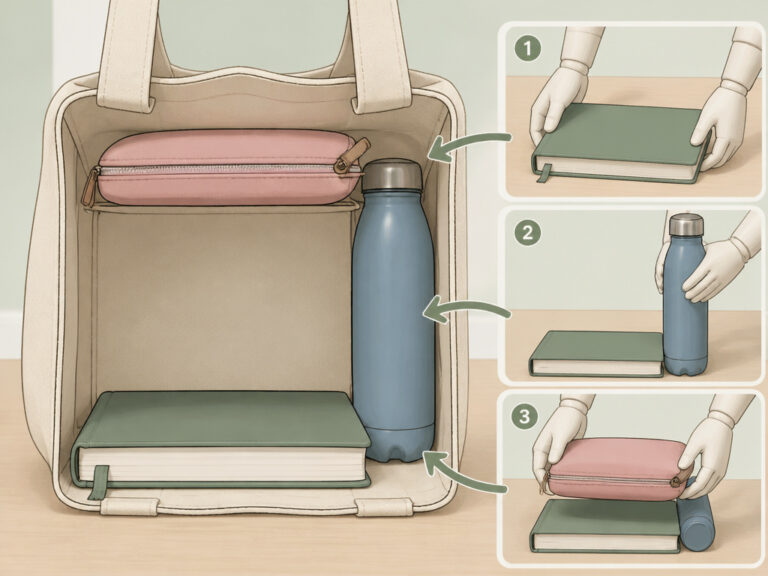
This practical approach to supplies mirrors the logic used in a broader tote bag organization system: the right simple tool prevents a cascade of problems later.
Drying and Reshaping: The Make-or-Break Phase
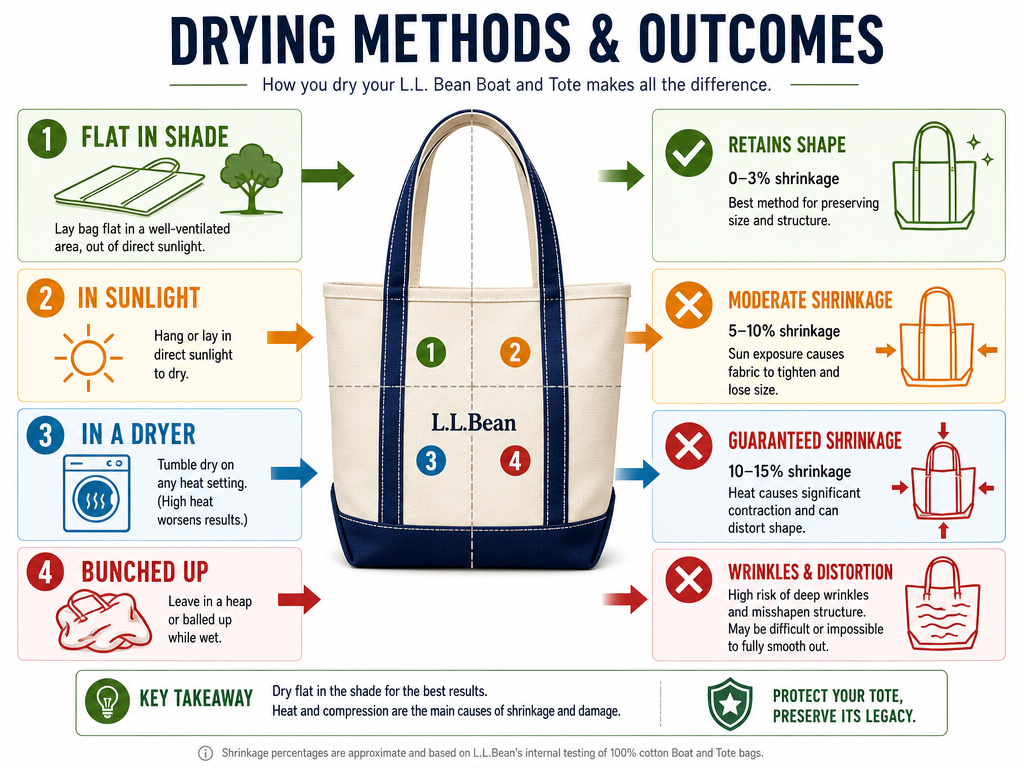 Cleaning is only half the job. How you dry the tote determines whether it comes back ready for work or retains a permanent slump. The rule is simple: air dry only, with no applied heat.
After extracting water via pressing or towel-rolling, lay the tote flat on a dry towel or a mesh drying rack. Reshape it into its proper rectangular form, smoothing out the base and sides. If the bag has a tendency to curl, place a light weight (like a clean, dry book) inside to hold the shape.
Avoid direct sunlight. UV rays will fade the iconic L.L. Bean colors over time. Dry the bag indoors or in a shaded, well-ventilated area. A fan can speed the process without risk.
| Drying Method | Projected Outcome | Timeline to Damage |
|---|---|---|
| Air dry, flat & shaded | Bag retains shape, color, and texture. | Safe indefinitely. |
| Air dry in direct sun | Colors fade noticeably. | Visible fading after 2-3 extended drying sessions. |
| Machine dry (any heat) | Guaranteed shrinkage; canvas may stiffen or become brittle. | One cycle. |
| Dried bunched up | Sets permanent wrinkles and a misshapen structure. | Set as soon as the bag is completely dry. |
The drying phase is where patience pays. Rushing it with a dryer or placing it in the sun undoes all the careful work of a cool-water wash. Once completely dry, store it properly to keep it clean longer.
Edge Cases and Special Materials
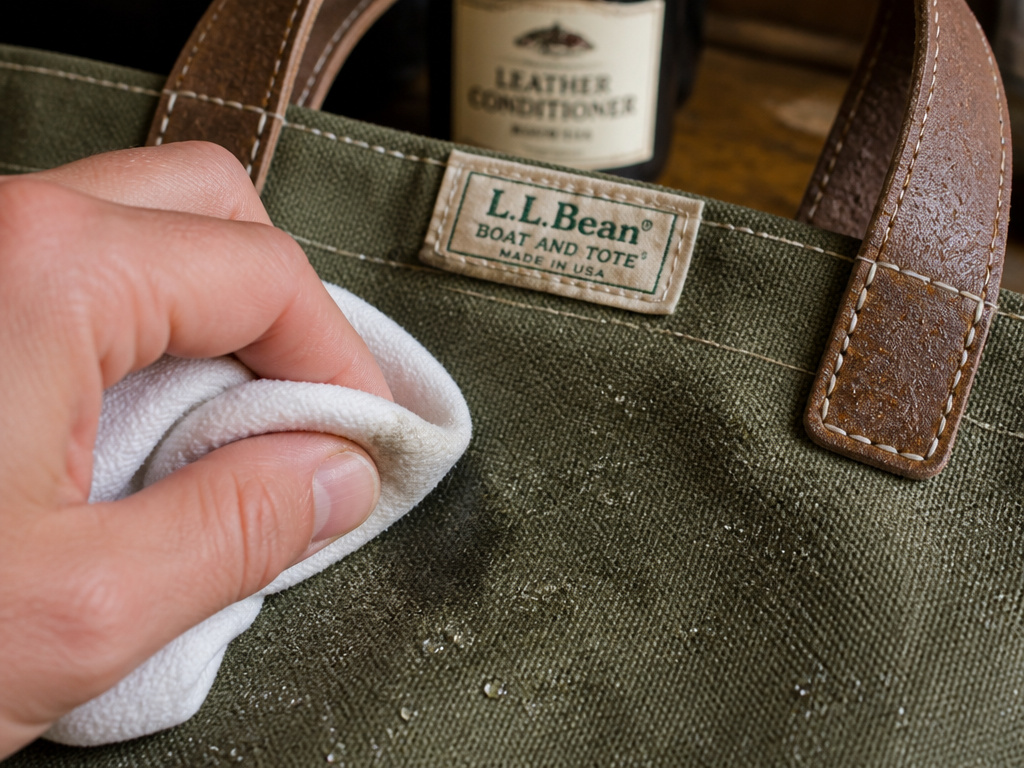 The standard Boat and Tote is 24-ounce cotton canvas. Some versions introduce materials that break the standard cleaning rules. Miss these details and you ruin the bag.
Waxed canvas totes should never be soaked. Immersion strips the wax coating, leaving spotty water repellency and a blotchy appearance. Spot clean only with a damp cloth, and re-wax according to the manufacturer’s instructions if needed.
Bags with leather handles or trim require a two-stage process. Clean the canvas body as directed, keeping the leather as dry as possible. After the canvas is dry, clean the leather with a dedicated leather cleaner, then condition it. Getting the leather soaking wet can cause it to stiffen and crack as it dries.
For heavily stained or moldy bags, spot cleaning or hand washing may not suffice. This is when professional cleaning becomes a viable option. Professionals have methods to treat severe stains without full immersion. However, the cost may approach that of a new bag.
These exceptions are why understanding tote bag materials is crucial. A one-size-fits-all method doesn’t work when the materials vary.
Frequently Asked Questions
Does washing an LL Bean tote void the warranty?
Yes. L.L. Bean’s official care instruction is “spot clean.” Any other method, including hand washing or machine washing, technically voids the product’s guarantee. If the bag fails due to a manufacturing defect after being washed, L.L. Bean is not obligated to replace it.
How much does an LL Bean Boat and Tote shrink?
Shrinkage depends on water temperature and method. One documented case saw about one inch of shrinkage in both length and width after a warm machine wash (~110°F). Hand washing in cool water presents minimal shrinkage risk, while hot water in any method will cause measurable contraction.
Can you put an LL Bean tote in the dryer?
No. Machine drying, even on air fluff/no heat, will shrink the canvas and can damage the seams due to tumbling. Always air dry the tote flat and away from direct heat or sunlight.
How do you get mold out of a canvas tote?
For light mold, scrub the affected area with a soft brush and a mixture of cool water and white vinegar (1:1 ratio) outdoors. Rinse thoroughly and air dry completely in the sun to kill remaining spores. For extensive mold, professional cleaning or replacement is advised, as mold can weaken the fabric.
What’s the best way to store a clean Boat and Tote?
Ensure the tote is completely dry to prevent mildew. Store it in a cool, dry place, lying flat or neatly folded. Avoid cramming it into a tight space for long periods, as this can set permanent creases. For long-term storage, consider the principles outlined in our guide on how to store tote bags properly.
Can you iron an LL Bean tote?
It’s not recommended. The high heat of an iron can scorch the cotton canvas. If wrinkles are severe after washing, try reshaping the bag while damp and drying it under light tension. For stubborn creases, use a garment steamer at a distance, avoiding direct contact with the fabric.
The Bottom Line
Cleaning an LL Bean Boat and Tote is a negotiation between getting it clean and keeping it intact. The official answer is spot clean. The practical answer for most owners is a careful hand wash in cool water. The machine wash is a last resort that trades warranty and texture for a deep clean.
Your goal isn’t a sterile bag. It’s a durable one that lasts another decade. That means cool water, mild soap, no wringing, and air drying. Skip the heat, skip the dryer, skip the harsh chemicals. The bag’s 80-year legacy is built on heavy canvas and double stitches, not surviving aggressive cleaning. Treat it like the workhorse it is, not like a delicate.