What Is Not Allowed in Carry-On Luggage (TSA Checklist)
This post contains affiliate links. As an Amazon Associate, we earn from qualifying purchases.
To determine what is not allowed in carry-on luggage, follow the official TSA prohibited items list, which bans all weapons, most tools, flammable items, and liquids over 3.4 ounces. The final decision always rests with the screening officer, who can prohibit any item they deem a security risk.
Most travelers get tripped up by the nuances, not the big bans. They know guns are out. They forget that a forgotten multi-tool from a weekend project or a souvenir bottle of high-proof liquor counts as a weapon or a flammable hazard.
This guide walks through the TSA’s actual enforcement categories, item by item. It covers the common mistakes that trigger bag searches, the specific exceptions for medical needs, and the exact items that will get your gear confiscated on the spot.
Key Takeaways
- The TSA 3-1-1 rule applies to all liquids, gels, and aerosols: containers must be 3.4 oz or less, all must fit in one quart-sized bag, one bag per passenger.
- Medically necessary liquids (medication, baby formula, breast milk) are exempt from the 3-1-1 rule but must be declared for separate screening.
- Lithium batteries must be in your carry-on; powerful ones in checked bags are a fire risk and will be removed.
- Any tool that can be used as a weapon is prohibited: this includes all knives, screwdrivers over 7 inches, saws, hammers, and wrenches.
- The final call is the officer’s. An item on the “allowed” list can still be denied if it appears altered, suspicious, or poses any security concern.
The 3-1-1 Rule and the Major Exceptions
The 3-1-1 rule is the cornerstone of TSA liquid policy. Containers must be 3.4 ounces (100 milliliters) or smaller. All containers must fit comfortably inside a single, one-quart-sized, clear plastic, resealable bag. You are limited to one such bag per passenger.
The Transportation Security Administration’s 3-1-1 rule for carry-on luggage limits liquids, aerosols, gels, creams, and pastes to travel-size containers of 3.4 ounces or 100 milliliters. These containers must fit entirely within a single, one-quart, clear plastic bag. The rule exists to limit the total volume of potential liquid explosives a passenger could bring aboard an aircraft.
Forget “comfortably.” If you have to force the zipper shut, it’s not comfortable. The officer will make you choose which items to remove. A bag that looks overstuffed is a guaranteed stop.
TL;DR: Pack your 3-1-1 bag neatly. If it’s bulging, remove something. Declare all medical liquids and baby food immediately.
What Doesn’t Fit in the Quart Bag
Medically necessary liquids get a pass. This includes prescription and over-the-counter medications, insulin, saline solution, and contact lens fluid. It also covers baby and toddler necessities: formula, breast milk, toddler drinks, and baby food in puree pouches or jars.
You must notify the TSA officer you have these items before screening begins. They do not need to be in the quart bag, but they will undergo additional screening, often including a vapor test. Keep them in a separate, easy-to-access pouch.
Common mistake: Packing a full-size bottle of contact solution in your carry-on without declaring it — the officer will find it, your bag gets a full search, and you risk having it confiscated if you can’t prove it’s medically necessary.
The same exception applies to liquid nutrition or hydration gels for passengers with medical conditions. The key is declaration. Silence guarantees a hassle.
Sharp Objects & Tools That Will Be Confiscated
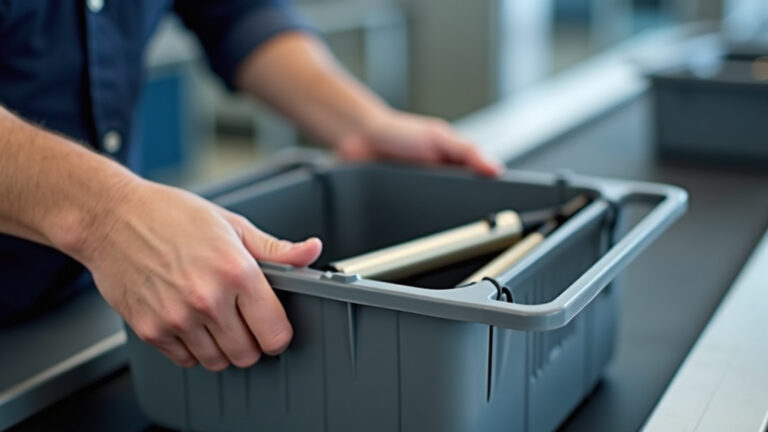
This category sinks more DIYers and tradespeople than any other. The rule is simple: if it can puncture skin or be used as an impact weapon, it stays out of your carry-on. Your checked bag is the only place for them.
| Item Category | Carry-On Status | Checked Baggage Rule |
|---|---|---|
| Knives & Blades | Prohibited (all types, any length) | Allowed, must be sheathed or securely wrapped |
| Tools (Screwdrivers, Wrenches) | Prohibited if over 7 inches | Allowed, no length restriction |
| Scissors | Prohibited if blade > 4 inches from pivot | Allowed |
| Drill Bits & Saw Blades | Prohibited (loose) | Allowed only if securely packaged in a tool case |
That includes the Leatherman or Gerber multi-tool on your belt. It includes the utility knife from your last home project. It includes ice axes and ski poles. I learned this the hard way returning from a cabin build. My favorite folding knife, a constant companion, was in my backpack’s front pocket. The agent pulled it, tagged it for destruction, and gave me a receipt. There was no “I forgot” option. The line behind me stretched for twenty people.
Screwdrivers and wrenches under 7 inches are technically permitted, but I wouldn’t risk it. Most officers see any tool as a potential weapon. If you must travel with tools, research the specific TSA rules for pins on backpacks and other accessories that might draw scrutiny, then check them in a hard-sided case.
TL;DR: Assume all tools are banned from carry-on. Pack them in checked luggage, secured so they can’t cause damage.
Flammables, Batteries, and Fire Starters
The cargo hold of an airplane is a pressurized, oxygen-rich environment. A spark or thermal event down there is catastrophic. The rules here are absolute and non-negotiable.
Flammable Liquids & Solids: Gasoline, lighter fluid, paint thinner, and liquid bleach are banned in both carry-on and checked bags. Strike-anywhere matches are completely forbidden. One book of safety matches or a classic Zippo lighter is allowed on your person or in your carry-on.
Arc Lighters & E-Lighters: These are the flameless plasma lighters. They are banned in checked bags because a shifting suitcase could press the button, creating a 1,100° arc that melts through fabric. You may carry one in your carry-on only if it has a safety latch preventing accidental activation.
Batteries: This is critical. Spare lithium-ion batteries, power banks, and any device with a lithium battery over 100 watt-hours must be in your carry-on. The risk is thermal runaway—a fire that can’t be extinguished in the cargo hold. If your bag is checked, the device itself (like a laptop) can stay inside, but spare batteries must come out. Always check the official TSA What Can I Bring? database for the latest watt-hour limits.
Bear Spray & Pepper Spray: These are prohibited in carry-on bags. Some airlines allow a small (often 4 oz or less) personal pepper spray canister in checked baggage if it has a safety cap and is declared at check-in. Policies vary wildly. Bear spray, containing concentrated capsaicin, is almost universally banned by airlines. Don’t fly with it. Buy it at your destination.
Weapons, Replicas, and Blunt Objects

The rules here are designed for zero ambiguity. Real, replica, or toy—if it looks like a weapon, it will be treated as one.**
Firearms, ammunition, stun guns, tasers, and martial arts weapons are prohibited. Firearms can only travel in checked baggage, unloaded, in a locked hard-sided container, and must be declared at check-in. Ammunition must be in its original packaging or a specially designed container.
The bigger trap for everyday travelers is the “replica or toy” category. That novelty grenade-shaped bottle opener, the fake dynamite alarm clock, or a realistic toy gun will be seen as a potential explosive or weapon on the X-ray. The response isn’t a polite inquiry. It’s a checkpoint shutdown and a bomb squad call. You will face fines and be placed on a watchlist.
Blunt objects intended for sports are also out: baseball bats, golf clubs, hockey sticks, pool cues, and lacrosse sticks. If you can swing it with force, it’s not allowed in the cabin. Rollerblades and ice skates are generally permitted, but hockey skates often are not—the boot is considered a potential weapon.
Medical Devices, Powders, and Special Circumstances
Traveling with medical equipment or large quantities of powder requires a proactive approach. The rules are accommodating, but only if you communicate.
Medical Devices: CPAP machines, nebulizers, and other large medical devices are allowed and do not count against your carry-on limit. You must remove them from their case for X-ray screening. Inform the officer. For supplies like ostomy pouches or large liquid medications, a quick declaration and possible vapor test are standard. The TSA Cares helpline can provide additional screening support if you notify them 72 hours before travel.
Powders: Powders like protein mix, spices, or cosmetic talc over 12 ounces (350 ml) may require additional screening in your carry-on. The officer may need to open the container and test it. On international flights arriving in the U.S., powders over 12 oz are often prohibited entirely in carry-ons. To be safe, pack non-essential powders in your checked luggage.
Food & Gifts: Solid food is allowed (sandwiches, fruit, chocolate). Gifts are fine, but if they are liquid or gel-like (jam, syrup, salsa), they must comply with the 3-1-1 rule. A wrapped present might need to be unwrapped if it alarms the scanner. It’s better to ship gifts ahead or wrap them after security.
Electronics and the Power-Up Rule
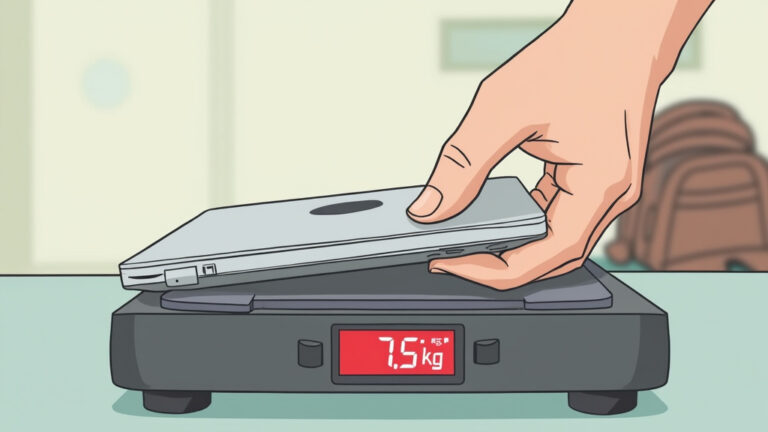
Officers may ask you to power on any electronic device: laptops, tablets, e-readers, and even cell phones. The device must turn on and boot to its home screen. If your battery is dead, the officer has the authority to prohibit the device from flying.
This isn’t about inspecting your data. It’s a verification that the device’s internal components are real and not a hollow shell hiding explosives. Always charge your devices before heading to the airport. A power bank can save you if your phone dies in line, but the power bank itself must also be in your carry-on.
When considering your backpack as carry-on luggage rules, remember that electronics organization matters. A cluttered bag with cables and devices tangled together looks like a mess on the X-ray. That mess triggers a hand search. Use cable organizers and keep your laptop in an easy-to-remove sleeve.
How to Pack to Avoid a Bag Search
Efficiency at security is about predictability. Officers process hundreds of bags an hour. A bag that looks standard on the X-ray glides through. A bag that is a tangled web of wires, dense blocks, and unidentifiable organic material gets pulled.
Before you start: Separate your liquids, large electronics, and food into accessible sections. Ensure all prohibited items are out of your carry-on and in your checked bag. Use the TSA’s own prohibited items overview for a final check.
First, use packing cubes. They compartmentalize your belongings, making the X-ray image cleaner. Clothing goes in one cube, cables and small electronics in another.
Second, position your quart bag and laptop at the very top of your backpack or carry-on. You should be able to retrieve them in under ten seconds without digging. This simple step saves you and everyone behind you time.
Third, know your airline’s specific personal item dimensions. A bag that is oversize might force you to gate-check it, and any prohibited item inside will be discovered, causing delays and potential penalties. A compact, compliant bag is your best defense.
Frequently Asked Questions
Can I bring a screwdriver in my carry-on?
You can bring a screwdriver shorter than 7 inches, but it is not recommended. TSA officers have broad discretion and often confiscate any tool that could be used as a weapon. For any tool, your checked bag is the only safe place.
What happens if TSA finds a prohibited item in my bag?
The officer will immediately stop the screening process. You will be given a choice: you can surrender the item for destruction, you can exit security to place it in your checked baggage (if time allows), or you can return it to your car. Some items, like weapons, will result in a law enforcement response and potential fines.
Are knitting needles or crochet hooks allowed?
Yes, both knitting needles and crochet hooks are permitted in carry-on and checked bags. The TSA explicitly allows them, though officers may inspect them if they appear unusually sharp or metallic.
Can I bring a razor in my carry-on?
Disposable razors and cartridge razors (like Gillette Mach3) are allowed. Safety razors where the blade is removable are prohibited—the blade itself is the issue. Electric razors are always allowed.
Is food allowed in carry-on luggage?
Yes, solid food is allowed. However, food that is a liquid, gel, or paste (yogurt, peanut butter, soup, jam) must follow the 3-1-1 rule. If it’s spreadable, it’s likely a gel.
What about checking a backpack with tools?
You can check a backpack as luggage, but you must ensure any tools inside are securely wrapped or in a case to prevent damage. Remember, flammable items and certain batteries are still banned from checked bags. Always verify your airline’s specific checked baggage policies for weight and fee structures.
The Bottom Line
Packing a carry-on that sails through security is a mechanical process, not a mystery. It requires matching your contents to a fixed set of government rules. The most reliable resource is the TSA’s own alphabetical prohibited items list. Check it twice.
Assume all tools and sharp objects are banned from the cabin. Your lithium batteries and power banks must fly with you. Declare every medical liquid and large device before your bag hits the belt. That declaration is the difference between a nod and a full unpacking.
Organize your bag for the X-ray, not just for your trip. A clean scan is a fast pass. Finally, remember the officer’s discretion is absolute. When in doubt, check it or leave it behind. No souvenir is worth a fine, a missed flight, or a permanent mark on your travel record.