What Size Luggage for Carry On? Airline Sizes, Limits & Rules
This post contains affiliate links. As an Amazon Associate, we earn from qualifying purchases.
To determine what size luggage you can carry on, you must match your specific airline’s published dimensions, which are not universal. The most common limit for major U.S. domestic airlines is 22 x 14 x 9 inches (height x width x depth), including wheels and handles. International and budget airlines enforce stricter, smaller limits, often around 21.5 x 15.5 x 9 inches or less, and frequently add weight restrictions between 15 to 22 pounds.
Most people grab a bag labeled “carry-on” and assume it will fit. The airline’s metal sizer at the gate disagrees. It measures the total exterior box your bag occupies, a reality that marketing labels conveniently ignore.
This guide breaks down the exact numbers for every major carrier, explains how to measure correctly the first time, and shows you which bags actually survive the sizer test. We’ll cover domestic rules, international pitfalls, and the one type of bag that never gets gate-checked.
Key Takeaways
- The printed label on a “22-inch carry-on” suitcase refers to the interior body length, not the total exterior dimensions. Wheels and handles add 2-3 inches, pushing many bags over the limit.
- U.S. domestic giants like American, Delta, and Southwest rarely weigh carry-ons. Fly internationally or on a budget carrier like Spirit or Ryanair, and you will face a scale and strict 15-22 lb limits.
- Your personal item must fit under the seat without blocking footspace. A bag measuring 18 x 14 x 8 inches is a safe maximum for most airlines.
- Automated overhead bin scanners are rolling out at major hubs. They remove gate agent discretion—a bag half an inch over will be flagged and gate-checked, every time.
- A soft-sided, non-expandable duffel or backpack has more compliance leeway than a rigid hard-shell spinner. Fabric can compress in a sizer; polycarbonate cannot.
The #1 Mistake: Measuring the Bag, Not the Spec
You find your airline’s carry-on size limit online. You hold a tape measure to your suitcase. It looks fine. This is where you fail.
Airlines measure the total exterior rectangular prism your bag creates. That includes every permanent protrusion: the wheels, the telescopic handle when fully extended, and any rigid side pockets. The sizer at the gate is a metal box of those exact interior dimensions. Your bag must fit inside without force.
Common mistake: Measuring just the main body of the bag — the wheels and handle add 2 to 3 inches of height. A bag marketed as “22-inch” often measures 24.5 inches tall with the handle up. It will not fit in a 22-inch sizer.
The official Transportation Security Administration baggage rules page states the TSA does not set size limits. They defer to individual airline policies. This is your first clue: there is no single federal standard.
TL;DR: Measure your bag’s height from the floor to the top of the fully extended handle, width at the widest point, and depth including wheels. Compare those numbers directly to your airline’s published “including wheels and handles” dimensions.
The U.S. Domestic Standard (And Its Exceptions)
For flights within the United States on full-service carriers, a common pattern exists. It is not a guarantee.
Most airlines—American, Delta, United, Southwest, Alaska—use a dimension limit close to 22 x 14 x 9 inches (56 x 36 x 23 cm). Some, like Delta, express it as a 45 linear inch limit (height + width + depth). Southwest uses 24 x 16 x 10 inches, a notably more generous maximum carry-on size.
Weight is the differentiator. Major U.S. carriers typically do not enforce a carry-on weight limit for domestic travel. You can stuff a 45-pound bag into the overhead bin if you can lift it. Try that on an international flight and you’ll be checking it at a several-hundred-dollar excess baggage rate.
Budget airlines operating in the U.S. play a different game. Frontier, Spirit, and Allegiant sell bare-bones fares that include only a personal item that fits under the seat. Their “carry-on bag” is an upsell, often costing more than the ticket itself, and it comes with smaller size limits and strict weight enforcement around 35 pounds.
| Airline | Carry-On Size Limit | Weight Limit | Personal Item Size |
|---|---|---|---|
| American Airlines | 22″ x 14″ x 9″ | None (domestic) | 18″ x 14″ x 8″ |
| Delta Air Lines | 22″ x 14″ x 9″ (45 linear in) | None (domestic) | Fits under seat |
| Southwest Airlines | 24″ x 16″ x 10″ | None | 18.5″ x 13.5″ x 8.5″ |
| Spirit Airlines | 22″ x 18″ x 10″ | 40 lbs | 18″ x 14″ x 8″ |
| JetBlue (Basic Economy) | 22″ x 14″ x 9″ | None | 17″ x 13″ x 8″ (personal item only) |
The most generous common carry-on size allowances are on Southwest Airlines. Their 24-inch linear limit gives you a real 2-inch buffer over the standard, making it a safe baseline for U.S. travel if you use one bag for multiple airlines.
The critical detail is your fare class. United’s Basic Economy, JetBlue’s Blue Basic, and American’s Basic Economy restrict you to a single personal item stowed under the seat. A roller bag at the gate costs a fee higher than checking it at the counter.
What Counts as a Personal Item?
This is your lifeline when overhead bins fill up. The rule is physical: your bag must fit completely under the seat in front of you without blocking footspace or protruding into the aisle.
Dimensions are usually around 18 x 14 x 8 inches (46 x 36 x 20 cm). It is not a second small suitcase. A dedicated under-seat bag like the Patagonia Black Hole 25L or a slim laptop backpack works. A overstuffed tote bag that you have to kick for three hours does not.
- Wins: Slim backpacks, laptop bags, large handbags, camera slings.
- Fails: Duffel bags, bulky hiking packs, anything with rigid structure.
- Pro move: On a full flight, board with your personal item in hand and your roller bag empty. If the gate agent calls for volunteers to gate-check, you’ve lost nothing. Your clothes stay with you.
Airlines are cracking down on passengers bringing two full-sized roller bags aboard. The personal item is the last free carry-on. Do not abuse it.
TL;DR: Your personal item must be soft and compressible enough to tuck fully under the seat. A bag measuring 18 x 14 x 8 inches is the practical maximum.
International Rules Are a Different Game
Forget the 22-inch standard. When you leave the U.S., the rules shrink.
European and Asian full-service carriers like British Airways, Lufthansa, and Air France commonly use the IATA-recommended cabin bag size: 21.5 x 15.5 x 9 inches (55 x 40 x 23 cm). That’s a half-inch shorter and narrower than the U.S. standard. It matters.
European low-cost carriers are ruthless. Ryanair’s limit is 21.5 x 15.5 x 7.8 inches (55 x 40 x 20 cm). They sell a sizer bag at the gate and charge a 70 Euro penalty if yours doesn’t fit inside it. Wizz Air has a 21.6 x 15.7 x 7.8 inch limit. They enforce it with staff at the boarding gate holding sizer templates.
Weight limits are standard and strict. British Airways allows 51 lbs (23 kg), but most others cap at 15-22 lbs (7-10 kg).
Common mistake: Assuming a bag that works on Delta will work on Ryanair. The depth (front to back) is the killer. A standard U.S. spinner is often 9.5 inches deep. Ryanair’s limit is 7.8 inches. That bag gets stopped.
| Region / Airline | Typical Size Limit | Typical Weight Limit | Enforcement Style |
|---|---|---|---|
| European Full-Service (BA, Lufthansa) | 21.5″ x 15.5″ x 9″ | 15-22 lbs | Moderate, scales at check-in |
| European Low-Cost (Ryanair, Wizz Air) | 21.5″ x 15.5″ x 7.8″ | 15-22 lbs | Aggressive, sizer at gate, high fees |
| Middle East (Qatar, Emirates) | Varies, often similar to IATA | 15-22 lbs | Strict, can include weigh-in at gate |
| Australian Domestic (Qantas) | 22″ x 14″ x 9″ | 15 lbs | Strict weight enforcement |
Your bag needs a passport, too. If you’re flying a mixed itinerary (e.g., Delta to London, Ryanair to Barcelona), you must comply with the strictest carrier’s rules for every leg. That usually means the European budget airline.
How to Actually Measure Your Bag (And Win)
This is a pre-flight inspection, not a guess. Follow this sequence.
- Empty the bag. Remove all packing cubes and contents. You’re measuring the shell.
- Extend the handle. Pull the telescopic handle to its full, locked height. This is how the airline measures it.
- Stand it upright. Place the bag on its wheels on a hard floor.
- Use a rigid tape measure.
- Height: Measure from the floor to the very top of the extended handle.
- Width: Measure across the bag at its widest point, usually the center. Include any side pockets or compression straps.
- Depth: Measure from the front (the side facing you) to the back, including the wheels.
- Write down the numbers. Compare them directly to your airline’s “including wheels and handles” carry-on size specifications.
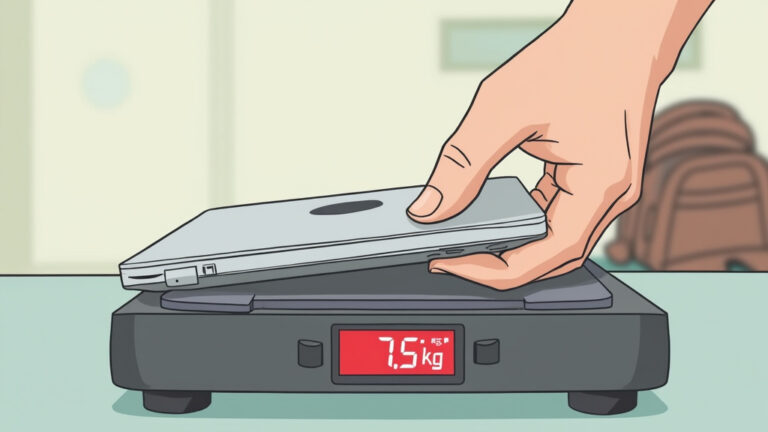
Now, pack it as you would for a trip. Do not engage any expansion zippers. Weigh it. A simple luggage scale costs $15 and saves a $75 overweight fee.
If your numbers are within half an inch of the limit, you are at risk. Airport sizers are metal and do not flex. Your soft-sided bag might have given you a false sense of security.
I traveled for two years with a Samsonite Winfield 2 that was marketed as a 22-inch carry-on. It measured 23.5 inches tall with the handle up. It fit in overhead bins on empty flights where no one checked. On a packed Delta connection in Atlanta, the gate agent made me sizer it. It didn’t fit. I gate-checked it and watched a baggage handler throw it onto the tarmac in the rain. I now use a Briggs & Riley Baseline 22″ that measures 21.75 inches tall, handle included.
TL;DR: Measure your empty bag with the handle up, from the floor, and compare the hard numbers to the airline’s hard limit. Half an inch over is over.
Hard Shell vs. Soft Shell: The Compliance Reality
The material of your bag dictates its forgiveness factor at the moment of truth.
A polycarbonate or aluminum hard-shell spinner has fixed dimensions. If the factory made it 22.5 inches tall, that’s it. You cannot argue with geometry. The benefit is structure and protection for fragile items.
A soft-sided duffel, backpack, or hybrid bag can compress. You can squeeze it into a sizer, or it might deform just enough to slide into a full overhead bin. This is the single biggest advantage for frequent flyers on strict airlines. The trade-off is less organization and no crush protection.
- Choose a hard shell if: You primarily fly U.S. domestic routes on major carriers, need to protect electronics or souvenirs, and value organization.
- Choose a soft shell if: You frequently fly international budget airlines, need maximum packing flexibility, or want one bag that will never be denied for being half an inch too fat.
The expanding suitcase is a trap. That zipper gives you 2 extra inches of packing space. It also guarantees your bag will exceed the standard carry-on dimensions when used. If you must expand, do it on the return trip after you’ve cleared the departing airport’s sizer.
The Tools and Mindset for Stress-Free Boarding
Your goal is to walk past the gate agent without a glance. These practices get you there.
Before You Book:
Check the carry-on size policies for every airline on your itinerary, especially the third-party regional carrier for the last leg. Their rules govern your entire journey.
Before You Pack:
Know your bag’s true measurements and weight empty. This gives you a realistic budget for your clothes and souvenirs. Use a luggage measuring guide as your final pack check.
At the Airport:
If you’re borderline, arrive early. Test your bag in the airport’s public sizer, usually near check-in. If it doesn’t fit, you have time to check it at the counter for a lower fee than at the gate. Do not be the person holding up the jet bridge while repacking.
The industry is moving toward automated scanning at the gate. These machines measure every bag in 3D as it passes. There is no human “looks okay” judgment. Compliance will be binary. Your preparation is your only defense.
Frequently Asked Questions
What is the most common carry-on luggage size?
In the United States, the most common limit is 22 inches tall x 14 inches wide x 9 inches deep (56 x 36 x 23 cm), including wheels and handles. This is the standard for American, Delta, and United on domestic routes. Do not confuse this with the “22-inch” label on a suitcase, which rarely includes the wheels.
Do carry-on bags have weight limits?
On most major U.S. domestic airlines, no. On nearly all international and budget airlines, yes. Limits commonly range from 15 pounds (7 kg) on carriers like Ryanair to 22 pounds (10 kg) on many full-service international airlines. Always verify with your specific carrier.
Can a 24-inch suitcase be a carry-on?
Almost never. A 24-inch suitcase refers to the internal body length. With wheels and a handle, it typically measures 26-27 inches tall. This exceeds every major airline’s carry-on size limit. A 24-inch suitcase is a checked bag.
What if my carry-on is slightly too big?
If it is oversized, the airline will require you to check it at the gate. This is usually free on U.S. domestic flights if the overhead bins are full, but if the bag is visibly oversized, you may be charged a gate-check fee, which is often more expensive than checking it at the ticket counter. On strict budget airlines, you will pay a high penalty fee.
Are backpacks considered carry-on or personal items?
It depends on the size. A full-sized travel backpack (40-50 liters) that fits in the overhead bin is a carry-on. A smaller daypack or laptop bag (25-30 liters) that fits under the seat is a personal item. You are generally allowed one of each.
The Bottom Line
Carry-on size is not a mystery. It is a set of published numbers you must match with a verified measurement of your own bag. The universal 22-inch standard is a myth—international and budget carriers enforce smaller, stricter limits.
Your move is simple. Find your airline’s policy. Measure your bag from the floor to the top of the extended handle. Choose a soft-sided bag if you fly strict airlines, a hard-shell if you don’t. Never rely on the marketing label.
The right bag, measured correctly, gets you on the plane faster, keeps your belongings in sight, and saves you money. The wrong guess costs you time, cash, and the peace of mind that comes from knowing your bag is already in the bin above you. Measure twice, fly once.