What Is a Tote Purse? Defining the Classic Carryall Bag
This post contains affiliate links. As an Amazon Associate, we earn from qualifying purchases.
A tote purse is a large, open-top bag with two parallel handles, designed for carrying everyday items by hand or over the shoulder. Legally, it’s classified as a “travel, sports and similar bag,” not a handbag, a distinction solidified by a 1992 U.S. Customs ruling that examined its coarse construction and lack of closures.
That legal ruling is the spine of the definition. It moves the conversation from vague style terms to specific, measurable features: open top, often unlined, typically made of sturdy cloth like cotton canvas or nylon. The choice between a tote and a traditional purse comes down to capacity versus security, and casual utility versus structured formality.
What follows is a breakdown of that legal definition, the materials and sizes that matter, and the practical checks that separate a bag you’ll use for a season from one that lasts for years.
Key Takeaways
- The U.S. Customs Service definitively classified tote bags as “travel, sports and similar bags” in 1992, basing the decision on their coarse construction, lack of lining, and variety of uses.
- A true tote prioritizes open, easy access and high capacity, making it ideal for shopping, work, or the beach, but a poor choice for securing valuables in crowded spaces.
- Cotton canvas totes need to be reused at least 131 times to break even environmentally compared to a single plastic bag, according to a UK study.
- Check the zipper action, hardware weight, and stitch consistency before buying, these are the physical points where cheap bags fail first.
- The best tote bag for you is dictated by your daily carry list; match the bag’s size and internal organization to your non-negotiable essentials.
The Legal Definition That Changed Everything
Most definitions of a tote bag are stylistic. The binding one is bureaucratic. On May 19, 1992, the U.S. Customs Service issued Ruling HQ 951113. It was a response to a dispute from a company called The Gem Group, which argued its cotton tote bags should be classified as handbags. Customs disagreed, and that disagreement became the rule.
The ruling examined a sample bag. Item 124, made of natural cotton, measuring about 14 by 14.5 inches. It had an open top, no lining, no pockets, and no closure. The fabric was meant to be printed with logos. Customs concluded that bags of this type, with their “relatively coarse construction” and advertising, were unlikely to be used like a woman’s handbag. They were, instead, “travel, sports and similar bags.”
This 1992 U.S. Customs Ruling (HQ 951113) explicitly classifies tote bags under tariff code 4202.92.1500 as “travel, sports and similar bags,” not handbags. The decision hinged on the bags’ coarse cotton construction, lack of lining or pockets, and their common use as promotional giveaway items, which distinguished them from typical handbag usage.
This matters because it frames the tote by its construction and common use, not by marketing. The legal definition pulls from the tote bag overview article on Wikipedia, which notes the archetypal bag is made of sturdy cloth like canvas or jute. When you understand a tote as a travel, sports and similar bag, its design priorities snap into focus: durability, capacity, and casual utility over refined security.
Tote vs. Purse: The Capacity vs. Security Trade-Off
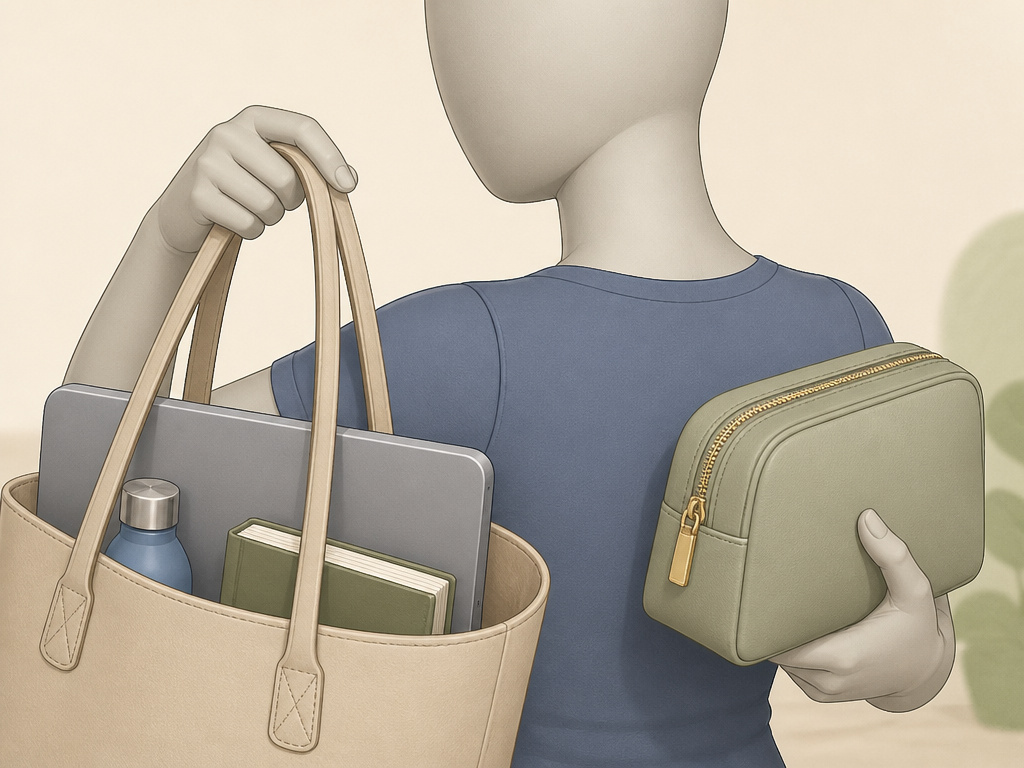
The core difference is functional, not just semantic. A tote is a vessel for volume. A purse is a vault for valuables.
Think about the physical experience. A tote bag is built around an open cavity. You drop in a laptop, a water bottle, a sweater. The two handles are designed to carry significant weight, whether by hand or on the forearm. There’s no fumbling with a clasp. This is the essence of its uses for a tote bag: hauling groceries, books, beach gear, or work supplies. It’s a mobile bin.
A traditional purse, especially a handbag, inverts those priorities. It has a structured shape, often with a secure closure, a zipper, a clasp, a magnetic snap. It’s lined. It has dedicated pockets for a phone, keys, and a wallet. Its purpose is to organize and protect a smaller set of high-value items, making them easy to find and hard to lose.
| Feature | Tote Bag | Traditional Purse / Handbag |
|---|---|---|
| Primary Design Goal | Maximize capacity, ease of access | Organize and secure valuables |
| Closure | Typically open top; may have a simple snap | Zipper, clasp, or other secure closure |
| Internal Organization | Minimal; often one large cavity | Multiple pockets, dividers, lined compartments |
| Structure | Often soft-sided; can slouch | Usually structured to hold its shape |
| Best For | Shopping, work, beach, casual daily carry | Everyday urban use, occasions, securing essentials |
The trade-off is straightforward. Choose a tote when you need to carry bulk. Choose a purse when you need to protect specifics. A tote fails in a crowded subway if your wallet is just floating in the bottom. A purse fails on a weekend farmer’s market run when you buy more than you planned.
Materials, Size, and What “Sturdy” Actually Means

The word “sturdy” gets thrown around. In practice, it breaks down into the fabric’s denier, the strap attachment, and the stitch count.
Fabric is the first layer. A canvas tote bag is the default for a reason. Cotton canvas is dense, abrasion-resistant, and gets softer without losing integrity. Nylon totes, like the famous Longchamp Le Pliage, offer a different kind of sturdiness: water resistance, incredible lightness, and packability. Leather adds durability through thickness and patina, but also significant weight and cost. The tote bag materials you choose dictate the bag’s care, feel, and lifespan.
Size is the second constraint. The typical tote bag dimensions given in the research, 10 to 18 inches wide, 4 to 8 inches deep, are a useful starting box. But your body and your loadout are the real guides.
Where this goes sideways: Buying a tote based on aesthetic dimensions alone. A bag that’s 18 inches wide will bang against your hip with every step if you’re under 5’5″. A shallow 4-inch depth means a standard folder will stick out the top.
The correct method is to measure your largest essential item. For most, that’s a 13-inch laptop or a standard file folder. Then add 2 inches in height and depth for padding and other items. That’s your minimum viable tote size. The Longchamp Le Pliage Large works for millions because its folded dimensions happen to snugly fit a 13-inch laptop with room for a charger and a notebook. That’s not an accident.
Quality Over Aesthetics: The Three-Point Check
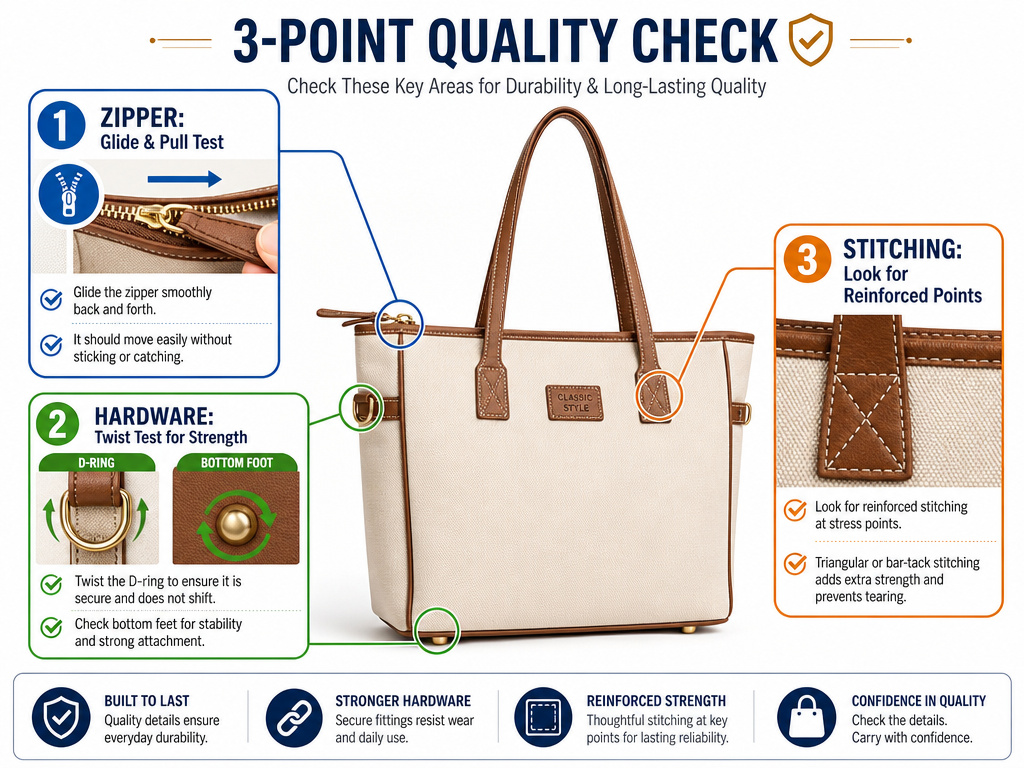
A tote bag is a workhorse. Its failure points are mechanical, not stylistic. Before you buy, perform this three-point physical check. It takes ten seconds and saves you from a bag that fails in a month.
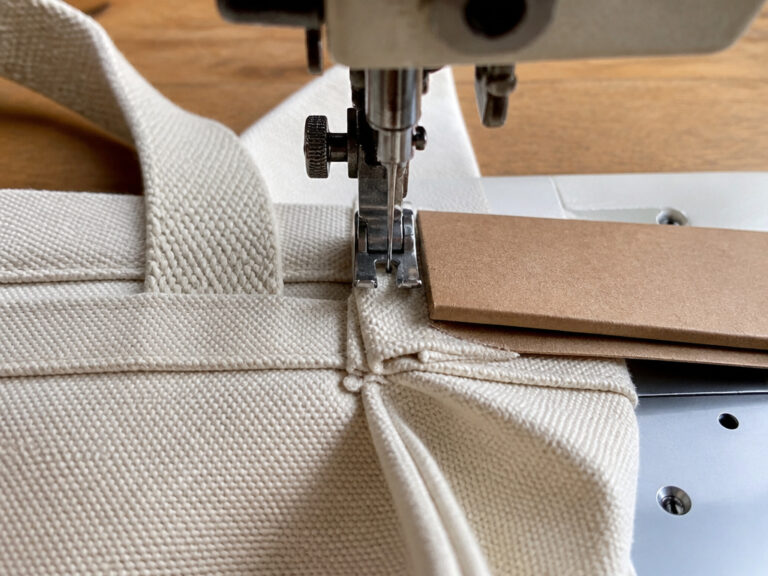
First, work the zipper. If the bag has one, open and close it fully five times. It should glide without catching, and the pull should feel solid in your hand. A cheap zipper will snag on the fabric by the third pull. Second, assess the hardware. D-rings for straps, any clasps, or feet on the bottom. They shouldn’t feel like hollow, tinny metal. Give them a slight twist with your fingers. If they bend or feel sharp, they’ll snap or tear the fabric under load. Third, inspect the stitching, especially where the straps meet the bag body. The stitches should be even, tight, and without loose threads. Look for reinforcement, a box stitch or a triangular stitch, at these high-stress points.
This check separates a $50 bag that lasts three years from a $50 bag that lasts three months. The YouTube reviewer’s advice is practical: a bag that sags empty won’t support a load. A stitch that’s bad from the start only gets worse.
The Environmental Math No One Wants to Do
Tote bags are marketed as an eco-friendly alternative. The reality is a equation of reuse. A 2011 study by the UK Environment Agency, often cited in the tote bag reference page, found a cotton canvas bag must be reused 131 times to break even with a single disposable plastic bag in terms of global warming impact. If the plastic bag is reused as a bin liner, the cotton bag needs 327 uses.
That’s for cotton. Recycled polypropylene totes need far fewer uses, around 11. This isn’t an argument against totes. It’s an argument against accumulating them. The most sustainable tote is the one you already own, used until it wears out. The Reddit upcycling project turning trashed Carhartt overalls into a lined tote is the ideal end of this spectrum: giving a durable material a second, long life.
How to Choose Your Everyday Tote
Choosing a tote bag is a process of elimination driven by your daily reality. Start with a checklist of your non-negotiable carry. Phone, wallet, keys, tablet, laptop, water bottle, lunch container. Pile them on your table.
Now, answer three questions about that pile: 1. What is the largest item? (This sets the minimum internal dimensions.) 2. What needs instant access? (This dictates whether you need an open top or a quick-access external pocket.) 3. What needs protection? (This determines if you need a padded sleeve or a separate pouch.)
Your answers point you to a type. A commuter needs a sleeve and a water bottle pocket. A parent needs wipeable nylon and wide straps that fit over a stroller handle. A traveler needs a tote bag that qualifies as a carry-on with a secure zip top.
Common mistake: Prioritizing a trendy print over strap comfort. Wide, padded straps distribute weight. Thin, chain-style straps dig into your shoulder under the weight of a laptop and a book. Your shoulder will veto the bag long before the print goes out of style.
Finally, consider the closure. An open-top tote is classic and fast. For urban use or travel, a zip-top provides security and peace of mind. Some, like the Baggu Duck Bag, offer a clever fold-over closure that’s a middle ground. Your environment chooses for you.
Frequently Asked Questions
Are tote bags considered purses by airlines?
It depends on the airline’s specific airline policies for tote bags as personal items. Generally, a tote bag can serve as your personal item if it fits under the seat in front of you. Its soft-sided nature is an advantage here, as you can often stuff it into the sizer. However, if it’s overstuffed and bulky, a gate agent may classify it as your carry-on bag instead.
What is the difference between a tote bag and a shoulder bag?
All tote bags are shoulder bags, but not all shoulder bags are totes. “Shoulder bag” describes any bag carried on the shoulder. A tote is a specific subtype characterized by its large, open capacity, two parallel handles (which can be held or shouldered), and simple construction. A shoulder bag could be a structured satchel with a single strap and a flap closure, which is not a tote.
Why are tote bags so popular?
Tote bags hit a sweet spot of casual utility, high capacity, and often, low cost. They are incredibly versatile, functioning as a reusable shopping bag, a work bag, a beach bag, and a daily carryall. Their simple design also makes them an ideal canvas for personal expression, from brand logos to artistic prints.
Can men use tote bags?
Absolutely. The 1992 Customs ruling made no gendered distinction, it classified the bag by its construction and use. A tote is a tool for carrying things. The Reddit discussion highlights this perfectly: a user switched from a tote to a purse for his tablet, facing comments about it being “girly,” but prioritized the convenience. Function has no gender.
How do I keep my tote bag from getting messy?
The open design invites chaos. The solution is tote bag organization via internal containers. Use a small pouch for cosmetics, a flat tech organizer for cables, a zippered clutch for your wallet and keys. This creates modular blocks inside the bag that you can move in and out quickly, transforming a black hole into an organized system.
The Bottom Line
A tote purse is not a mystery. It’s a large, open carryall defined as much by a 1992 Customs ruling as by its two handles. Its value is in its brute utility, the ability to hold a lot, easily. Choose based on the dimensions of your daily load, the abrasion-resistance of its fabric, and the integrity of its stitches and zipper. Remember the environmental math: use the bag you buy, hundreds of times. And ignore any noise about who it’s for. A good tote is for anyone with stuff to carry.